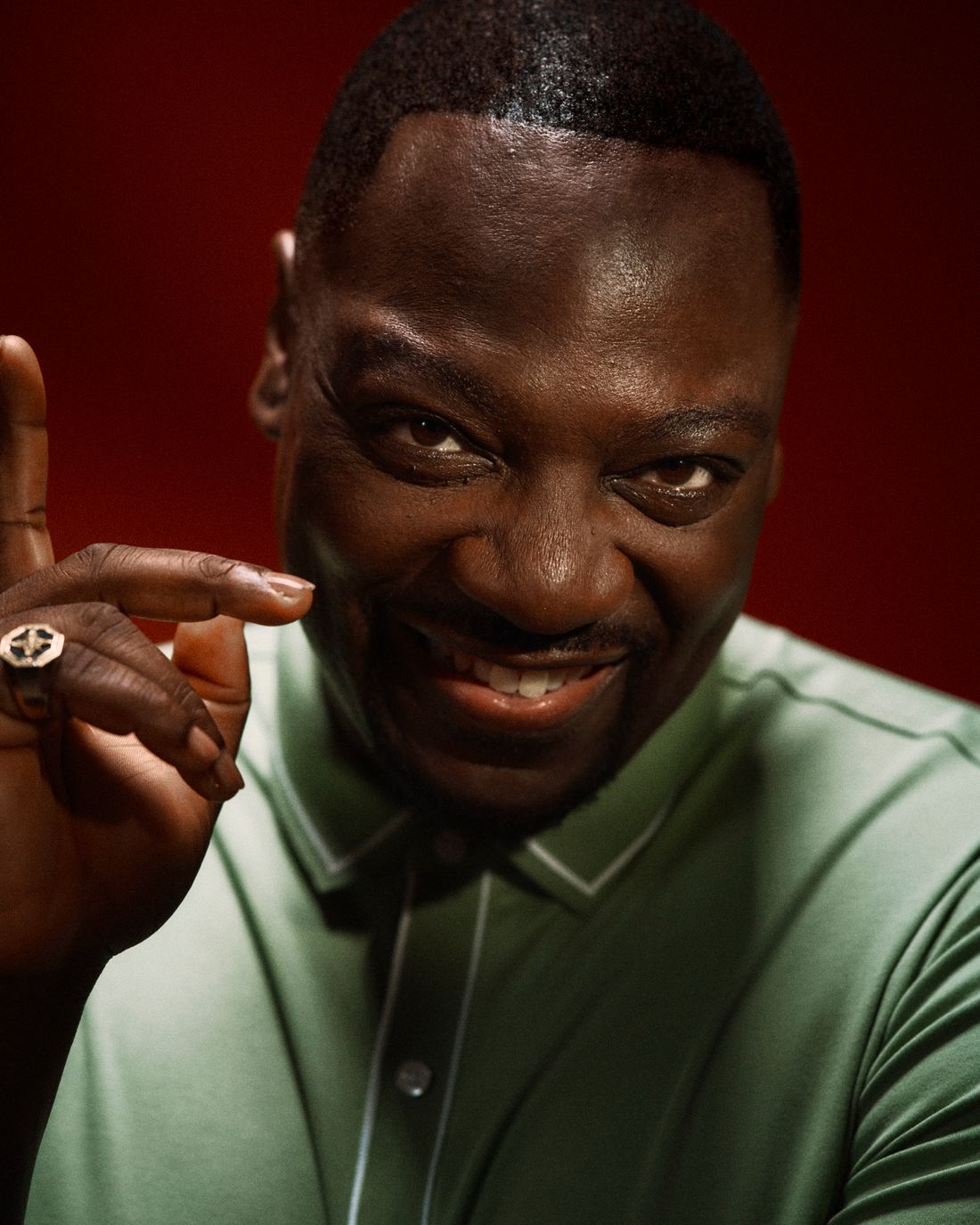
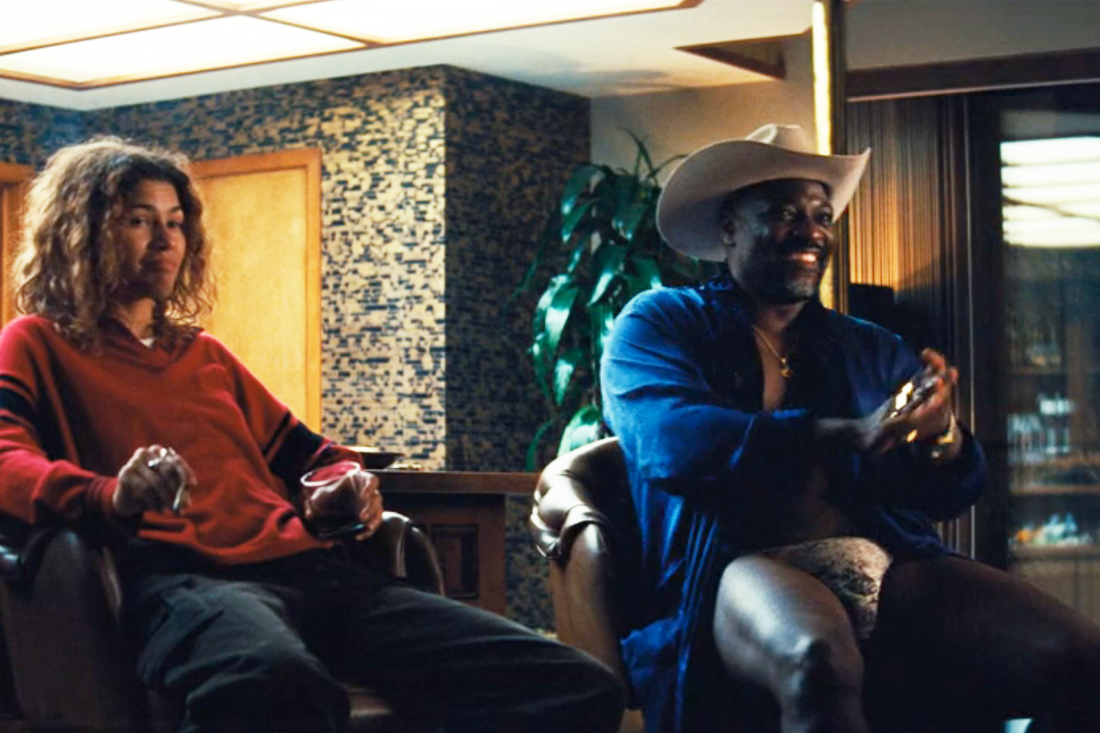
Adewale Akinnuoye-Agbaje, a 58-year-old actor, was surprisingly new to the world of cowboys when he landed the role of Alamo Brown. He hadn’t worn a cowboy hat, ridden a horse, or even watched much of the show Euphoria before being cast. He remembers enjoying the hat, speaking from a restaurant patio in Los Angeles. Tall and handsome, with a North London accent that has a touch of Cockney, Akinnuoye-Agbaje is quite different from his Euphoria character – a powerful strip club owner who gets Zendaya’s character, Rue, involved in dangerous activities like drug dealing and gun running. The show now follows these characters as young adults facing the challenges of entering the real world. Their first scene together is memorable: Rue, working as a drug courier, navigates a crowded party and finds Alamo relaxing in a hot tub, wearing a cowboy hat and Speedo, surrounded by dancers. They immediately try to figure out what the other wants. Akinnuoye-Agbaje explains that Alamo needed to be both charming and intimidating, and that creator Sam Levinson helped him embody that by using a snake-like hand gesture before each take to suggest the character’s energy.
Okay, buckle up, because the tension in this episode really ratchets up towards the end. After a tragic overdose involving one of his dancers, Alamo wrongly accuses Rue and things quickly spiral out of control. It’s a chilling scene – he corners her and, in a truly disturbing power play, asks if she believes in God before essentially putting her life in the hands of fate. He leads her up to the highest point on his property and, in a blatant display of control, shoots an apple off her head. It’s a moment designed to terrify, and honestly, it succeeds. The whole sequence is deeply unsettling and leaves you completely on edge.
Akinnuoye-Agbaje remembers being on a freezing cold hill in Palmdale at one in the morning, a truly unfortunate time to be wearing cowboy boots and Speedos. Normally, the crew provides hand warmers between scenes when it gets that cold, and they were quick to keep things moving. He jokes that the hand warmers were particularly useful inside his Speedos.
I’ve been thinking about the first scene where Rue and Lamar meet – it really marks the beginning of their connection. What I find so interesting is how different they are. Zendaya’s Rue perfectly embodies Gen Z, while Lamar is this old-school, almost classic criminal type. But there’s this underlying feeling, almost like a father-daughter dynamic, that’s really compelling. It’s a genuine connection, and honestly, it’s one of the things that grounds the emotional weight of the whole third season.
I was so excited to learn more about how they cast the new character on Euphoria! Apparently, the casting director, Mary Vernieu, has worked with the actor, Akinnuoye-Agbaje, for years – all the way back to Bullet to the Head and Concussion. She immediately thought of him for this role, and he actually sent in an audition tape from London! She described the character as needing to be intimidating but also really charismatic and mysterious – a total cowboy type. She really needed someone who could match Zendaya’s energy and hold their own, and she clearly thought he was the perfect fit.
He auditioned for the roles with Levinson and Vernieu. Marshawn Lynch, the former football player who became an actor, was also being considered, and they even rehearsed together after Akinnuoye-Agbaje was cast. (Lynch ultimately played one of the minor characters working for Alamo.)
When the third season of Euphoria premiered, the television world was very different than it was in 2019 when the show first aired. The young actors who star in the series are now major celebrities. The season’s development was also marked by tragedy, including the deaths of producer Kevin Turen and actor Angus Cloud (Fezco), as well as reports of difficult production conditions. This led to uncertainty about whether a third season would even happen. While reviews have been mixed, over 8 million Americans watched the first episode within the first three days, eager to see the show’s signature style and famous cast.
Lyndon Akinnuoye-Agbaje is a well-known actor, famous for playing the villain Simon Adebisi on Oz and the character Mr. Eko on Lost. He started his career in the early 1990s after being discovered as a model and appearing in music videos for artists like Mary J. Blige and En Vogue. Born in London to Nigerian parents, Akinnuoye-Agbaje experienced a unique upbringing. At just six weeks old, he was placed with a white, working-class family through a practice once common in the U.K. called “farming.” This involved Nigerian immigrant parents sending their children to live with foster families while they established their careers. Akinnuoye-Agbaje lived with his foster family until he was 16, when he reunited with his biological parents, and now spends summers with them in Nigeria. He explains that while “farming” sometimes worked well, it was often traumatic due to a period of anti-immigrant sentiment in England, marked by racial attacks and slogans promoting a white-only Britain.
He used to feel very angry towards his birth parents, but he was able to make peace with them before his father passed away. He found that creating art was the only way to start dealing with his difficult past. This led him to create a short film through the Sundance Institute Labs, which he later developed into the 2018 feature film Farming, starring Damson Idris. Akinnuoye-Agbaje explains that his mother supported the film, as he needed her permission and she had to approve the script. Despite how upsetting it was for her, she was incredibly supportive, and he’s very grateful for that. He says he didn’t truly feel at peace until the film was finished, realizing that the trauma and resentment had been slowly damaging him.
Adewale Akinnuoye-Agbaje began his film career in 1995, playing Kahega, the leader of a gorilla expedition, in the movie Congo. He was particularly inspired by Delroy Lindo’s performance as Captain Wanta, saying he knew that’s the kind of actor he wanted to be after seeing a scene Lindo filmed. On the set of Congo, he also met Tim Curry, another British actor, who helped him get an agent. This was a fortunate turn of events, as people began to recognize his potential. Another lucky break came when director Steve Oedekerk spotted him on the studio lot and invited him to audition for the role of Hitu, a security guard, in Ace Ventura: When Nature Calls, also released in 1995.
He got his start in Hollywood during a period when movies set in Africa were popular. Being African himself, he naturally fit the roles – he had the look, the accent, and the cultural understanding. However, like many trends in Hollywood, that phase didn’t last. Once the interest faded, work dried up completely. To broaden his opportunities, he began working on developing an American accent.
Before shows like The Sopranos changed everything, television was often seen as less prestigious than film. However, Oz, a raw and realistic HBO prison drama that debuted in 1997 and featured a four-year role for Akinnuoye-Agbaje, paved the way for the current high-quality television we enjoy today. Interestingly, it was produced by Sam Levinson’s father. Akinnuoye-Agbaje recalls Levinson telling him how much he loved the show, prompting him to jokingly question how Levinson, as a young boy at the time, was even watching it.
Originally, the character was intended to be American, and Adewale Akinnuoye-Agbaje initially auditioned with an American accent. However, he spontaneously added accents from Britain, Jamaica, and Nigeria, hoping to land the part. He recalls that casting director Alexa Fogel immediately brought him to the show’s creator, Tom Fontana, and asked him to repeat the accent work he’d just done. Fontana, without looking up from his typing, gave him only two minutes to perform. Fontana was impressed by the Nigerian accent and even helped create the character’s last name, Adebisi, combining elements of his own name and that of a Nigerian friend named Bisi. The writing process involved Fontana creating dialogue in American slang, which Akinnuoye-Agbaje would then adapt into Nigerian pidgin.
Adewale Akinnuoye-Agbaje relished the creative freedom he found playing Mr. Eko, the wise and sometimes forceful priest on Lost – a role the show’s writers specifically created for him. He’d been hesitant to return to television after portraying Majestic, the ruthless mentor to 50 Cent in the 2005 film Get Rich or Die Tryin’, but the idea of filming on a tropical island for nine months appealed to him. He even chose his character’s name and quickly won over viewers. However, after a little over one season, he requested that his character be removed from the show following the deaths of his character’s adoptive parents, feeling it was important to give them a fitting tribute.
Adewale Akinnuoye-Agbaje has taken on many different roles, but he’s particularly recognized for playing villains. When asked if he fears being stuck playing similar characters, he considers it carefully. He doesn’t see them as simply ‘bad guys,’ but as people doing what they feel they need to do in difficult situations, leaving it to the audience to decide if they’re sympathetic. He also enjoys the creative freedom of playing characters without moral limits, compared to those constrained by rules and a sense of right and wrong.
His acting method requires total immersion in the role. He asked the director to call him “Alamo Brown” from the start, and maintained the accent throughout filming. He felt it was crucial to stay consistent, as wavering would damage the character’s authenticity. He even contributed dialogue suggestions, and in one scene, his character, Alamo, is subjected to both a racial slur and called a “pig” during a phone call. Interestingly, Akinnuoye-Agbaje focused on Alamo’s reaction to being called a “pig” as being more impactful than the racial slur, especially given the script was written by a white author. He explained that Alamo, a self-made man seeking validation through success, was deeply offended by the insult, viewing it as an attack on his self-worth. The comparison to a pig eating its own waste was particularly disgusting to him. Akinnuoye-Agbaje also shared a memorable, and messy, story from filming a scene involving pigs at a club. One of the pigs not only defecated but urinated on the carpet, creating a chaotic situation. The sounds of shock and distress heard in the scene were genuine reactions from the dancers present.
Adewale Akinnuoye-Agbaje throws himself completely into his roles, and it used to be difficult for him to separate himself from the characters he played. Unlike many actors who trained at prestigious schools like the Royal Academy of Dramatic Art, he learned by fully immersing himself in each role, striving for authenticity. He took this so seriously that it almost damaged his mental health, and he hadn’t yet learned how to mentally ‘switch off’ after a performance. Around 2001, after finding success in his career, he discovered Buddhism, which helped him learn to manage this. It took years for him to truly master the ability to transition between his roles and his own life.
Having worked in the entertainment industry since the 1990s, he’s experienced how quickly things can change. Despite this, he remains optimistic, especially for Black actors, as he’s witnessed significant progress in his lifetime. He recalls a time when, “We were all competing for the single Black character in a movie who would usually die early on.” Now, he’s thrilled to see young actors quickly landing leading roles in both television and film, even after just a year in the business.
Read More
- Netflix’s Little House On The Prairie Reboot: Release Date, Cast & Everything We Know
- Off Campus Season 1 Soundtrack Guide
- YouTuber arrested after viral AI bodycam videos spark real police complaints
- Silver Rate Forecast
- Prime Video’s New R-Rated Spy Thriller Is Officially No.1 On Streaming Despite Poor Reviews
- Brent Oil Forecast
- Peaky Blinders: The Immortal Man’s Tommy Shelby Is a Better Father Than Michael Corleone
- Bulgakov’s Take: Koreans Bet the Farm on Chips, Crypto, and Chaos
- EUR ZAR PREDICTION
- Gold Rate Forecast
2026-04-20 14:59