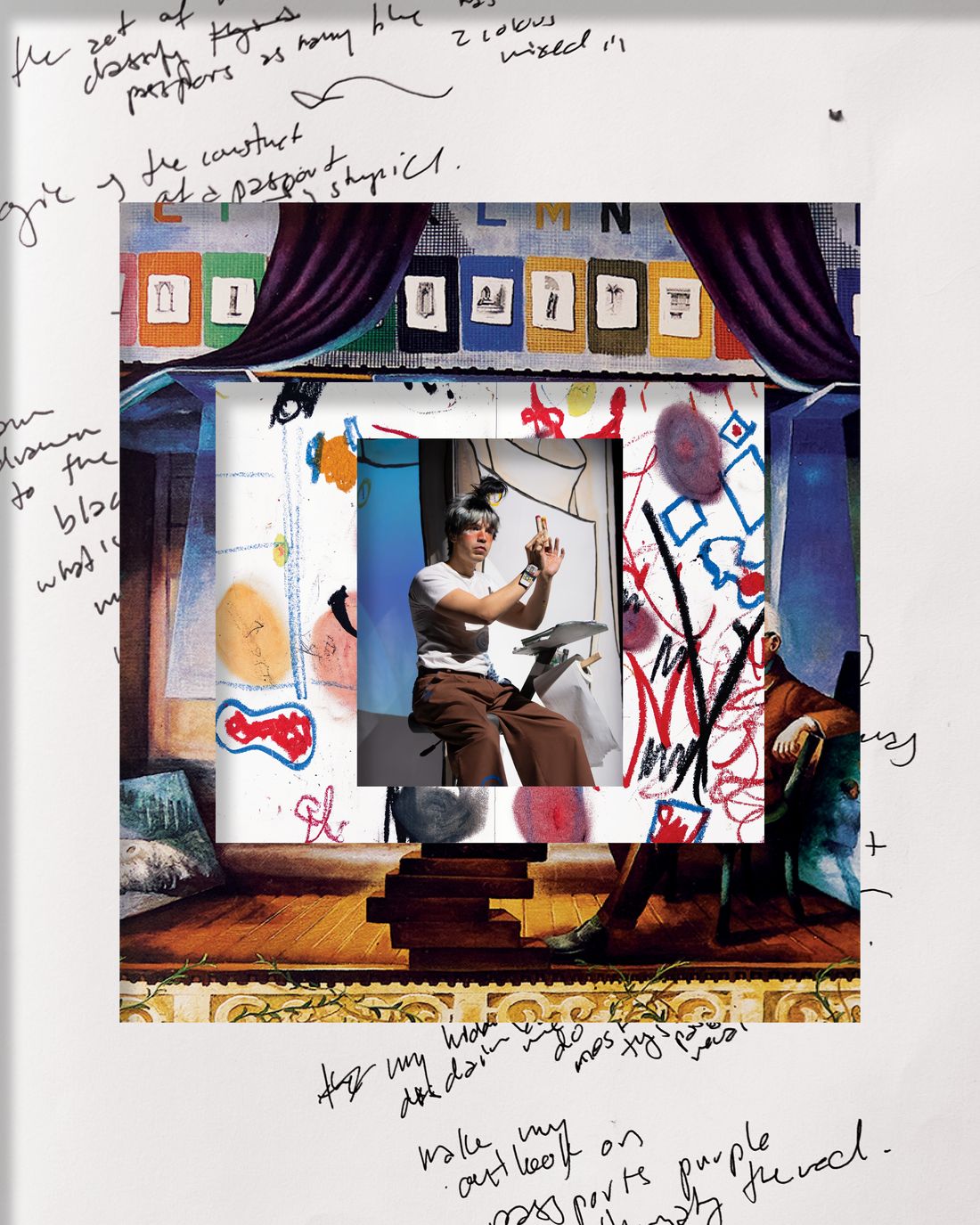
Julio Torres, whether he’s acting in TV or movies, doing sketch comedy, or performing stand-up, has a charmingly innocent persona. He often acts like a stubborn, even childish person, but he offers surprisingly perceptive observations. He seems so genuinely naive that you feel the urge to shield him from harsh realities, even though he actually understands the world more clearly than most adults.
The Julio Torres who was sitting next to me in his big bright Greenpoint studio is only sort of like that. He’s boyish but not at all naïve — he knows exactly what he is doing. He is so good at playing the wise fool that I realized that’s who I expected to meet. Julio Torres is “an unconscious construct,” he explained, when I asked the obvious question. “It’s like when you have a service job and you do your customer-service voice. ‘How’s everything tasting?’ That person’s not rehearsing in the mirror before they go to work. But they ask in a way that they have landed on so that the answer is ‘great.’ We all do it. There’s a version of ourselves that we put on when we go to work. My persona is as much of a persona as those.”
A stack of notebooks sat before him – the ones I’d requested to look through. He’d filled them while developing Color Theories, his recent HBO special which originated as a stage show he wrote and performed the previous year. I knew he relied on notebooks during his creative process, and I was hoping they’d reveal something about his unique way of thinking. They definitely do.
I got a real glimpse inside the creative process while looking through these notebooks. It was fascinating to see the fragments of ideas – sometimes fully formed writing, other times just sketches – that ultimately became his work. It felt like watching him think, page by page.
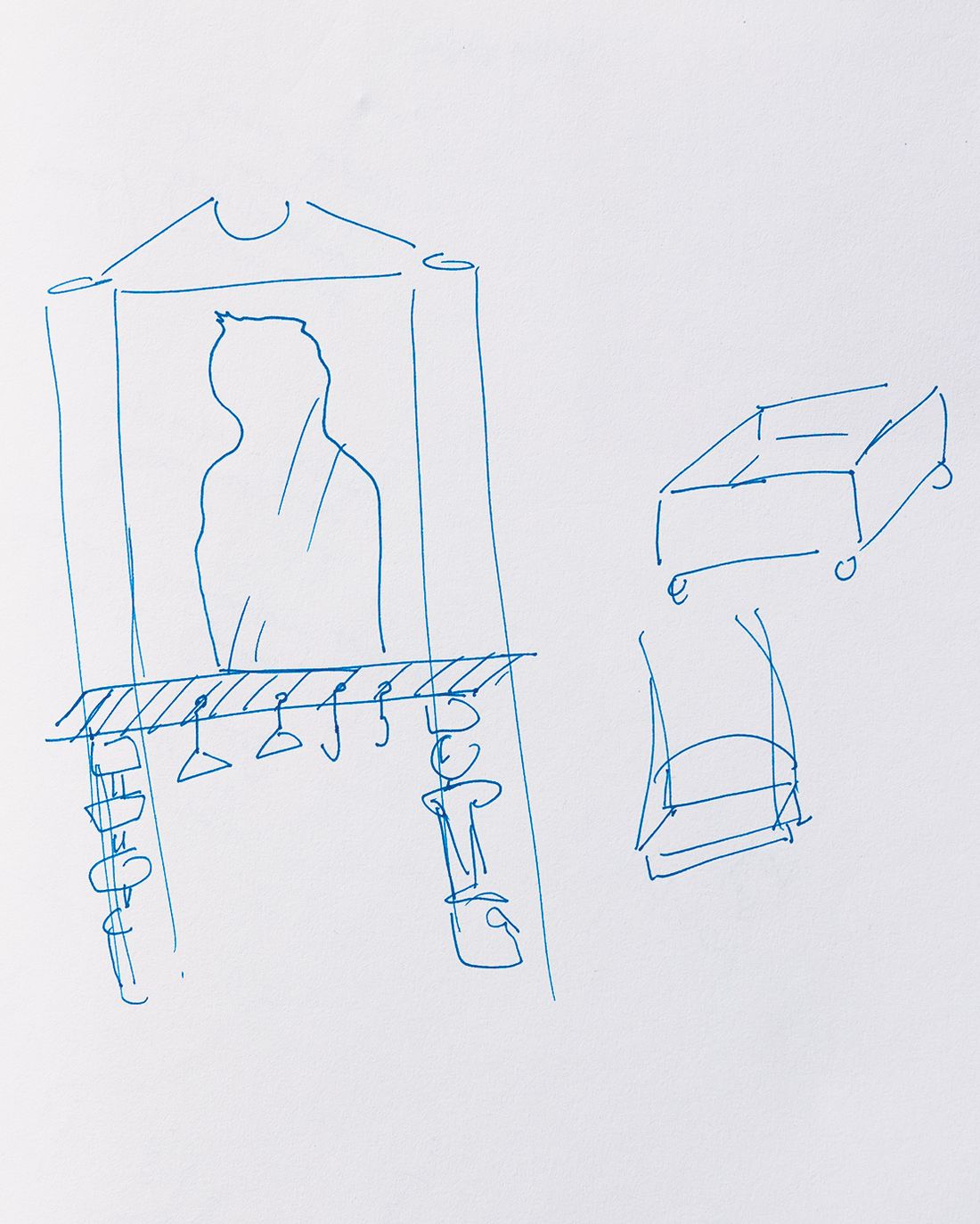
I was flipping through his sketchbook, and it wasn’t just movie ideas – he was constantly sketching out designs for clothes and furniture too. There was this amazing room divider he came up with, complete with hangers, and on top, a mirror shaped like his own silhouette – apparently, it actually lives in his apartment! It really gives you a sense of his whole creative world.
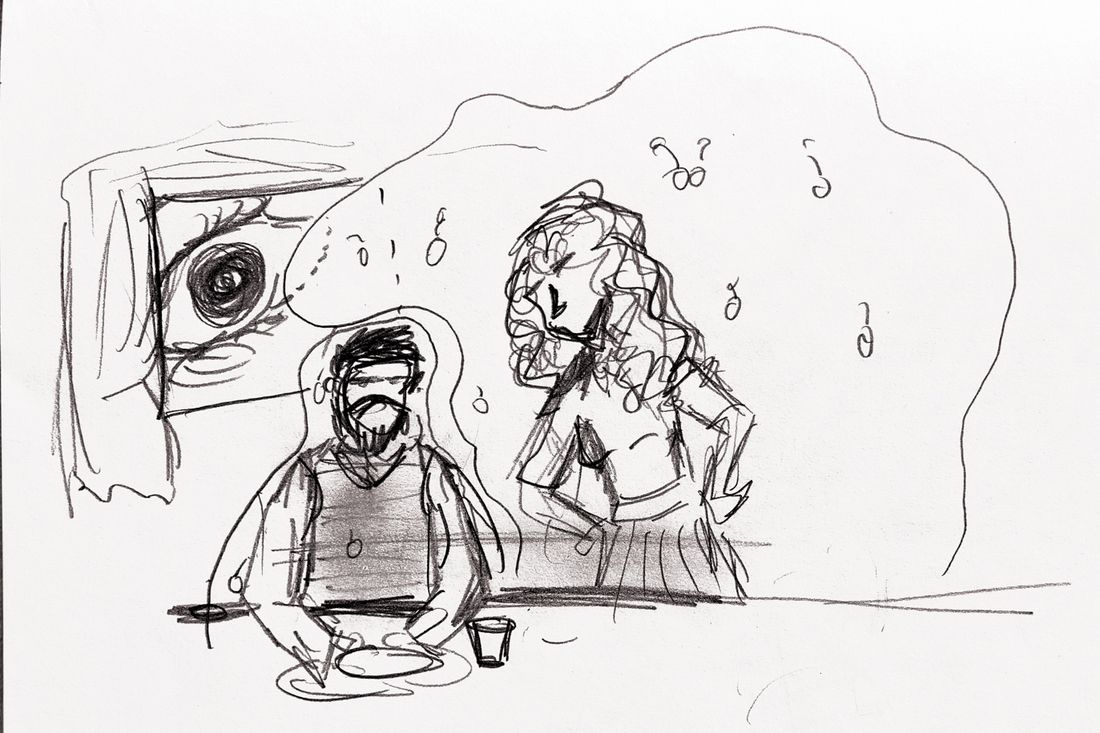
You’ll find ideas for movies — this one for a movie he’s writing about “overlapping auras”
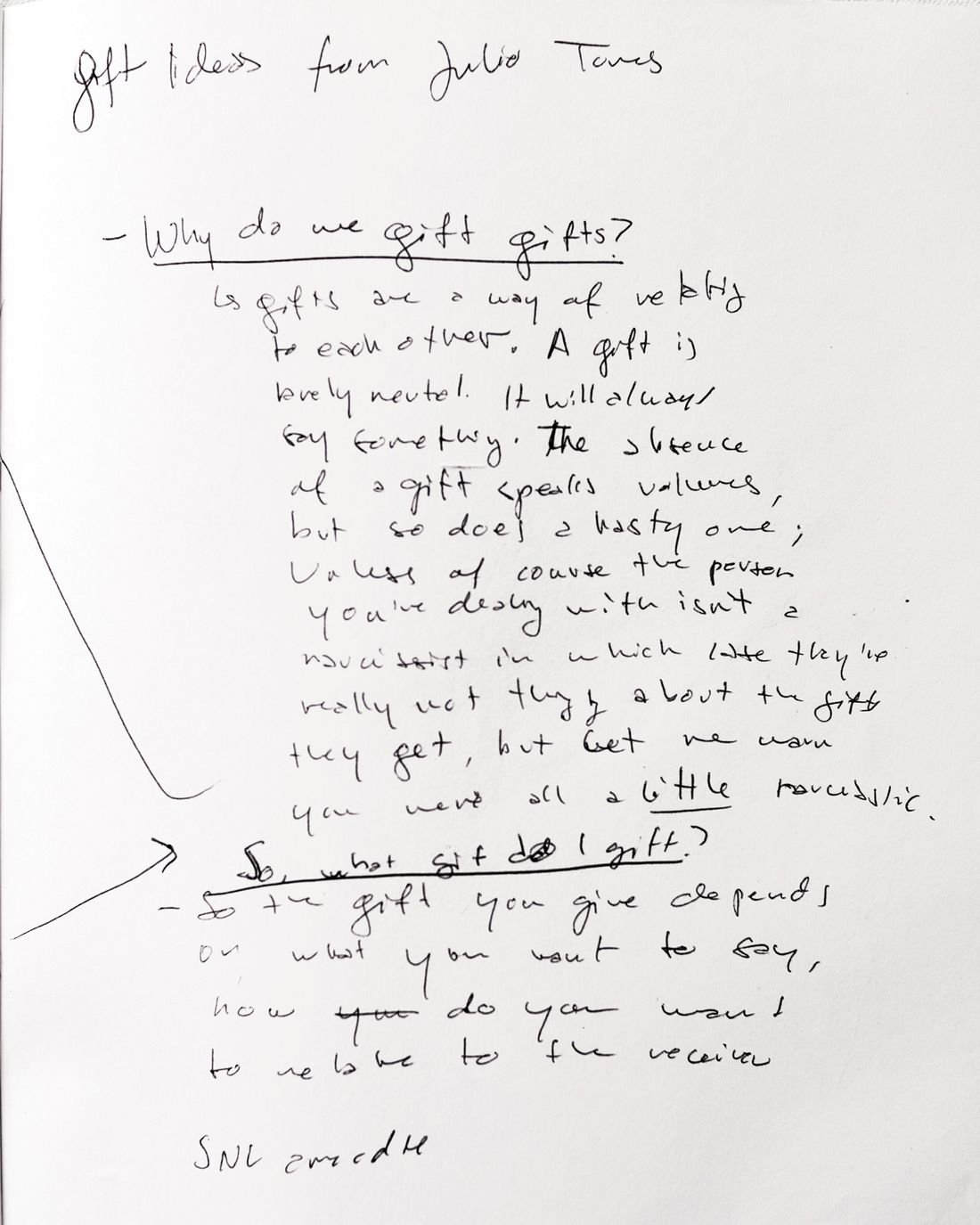
So, he’s also working on books, and this one’s a really cool concept – it’s all about famous gifts in history, like the Trojan Horse or the Statue of Liberty. It’s scheduled to be released later this year, and I’m honestly pretty excited about it!
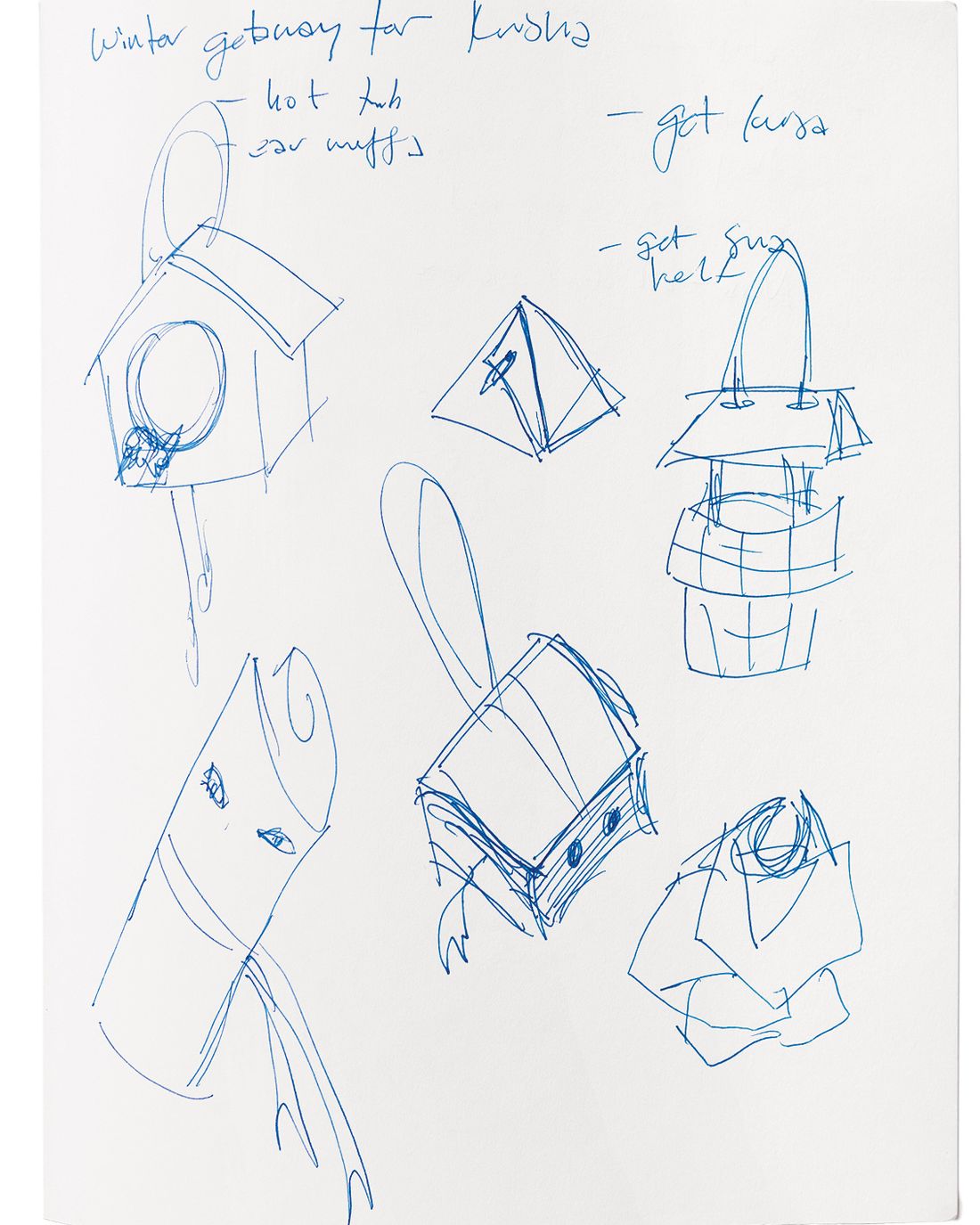
I was checking out this amazing page full of handbag ideas, and honestly, it’s so creative! They’ve got everything – a purse shaped like a cuckoo clock, a pyramid purse, even one that looks like a little well! It’s wild!
You can really see Torres’s unique and imaginative mind at work in every page of his notebooks. And just like Torres himself, his notes aren’t organized in a straight line. He explains it’s a mix of everything – ideas about color, plans for a couch he wants to build, the couch’s measurements, and layouts for a book he’s designing. Sometimes you’ll even find dates he was thinking about for a trip. Torres doesn’t keep separate journals for each project; instead, everything gets mixed together. He says that when a project really grabs him, it takes over completely.
Growing up in El Salvador during the tail end of its civil war, Torres had a supportive, unconventional family who fostered his many aspirations. Inspired by American films and television, he moved to New York City hoping to become a screenwriter. While attending the New School and navigating visa issues, he discovered stand-up comedy as a way to share his writing. It eventually led to comedy writing jobs, but not before he honed his comedic voice. Torres always had a unique perspective, allowing him to create surprising and humorous connections, but initially, his observations weren’t laugh-out-loud funny. He had to work through a lot of unsuccessful performances to truly understand what made people laugh, as he once discussed with fellow comedian Fred Armisen. He was known for being insightful as a child, rather than a class clown.
The Work of Art
A series by Adam Moss, the author of The Work of Art: How Something Comes From Nothing, featuring the evolutions of works from Stephen Sondheim, Louise Glück, Kara Walker, Moses Sumney, George Saunders, Sofia Coppola, and many others. Each installment dissects the making-of of a show, novel, painting, song, or other work through conversations with artists and their artifacts.
Torres explained that performing at open mics was how they honed their skills. They realized that how you deliver a joke is just as important as the joke itself—a flat joke on paper can land if the performer connects with the audience. This led Torres to focus on precise delivery and avoid memorization, instead reading from notes. Someone complimented a character they portrayed, and Torres realized it was simply an extension of their own personality. That moment taught them a valuable lesson about authenticity and performance.
He quickly landed a writing job at Saturday Night Live, then teamed up with Fred Armisen to create and star in the HBO series Los Espookys. He followed that by writing, directing, and acting in the film Problemista with Tilda Swinton, and another show called Fantasmas. In 2019, he released the HBO special My Favorite Shapes, which paved the way for Color Theories. It didn’t take long for him to become a uniquely popular comedic voice, moving from cult favorite to gaining wider recognition, all driven by his distinct and versatile perspective.
Color Theories
Much of Torres’s comedy comes from his tendency to categorize things – it’s just how his mind works, even when he’s not trying to be funny. He’s currently very busy, perhaps even overwhelmed. To manage everything, he’s essentially created a system for dividing himself into five parts. The first part handles everyday life – things like socializing, exercising, going to the doctor, and grocery shopping. But by taking care of these basic needs, that part of him also finds inspiration and comes up with new ideas.
I dislike number two the most. He focuses on self-promotion and networking with a clear goal in mind. He attends premieres and always agrees to photos, but his key role is presenting ideas originally conceived by number one, and persuading others to move forward with them. Numbers three and four are the creative forces – they actually write, direct, and produce the films and TV shows, and are involved in post-production. Number five covers everything else – things like children’s books, furniture design, and art exhibitions. Now, I use color-coding in my calendar to track how much time each of these ‘Julios’ requires each week. ‘Julio one’ is represented by green, and ‘Julio five’ by purple.
So, let’s talk about Color Theories, which is actually why I was so eager to dive into this. I’m a bit of a pattern-seeker when it comes to creative work – I love seeing how artists in different fields approach things. I wanted to really break down Torres’s writing process with this book and see if there were any common threads with how art is made in general, you know, like a kind of universal creative logic.
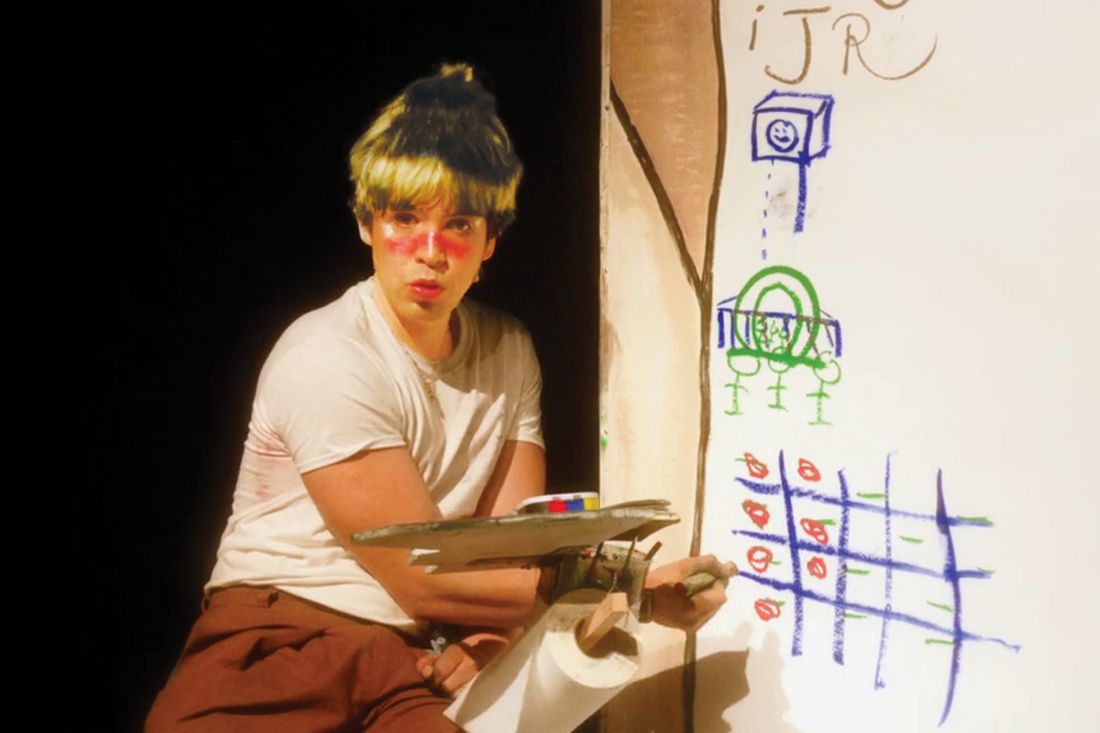
In his show, Color Theories, Torres aims to help young viewers understand the world by using color as a way to categorize things. This idea is explained directly within the show itself, as Torres presents it while on a set designed like a large, interactive storybook. He’s playfully dressed with colorful smudges on his face and a silly hairstyle, and he speaks alongside a blue robot named Bibo. Color Theories feels like a TED Talk designed for preschoolers, with Julio – a mischievous and endearing character – acting as the presenter. His talk is a wild exploration of classification, where colors come to life and the world is imagined as a colorful battle. Like much of Torres’s work, it’s delightfully absurd, but surprisingly insightful.
Yellow represents happiness and amazement. Think about how a child draws the sun – it’s a reflection of their own limited, but genuine, understanding of something huge and complicated. That’s a good thing, because it shows they’re expressing the world as they experience it.
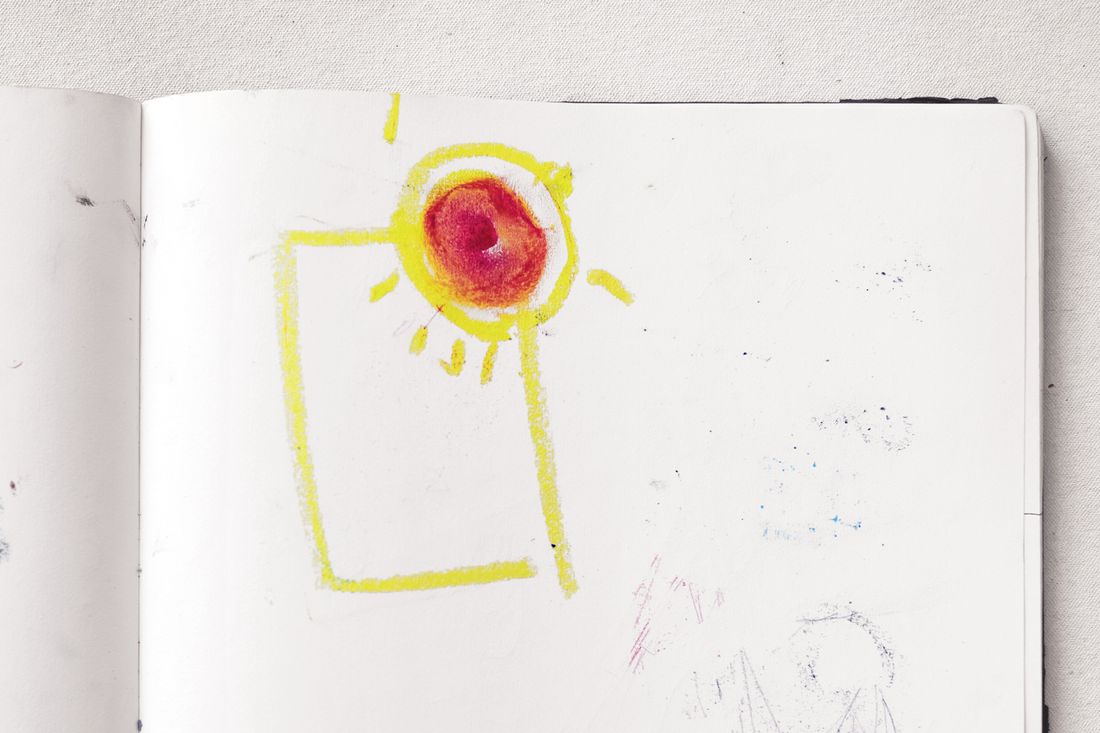
Red often represents strong emotions like passion and anger, which is fairly predictable. Orange, however, is a mix of innocent joy and intense frustration. He chose orange as his starting point because it felt like the most accessible way to begin – not as obvious as red, but still easily understood. He explains that orange requires a little more thought, moving beyond simple associations like ‘red is anger’ towards a feeling of, ‘Okay, this makes sense, there’s a reason behind this choice.’
The show has a very distinctive orange color scheme and a surprisingly angry energy. While it started as simply Julio talking about different colors, it’s evolved to include a storyline and even some political themes. Interestingly, navy blue plays a key role – it’s essentially the antagonist of the show, and we’ll explain that shortly.
First Thought, on Instagram
When the pandemic hit and Torres found himself with a lot of free time, he started thinking about how colors seemed to have their own unique qualities. He’d always been fascinated by impressionists and impersonators, but realized he didn’t have those skills. As he put it, he could, however, ‘do purple.’ It was 2020, and he was simply looking for silly things to create online while stuck in lockdown. This led him to start posting some ideas on Instagram.

After lockdown restrictions lifted, he began performing comedy again. He noticed he kept returning to jokes about colors, and his show, Color Theories, grew out of those recurring bits. While working on other projects like Problemista and Fantasmas, he continued to develop the color material in his stand-up routines. Through performing, he realized the colors provided a structure for something fresh – almost like a fill-in-the-blanks exercise.
I realized, ‘I’ve created films and TV shows, and I have plenty of future projects in mind.’ But those are long-term goals. My immediate concern is simply, ‘How am I going to earn money now?’
“So, Oh, you know what? I should go on tour. I’ll massage these color ideas into something.”
The Road and the Page
Torres traveled across the country, performing in comedy and theater venues while refining his material. He documented the entire process in notebooks, which reveal layers of development. Pages contain repeated themes and jokes, with subtle changes and variations building upon each other. As a stand-up comedian, he explained, repetition is key. He views this process as a form of sculpting, similar to a musician practicing a note repeatedly – constantly refining it until it evolves into something new.
The creative process often starts with jotting down ideas in a notebook. He’ll explore those thoughts, discuss them with others, and then refine them based on those conversations, returning to his notebook along the way. Eventually, he’ll share his work publicly to see how it resonates with an audience.
He quickly associated navy blue with authority and control – things like police uniforms and business suits. He explained that the color evokes a feeling of being confined, like being in a cell or within a strict, organized system where everyone has a defined role.
He drew that grid over and over in the notebook.
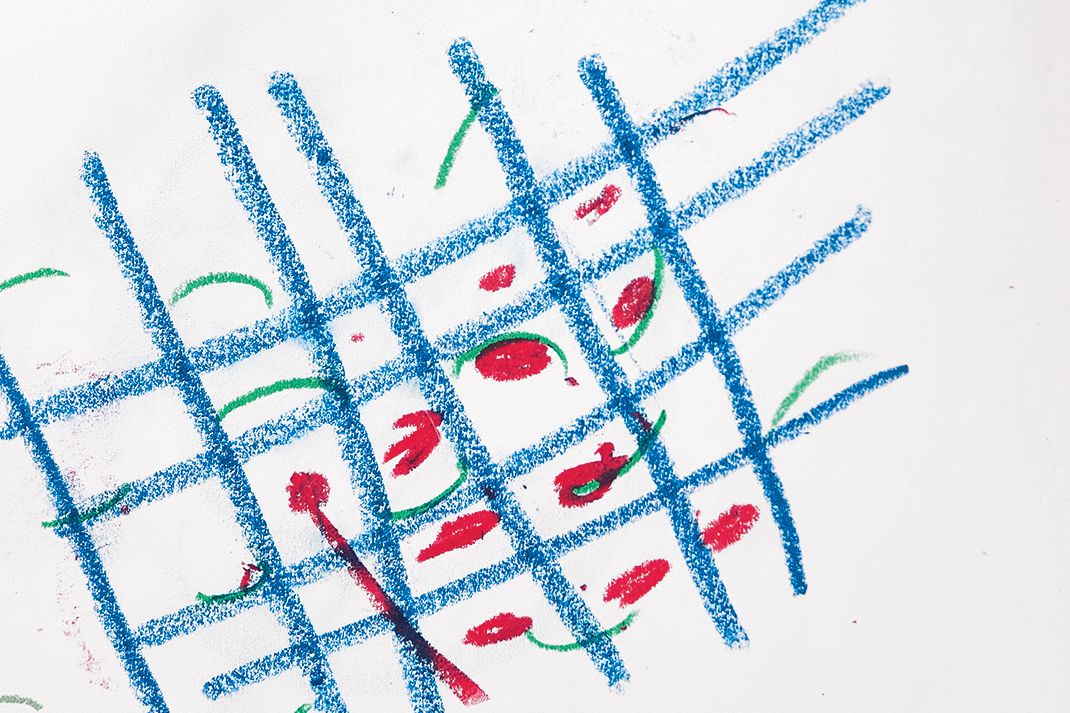
That pressure can make you feel intensely angry. Going against established boundaries – think of it like breaking a rule or crossing a line – that’s what we consider unacceptable behavior.
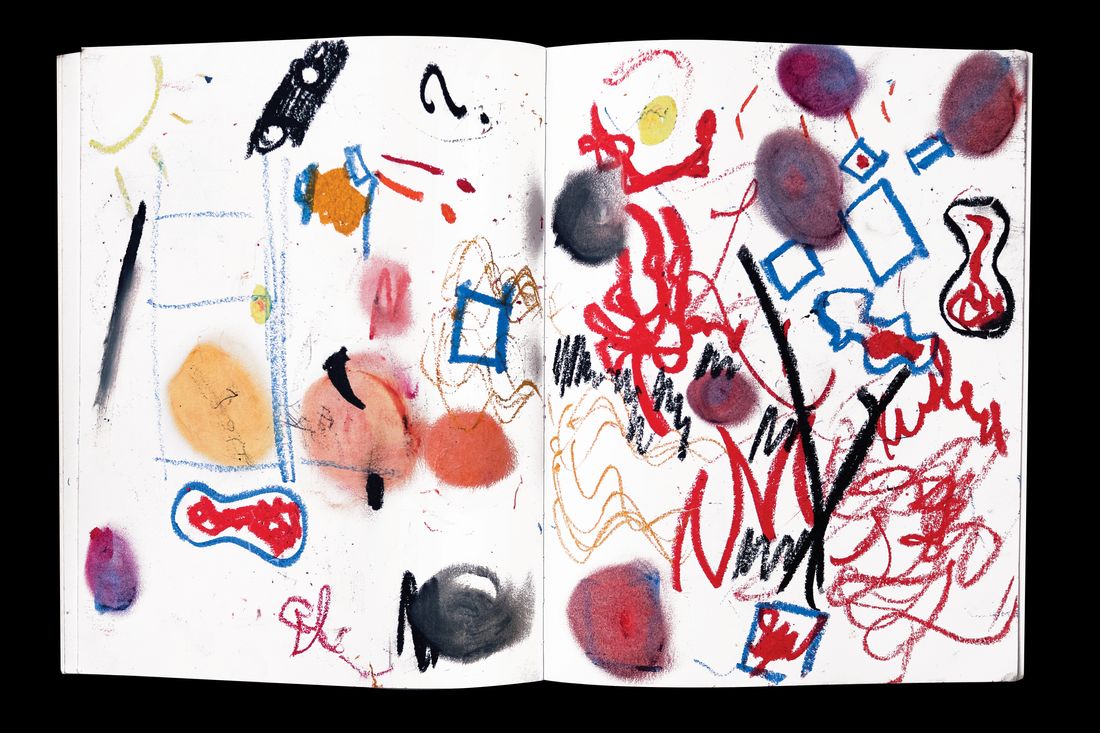
Looking through his notebooks, it’s clear he thinks in pictures and develops jokes by visually experimenting with colors and images. Many pages show him blending colors together as part of his creative process.

He was hoping to come up with a funny joke, and for this particular routine, he simply kept drawing lines in his notebook. These lines weren’t just a symbolic idea, they actually became the basis of the joke. He realized this related to how people in positions of power often disregard boundaries, essentially changing the rules to suit themselves.
In his performance My Favorite Shapes, he cleverly started by simply drawing directly for the audience, initially projecting images from his sketchbook. He then returned to live drawing, which let him create funny visual gags, like depicting someone wealthy filing their taxes.
“And then this” — he drew a huge blue perimeter around a huge red line — “is a war crime.”
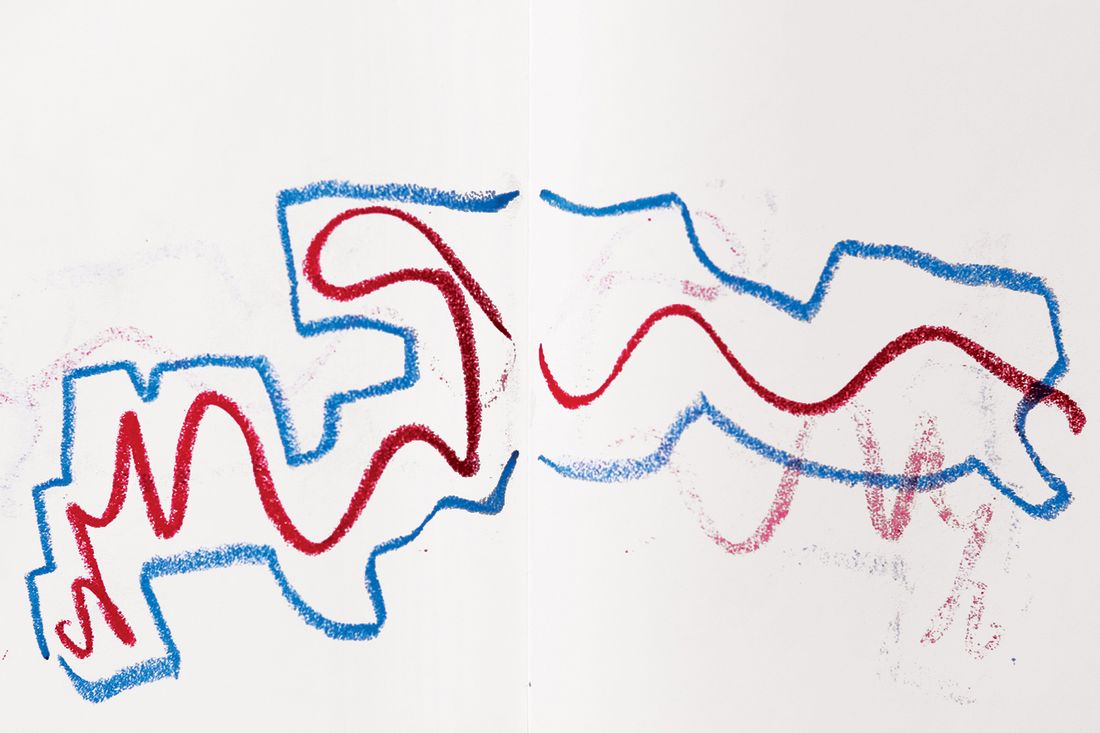
The joke landed. And it became a highlight of the show he was touring.
When depicting the war crime, I really thought about what the most shocking and terrible act I could imagine would be. Then, the character’s reaction – essentially denying any wrongdoing – felt jarring. It was like they were constantly shifting to avoid responsibility, always following the situation to justify their actions. I think this was a really effective way to show that visually. I initially sketched it out in the book, then performed it live to see if the audience understood the reasoning behind the character’s denial.
So, that was how he always approached things – by thinking about color, specifically purple! He had this amazing explanation on the show: he said purple is what happens when your passionate, fiery side – that’s the red – playfully challenges the serious, established order – the navy blue. He described purple as being full of mystery and excitement. He even broke it down further – navy blue represented things like lawyers and the legal system, while red was all about surprise and shock. And when you put those two together? You get a surprise witness! It’s such a creative way to think about things, and it totally stuck with me.
This is what it looked like as a visual joke.
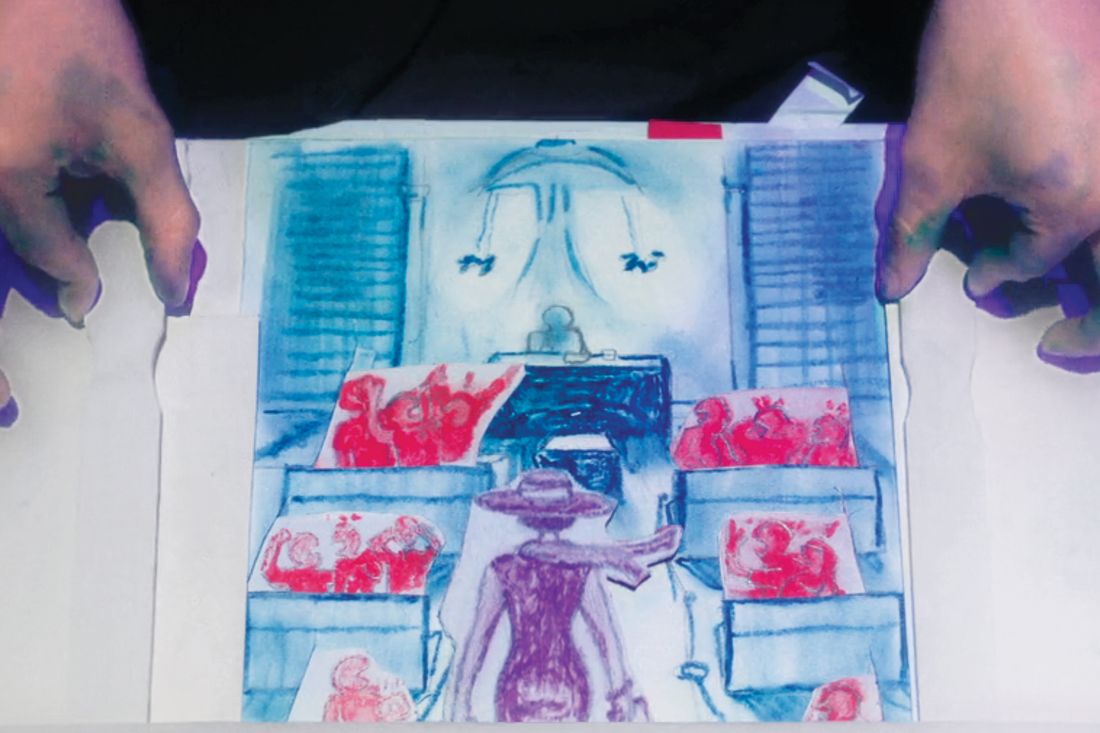
“What else is navy blue? Organized religion. Red? Blood. Passion. Combine them — “Catholicism.”
There’s a really humorous bit in the show – though it didn’t translate quite as well when written down. He discovered it by trying out different ideas and seeing what worked. He explained that many attempts didn’t pan out. He’d considered scenes like a will reading or someone being poisoned. He connected specific colors to certain imagery – a chalk outline is blue, and a crime scene is purple. For example, the image of looking down the stairs and seeing a body at the bottom felt distinctly purple to him.
One page of his notebook contained story ideas he was experimenting with for potential comedy routines. It also included jokes he ultimately decided weren’t strong enough. One example was the line, “It’s deeply embarrassing when navy blue wants to be fun,” immediately followed by the name Hillary.
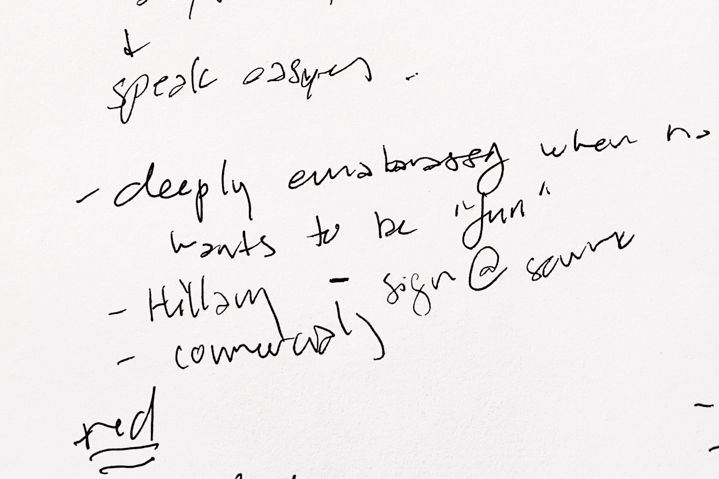
I liked that one especially. He’d forgotten about it.
As a fan, it’s fascinating to see how much work goes into perfecting the show! I’ve been looking at some notes, and it’s clear the setlist was constantly being tweaked – even the opening joke for Ellen was moved around a lot. They were always adding and removing bits. Apparently, the way he delivers lines changed a lot through trial and error, mostly by simplifying and cutting things down. He described it as a mix of his stand-up background and a bit of perfectionism, so things just naturally came out the same way each time. Sometimes a joke’s wording just felt right, but other times he’d realize something wasn’t landing – like, ‘Okay, no one is laughing at this,’ or ‘This is just confusing!’ He’d then rework it until it was perfect.
The order of things wasn’t based on logic, but on what felt right—like putting orange before beige to make the beige stand out (someone joked it was the color of “Pixar acting”). Most of the changes he made while performing weren’t about making the show more organized, but about finding what was funniest, and what he found interesting. He paid attention to the audience, but he was really listening to his own reactions. For him, like many artists, the work was mostly about recognizing what resonated with him personally.
The Artist As Algorithm
In this way, Torres likens his comedy mind to an algorithm.
He explained that he begins by simply playing around with objects that catch his eye. As he arranges them together, a common theme naturally appears. He compared it to how Instagram’s algorithm works – it shows you more of what you’ve already been looking at, revealing your current interests. He said it’s like the algorithm noticing you’re focused on things like diet and exercise. He felt this was a helpful way to understand his creative process.
For a long while, he was playing with a joke about lanternflies.
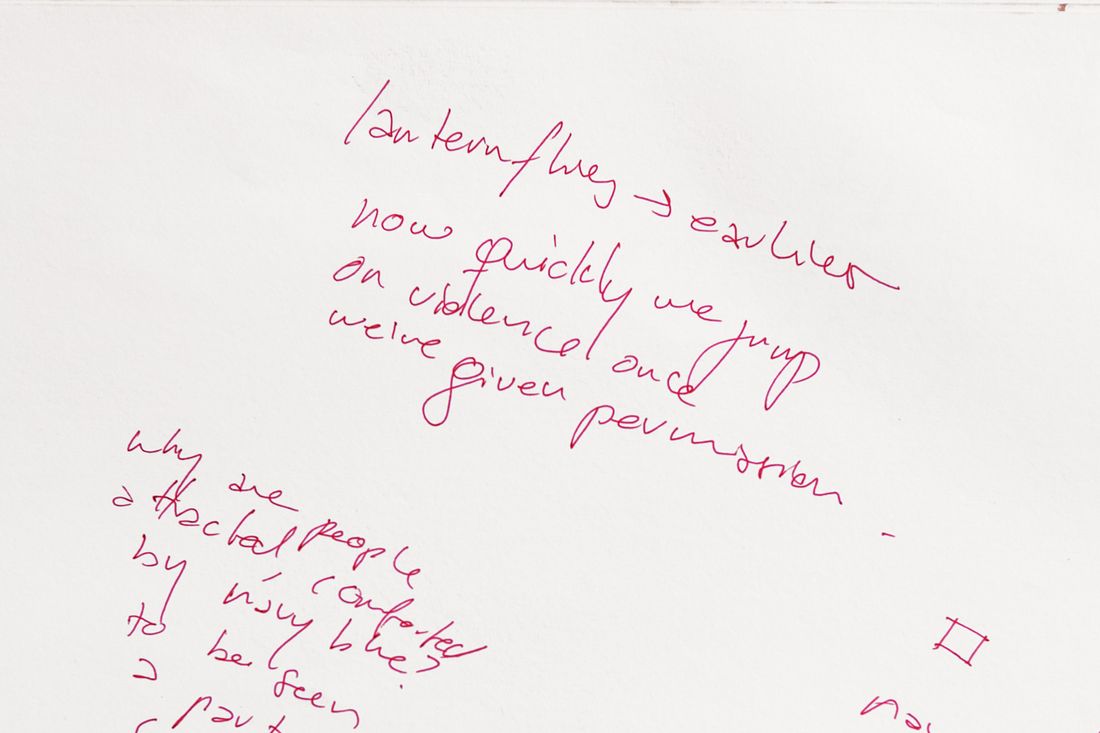
You won’t believe what we ended up cutting from the project – the whole storyline about spotted lanternflies! It was originally a major theme. The idea was that presenting them as a threat really worked because the color navy blue – representing authority, I guess – somehow gave people an excuse to act aggressively, to ‘kill’ them. People were just so eager to jump in and destroy the lanternflies! It was like the blue allowed them to unleash their own ‘red’ – their anger. It was basically saying, ‘Go ahead and take your frustrations out on those bugs!’
He explained that a particular feature was dominating the show’s content, so he removed it. He described the change as reducing the appearance of dogs on users’ Explore pages if they showed less interest. However, he added that he wasn’t throwing away the idea entirely – he planned to revisit it and use it again in the future.
Fewer Hats
On one page, there’s a note: “passport drama.”
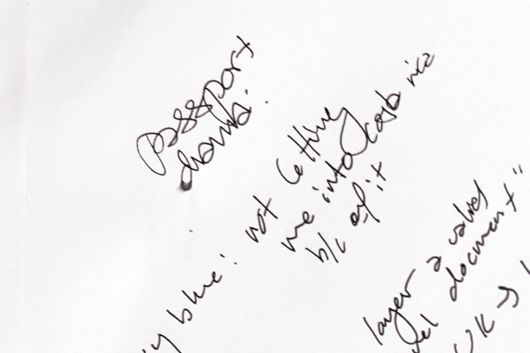
A lot of the material he was developing for his show involved travel experiences – like being held for 12 hours in a depressing room at Heathrow airport due to a visa problem, something that actually happened to him. At one point during the tour, he even thought about building the entire show around the theme of passports, even designing a set that looked like a giant one. However, the show was fundamentally about color, and these two ideas felt like they were competing. As Torres put it, it felt like layering metaphors on top of each other, something he often did. He realized that streamlining his ideas was just as crucial as coming up with them in the first place.
The Navy-Blue Problem
Initially, his idea was simple: a show where each color got equal attention. However, he kept getting drawn back to navy blue, as you can see from his notes. He couldn’t seem to let it go.
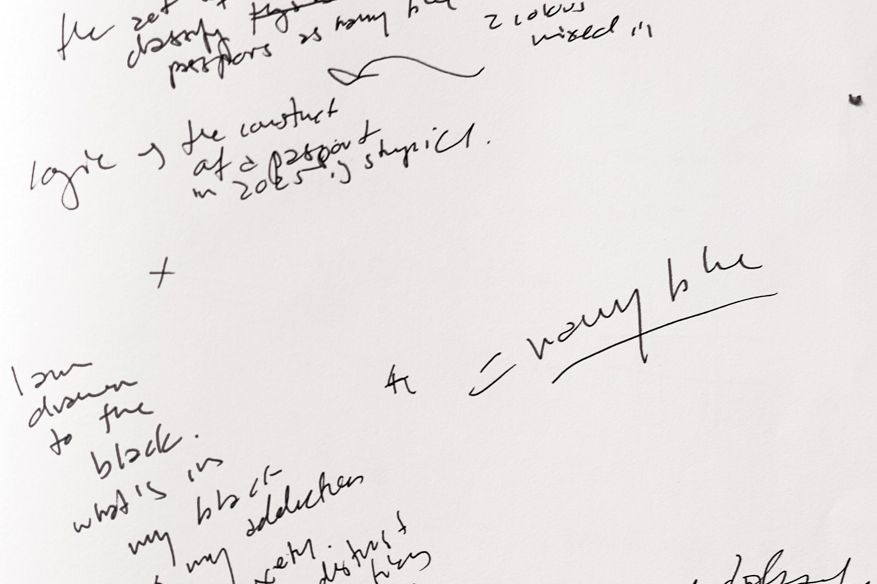
Torres realized he was really fixated on the color navy blue as the show developed. He found himself constantly comparing everything to it. A recurring theme in his work is exploring how we try to navigate and live within systems we didn’t create, and how we’re often led to believe these systems are natural or logical, even when they aren’t. He saw this idea reflected in the show, simply thinking, ‘That’s very navy blue,’ meaning there was a hidden logic beneath the surface.
I realized the work was heavily focused on navy blue, and I needed to balance it out with more variety. I started actively brainstorming other colors, but kept returning to navy. That made me wonder why I was so drawn to it, and exploring that question ultimately led to the bigger ideas behind the whole show.
The show unexpectedly started to develop a clear style and a subtle political message. It featured a contrast between navy blue and other colors, and presented order itself as the opposing force.
An Off Broadway Show
After performing Color Theories in Melbourne, he started to envision a fully realized stage show – something he could bring to a traditional New York theater with proper production and a clear narrative. While the performance was becoming less chaotic, it still lacked the structure he felt it needed to succeed in a new venue. He realized after Melbourne that the show needed to be more complete. The biggest challenge he faced was that it needed a definite ending. He began experimenting with storylines and conclusions, wanting to give audiences a compelling reason to have seen the show, beyond just enjoying a series of interesting ideas. He developed some initial ideas while in Australia, and then decided to try a run of the show in New York – something he hadn’t done before.
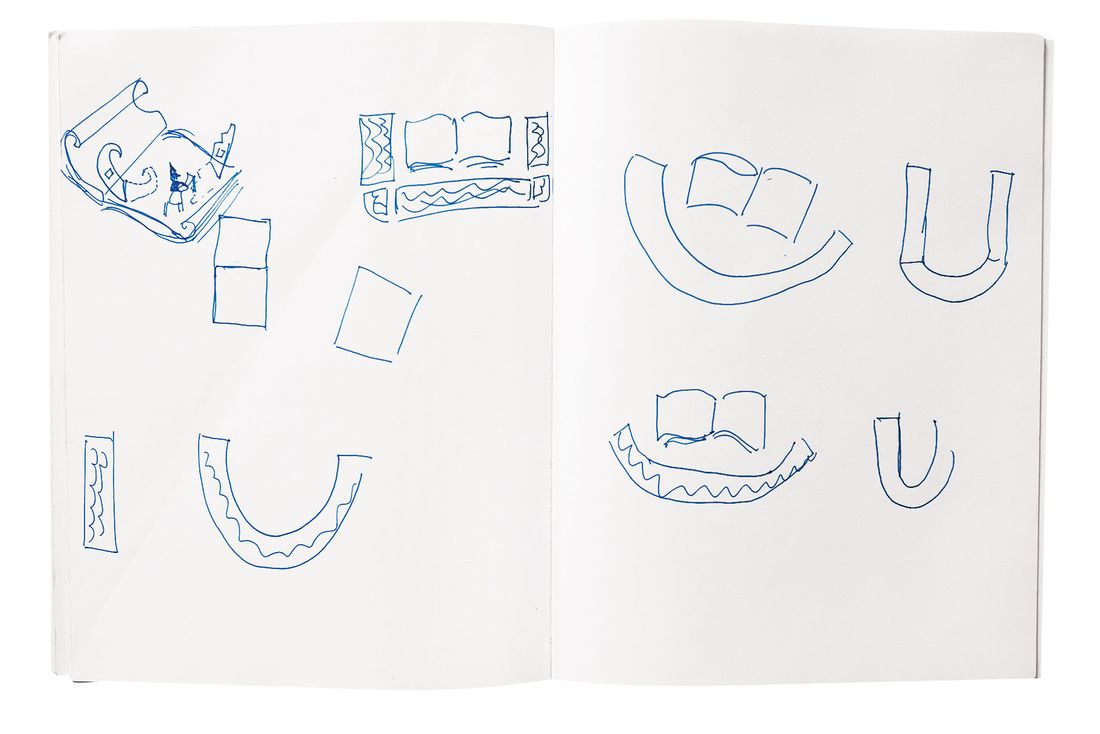
He was headed to New York and started envisioning the show. Initially, he considered a dreamlike set design, inspired by an image he’d come across in a book.
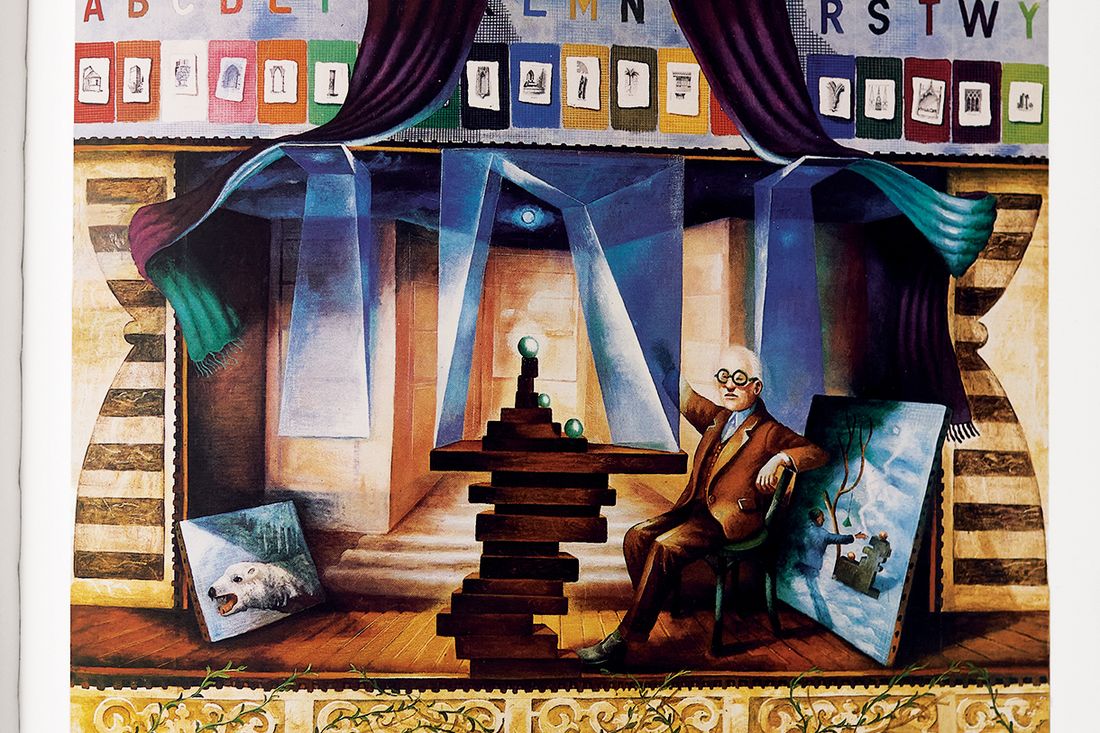
My initial attempts didn’t pan out. Then, while sketching set ideas, it suddenly hit me – the notebook itself was the key! I sent a strange picture of it to the production designer, and he was understandably confused. I explained that the set wasn’t inspired by the notebook, but that the set was the notebook.
As I said before, the notebook can be used in many ways. It transformed into a large, interactive book with pages he could flip through.
He pictured the stage crew members visible to the audience, playfully imagining one of them as a character he’d named ‘Spilled Wine’ and another as a simple pencil sharpener – a funny contrast to their roles behind the scenes.
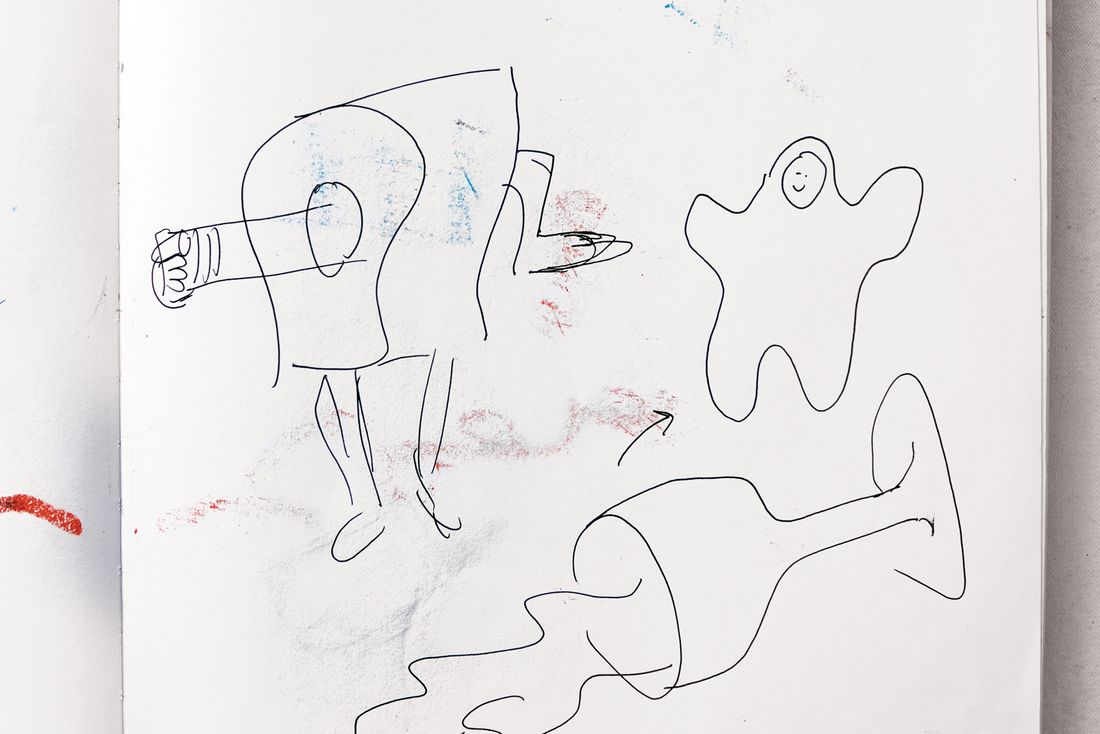
He then cleverly added a robot character named Bibo, essentially giving him a partner to interact with on stage. Torres is known for reusing materials – he doesn’t throw anything away. He originally featured Bibo in a previous show called Fantasmas. This led him to consider, “What are the limitations of putting on this particular show?”
We needed someone to keep track of time, so we brought Bibo back for that role. It felt right because giving him a simple, repetitive job is amusing. I especially like the contrast of a small, cute character constantly reminding everyone about the time. It’s funny because it’s a bit annoying, but it also reflects the practical side of performing – shows can’t last forever, and people need to go home eventually.
He added that he really loved clocks, considering them a core influence on his art – a nod to Surrealism and the famous melting clocks of Dali. He also mentioned Kafka, explaining that Kafka’s work captured the way time can feel both orderly and completely illogical.
Throughout the show, Bibo frequently interrupts Julio and steers the conversation in different directions. This actually simplifies the show’s flow, removing the need for many scene transitions. However, seeing everything from Bibo’s perspective also led to the difficult ending he had been worried about – the show’s conclusion.
The Ending
It really shouldn’t have surprised anyone that Torres directed the show himself – he’s incredibly talented! But this was new territory for him, as he’d never directed a play before. Luckily, his producer suggested he work with a dramaturg, which is basically a script doctor. I remember telling them right away that getting the ending right was the most important thing to me.
It turned out the dramaturg was a lot like a therapist. They had a long conversation, almost like a therapy session, where Julio opened up. Through these talks, a realization began to dawn – a sort of ‘Oh no…’ moment.
The dramaturg pointed out that the act of classifying is itself navy blue.
It might seem strange coming from a wacky comedy about colors, but this realization was genuinely profound for him. It really struck a chord.
Torres explained it was a difficult truth to accept, one that bothered you even after you first heard it. The surprising part was that Julio, who always stood against authority, also had a strong, dependable side – a ‘navy blue’ quality, if you will.
So with that cathartic moment, Torres found his ending. As the show concludes, Bibo confronts him:
Julio, you have unconscious prejudices. You criticize Pixar because you’re afraid of becoming overly sentimental and mainstream. And you didn’t respond to my party invitation – you said the color scheme was controlling, but I just wanted to offer you some vegan snacks. I get why you dislike rigid structures, but no one is truly unbiased. Our experiences always shape how we categorize things. We tend to oversimplify when we’re upset or frightened, because it feels comforting to frame our feelings as logical and obvious.
Okay, so watching Julio on screen… it’s fascinating. He’s really leaning into the whole ‘Housewife’ persona, analyzing everything – even the colors! He’s talking about how, when people are stressed or scared, they gravitate towards darker shades like navy. But beyond the surface level, it feels like he’s admitting some personal struggles. He’s apologizing for putting others on the spot, explaining it was a reaction to him feeling trapped. Honestly, the whole segment just comes across as… constricted. Like everyone’s movements, and even the conversation, are happening within very tight boundaries.
Bibo then revealed he’d written an ending for the show, and that brief moment really brought everything together. It highlighted something important: for an artist, having a sense of order is just as vital as being imaginative. And it struck me that the color navy blue feels very mature and sophisticated.
Older
At 39, Torres is shifting his focus away from performing on stage. He’s interested in exploring writing and directing plays, rather than being in them, feeling he needs to move beyond being the central figure in his work. He describes himself as not being a particularly versatile performer. This summer, he’s debuting a non-traditional opera – one without singing – at Little Island. He’s also been busy with several other artistic projects, including designing furniture, writing a more experimental film, and creating a video installation. These projects represent a mature and artistic direction for his work.
We shut our notebooks, and I suddenly felt a wave of sadness. I couldn’t help but wonder if this meant he was leaving behind the quirky, lovable persona so many of us adored. Was he growing up, leaving that playful side behind? Honestly, I wasn’t ready to say goodbye; it felt like losing someone special.
“I’m not sure,” he said with a comforting tone. “I understand your point, but—” He gave a mischievous smile. “I actually think it’s funnier—and better—to see an older man tackling Color Theories. I’m really excited about it.”
The movie “is about our inability to see each other. It plays with the idea that creating a bond is [just] when our auras overlap.”
The well is a reference to one of his most famous and funniest SNL sketches, “Wells for Boys,” a fake commercial featuring a sensitive boy staring meaningfully into his new toy well.
“It was always the sense of a dangerous and violent place,” said Torres. “But for me, what was most consequential were [the dominoes from the war]. My mother ran her own clothing store. It was very popular. We had a little apartment on top of it, and I loved living there. But then the economy took a turn and you really felt an incoming cascade of American companies. Remember Payless Shoes? Those Payless Shoes became a villain in the household because my mother also designed shoes. My mom had to close her store, and suddenly in my home money became a huge, huge stressor. It was like the better days were behind us.” Still, for all of that, the U.S. (“Not the U.S., New York,” he said) was where he was determined to go. “El Salvador’s always had a love-hate relationship with America. It’s like the U.S. is this abusive partner that is wooing you and then you try to get close but it pushes you away.”
All quotes from the show itself are from the Off Broadway version. For the HBO version, some of the language shifted, but not all that much.
The joke goes, “Ellen, my peer Ellen … she presents yellow, but now we know she’s actually … red.” It more or less opens the show. Julio tried it at the end too, more trial and error, and the notebooks show bits where he tries to draw the joke out in various little bitchy ways. “Oh God,” Julio said to me. “I’ve never met this woman. I’m sure she’s … I’m so sorry. I’m so, so sorry.”
For what it’s worth, almost every artist I talked to for this series and the book that spawned it thought they had OCD.
It was a big moment for him. “Those lightbulb moments that you have as a person are very helpful to what you’re making,” said Torres. “I’m saying how much I hate feeling like men walking around in suits; I’m just making assumptions about people I’ve never met. And I think the willingness to confront is where exciting things can happen.” Which, if you talk to enough of these guys, whether they’re writing 600-page novels or little dopey jokes, is what all artists will eventually tell you.
Read More
- Solo Leveling’s New Manhwa Chapter Revives a Forgotten LGBTQ Story After 2 Years
- All Itzaland Animal Locations in Infinity Nikki
- The Boys Season 5 Spoilers: Every Major Character Death If the Show Follows the Comics
- Gold Rate Forecast
- How to Get to the Undercoast in Esoteric Ebb
- Cthulhu: The Cosmic Abyss Chapter 3 Ritual Puzzle Guide
- Woman fined $2k over viral googly eyes graffiti on $100k statue
- Smarter, Faster Networks: Optimizing Early-Exit Architectures for Edge AI
- Zerowake GATES : BL RPG Tier List (November 2025)
- CBR’s Official Spring 2026 Anime Series Power Ranking (Week 1)
2026-04-17 15:01