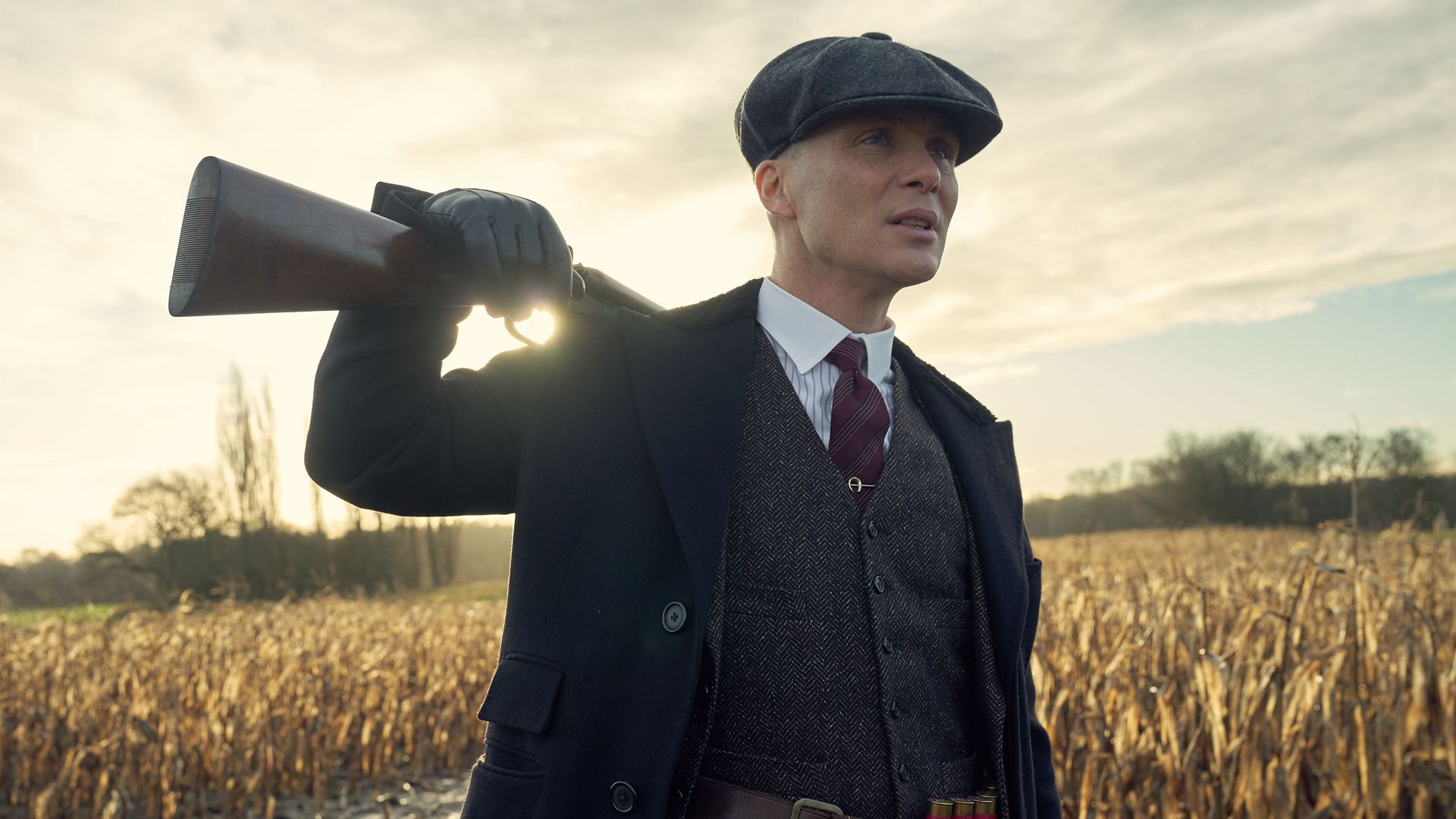
The story of Tommy Shelby and the Peaky Blinders concluded with the release of Peaky Blinders: The Immortal Man on Netflix on March 20th. Picking up after the events of Season 6, where Tommy Shelby stepped away from leading the Birmingham gang, the film shows Duke, Tommy’s son, now in charge. Ada immediately warns Tommy that Duke is running the Peaky Blinders with old-fashioned methods and asks him to intervene.
Although many hoped Tommy would regain his former strength – and he does lead the Peaky Blinders again for a while – no one really expected him to finally achieve what he’d longed for: genuine freedom. His connection with his son was reminiscent of Michael Corleone in The Godfather, but the two men ultimately left very different marks on the world, particularly as fathers.
Tommy Shelby Redefined His Legacy In Peaky Blinders: The Immortal Man
Michael Corleone from The Godfather and Tommy Shelby share many similarities – both lead powerful criminal organizations facing challenges from within and outside. Michael begins the story as a relatively innocent man aware of his father’s, Vito’s, criminal life but wanting to stay out of it. However, after an attempt on Vito’s life, Michael steps up to protect the family. When his brother Sonny is also killed, Michael ultimately takes full control of the Corleone crime empire.
Unlike Michael Corleone, Tommy Shelby started the show already in charge of the Peaky Blinders. Over the next six seasons, however, he began to feel remorse as he lost family members. A key moment was the revelation that Tommy had accidentally killed his brother Arthur in a drunken fight – a realization he described as deeply shocking. This echoes the story of Michael Corleone, who was forced to kill his brother Fredo after Fredo’s betrayal.
Despite their similarities, Michael and Tommy Shelby ultimately made very different choices. Michael’s relentless ambition isolated him, while Tommy chose to distance himself from power, eventually returning to protect his son. Michael’s lack of self-control drove everyone away – including his wife, Kay, and children Anthony and Mary – and tragically culminated in Mary’s death in The Godfather Coda: The Death of Michael Corleone.
Vito established his criminal organization by fiercely supporting and safeguarding his family. That’s why Peaky Blinders: The Immortal Man felt like a fresh take on the familiar gangster story – and it was a welcome one. Even facing immense loss, and even if Tommy Shelby had harmed his brother Arthur, his last acts demonstrated he broke the long-standing pattern of violence within his Romani family, a cycle that had continued for generations.
Tommy Shelby Returned to Save Duke In Peaky Blinders: The Immortal Man
Duke, much like a younger Tommy Shelby, was aggressively leading the Peaky Blinders. However, Tommy realized this reckless approach threatened the family’s future and his son’s well-being. Duke was not only raiding dangerous, damaged munitions factories, but also secretly working with a Nazi spy, John Beckett, to flood the UK with fake money and destabilize the country’s economy.
Duke’s agreement was a betrayal of his country and, even worse, aided a dangerous fascist movement – something Tommy Shelby had strongly opposed during his time in Peaky Blinders. Still grieving for his daughter Ruby and Arthur’s death, Tommy is driven to find Duke when Kaulo Chiriklo appears, hoping to guide him toward a better course.
Just as Duke is about to reach his son, he becomes involved in a terrible situation: he promises to kill Ada, who is collecting evidence against him, but can’t go through with it. Then, Beckett shoots Ada instead. This solidifies Tommy’s determination to help Duke, both to save him from his own mistakes and to prevent him from losing his compassion.
It’s clear Tommy is acting with the understanding that he’s facing his own death. This is shown by his confession to Kaulo about the bullet meant for him, and the appearance of a new Rom Baro after his conversation with Duke. Knowing his fate, Tommy initially tries to kill Beckett, and when that fails, he proceeds with two other plans.
The protagonist eliminates Beckett’s hired soldiers using explosive-laden barges, then destroys the fake money. Knowing Beckett will be enraged by this betrayal, he rescues his son, but ultimately longs for a peace that can only come with death. Duke manages to save his father from a speeding car, but Tommy manipulates him into shooting him with a special bullet, fulfilling a prophecy made by Kaulo.
Peaky Blinders: The Immortal Man Gave Audiences an Evolved Gangster Story
Both stories conclude sadly, but there’s a key distinction. Michael Corleone’s life spiraled into complete despair, starting when he withdrew to his remote lakeside home. He distanced himself from those who cared about him, and as he grew older, he became lonely, felt unappreciated, suffered greatly, and was ultimately devastated by his daughter’s death.
Like Michael, Tommy Shelby was driven by a desire for power. However, the creator of Peaky Blinders, Steven Knight, presents a story focused on finding redemption rather than simply causing destruction. While Tommy ultimately died, his death had a purpose. He suffered immense loss – Polly, Ada, Michael, Arthur, Finn, Grace, Ruby, and many others – but he succeeded in saving Duke from a life of crime.
Tommy’s last actions weren’t about regaining control for himself, even though he briefly took the leadership back from Duke. He wanted to steer Duke back on the right path, believing Duke was the better future leader of the Peaky Blinders. Unlike Michael Corleone, who was consumed by ruthlessness and a desire for power, Tommy managed to prioritize the future of the organization, even if it meant sacrificing himself in the end.
As a huge fan of gangster movies, I have to say this film, the final chapter in the saga, really stands out. It takes a familiar story – the rise and fall of a criminal – but Knight and Murphy do something special. They make Tommy Shelby, despite everything he does, incredibly human. You genuinely feel he cares more about his family than power or wealth, and that’s powerfully shown in the last lines of his memoir: “Once, I nearly got fing everything. But nearly doesn’t count. But throughout it all, I had me family.”
Found an error? Send it so it can be corrected.
Read More
- Gold Rate Forecast
- What is Omoggle? The AI face-rating platform taking over Twitch
- Man pulls car with his manhood while on fire to raise awareness for prostate cancer
- Elden Ring Is Back With A New Free Game, Thanks To The Fans
- Audible opens first ‘bookless bookstore’ in New York
- How To Grow Money Trees In Animal Crossing: New Horizons
- 10 Adorable Quotes from Diana in Pragmata
- Netflix’s Remake Of R-Rated Denzel Washington Classic Carries On A Rotten Tomatoes Trend
- Wartales Curse of Rigel DLC Guide – Best Tips, POIs & More
- Tom Hardy’s Best Performance is in Warrior
2026-03-24 13:09