In early March, Sam Heughan and Caitriona Balfe, stars of Outlander, were met with enthusiastic screams from fans outside Lincoln Center. Fans, gathered in a designated area, waved posters and shared how far they’d traveled to see them. Heughan and Balfe cheerfully signed autographs and posed for countless selfies. The crowd unexpectedly burst into a sing-along of the show’s theme song, which quickly spread across the event. The actors playfully pretended to conduct the singing, even signaling for the fans to pause after the first chorus – but the excited screams continued undeterred.
As Outlander finishes its eighth and final season, it’s clear the show has always had a dedicated and enthusiastic fanbase. While it hasn’t received the same critical acclaim or sparked the same cultural conversations as shows like Succession or The Bear – it’s never been nominated for a major Emmy, for example – Outlander has consistently generated passionate reactions from its viewers, including lively concerts and devoted fan gatherings. Like those popular series, Outlander blends multiple genres, but it’s more akin to a show like Heated Rivalry than Succession: at its core, it’s always been a story about love and intimacy. As Sam Heughan points out, “We were doing this before Bridgerton came along – for twelve years, in fact.”
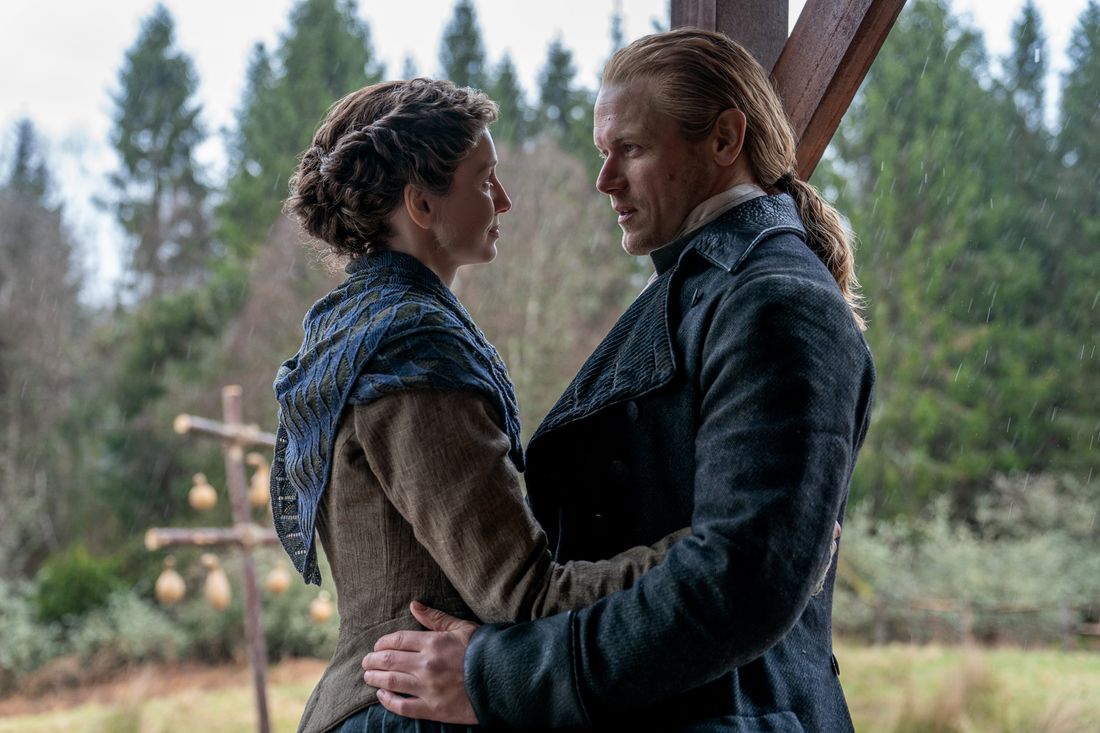
Sam Heughan stars as Jamie Fraser, a passionate and sometimes impulsive Highlander in 18th-century Scotland. The story begins with him navigating the dangerous world of Scottish clans, but he’s best known as the devoted and protective partner to Claire Randall, played by Caitriona Balfe. Claire is a nurse from the 20th century who is unexpectedly transported back in time by a mysterious stone circle and finds herself stuck in the past. Based on Diana Gabaldon’s novels, the series blends multiple genres. At times, it’s a very realistic historical drama, filled with authentic characters, events, and meticulous details about everyday life in the 1700s – from making textiles to the harsh realities of prisons. Other times, it embraces fantasy with elements like time travel, witchcraft, and magical objects, especially when Jamie and Claire face difficult challenges.
When Outlander concludes in May, it will have aired over 100 episodes – a rare achievement for a TV drama in the last ten years. However, it hasn’t been a cultural phenomenon or a groundbreaking show that others try to copy. Instead, Outlander exists in a space between two types of TV genres. It emerged during the height of violent, high-budget historical dramas like Game of Thrones and Spartacus, sharing their complex plots, battles, and often grim outlook on humanity. Like those shows, Outlander didn’t shy away from intense brutality, and frequently depicted violence, including repeated instances of rape and suffering. In fact, both main characters, Claire and Jamie, are either raped or threatened with rape in the first season, and their daughter Brianna experiences a similar attack soon after arriving in the 18th century.
Ultimately, Outlander is, at its core, a romance story. For every difficult scene involving violence or fear, there’s another where Jamie and Claire reaffirm their deep love, intimacy, and passionate connection – often in idyllic Scottish settings. The show uses hardship and separation as a way to create drama and bring the couple back together, but it always reinforces the idea that they are destined to be with each other. Unlike many TV shows that build tension around whether a couple will end up together, Outlander follows the formula of romance novels: Jamie and Claire’s connection is never truly in question, even when they’re apart.
From the beginning, Outlander has been notable for portraying sex as enjoyable, a bold move for television. The very first episode features an intimate scene between Claire and her husband amidst Scottish castle ruins. However, actors Sam Heughan notes that, since intimacy coordinators didn’t exist when the show started in 2014, filming these scenes was often awkward and they had to figure things out as they went. While the show now utilizes an intimacy coordinator, the lack of one early on affected both the sensual and violent scenes equally. Caitríona Balfe explains that they always aimed for sensitivity, hoping the scenes would be viewed as empowering rather than upsetting to viewers.
Even with its flaws, the success of Outlander and its dedicated fanbase come from its unique blend of realistic drama and grand, romantic storytelling. Similar to the recent surge in popularity of epic fantasy romance novels inspired by Diana Gabaldon’s books, viewers crave a large-scale love story with high stakes, danger, and a touch of magic. When Outlander perfectly balances these elements, it’s incredibly powerful. A prime example is the season one finale, where Jamie sends Claire back in time before the Battle of Culloden to protect her and their baby – those scenes are among the most memorable and emotionally impactful ever shown on television.
Often, the two main storylines in Outlander have actually worked against each other. It hasn’t appealed to fans of dark, serious dramas because it’s too focused on emotion, comfort, and themes of healing and fairness, rather than just grimness and revenge. At the same time, its darker elements and complex themes prevent it from fully attracting mainstream romance viewers. Scenes dealing with sexual trauma turn off those seeking lighthearted entertainment, while moments of intimacy and anachronistic elements – like unexpectedly modern ideas or objects appearing in the past – make it feel too silly or overly sentimental for fans of shows like Game of Thrones.
When Outlander first started, it aimed for the raw, realistic style popular in shows during the 2010s. But as it concludes, it feels more like a forerunner to shows such as Bridgerton and Heated Rivalry – series that fully embrace romance without the need for the violence and dramatic weight that defined Outlander. Caitríona Balfe explains that the show was part of a shift in television, moving from the fantasy of Game of Thrones toward stories centered on relationships and romance. Outlander occupies a unique space – it doesn’t quite fit into any one category. Just like its time-traveling characters, the show will end with powerful emotions, built on years of love and hardship, and will be remembered as a link between older and newer styles of television, never fully belonging to either.
Read More
- Off Campus Season 1 Soundtrack Guide
- Euphoria Season 3’s New R-Rated Sydney Sweeney Scene Proves The Show Is Trolling Us
- Gold Rate Forecast
- DoorDash responds after customer uses AI to make food look bad and get a refund
- Brent Oil Forecast
- What is Omoggle? The AI face-rating platform taking over Twitch
- 8 Funniest Billy Butcher Quotes From The Boys
- MNT PREDICTION. MNT cryptocurrency
- Crypto Chaos: Are Your Bitcoins and Ethereums Ready for a Wild Ride? 🚀😱
- 🇧🇷 Blockchain & AI: Brazil’s SUS Gets a Tech Makeover! 🚀
2026-03-17 16:55