
With so many movies coming out every year, it’s hard for one to truly grab attention. A striking poster and a memorable tagline are now more important than ever, especially with how quickly things spread online.
Advertising slogans seem to have started in England around the 1850s, and they’ve been used in movie marketing for over a hundred years. A great example is the 1920 German horror film The Cabinet of Dr. Caligari, which famously used the tagline “You must become Caligari!”—it’s still fun to shout that with a German accent! Nowadays, almost every movie poster includes a catchy tagline, it’s become essential. Here are 25 of the best taglines from the last decade of filmmaking.
Just to be clear, the fact that a movie is on this list doesn’t mean I think it’s a good or bad film. Some of these movies are fantastic and also have great taglines. Others aren’t very memorable – honestly, the only thing I recall about a few of them is their tagline.
Some of the selections, even a few of my favorites, are for truly terrible movies. One film actually caused a nasty legal fight that completely contradicts its own message! Still, it has a catchy tagline, and that’s just the way things go sometimes.
Here are my picks for the best taglines of the last 10 years…
The 25 Best Movie Taglines of the Last 10 Years (2016-2025)

25. Ford v Ferrari (2019)

24. Fifty Shades of Black (2016)

23. Joker (2019)

22. The Meg (2018)

21. The Founder (2016)

20. Moonfall (2022)

19. Parasite (2019)

18. It Ends With Us (2024)

17. Expend4bles (2023)

16. Bad Santa 2 (2016)

15. Finding Dory (2016)

14. Where’d You Go, Bernadette (2019)

13. Mickey 17 (2025)

12. Clerks III

11. Time Freak (2018)

10. Companion (2025)

9. Get Out (2017)

8. Turning Red (2022)
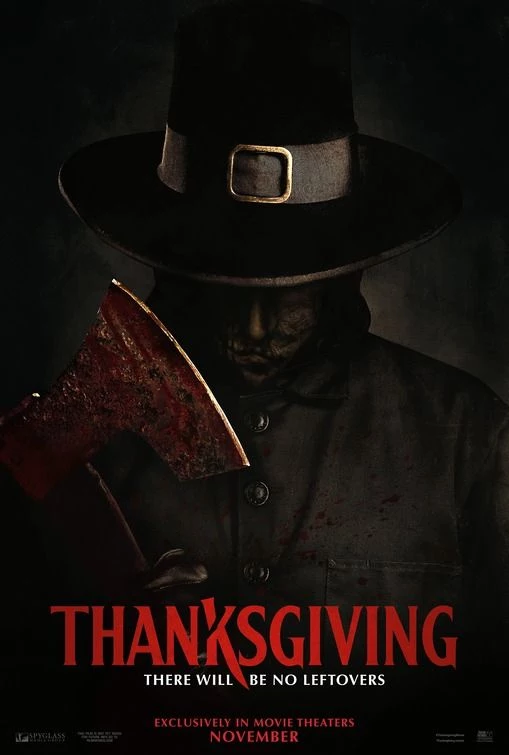
7. Thanksgiving (2023)

6. Teen Titans Go! To the Movies (2018)

5. The Blackening (2022)

4. Fifty Shades Freed (2018)

3. Hatching (2022)

2. Central Intelligence (2016)

1. Ocean’s 8 (2018)
The Worst Oscar Best Picture Winners

15. Marty (1955)
While Marty isn’t a bad film, it doesn’t quite live up to the original television version shown on Philco Television Playhouse. The simple story of two lonely people finding a connection works better as a one-hour TV special than as a 90-minute movie—the added scenes don’t really improve it. Rod Steiger and Nancy Marchand brought more depth and darkness to the characters of Marty and Clara than Ernest Borgnine and Betsy Blair do in this film. It’s certainly the strongest movie on this list, but it feels odd that the TV version, which is better, didn’t receive the Oscar.

14. The Artist (2011)
It’s been a while since anyone’s thought about the film The Artist, hasn’t it? It’s mostly remembered for winning five Oscars, including Best Director and Best Picture – awards it shared with nominees like Moneyball and The Tree of Life. The film isn’t bad – it’s a charming, well-made comedy about the silent film era, and Jean Dujardin is great in it. But ultimately, it doesn’t really say much. Many more deserving and genuinely funny comedies have been overlooked by the Academy over the years, which makes it a little frustrating that this relatively minor film received such high praise.

13. Dances With Wolves (1990)
The 1990 Oscars are remembered for a major upset: Kevin Costner’s Dances With Wolves won Best Picture over Martin Scorsese’s Goodfellas. Dances With Wolves is a Western about a Civil War soldier who connects with and eventually lives among Native Americans. While the story feels cliché now, it was hugely popular with both audiences and critics when it came out, and Costner’s direction was competent. However, whether it was better direction than Scorsese’s work on Goodfellas is debatable.

12. The Greatest Show on Earth (1952)
1952 was a landmark year for cinema around the world. Iconic films released that year included John Ford’s The Quiet Man, Akira Kurosawa’s Ikiru, Vittorio De Sica’s Umberto D., and Orson Welles’ Othello, which premiered at Cannes. Hollywood also delivered classics like the Western High Noon, the melodrama The Bad and the Beautiful, and the musical Singin’ in the Rain. Surprisingly, the film that won the Academy Award for Best Picture was The Greatest Show on Earth.
If you separate The Greatest Show on Earth from the controversy surrounding its Oscar win and view it as a standalone film, it’s a reasonably well-made spectacle. While there’s a plot, the movie primarily showcases the impressive acts of the Ringling Bros. and Barnum & Bailey Circus, taking up a significant portion of its two-and-a-half-hour runtime. In many ways, it’s similar to today’s big summer blockbusters—filled with stars, action, and visually stunning moments, but lacking in deep emotional resonance or intellectual complexity. It’s a solid and impressively large-scale production, dedicated to realistically portraying the circus, but it’s the kind of film that typically doesn’t win Best Picture.

11. My Fair Lady (1964)
Despite beautiful costumes and catchy songs, this movie hasn’t held up well over time. Audrey Hepburn isn’t quite right for her role, and Rex Harrison is deliberately unlikeable – and neither of them can sing! Hepburn’s singing is actually done by another actress, and Harrison basically talks his songs into an early microphone – a new technology that unfortunately highlights how unpleasant his voice is. All of this supports a supposed love story where a man repeatedly criticizes a woman for her accent until she finally leaves him, and then he feels bad. It’s a strange idea of romance.

10. Green Book (2018)
Peter Farrelly’s Green Book simplified the true story of pianist Don Shirley (Mahershala Ali) and his driver Tony Lip (Viggo Mortensen) into a feel-good, but overly simplistic, tale about race relations in America. The Shirley family protested certain parts of the film, stating they weren’t involved in its creation. (The screenplay was co-written by Nick Vallelonga, the real Tony Lip’s son, who drew from interviews with his father.) Ultimately, the movie feels a bit overwhelming and heavy-handed, like trying to eat a whole pizza folded in half.

9. Birdman (2014)
While technically brilliant, Birdman feels emotionally empty. The film follows a former Hollywood star trying to revive his career with a Broadway play, but despite impressive long takes that make it seem like one continuous shot, it lacks genuine depth. Michael Keaton delivers a strong performance, and the cinematography is stunning, but when compared to other great films from that year – like Boyhood, The Grand Budapest Hotel, Selma, and Whiplash – Birdman doesn’t quite measure up as the best movie of the year.

8. Gigi (1958)
Alfred Hitchcock’s Vertigo, now considered one of the greatest films ever made, surprisingly wasn’t even nominated for Best Picture in 1958. The Oscar that year went to Gigi, a visually stunning but ultimately shallow movie set in Belle Époque France. While directed with vibrant glamour by Vincent Minnelli, Gigi’s story is thin – it’s about a privileged man who’s simply bored with his luxurious life, making him a difficult character to root for. Today, Gigi is mostly remembered for its song, “Thank Heaven For Little Girls” – a song that would be unthinkable in a modern Best Picture winner.

7. American Beauty (1999)
Putting aside the controversies surrounding Kevin Spacey, the story of American Beauty remains troubling. Even with a different actor, the film centers on a man going through a midlife crisis who becomes obsessed with his daughter’s friend. He fantasizes about her in a highly sexualized way, and the movie presents these fantasies not as disturbing, but as a path to personal renewal. The film portrays this as Lester regaining his youthfulness by rejecting the constraints of middle age.
Adding to the problematic nature of the film, Lester’s wife is depicted as a cold and materialistic character, and she also has an affair. If American Beauty were released today, it would likely be met with significant criticism and wouldn’t stand a chance of winning Best Picture, especially considering it beat out critically acclaimed films like The Sixth Sense and The Insider in 1999.

6. Out of Africa (1985)
Winning Best Picture at the Academy Awards, this film came out in 1985. It stars Meryl Streep and Robert Redford as characters inspired by the real-life story of Karen Blixen, who Streep portrays. The movie follows Blixen as she leaves Denmark to establish a farm in Nairobi and begins a relationship with a local game hunter (Redford). Though beautiful to look at, the film itself isn’t particularly memorable.

5. Cimarron (1931)
Some films from the 1930s still feel modern, but Cimarron hasn’t aged well. This Western follows a newspaper publisher and the evolution of his Oklahoma home over several decades, beginning in the late 1800s. While audiences at the time likely enjoyed its grand scale and scenery (and were less sensitive to its problematic stereotypes), today’s viewers will find that Cimarron’s themes and execution have been surpassed by more polished and compelling films with better acting, writing, and visuals.

4. Crash (2005)
Oscar-winning films about race often feel overly simplistic and heavy-handed, which explains why Crash won Best Picture in 2004, despite strong competition from films like Good Night, and Good Luck and, notably, Ang Lee’s Brokeback Mountain. The film boasts a well-known cast – including Sandra Bullock, Don Cheadle, and Matt Dillon – lending it an air of prestige that helps during awards season. However, the movie itself – a collection of interconnected stories about racism in Los Angeles, where characters are both victims and perpetrators – is ultimately chaotic and unsatisfying.

3. The Great Ziegfeld (1936)
If you think the Oscars’ love for long, serious biographical films is new, this 85-year-old movie proves it’s been happening for a while. However, it begs the question: why is a film about a dishonest Broadway producer who doesn’t grow or change as a person nearly three hours long? It’s not even filled with witty banter between William Powell and Myrna Loy, though that would be enjoyable. In fact, Loy doesn’t appear for the first two hours! While some of the musical numbers are visually impressive, Powell does a good job making the flawed Ziegfeld somewhat likable, despite him being a liar who takes advantage of others and doesn’t really contribute much creatively—mostly just criticizing costumes and manipulating the press. Seriously though, why does this movie need to be three hours long?

2. Driving Miss Daisy (1989)
Driving Miss Daisy isn’t just a bad Best Picture winner, it’s a surprisingly strange one. While it’s true that Hollywood rarely focuses on topics like aging and employer-employee relationships, that novelty probably wasn’t enough to justify the 1990 Oscar. The film is essentially a character study, but not a very deep one. Despite covering 25 years, it doesn’t convincingly show how the world or its characters change. The aging feels superficial – Dan Aykroyd goes from looking like his 1989 self to wearing a gray wig with no transition. Compared to films like Spike Lee’s Do the Right Thing (which wasn’t even nominated), or even the other Best Picture nominees that year – Born on the Fourth of July, Dead Poets Society, Field of Dreams, and My Left Foot – Driving Miss Daisy simply doesn’t hold up. Any of those other films would have been a better choice, even looking back now.

1. Around the World in 80 Days (1956)
This movie’s take on the classic ‘Around the World in Eighty Days’ story feels surprisingly slow and lacks excitement. The film spends too much time on unnecessary detours – dance numbers, bullfights, and circus acts – which really hold up the pace. David Niven seems bored throughout, and the attempt to connect the adventure to early space travel doesn’t help. It feels like a very long movie, and it’s hard to believe this was chosen as Best Picture in 1956 – it seems like there weren’t any better options available at the time.
Read More
- Off Campus Season 1 Soundtrack Guide
- Euphoria Season 3’s New R-Rated Sydney Sweeney Scene Proves The Show Is Trolling Us
- Gold Rate Forecast
- 5 Horror Shows I Knew Would Be 10/10 Masterpieces After The First 10 Minutes
- The Best Switch RPGs to Play Using Switch 2 Handheld Boost Mode
- What is Omoggle? The AI face-rating platform taking over Twitch
- Why is there no Jujutsu Kaisen this week? Missing Season 3 Episode 8 explained
- Crimson Desert Guide – How to Pay Fines, Bounties & Debt
- Jailbreak codes (April 2026)
- Lord Of The Flies Review: Near-Perfect Adaptation Is A Reminder Of Classic Novel’s Haunting Power
2026-03-13 19:01