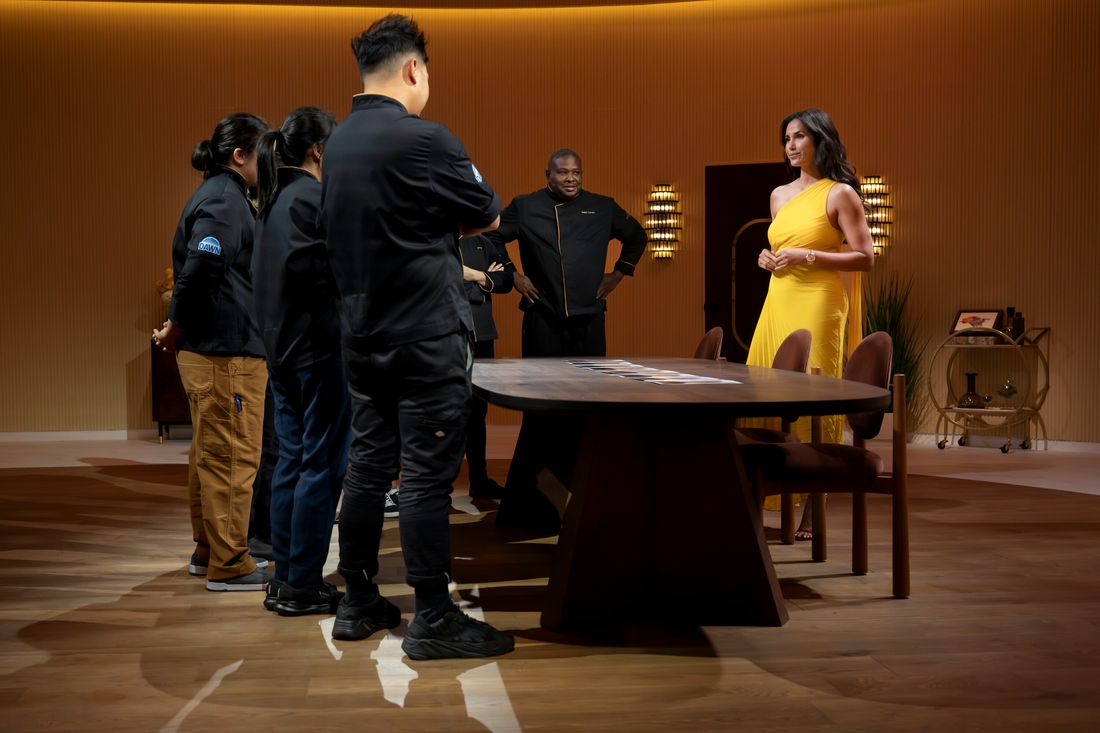
You’re not seeing things! That’s Padma Lakshmi hosting a cooking show, but this isn’t Top Chef. After 19 seasons on Bravo’s Top Chef, Lakshmi left in 2023 to create her own competition. The result, America’s Culinary Cup, which she created, produces, and hosts, premiered on CBS on March 4th. And yes, it feels pretty familiar. Think a gleaming kitchen packed with fancy equipment and product placements, a panel of three judges, and lots of faces food lovers will recognize—including Padma herself, molecular gastronomy expert Wylie Dufresne, meat supplier Pat LaFrieda, and several former Top Chef contestants, like two-time winner Buddha Lo. Honestly, I rolled my eyes a little when he walked in, just like some of the competitors! Come on, Buddha, let someone else have a chance!
With so many cooking competitions on TV, it’s natural to wonder how America’s Culinary Cup stacks up against Top Chef. While it’s not quite the same as one show being a direct copy of another, there’s a lot of similar content available. Top Chef: Carolinas is even airing at the same time! So, is America’s Culinary Cup worth adding to your watchlist, especially when it features chefs using fancy terms and debating small details? Let’s take a closer look.
How similar is America’s Culinary Cup to Top Chef?
While it’s not a carbon copy, America’s Culinary Cup is heavily influenced by Top Chef. Unless a cooking competition goes for a more casual or unusual approach – like some Food Network shows with personalities like Guy Fieri, or the game-show style Wildcard Kitchen – it’s hard to avoid similarities in format. Like Top Chef, this show features highly accomplished chefs – you’ll hear a lot about James Beard awards – competing in fast-paced cooking challenges. Expect to see prominent branding throughout, from the cookware used (Staub and Viking) to the logos on the chefs’ coats (which are black, unlike Top Chef‘s white coats). Though filmed mainly in Toronto and not tied to a specific location like Top Chef, America’s Culinary Cup appears to follow a similar structure of two challenges per episode.
The first episode of America’s Culinary Cup doesn’t immediately explain how the show works. Titled “Spoiled for Stroganoff,” it quickly narrows a group of 16 chefs down to ten through a series of direct competitions. Each chef has 75 minutes to create their best dish, judged on taste, creativity, presentation, and technique, with a possible 60 points total. The eight chefs who perform the worst then compete against each other, while the winners assign them dishes like beef stroganoff or fried chicken. This creates a strategic element, as the winners try to team up and give their opponents the most challenging dishes, ultimately aiming to eliminate the competition in the most effective way.
The show changed things up on March 11th with an episode called “Meat the First Commandment,” introducing “culinary commandments” – essentially weekly themes the chefs need to excel at. This week, the chefs split into pairs and had to butcher a cow, being judged on their technique. Then, they had to choose cuts and prepare them in two different ways for a barbecue serving 100 people – and were judged on that too! It was a complex challenge, with lots of scoring happening onscreen, reminding me of Iron Chef. So far, America’s Culinary Cup seems to focus on two main tasks each episode, often involving direct competition. The idea of “commandments” isn’t entirely clear yet, but there’s still time for the show to develop that concept. Upcoming episodes on March 18th and 25th will focus on vegetables and sauces, respectively.
So the “culinary commandments” idea is the main difference from Top Chef?
What struck me about America’s Culinary Cup is that it doesn’t really lean into location. Unlike many food shows, it’s not about showcasing a specific region or its cuisine. Instead, the focus is squarely on the chefs themselves – their skills, their styles, and how they handle the pressure. They’re given ingredients and a time limit, and then they just cook. One episode, “Spoiled for Stroganoff,” is entirely filmed in a massive production kitchen – seriously, the pantry is enormous! Another, “Meat the First Commandment,” takes place on a farm, but the location feels almost secondary. This approach does make the competition feel a bit removed from the idea of truly authentic cooking. However, it also creates a really pure sense of challenge: just make the best dish you can, right now, or you’re out.
The show really highlights Padma, placing her prominently between judges Dufresne and Michael Cimarusti. They often save her scoring comments for last, emphasizing her importance – a refreshing change from Top Chef, where Tom Colicchio always seemed to have the final say.
Outside “culinary commandments,” what else is the show going to offer that’s singular?
I’m hoping to see more strategic gameplay in America’s Culinary Cup. The show’s marketing emphasizes this aspect, and the challenge where winning chefs paired up with losing chefs – like in “Spoiled for Stroganoff” – was really compelling. The chefs often don’t know each other well, creating a situation where they have to quickly assess the competition based on limited information. It’s fascinating to watch them rely on industry knowledge and even gossip to get ahead. Top Chef has similar elements, particularly when chefs with past working relationships compete. Because America’s Culinary Cup quickly eliminates chefs through direct cook-offs, every little bit of information becomes crucial. The series seems to actively encourage this kind of maneuvering, and as Buddha put it, it’s “like chef Survivor.” I’m excited to see how the strategic side of the competition unfolds!
Speaking of Buddha … how much Buddha is there?
Let’s be honest, the show is really focusing on Buddha. He’s the first contestant they’ve interviewed directly, and they’re making him seem like a strong competitor right from the start. While Padma doesn’t seem to favor him personally, the show is treating him like a celebrity – someone everyone already knows and who really understands how the competition works, even letting him explain things to the audience. If you’re already annoyed by Buddha – his attitude, his boasting, and all the complicated dishes he makes – this season might be tough to watch.
But there’s another familiar face: Beverly Kim, a contestant from Top Chef. Many remember how unfairly she was treated on Top Chef: Texas, but she’s since achieved incredible success, winning a James Beard Award and earning a Michelin star. Now, on America’s Culinary Cup, she’s full of energy, quickly moving around the kitchen and impressing everyone with her Korean-inspired dishes. There are plenty of other contestants to support too, regardless of whether you followed Top Chef. Diana Dávila quickly stood out by adding dried grasshoppers to one of her creations, and Keith Corbin is inspiring – he spent time in prison and now runs a restaurant that provides second chances to formerly incarcerated individuals. He’s so likeable that he even makes the show’s sponsored segments sound natural, which is a remarkable achievement for America’s Culinary Cup so far.
Read More
- Gold Rate Forecast
- The Best Switch RPGs to Play Using Switch 2 Handheld Boost Mode
- Avengers: Doomsday Spoilers & Leaks Addressed By Director Joe Russo: “It’s Over-Policed”
- INJ/USD
- STX/USD
- 5 Horror Shows I Knew Would Be 10/10 Masterpieces After The First 10 Minutes
- What is Omoggle? The AI face-rating platform taking over Twitch
- Lord Of The Flies Review: Near-Perfect Adaptation Is A Reminder Of Classic Novel’s Haunting Power
- Man pulls car with his manhood while on fire to raise awareness for prostate cancer
- Netflix’s Little House On The Prairie Reboot: Release Date, Cast & Everything We Know
2026-03-12 23:55