
Colin Firth usually plays the epitome of British charm – handsome, polite, utterly proper. That’s why the new trailer for Steven Spielberg’s Disclosure Day genuinely unsettled me. He’s not a performer I’d expect to be genuinely creepy, and that’s precisely what makes his performance so disturbing. It’s a fascinating, and frankly unnerving, shift for him.
Colin Firth plays against expectations as a creepy, imposing character – complete with a beard! It’s hinted he has psychic abilities, possibly being able to read minds and even control people’s actions. Adding to the effect, he has intensely blue, unsettling eyes, making him a truly frightening presence.
It’s not yet known what role he’ll play in Disclosure Day, but he’s definitely an antagonist to the main characters, played by Emily Blunt and Josh O’Connor. They uncover a huge government cover-up that involves aliens, train crashes, and even the evening news weather report. Typical Spielberg, always pushing boundaries!
Check out the new Disclosure Day trailer below…
With his new film, Disclosure Day, Steven Spielberg revisits a theme he’s explored throughout his career: the possibility of finding alien life and how people would respond. He’s touched on this idea in several movies, including Close Encounters of the Third Kind, E.T., War of the Worlds, and even Indiana Jones and the Kingdom of the Crystal Skull. Spielberg not only directed Disclosure Day, but he also came up with the original story. David Koepp, who wrote Jurassic Park, The Lost World, War of the Worlds, and Kingdom of the Crystal Skull, then turned Spielberg’s idea into a screenplay.
They’ve released a new poster, and I have to say, it’s brilliant! If you really look at the main image – the eye with the light bending – you can actually see the shape of a classic flying saucer hidden within it. It’s super subtle, but I think it’s a really clever detail.
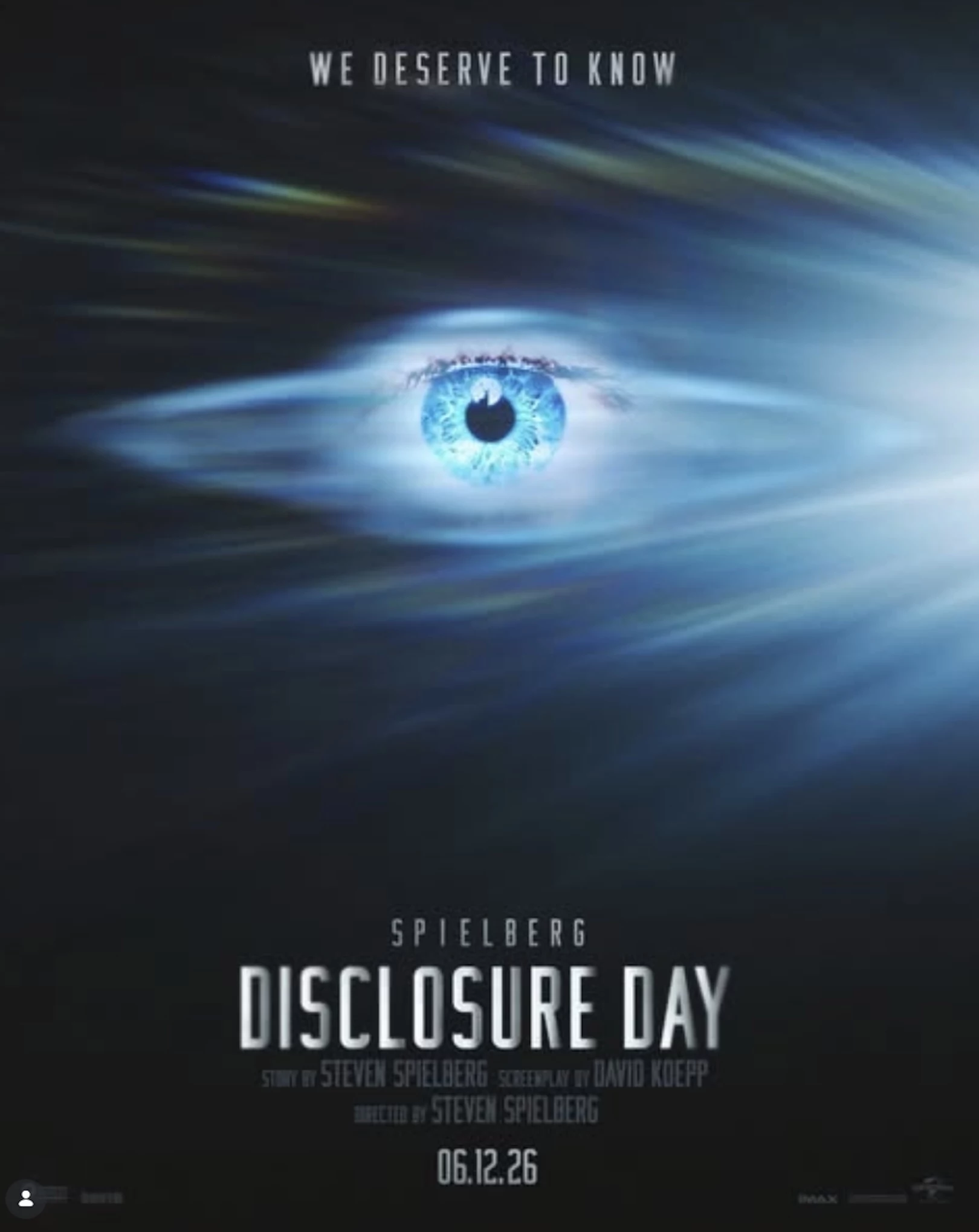
Here is the film’s official synopsis:
As a total film buff, I keep thinking about this: if we actually discovered we weren’t alone in the universe, and someone showed us undeniable proof, would it be terrifying? This summer feels different, like the truth is about to be revealed to everyone – all seven billion of us. It feels like we’re on the verge of what they’re calling ‘Disclosure Day’, and honestly, it’s got me on the edge of my seat.
Disclosure Day is scheduled to open in theaters on June 12.
The Worst Oscar Best Picture Winners

15. Marty (1955)
While Marty isn’t a bad film, it doesn’t quite live up to the original television broadcast on Philco Television Playhouse. The simple story of two lonely people finding a connection works better as a one-hour TV special than it does stretched to 90 minutes – the added scenes in this film version don’t really improve it. Rod Steiger and Nancy Marchand portrayed the sadness of Marty and Clara with more depth and grit than Ernest Borgnine and Betsy Blair do here. It’s definitely the strongest film on this list, but it feels odd that the movie version, which is less impactful than the original TV play, received an Oscar.

14. The Artist (2011)
It’s been a while since anyone’s thought about the film The Artist, hasn’t it? It’s mostly remembered for its surprising win of five Academy Awards, including Best Director and Best Picture (competing against films like Moneyball and The Tree of Life). It’s not a bad movie – it cleverly portrays early Hollywood with a charming performance by Jean Dujardin as a silent film star struggling with the arrival of sound. But ultimately, it doesn’t really matter. Many more deserving and genuinely funny comedies have been ignored by the Academy over the years. It’s almost frustrating that this rather unremarkable film was the one they chose to honor with their highest award.

13. Dances With Wolves (1990)
The 1990 Oscars are remembered for a major upset: Kevin Costner’s Dances With Wolves won Best Picture over Martin Scorsese’s Goodfellas. Dances With Wolves is a visually impressive Western about a Union soldier during the Civil War who develops a connection with a Native American tribe and ultimately lives among them. While the story feels somewhat cliché today, it was hugely popular with both audiences and critics when it was released, and Costner’s direction was competent. Whether it was better direction than Scorsese’s is debatable.

12. The Greatest Show on Earth (1952)
1952 was a landmark year for cinema around the world. John Ford directed The Quiet Man, Akira Kurosawa made Ikiru, Vittorio De Sica released Umberto D., and Orson Welles debuted his adaptation of Othello at the Cannes Film Festival. Hollywood delivered classics like the Western High Noon, the melodrama The Bad and the Beautiful, and the musical Singin’ in the Rain. Surprisingly, the Academy Award for Best Picture that year went to a film about the circus: The Greatest Show on Earth.
If you separate The Greatest Show on Earth from the controversy surrounding its Oscar win and consider it on its own, it’s a well-made spectacle. While there is a story, the film largely showcases the impressive acts of the Ringling Bros. and Barnum & Bailey Circus, filling its 150-minute runtime with action and visuals. In many ways, it’s similar to today’s big summer blockbusters: full of stars, exciting stunts, and stunning imagery, but lacking deep emotional resonance or intellectual substance. It’s a solid and impressively large-scale production, but the kind of film that typically doesn’t win—or even get nominated for—the Best Picture Oscar.

11. My Fair Lady (1964)
Okay, let’s be honest: this supposed classic hasn’t held up. While the costumes are gorgeous and the songs are recognizable, that’s about where the praise stops. Audrey Hepburn just feels wrong for the role, and Rex Harrison… well, he’s deliberately irritating, but still irritating. And neither of them can actually sing! They cleverly (or not so cleverly) dubbed Hepburn’s vocals, and Harrison basically talks his songs into a vintage microphone – which only serves to amplify a truly unpleasant voice. And the romance? It’s built on a guy constantly putting down a woman for how she speaks until she finally walks away, and then he decides he likes her. Seriously? Not my idea of a love story.

10. Green Book (2018)
Peter Farrelly’s Green Book simplifies the true story of pianist Don Shirley (Mahershala Ali) and his driver Tony Lip (Viggo Mortensen) into a feel-good, but somewhat simplistic, story about race in America. The Shirley family protested parts of the film, saying they weren’t involved in making it. (The screenplay was co-written by Nick Vallelonga, the real Tony Lip’s son, who drew from interviews with his father.) Ultimately, the movie feels overly sentimental and difficult to fully accept, like trying to eat a whole pizza folded in half – it’s heavy and a bit much.

9. Birdman (2014)
While technically brilliant, Birdman feels emotionally empty. The film follows a former Hollywood star trying to revive his career on stage, but its impressive long takes – which make it seem like one continuous shot – ultimately draw attention away from the story’s lack of depth, even with Michael Keaton’s strong performance. It’s visually stunning, perhaps the best cinematography of the year, but it doesn’t stand up to other great films released that year, like Boyhood, The Grand Budapest Hotel, Selma, and Whiplash.

8. Gigi (1958)
Alfred Hitchcock’s Vertigo, now considered a cinematic masterpiece, surprisingly wasn’t even nominated for Best Picture in 1958. Instead, the Oscar went to Gigi, a visually stunning but ultimately shallow film set in Belle Époque France. While directed with colorful glamour by Vincent Minnelli, Gigi’s plot revolves around a privileged man simply bored with his luxurious life – a protagonist many viewers might find hard to sympathize with. Today, Gigi is mostly remembered for its song, “Thank Heaven For Little Girls,” a tune that’s hard to imagine being featured in a modern Best Picture winner.

7. American Beauty (1999)
Regardless of the controversies surrounding Kevin Spacey, the story of American Beauty remains problematic. Even with a different actor, the film centers on a man experiencing a midlife crisis who becomes dangerously obsessed with his daughter’s friend. The movie depicts his fantasies about her in a way that isn’t presented as disturbing, but rather as a path to personal renewal.
Adding to the issues, the film portrays Lester’s wife as a cold and materialistic character, and she ends up having an affair. If American Beauty were released today, it would likely be very controversial and wouldn’t likely receive the same acclaim. It’s hard to imagine it winning Best Picture now, especially considering it beat out popular and respected films like The Sixth Sense and The Insider in 1999.

6. Out of Africa (1985)
Of all the films that have won Best Picture at the Academy Awards, this one came out in 1985. As the title suggests, it centers on two characters – played by Meryl Streep and Robert Redford – and is based on a true story by Karen Blixen, whom Streep portrays. The film follows Blixen as she leaves Denmark to start a farm in Nairobi and begins a relationship with a local hunter (Redford). While beautiful to look at, the movie is ultimately unremarkable and easily forgotten.

5. Cimarron (1931)
Some films from the 1930s still feel modern, but Cimarron hasn’t aged well. This Western follows a newspaper publisher and his family in Oklahoma as the state evolves from the late 1800s onward. While audiences at the time likely enjoyed its grand scale and scenery (and were less sensitive to its problematic stereotypes), today’s viewers will find little that hasn’t been done better in other, more polished Westerns. Those films offer stronger performances, sharper stories, and more impressive visuals.

4. Crash (2005)
Oscar-winning films about race often feel overly simplistic and heavy-handed, which explains why Crash won Best Picture in 2004, despite strong competition from films like Good Night, and Good Luck, and particularly Ang Lee’s powerful Brokeback Mountain. The film boasts a talented cast – including Sandra Bullock, Don Cheadle, and Matt Dillon – lending it an air of prestige that often appeals to Academy voters. However, the movie itself – a complex story about the interconnected lives of people in Los Angeles dealing with racism, both as victims and perpetrators – feels chaotic and unsatisfying, much like the real-life issues it tries to address.

3. The Great Ziegfeld (1936)
Think the Oscars have a thing for long, overly dramatic biopics? This film, from 1936, proves it’s been happening for decades. But seriously, why is a movie about a selfish Broadway producer who doesn’t grow as a person three hours long? It’s not even filled with the witty banter you’d expect from William Powell and Myrna Loy – Loy barely appears at all for the first two hours! While some of the musical numbers are good, Powell does a great job making the flawed Ziegfeld somewhat charming, even though he’s a dishonest exploiter who doesn’t really contribute much creatively. Honestly, though, the biggest question remains: why does this movie need to be so long?

2. Driving Miss Daisy (1989)
Driving Miss Daisy isn’t just a bad Best Picture winner, it’s a confusing one. While it’s true that Hollywood rarely focuses on topics like aging and employer-employee relationships, that novelty probably wasn’t enough to justify the 1990 Oscar. The film is essentially a character study, but not a very deep one. Despite covering 25 years, it doesn’t effectively show how the world or its characters change – one minute Dan Aykroyd looks like his 1989 self, the next he’s wearing a gray wig. Compared to Spike Lee’s Do the Right Thing (which wasn’t even nominated), or even the other films up for Best Picture that year – Born on the Fourth of July, Dead Poets Society, Field of Dreams, and My Left Foot – Driving Miss Daisy simply doesn’t measure up. Looking back, any of those other films would have been a better choice.

1. Around the World in 80 Days (1956)
I have to admit, watching this race around the world felt less like a thrilling adventure and more like… a really slow afternoon. It’s charming to see David Niven as Phileas Fogg, but all the detours – the dances, the bullfights, the acrobatic shows – really slowed things down! Honestly, Niven seemed as bored as I was starting to feel, and the attempt to connect this old story to early space travel just made the movie feel even longer. It’s hard to believe this won Best Picture in 1956 – I can only imagine there wasn’t much competition that year!
Read More
- Off Campus Season 1 Soundtrack Guide
- Euphoria Season 3’s New R-Rated Sydney Sweeney Scene Proves The Show Is Trolling Us
- Gold Rate Forecast
- What is Omoggle? The AI face-rating platform taking over Twitch
- Man pulls car with his manhood while on fire to raise awareness for prostate cancer
- Popeye Slasher Horror Film Officially Kicks Off Production on ‘Bigger & Bloodier’ Sequel
- Detonate codes (December 2025)
- Why is there no Jujutsu Kaisen this week? Missing Season 3 Episode 8 explained
- Crimson Desert Guide – How to Pay Fines, Bounties & Debt
- Jailbreak codes (April 2026)
2026-03-12 19:29