Author: Denis Avetisyan
New research explores how large language models are being leveraged to understand and predict the dynamics of spreading processes, from disease outbreaks to the viral spread of information.
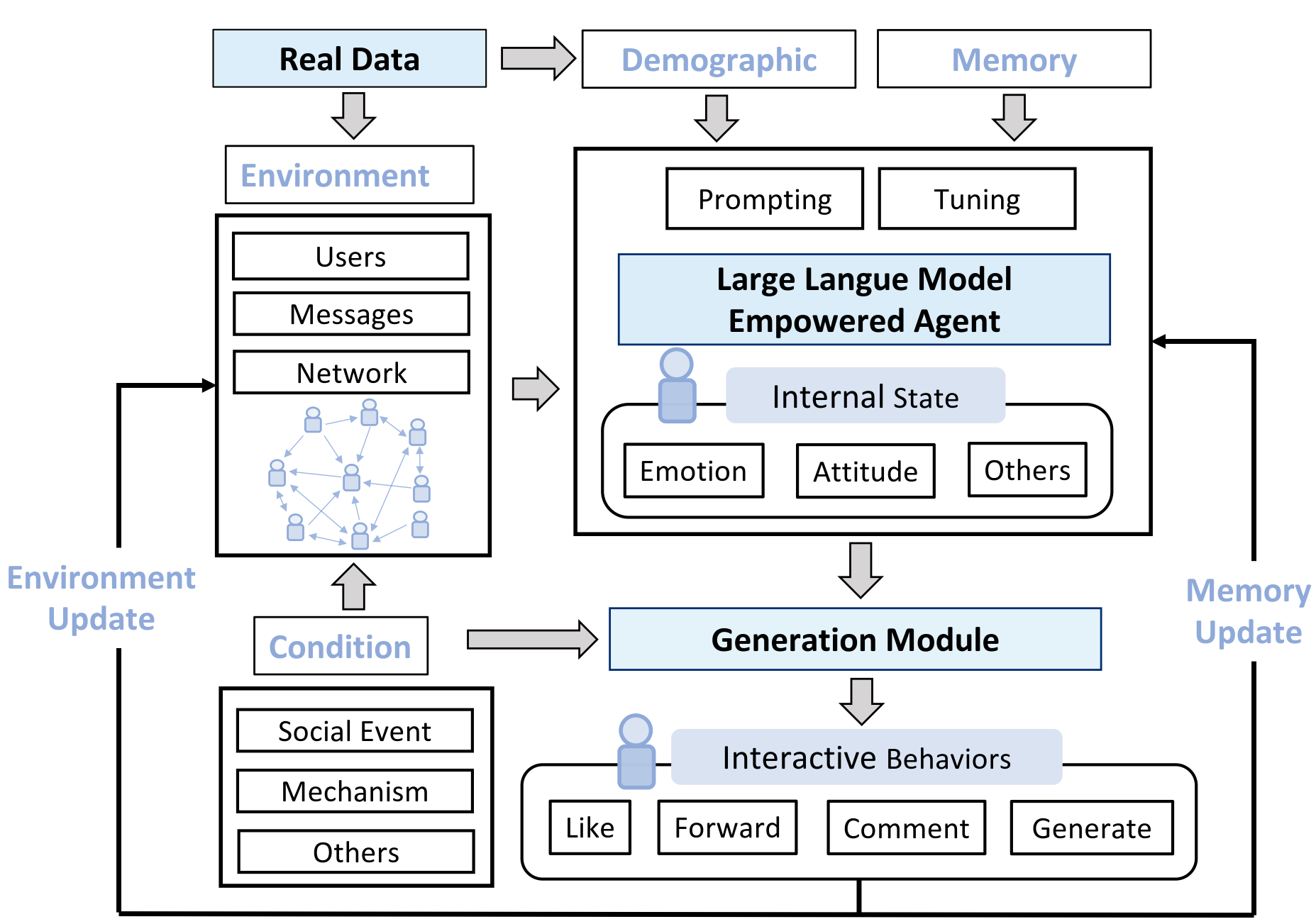
This review details the application of large language models to enhance epidemic modeling, detection, prediction, and management across biological and digital systems.
Understanding how information, behaviors, and diseases spread through complex systems remains challenging due to the interplay of multifaceted, often qualitative, influences. This review, ‘Large language models for spreading dynamics in complex systems’, synthesizes recent advances in leveraging large language models (LLMs) to model, detect, and predict these spreading dynamics across both digital and biological epidemics. LLMs offer a novel approach by integrating textual semantics and agent-based simulations, enhancing our ability to analyze complex propagation pathways. Will this intersection of artificial intelligence and complex systems theory ultimately provide more robust strategies for managing real-world outbreaks and information cascades?
The Echo of Patterns: From Biology to Digital Networks
The fundamental principles governing the spread of phenomena – whether a virus or a viral tweet – share striking similarities, rooted in the dynamics of transmission across networks. However, applying epidemiological models designed for biological outbreaks directly to information cascades proves problematic. Traditional models often assume homogeneity in susceptibility and transmission rates, conditions rarely met in the complex landscape of social networks where individuals exhibit vastly different propensities to share information and networks themselves evolve rapidly. Furthermore, biological transmission is largely passive, while the spread of information often involves active endorsement and modification by individuals, introducing feedback loops and complexities absent in purely biological systems. Consequently, while borrowing concepts like ‘basic reproduction number’ R_0 can be insightful, a nuanced understanding of digital epidemics necessitates adapting – and often developing entirely new – models that account for the unique characteristics of information diffusion and the behavioral factors influencing it.
The propagation of anything – be it a virus, a rumor, or an innovation – is fundamentally shaped by the network of connections within a population. Network science provides the tools to map these connections and analyze how they facilitate or hinder spread. Researchers utilize graph theory to characterize network structures – identifying key nodes, measuring network density, and assessing the influence of different connection patterns. A highly connected network, for instance, may experience rapid dissemination, while a fragmented one might contain the spread. Crucially, the nature of these connections matters; strong ties often transmit robust information, whereas weak ties can bridge disparate communities, enabling wider, though potentially less reliable, propagation. By quantifying these network effects, scientists gain a deeper understanding of how phenomena cascade through populations, offering insights applicable to fields ranging from public health to social media analysis.
Unlike biological epidemics, which rely on direct physiological transmission of pathogens, digital epidemics concern the propagation of information, beliefs, and behaviors through social networks. This fundamental difference necessitates a shift in analytical approaches; traditional epidemiological models, designed for tracking disease, often prove inadequate when applied to the complexities of online cascades. The speed and reach of digital transmission are exponentially greater, circumventing geographical limitations and allowing ideas-or misinformation-to spread virally. Consequently, researchers are developing new frameworks that incorporate factors like network topology, user psychology, and the role of ‘super-spreaders’ – highly connected individuals who significantly accelerate the diffusion process – to better understand and potentially mitigate the impact of these rapidly evolving digital phenomena.
Simulating the System: Agent-Based Modeling Emerges
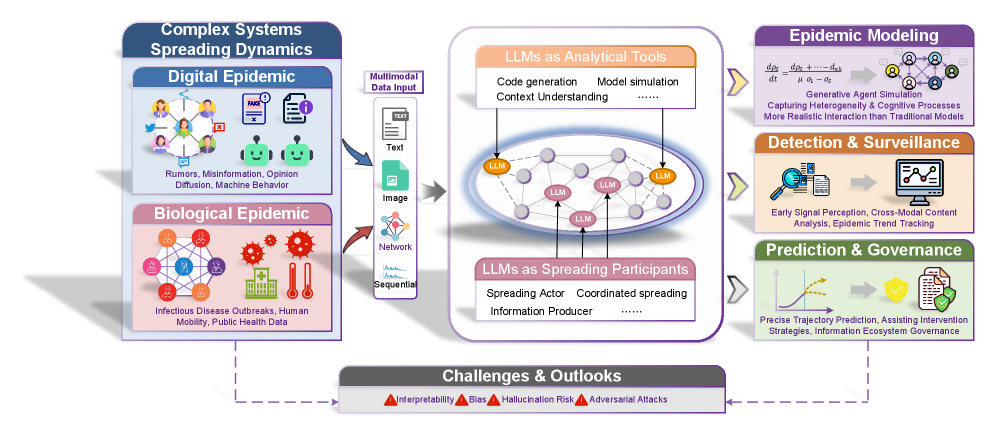
Agent-based modeling (ABM) simulates the actions and interactions of autonomous agents to assess the spread of infectious diseases. Unlike compartmental models that track population-level transitions, ABM represents individual entities – people, animals, or even vectors – each with unique characteristics and behaviors. These agents operate within a defined environment and interact with each other according to specified rules, allowing researchers to model transmission pathways, assess the impact of interventions like vaccination or social distancing, and observe emergent patterns at the population level. The methodology accounts for heterogeneity in factors such as age, location, social networks, and pre-existing conditions, offering a more granular and potentially realistic representation of epidemic dynamics than traditional epidemiological approaches.
Recent advancements in large language models (LLMs) have significantly improved the fidelity of agent behaviors in simulations. Traditionally, agent actions were governed by pre-defined rules or limited state machines. LLMs, trained on massive text datasets, now allow agents to respond to stimuli and interact with their environment using natural language processing, generating more complex and adaptive behaviors. This capability extends beyond simple scripted responses; LLMs enable agents to exhibit context-aware decision-making, learn from interactions, and even display variations in personality or risk tolerance. The use of LLMs allows for the creation of agents that more accurately reflect the heterogeneity and unpredictability of human behavior, leading to more realistic and robust simulations of complex systems.
LLM-Driven Agent Modeling integrates the capabilities of Large Language Models (LLMs) with the established methodology of agent-based modeling. Traditional agent-based models define agent behaviors through explicitly programmed rules; this approach is expanded by utilizing LLMs to dynamically generate agent actions and responses based on their internal state and the surrounding environment. This necessitates a strong emphasis on contextual awareness, as the LLM must accurately interpret the agent’s situation – including interactions with other agents and environmental factors – to produce plausible and coherent behavior. The LLM effectively acts as the ‘brain’ of the agent, enabling more complex and realistic simulations compared to rule-based systems, but requires careful prompt engineering and data management to ensure accurate and consistent results.
The efficacy of LLM-Driven Agent Modeling is predicated on robust contextual awareness and natural language understanding capabilities. Specifically, agents require the ability to interpret and respond to dynamic environmental factors and communications with other agents, necessitating the processing of textual information. Techniques such as text embedding are employed to convert textual data – representing agent knowledge, environmental cues, or inter-agent communication – into numerical vector representations. These vectors capture semantic meaning, allowing the model to quantify relationships between concepts and facilitate reasoning and decision-making processes within the simulation. The quality of these embeddings directly impacts the agent’s ability to accurately perceive its environment and behave realistically, thereby influencing the overall fidelity of the epidemic spread model.
Sensing the Signals: Data-Driven Epidemic Forecasting
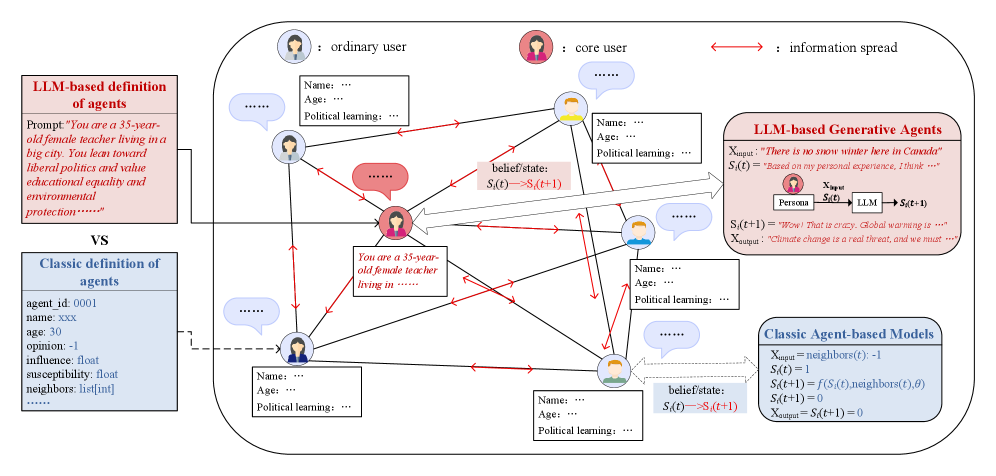
Effective epidemic prediction necessitates the consolidation and analysis of data originating from diverse sources, a process known as multi-source data analysis. These sources commonly include traditional epidemiological surveillance systems reporting case numbers and demographic data, alongside non-traditional data streams such as social media activity, search engine queries related to symptoms, news reports, and mobility data derived from mobile phone usage. The integration of these heterogeneous datasets allows for a more comprehensive understanding of disease transmission dynamics than can be achieved through single-source analysis. Specifically, early signals of outbreaks can be detected by monitoring changes in these alternative data streams before they are reflected in official case reports, thereby improving the timeliness and accuracy of predictions. Data fusion techniques, including statistical modeling and machine learning algorithms, are employed to reconcile inconsistencies and leverage the complementary strengths of each data source.
Large Language Models (LLMs) are gaining prominence in epidemic prediction due to their capacity to process and interpret unstructured data sources – such as news reports, social media posts, and online search queries – that are often inaccessible to traditional statistical methods like SIR models. These models leverage the ability of LLMs to identify early signals of outbreaks by analyzing textual data for symptom reporting, public concern, and geographic patterns. Furthermore, LLMs can incorporate complex, non-linear relationships between variables, potentially improving forecast accuracy compared to methods reliant on predefined statistical distributions. This allows for the integration of diverse data streams and the identification of subtle indicators that might be missed by conventional approaches, ultimately contributing to more timely and accurate predictions.
Social contagion models analyze the spread of information – and phenomena resembling epidemics – through social networks by adapting epidemiological principles. These models treat information as the ‘infectious agent’ and network connections as the transmission pathways. Key metrics include the reproduction number (R_0), indicating the average number of individuals one ‘infected’ node will ‘infect’, and the rate of ‘recovery’ or cessation of information sharing. Unlike traditional epidemiological models focused on biological transmission, social contagion models often incorporate factors specific to network topology, user behavior, and content characteristics. Applications extend beyond public health to include the diffusion of innovations, the spread of rumors, and the analysis of online trends, allowing for predictions about how information will propagate within a given network structure.
Early detection of spreading processes, crucial for mitigating epidemics, is increasingly reliant on robust data analysis and predictive modeling techniques. Recent advancements utilize Large Language Models (LLMs) to enhance prediction accuracy; these LLM-enhanced models have demonstrated accuracy rates reaching up to 92% in certain applications. However, establishing consistent baseline comparisons against traditional epidemiological models remains a challenge for fully evaluating the performance gains offered by LLM integration and ensuring reliable, generalizable results.
From Anticipation to Action: Managing the Inevitable Cascade
The capacity to effectively manage epidemics hinges decisively on the precision of epidemic prediction. Accurate forecasting isn’t simply about knowing when an outbreak will occur, but understanding where, how rapidly it will spread, and who is most vulnerable. This predictive intelligence enables preemptive resource allocation – from hospital beds and medical supplies to public health messaging and vaccination campaigns – transforming a potential crisis into a manageable challenge. Without reliable forecasts, interventions often become reactive and inefficient, chasing the spread of disease rather than preventing it. Sophisticated modeling, incorporating factors like population density, mobility patterns, and even social behaviors, is therefore paramount; the ability to anticipate, rather than simply respond, defines the difference between containment and widespread disruption.
Effective epidemic management necessitates a deep comprehension of how outbreaks propagate, recognizing that spread isn’t limited to biological vectors. Traditional epidemiological models, focused on person-to-person transmission, are now complemented by investigations into digital spread – the rapid dissemination of information, misinformation, and even behavioral patterns through social networks. Analyzing these digital mechanisms allows for the design of interventions that address not only the disease itself, but also the factors influencing public perception and response. For instance, targeted messaging campaigns can counter false narratives, while proactive monitoring of online activity can identify emerging hotspots or predict shifts in public behavior, ultimately enabling a more nuanced and effective strategy than simply reacting to reported cases. Understanding both biological and digital transmission pathways is therefore paramount for building resilient systems capable of anticipating and mitigating future outbreaks.
The shift from responding to outbreaks as they occur to anticipating and preventing them represents a fundamental advancement in epidemic management. Recent innovations leverage the power of Large Language Models (LLMs) to enhance predictive modeling, moving beyond statistical projections to incorporate a wider range of influencing factors. Studies demonstrate these LLM-enhanced methods achieve a notable reduction in forecasting errors – up to 20% compared to conventional techniques. This increased accuracy allows for the implementation of preemptive, targeted interventions, optimizing resource allocation and minimizing the impact of potential outbreaks before they escalate. Consequently, a proactive stance, fueled by sophisticated prediction, promises significant benefits not only for public health but also for bolstering cybersecurity resilience and maintaining broader social stability.
The principles underpinning proactive epidemic management extend far beyond the realm of public health, offering critical insights for bolstering cybersecurity and preserving social stability. Just as predictive modeling identifies potential outbreaks of disease, similar techniques can forecast the spread of misinformation or malicious code within digital networks, enabling preemptive defenses. Moreover, understanding the dynamics of information diffusion – analogous to epidemiological transmission – is vital for mitigating social unrest or countering coordinated disinformation campaigns. By anticipating and addressing vulnerabilities across these seemingly disparate domains, a unified approach to prediction and intervention strengthens resilience against a broad spectrum of systemic threats, fostering more secure and stable societies.

The exploration of spreading dynamics, as detailed in the article, mirrors a fundamental principle of emergent behavior. The research demonstrates how seemingly isolated interactions within complex systems – whether biological or digital epidemics – contribute to global effects. This resonates with Röntgen’s observation: “I have discovered something new, but I cannot yet explain it.” Just as Röntgen initially observed an inexplicable phenomenon, this work illuminates how LLMs can reveal underlying patterns in complex systems without necessarily dictating their outcomes. The study acknowledges that control is an illusion; instead, LLMs offer a means to influence the trajectory of spreading dynamics through improved modeling and prediction, working with the natural order rather than attempting to override it.
Emergent Futures
The integration of Large Language Models into the study of spreading dynamics reveals, perhaps predictably, that the map is not the territory. These models don’t control epidemic trajectories – a tempting but illusory notion – they offer increasingly nuanced methods for observing the rules governing those trajectories. The real power lies not in prediction, but in the capacity to generate plausible scenarios, to stress-test interventions within simulations where local rules, expressed through LLM-driven agents, produce global patterns. This approach tacitly acknowledges the limitations of centralized control, favoring instead a focus on influencing the conditions from which collective behavior emerges.
Current limitations remain stark. The fidelity of LLM-generated agent behavior depends heavily on the quality and biases within the training data, potentially obscuring subtle but critical factors influencing spread. Further work must address the challenge of grounding these models in genuinely multimodal information – not just text, but also behavioral data, social network structures, and environmental variables. The emphasis should shift from building comprehensive, monolithic models to creating modular, adaptable systems where local rules can be easily adjusted and re-evaluated.
Ultimately, the true potential of this field rests on embracing a philosophy of weak control. Attempts to impose order from above will likely fail, but carefully designed interventions that nudge the system towards desired states – interventions informed by LLM-driven simulations – may prove more resilient and effective. The future isn’t about preventing cascades, it’s about understanding how to shape them.
Original article: https://arxiv.org/pdf/2602.08085.pdf
Contact the author: https://www.linkedin.com/in/avetisyan/
See also:
- Off Campus Season 1 Soundtrack Guide
- Chainsaw Man Volume 24’s Cover Art Reveals a Brand-New Denji
- X-Men ’97 Finally Gave Gambit the Hero Moment He Deserved
- 46 Years Later, The Mandalorian & Grogu Answers A Major Empire Strikes Back Question
- HoI4 fans harsh reactions to the announcement of another DLC pack
- 10 Worst End-Game Couples In Sitcom History
- Emily Henry Says to ‘Trust the Vision’ For Beach Read Adaptation
- DoorDash responds after customer uses AI to make food look bad and get a refund
- Hatsune Miku cosplayer goes viral selling $15 cups of “foot juice” to thirsty anime fans
- Gold Rate Forecast
2026-02-10 16:43