Movies celebrated their 100th anniversary just before the 1990s, tracing their roots back to the first film created in 1888. Over that century, cinema dramatically improved and surprised audiences with each new decade. Color film became widespread in the 1960s, and the 1970s and 80s paved the way for the big-budget blockbuster movies we know today.
The 1990s were a fascinating time for film. It was a decade of huge change, as digital technology and independent filmmakers revolutionized how stories were told on screen worldwide. Sadly, many of the decade’s best films – even those that have stood the test of time – were overshadowed by big-budget marketing and changing preferences of moviegoers.
Miller’s Crossing Stylishly Defined the Coens’ Aesthetic
The Coen brothers launched their successful directing careers with the film Blood Simple, quickly establishing themselves as talented and innovative filmmakers. Their 1990 film delved into the world of neo-noir, focusing on the shifting balance of power between two groups of criminals. But what truly drives the film is the central character’s deceptive nature, which allows the Coens to carefully examine the complexities of human behavior.
As Rotten Tomatoes points out, Miller’s Crossing is more recognized for its striking visual style than a perfectly structured plot, offering a fresh and unusual take on gangster films. The movie is carefully crafted from beginning to end, blending classic noir elements with the distinctive filmmaking style of the Coen brothers, making it a standout film from the early 1990s.
I’ve always loved how the Coen brothers use dialogue – it’s like a secret weapon in their movies, and you can really see that in Fargo. But for me, it’s Miller’s Crossing where that darkly funny, almost musical way with language really shines. It’s a shame that when Goodfellas came out, it kind of overshadowed the Coens. I think some people found their style a little too…thoughtful, maybe, and drifted away. But honestly, critics still consider it a masterpiece, and I totally agree!
The Piano Is a Haunting Blend of Music and Silence
Jane Campion recently gained worldwide recognition with her film The Power of the Dog, earning her the Academy Award for Best Director. But before that, she received critical acclaim for The Piano in 1993, winning an Oscar for Best Original Screenplay and also being nominated for Best Director. The story centers around a woman who doesn’t speak and travels from Scotland to marry a settler in New Zealand – a seemingly straightforward premise with surprising depth.
The Piano is a rare and deeply moving film, often called “a whole universe of feeling.” While Holly Hunter gives a stunning performance, many also point to Anna Paquin’s Academy Award win – when she was just eleven years old – as proof of the movie’s lasting impact and quality.
The power of The Piano lies in what isn’t said, with much of the story unfolding in the spaces between dialogue. Its beautiful visuals – from lonely beaches to dimly lit rooms – perfectly mirror the character’s emotional state. Sadly, the film’s quiet and thoughtful nature was overshadowed in 1993 by more overtly emotional films like Schindler’s List, causing this remarkable work by Jane Campion to be largely overlooked.
Death Becomes Her Is a Darkly Comic Fantasy with Biting Satire
Robert Zemeckis is known for creating the Back to the Future series, but many consider Forrest Gump to be his masterpiece. It’s perhaps not surprising that his 1992 film, Death Becomes Her, hasn’t remained a major topic of conversation. However, seeing Meryl Streep and Goldie Hawn deliver such delightfully over-the-top performances was a truly special cinematic experience and deserves more recognition.
Bruce Willis appears in Death Becomes Her, but he’s overshadowed by the incredible and outlandish performances of Meryl Streep and Goldie Hawn, who both play women obsessed with him. The film’s groundbreaking visual effects – like Meryl Streep’s contorted head and a large hole in Goldie Hawn’s abdomen – are so remarkable they earned an Oscar, and perfectly capture the film’s surreal and bizarre tone.
Fans, especially within LGBTQ+ communities, love Death Becomes Her for its over-the-top, playfully exaggerated style that manages to be fun without ever feeling cheap or embarrassing. It’s a rare feat to strike that balance, but the film does it brilliantly, offering a witty critique of societal pressures on women. The movie seamlessly mixes glamour with dark humor, creating a delightfully absurd and modern fairytale.
Ocean Waves Is an Eternal Tale of Bittersweet Adolescence
Studio Ghibli is famous for sweeping epics like My Neighbor Totoro and Spirited Away, but they occasionally try something a little different. I recently checked out Ocean Waves, a 1993 film that’s a departure from their usual big-budget fare. While films like Princess Mononoke tackle huge environmental issues and The Boy and the Heron leans into fantasy, Ocean Waves is a much more grounded story – a simple, classic love triangle. It’s a nice change of pace, though definitely a different vibe than what you might expect from Ghibli.
Rather than being sweeping or dramatic, Ocean Waves offers a quiet and realistic look at teenage life. It focuses on three characters, showing their feelings and experiences through subtle actions and what isn’t said, beautifully capturing the mix of joy and sadness that comes with growing up.
What makes Ocean Waves stand out from other Studio Ghibli films is that it was made by a younger team who weren’t afraid to try new things, giving it a unique and lively feel. The film came out during a period of change for the studio, which is why it’s especially loved by longtime fans. Despite this, Ocean Waves‘ realistic and relatable story makes it a bright spot in Ghibli’s collection of more fantastical films.
Jacob’s Ladder Is a Nightmarish Journey Through Identity and Trauma
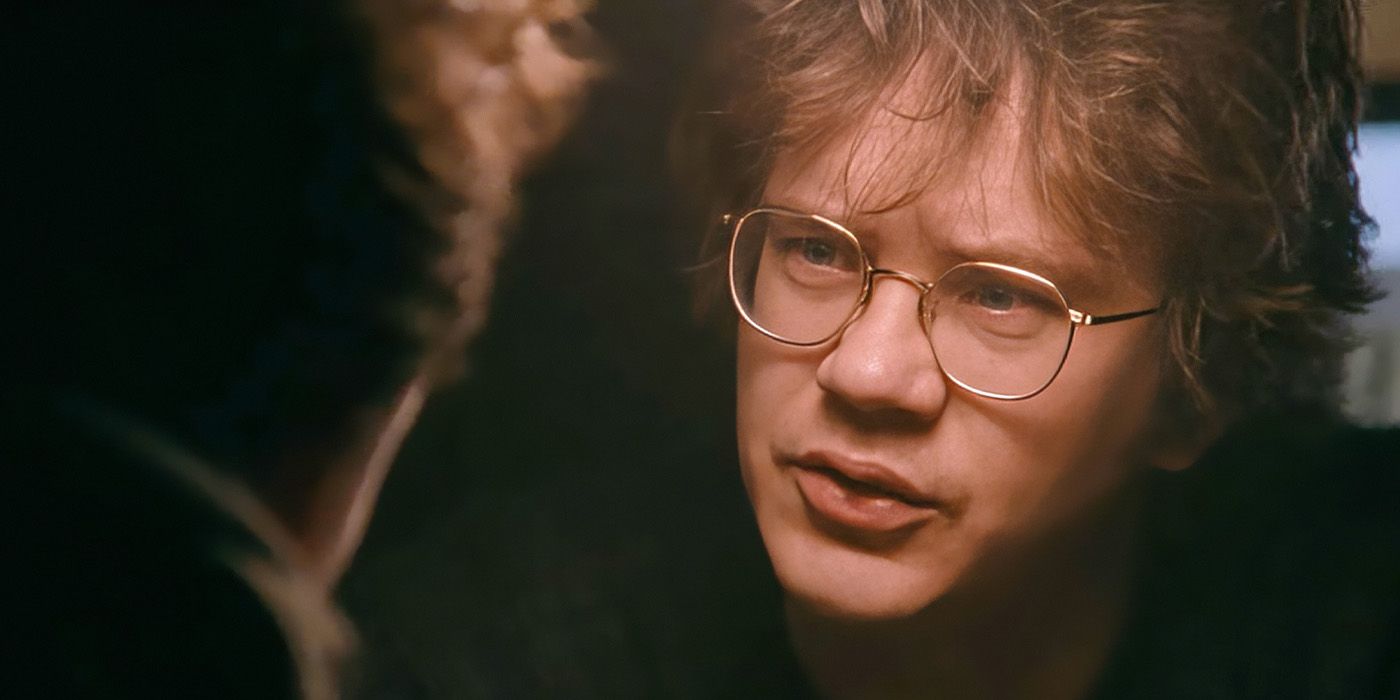
The film Jacob’s Ladder stars Tim Robbins, who would later become a famous actor, as Jacob Singer. Even early in his career, Robbins demonstrates a remarkable ability to convey emotion in this 1990 film directed by Adrian Lyne. Jacob’s Ladder is a deeply strange and unsettling movie, with a story that feels barely connected, and it’s sure to evoke a strong emotional response from anyone who watches it.
This film shares the intensely bleak feeling of Requiem for a Dream, but with a much more complex plot. While the hospital scene is famously terrifying, a sense of dread permeates the entire movie Jacob’s Ladder. It’s deeply disturbing, creates a suffocating atmosphere, and features vivid hallucinations, all of which have greatly influenced modern psychological horror – you can see its impact in many films today.
Despite being a unique film, Jacob’s Ladder didn’t initially gain much attention, especially compared to other popular thrillers of the time. Audiences generally haven’t embraced movies with confusing, non-traditional storylines or philosophical ideas, and Jacob’s Ladder is a prime example of a film that challenges viewers with its complex and thought-provoking nature.
Dark City’s Bold Sci-fi Vision Questions Reality Itself
Science fiction has become incredibly popular in the 21st century, even with complex films like Annihilation. But in the 1990s, the genre hadn’t quite mastered computer-generated effects, meaning some excellent movies didn’t get the attention they deserved. One of these is Alex Proyas’ Dark City, which follows Jon Murdoch, played by Rufus Sewell, as he struggles with amnesia to prove his innocence after being accused of a crime.
Christopher Nolan clearly drew inspiration from the film Dark City when creating the idea for Memento. However, Dark City, released in 1998, explores more than just its main character’s story. It also delves into questions of identity for the character Murdoch and the mysterious city itself, which physically changes every night.
As a huge film fan, I always thought Dark City was a truly brilliant and forward-thinking movie – some even called it a modern 2001: A Space Odyssey! But the producers were worried audiences wouldn’t get director Alex Proyas’s complex ideas, so they forced him to add a lengthy explanation at the beginning. Honestly, I think that single decision is why Dark City hasn’t reached the wider audience it truly deserves. It kind of diluted the mystery and impact, you know?
Eyes Wide Shut Is a Hypnotic Odyssey Through Desires and Dreams
Stanley Kubrick is best known for his iconic films from the 1960s and 70s, like 2001, The Shining, A Clockwork Orange, and Dr. Strangelove. It’s often forgotten that his last movie, Eyes Wide Shut, came out much later, in 1999. While Eyes Wide Shut is very much a Kubrick film, it has a different feel and pace than many of his other works. Sadly, Kubrick passed away before he could see the finished product.
Stanley Kubrick’s Eyes Wide Shut is a thought-provoking film that explores the complex connections between the human mind, what’s right and wrong, spirituality, and sexual desire. Both disturbing and sensual, the movie captivates audiences with its surreal, dreamlike atmosphere, blending themes of longing, affection, and envy.
Kubrick created a claustrophobic, indoor setting that allowed him to explore the film’s mysterious and symbolic visuals. While the masks in the film highlight the artificiality of human behavior, they also misled many viewers into thinking Eyes Wide Shut was a straightforward erotic thriller. This disconnect between what audiences expected and what the film actually delivered unfortunately overshadowed Kubrick’s final masterpiece.
Farewell My Concubine Is a Sweeping Drama of Art, Love, and Tragedy
1990s Hong Kong cinema saw huge success with action films like Hard Boiled and Drunken Master II, bringing the genre international attention. Around the same time, historical dramas were also being revitalized, most notably with the 1993 film Farewell My Concubine. The film, set from the early 1900s through China’s Cultural Revolution, used this turbulent period as a political setting for a deeply emotional story.
What truly sets Farewell My Concubine apart, making it a masterpiece of Chinese cinema, is its incredible emotional range. The film’s beautiful visuals create a dreamlike quality, contrasting the splendor of performance with the harshness of life. It powerfully examines how acting and a person’s true self can become intertwined, showing a deep and artistic transformation for the main character.
This film is a powerful exploration of oppression, political fanaticism, and societal expectations, ultimately becoming a moving story about how precious and delicate life is. For years after its release in the 1990s, Farewell My Concubine remained largely unknown, but it’s a remarkably beautiful and meaningful work of art – few movies offer such depth.
12 Monkeys Is a Twisted Science Fiction Puzzle with No Clear Solutions
Terry Gilliam moved from the playful humor of Monty Python to create darker, science fiction films. His critically acclaimed black comedy, Brazil, was released in 1985. Later, in 1995, he directed 12 Monkeys, a film loosely based on the 1962 short La Jetée. 12 Monkeys featured a memorable pairing of actors, and Brad Pitt won a Golden Globe for his outstanding and energetic performance in the movie.
I absolutely love how 12 Monkeys throws you right into the confusion of time travel! The story doesn’t follow a straight line, and that really puts you in the characters’ shoes, feeling just as lost and disoriented as they are. What really struck me, and a lot of critics too, was the movie’s incredibly bleak and unsettling atmosphere. It’s just so unique and you never quite know what’s coming next – it completely messes with your expectations in the best way!
The movie rushes through its story in two hours, with scenes blending into each other in a way that feels confusing for both the characters and viewers. Because the story doesn’t offer much emotional connection and has a bleak, gritty style, 12 Monkeys didn’t initially attract a large audience and was largely forgotten. It likely would have faded into complete obscurity if not for the later television series based on the film.
Jackie Brown Showcases the Subversive Extent of Tarantino’s Range
As a film fanatic, there are certain directors where I’ll watch anything they’ve made, even if it’s not their best work. Quentin Tarantino is definitely one of those for me—Roger Ebert practically gave everything he did before 2013 a perfect score! That’s why I always felt it was a little weird that Jackie Brown doesn’t get the same love as Pulp Fiction or Kill Bill. Honestly, a huge part of what makes Jackie Brown so great is Pam Grier. She is Foxy Brown, and she absolutely shines in this film.
Quentin Tarantino is said to have named Pam Grier the first female action heroine, a title that perfectly suits her powerful performance in Jackie Brown. While a departure from her earlier roles in blaxploitation films, Grier’s portrayal of Jackie Brown feels like a fitting next step for the strong female characters she played in the 1970s, like Foxy Brown and Coffy.
The film has a noticeable dramatic style and cleverly flips the conventions of 1970s blaxploitation films, portraying the strong character of Foxy as a more world-weary and desperate figure. It also lovingly references the era with its soulful music and visual style. The likely reason Jackie Brown isn’t as well-remembered is simply that it came out between the hugely popular Pulp Fiction and Kill Bill.
Read More
- All Itzaland Animal Locations in Infinity Nikki
- The Boys Season 5 Spoilers: Every Major Character Death If the Show Follows the Comics
- Cthulhu: The Cosmic Abyss Chapter 3 Ritual Puzzle Guide
- Gold Rate Forecast
- Solo Leveling’s New Manhwa Chapter Revives a Forgotten LGBTQ Story After 2 Years
- Persona PSP soundtrack will be available on streaming services from April 18
- Morgan Stanley’s Tokenized Tango: Wealth, AI, and the Onchain Waltz
- DTF St. Louis Series-Finale Recap: You Can’t Hold the Sun in Your Hand
- Warriors vs. Clippers Play-In Results According to NBA 2K26
- Dungeons & Dragons Gets First Official Actual Play Series
2025-12-10 07:13