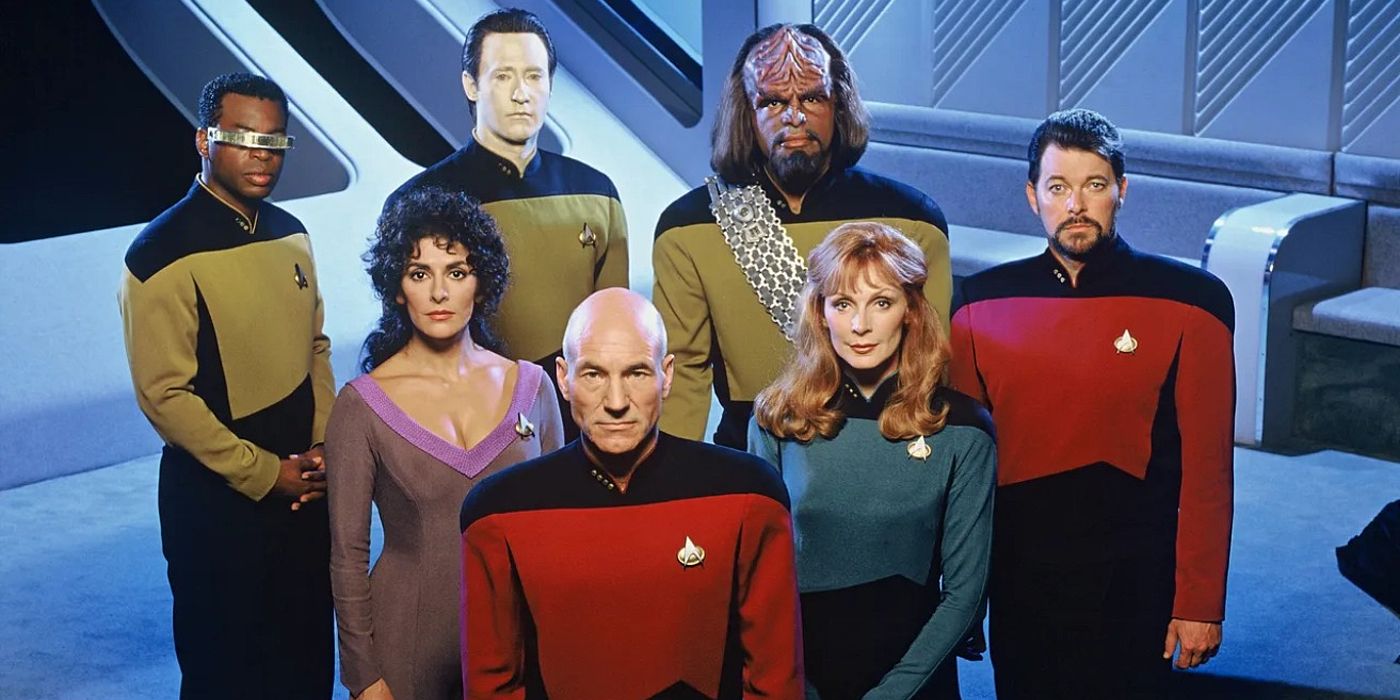
The fifth season episode “Disaster,” which first aired in 1991, is a turning point for the character Deanna Troi. Before this episode, Troi hadn’t been given much to do, but “Disaster” puts her in charge during a ship-wide emergency. Looking back at the series, it’s clear this episode was crucial for developing her character.
When problems arise on the ship, Troi unexpectedly steps up to take charge. Though she’s been a key character throughout the series, she’s usually been relegated to offering advice or support. However, in the episode “Disaster,” Troi proves she’s a capable leader, building on skills she’s developed over time. This episode shows a new side of her, moving beyond her familiar role as just a counselor.
Star Trek: TNG Mastered the Character Spotlight Episodes in Later Seasons
By season 5, the show’s creators realized some characters weren’t developing, so they started giving each main cast member their own dedicated episode. Executive Producer Michael Piller intentionally moved away from stories focused on weekly alien encounters and toward episodes that explored the characters’ inner lives and personal growth.
The show benefited from a stronger focus on supporting characters. Rick Berman and Michael Piller became showrunners during The Next Generation, and this is widely seen as a major improvement in the show’s writing quality. Previously, the writing team had a reputation for being unstable and difficult to work with.
Piller brought consistency to the show and made character development the central theme. By the time “Disaster” aired, this new direction had been established for several seasons. The impact of Piller’s approach was quickly noticeable, and you can see evidence of his influence in seasons 3 through 5, even before the episode focusing on Troi.
As a longtime Star Trek fan, one episode that always stuck with me from Season 3 was “The Bonding.” It really got into Worf’s character, showing a surprisingly tender side as he helped a young boy deal with his mother’s death. It was fascinating to see how Klingons approach death and grief – totally different than how humans do! And speaking of deep dives into character, that same season gave us “The Offspring,” which was equally compelling.
When Data creates a daughter, it forces viewers to consider his motivations as an android and his quest to understand humanity. This storyline moves away from simply showcasing Data’s skills and explores his deeper desire to be more human. The episode builds upon the previous installment, “The Measure of a Man,” which legally recognized Data’s rights as an individual.
I always loved Deanna Troi’s episodes, and while a lot of them early on dealt with her love life or focused on her being an empath, “Disaster” felt different. But it was Season 4’s “The Loss” that really got to me. It was fascinating to see her actually use her psychology training because she temporarily lost her empathic abilities. It made her question who she even was without that part of herself, and it was a really powerful story.
Unlike previous instances of character development, the storyline involving ‘Disaster’ completely removed the character from their position. Even though they were a key figure in TNG, the character had begun to feel repetitive, and a refresh was necessary. The season 3 finale specifically challenged Riker to examine his own flaws, with Commander Shelby acting as a reflection of his personality.
This episode centers on Riker demonstrating his ability to command the Enterprise while Picard is away. Focusing on character development and putting them in challenging situations was key to Star Trek: The Next Generation‘s success and kept viewers engaged throughout the series. It’s a reliable way to create compelling stories with emotional resonance.
The episode challenges viewers to rethink a character’s purpose and promises a captivating story. For Deanna Troi, “Disaster” demonstrated how well this approach worked when applied to a character who hadn’t yet had a chance to shine. It was a turning point for her, significantly shaping her development throughout the rest of the series.
Deanna Troi faced a unique challenge, and she embraced it. This experience became a turning point for her character, allowing for significant growth and development.
Deanna Troi Steps Up to the Plate in “Disaster”
I love this episode, “Disaster!” It starts with the Enterprise hitting this weird quantum thing, and suddenly everything goes dark – all communications are down and the power’s failing. It’s chaos because the collision separates all the senior officers, and Deanna Troi is unexpectedly left in charge on the bridge. It’s a really intense situation, and the episode is all about watching her step up and try to hold everything together when the stakes are incredibly high – she’s the only one who can lead at that moment, and it’s amazing to watch!
As a big Star Trek fan, I always found Deanna Troi fascinating. There’s this one moment where she’s facing a really tough situation affecting the whole Enterprise, and it’s cool how she handles it. She’s clearly feeling the pressure, but instead of pretending she knows everything, she turns to O’Brien and Ro for the technical details. She actually admits she doesn’t know what a warp core breach is! And honestly, it doesn’t make her seem weak at all – it makes her a stronger leader, because she’s willing to rely on her team’s expertise. It’s a really human moment, and that’s what I love about Trek.
Deanna Troi is comfortable admitting when she doesn’t know something. During the crisis, she focuses on gathering information and listening to the advice of experts. While she’s in charge due to her position, it’s not because she understands the technical details of the Enterprise. Initially, Lieutenant Monroe was the highest-ranking officer on the ship, but sadly, she didn’t survive the crash.
After the collision, the bridge was completely sealed off from the rest of the ship – communication lines were cut and physical barriers were put in place. Repairing the damage requires sending crucial information to the Engineering bay, but standard communication methods aren’t working.
Throughout the episode, Ro becomes increasingly forceful with her suggestions to Troi. The main issue is a critical one: if the ship’s warp core isn’t fixed quickly, the entire vessel will be destroyed. Ro urges Troi to detach the saucer section, but this would mean certain death for everyone trapped inside. Despite Ro’s warnings, Troi ultimately decides against following her plan.
Things are really bad with the power out, and honestly, we have no idea if anyone survived in that part of the ship. Ro was getting frustrated, saying that Troi was risking all of us to try and save just a few people. But Troi decided to go with her gut feeling and shut down Ro’s plan, even when Ro warned her that everyone could die because of it. It was a tough call, but Troi really stood her ground.
This action diminishes Troi’s ability to sense others’ emotions. Despite having no proof anyone else is alive, she believes redirecting power to engineering might alert survivors to the hull breach. Earlier in the episode, her empathic skills confirmed that some crew members were still alive, but she doesn’t know their location on the ship.
The show Star Trek: The Next Generation didn’t avoid dealing with death, so it’s quite possible everyone in engineering didn’t make it. The episode “Disaster” immediately highlights the danger with the death of Lt. Monroe. Ultimately, Deanna Troi’s choice to keep the ship together proves correct, and Riker and Data get the details they need to fix the issue.
The “Disaster” Episode of Star Trek: TNG is one of the Best Character-Centric Stories
The events of the episode “Disaster” deeply affected Deanna Troi’s personal growth. She later explained that the experience motivated her to take the Bridge Officer exam, as it highlighted her feelings of being unprepared and overwhelmed. Specifically, she realized she needed more technical knowledge about how the ship worked, and a new rank would help her gain that expertise.
Deanna Troi’s experiences in the episode “Disaster” paved the way for her to briefly command the Enterprise-D in the film Star Trek Generations. Many fans and critics now recognize this fifth-season episode as a turning point for her character, significantly shaping her development and altering how she was perceived by the rest of the crew.
Although the episode “Disaster” is best known for its focus on Counselor Troi, it really puts the entire crew through intense challenges that test them to their breaking points. Captain Picard, Riker, Geordi, Dr. Crusher, and Worf each manage to overcome significant personal flaws throughout the episode. Because of this strong emphasis on character development, “Disaster” is often considered a prime example of Michael Piller’s storytelling style.
Found an error? Send it so it can be corrected.
Read More
- Off Campus Season 1 Soundtrack Guide
- Chainsaw Man Volume 24’s Cover Art Reveals a Brand-New Denji
- X-Men ’97 Finally Gave Gambit the Hero Moment He Deserved
- 46 Years Later, The Mandalorian & Grogu Answers A Major Empire Strikes Back Question
- HoI4 fans harsh reactions to the announcement of another DLC pack
- 10 Worst End-Game Couples In Sitcom History
- Katanire’s Yae Miko Cosplay: Genshin Impact Masterpiece
- Emily Henry Says to ‘Trust the Vision’ For Beach Read Adaptation
- DoorDash responds after customer uses AI to make food look bad and get a refund
- Dragon Quest II HD-2D Remake: Where to get the Magic Key
2026-04-19 06:43