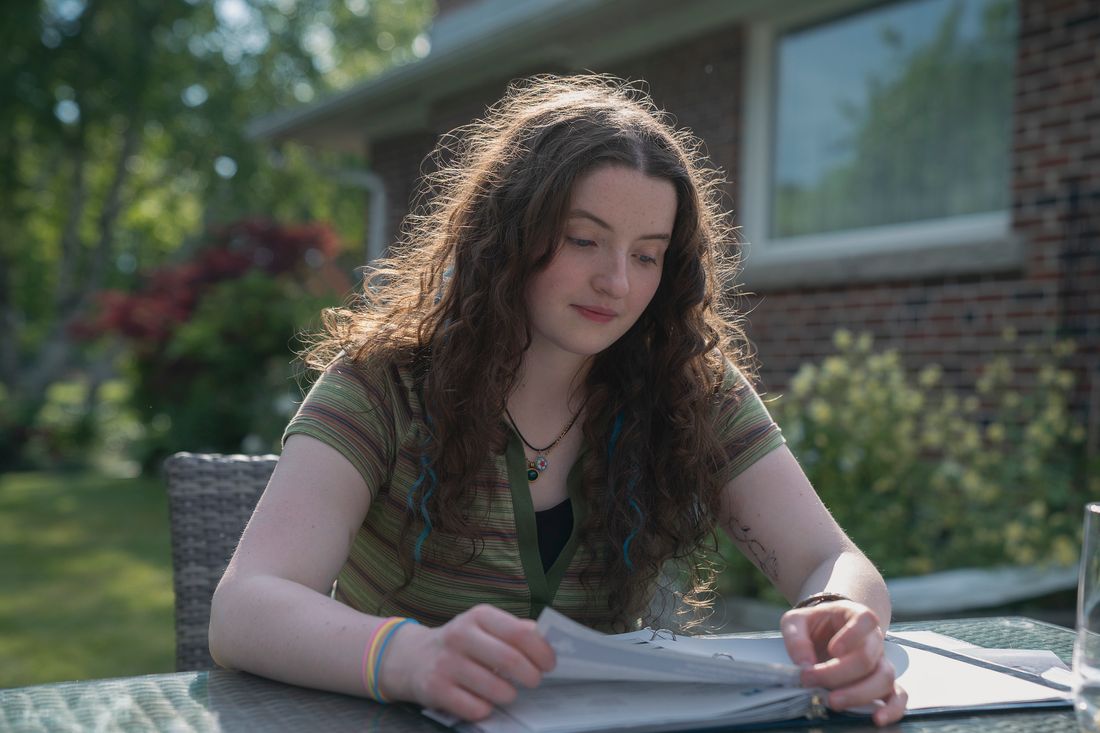
The latter half of The Testaments‘ first season focuses heavily on explaining characters’ pasts. In the episode “Stadium,” we saw how Aunt Lydia went from being a frustrated American teacher to a key figure in building Gilead’s oppressive system. However, the explanation of why she became that person felt underwhelming, as she always possessed those traits – a strong sense of self-importance, a judgmental attitude, and a tendency to scold. Gilead simply provided a context where those negative qualities were seen as positive attributes.
This week’s episode, titled “Commitment,” continues Daisy’s story, revealing how she ended up under Lydia’s care. We learn about the short time between her life with her family and her arrival as a Pearl Girl. Last time we saw Daisy, she was in Canada, instructed to wait at a diner for someone from the Mayday resistance. It turns out the waitress who’s been serving her coffee is the contact she’s been waiting for – Linda. Linda brings Daisy to a safe house owned by Rita, a familiar face from the Boston uprising in The Handmaid’s Tale. It’s reassuring to see that Rita escaped Gilead and is now living freely in Toronto, even attending culinary school.
The plan is to create a new identity for Daisy and secretly bring her to Colombia, where she’ll be protected from those who are hunting her. Melanie and Neil have saved money for Daisy, preparing for the possibility that something might happen to them. A significant change from the original novel—though others don’t seem to feel it as strongly—is Rita’s confirmation that Daisy’s biological parents died in Gilead, meaning she has nowhere else to go. Her only option is to reach Bogotá.
However, Daisy is becoming more determined and has a different plan. Coming from a family known for political activism, she wants to join the resistance movement. I was shocked at how quickly Rita agreed to send a heartbroken teenager into a dangerous conflict, but soon she’s helping Daisy create and learn a fake identity. This new Daisy supposedly ran away from her two fathers and has a minor criminal record. She even gets a deliberately cheesy tattoo, allowing Gilead to essentially give her a fresh start. We learn that June has always wanted to get someone inside the Aunt Lydia School, and Daisy fits the bill perfectly. She’s young—around the same age as June’s daughter—an orphan, and likely unable to have children. In fact, Daisy reveals that, among the girls she knows in Toronto, only one is still menstruating.
Rita is more concerned with Daisy’s overconfidence than with maintaining her false identity. Daisy wants to learn self-defense, but in Gilead, true safety comes from avoiding attention and trusting no one. She believes she can easily outsmart the Plums, but they are much more aware and prepared than she realizes. While Mayday can give Daisy a new identity and send her on a dangerous path, there’s no easy way to learn the self-control needed to survive. The more we learn about how Daisy prepared to go undercover, the more it seems like a mistake that June and Rita allowed her to proceed. Daisy even thinks about how her experiences as a teenage spy would make for a great college essay, showing she still doesn’t fully grasp the danger she’s in and believes her life will simply return to normal after Gilead.
Daisy doesn’t have to wait long in downtown Toronto before members of Gilead, known as Pearl Girls, approach her. One of them asks if she knows God loves her – a surprisingly strange way to start a conversation. Soon, Daisy finds herself in a hotel room with the Pearl Girls, showered and eating room service. She answers their questions with humor, subtly showing she’s engaged. Sitting in a clean robe, she begins to see a glimpse of the person she might become. Before she returns to the streets, the girls pray for her, and she’s unexpectedly touched. She’s already grappling with the confusing situation: these young women have been indoctrinated by a political movement that oppresses them, yet they genuinely believe they’ve found salvation through God. Slowly, Daisy allows them to influence her. However, there’s no legal way to immigrate to Gilead. When the Pearl Girls bring her to the border, she’s confronted by guards – including Garth – who reveal a much darker and more frightening reality of life under Gilead’s rule.
The Green Girls are acutely aware that their lives are about to change completely and permanently. When Agnes awakens, Paula introduces her to three potential husbands – but none of them are Garth. Paula claims Commander Weston, the leader of the Eyes, offers the easiest path to a secure future. Daisy’s research before leaving Canada includes a file on Weston, revealing information about him that even Paula may not know. Before Gilead’s rise, Weston made a substantial fortune in cryptocurrency, fitting a pattern seen with those who moved from Silicon Valley into far-right extremism. Even more concerning, court records show Weston had multiple restraining orders filed against him for domestic violence.
Becka shared that her potential matches include Commander Chapin, who used to be known as Garth. Last episode, Aunt Lydia surprisingly agreed to Agnes’s plea, saving a friend from punishment. While the established Commanders in Maryland don’t approve of Garth—especially considering his past behavior—he doesn’t have enough influence to challenge their decision. Agnes is shocked by this news and desperately tries to convince Becka not to marry him, pointing out that her other options are equally bad: exile to the Colonies or marrying the man who got her drunk. Overwhelmed, Becka exclaims that she feels hopeless.
The majority of the events in “Commitment” – and there aren’t many – revolve around interviews. While the Greens and their families are being interviewed for potential matches, the Eyes unexpectedly arrive at the Aunt Lydia School to question the Pearl Girls, putting Weston in a difficult position. Shu learns from her father that the Eyes are investigating the attack on the Plum bus, using new information found after Gilead’s unsuccessful attempt to recapture Boston. Daisy is understandably frightened when she’s summoned to Commander Weston’s temporary office to repeat the fabricated story of her life. It’s clear the Eyes have searched the Pearl Girls’ dormitory, as Daisy’s hidden pocket radio – which she’d stashed inside her roommate Thalia’s bed frame – is now sitting on the desk.
I was really struck by how Daisy keeps up a brave front, even when things get tough. She shared her story with Weston – how she ran away with a boyfriend and ended up with the Pearl Girls. After the questioning, Agnes found her practically gasping for air, either from relief that it was finally over or the scary thought that it might never truly end. It hit me that that’s just what life in Gilead feels like for her – constantly on edge. But there’s a glimmer of hope, too. She told Agnes she didn’t have anyone left to care about back in Canada, but she’s starting to make friends here. Agnes even invited her over after school, which is a really sweet sign that she’s finding some connection and maybe even a little peace.
Every teenage girl’s bedroom reflects her individual personality, and for Daisy, growing up in Toronto, hers was covered in posters of her favorite bands. Music meant more than just traditional instruments; it was about powerful songs that made you feel strong and heartbreaking ballads about love. I couldn’t help but wonder why a mother in Gilead would allow her daughter to befriend someone like Daisy, who seemed to offer a glimpse into a much more vibrant and free world. But I quickly realized I was wrong when Agnes revealed her own feelings. She found the freedom of American life overwhelming and chaotic. When Daisy described the excitement of choosing your own partner, even if it meant risking heartbreak, Agnes didn’t find it appealing – she found it confusing. In Gilead, Daisy pointed out, personality doesn’t matter in finding a spouse; it’s all about family background, appearance, and obedience.
Agnes is fascinated by the past, much like someone who loves Disney’s The Little Mermaid. She collects objects from that time and dreams about what life was like. Instead of collecting things like ‘dinglehoppers,’ Agnes gathers pens, keychains, and even a pipe with a rose inside. Daisy chooses not to tell Agnes the harsh truth about where these items come from. In a way, that’s a benefit of life in Gilead – Agnes is sheltered from the darker sides of the world, like drugs and other dangers. She’s been raised to believe God has always protected her.
Agnes’s interviews are progressing smoothly. Unlike the fathers of Hulda and Becka, Commander Mackenzie’s position means he doesn’t feel the need to boast about his daughter’s goodness. Weston, the second father Agnes has visited, politely asks if she has any questions for him. Agnes subtly brings up his past marriages, which makes the already awkward conversation even more strained. Before leaving, Weston reveals that his wife and child died during childbirth. This suggests there might be a more personal, human story behind Daisy’s file.
After a scolding from Paula for speaking her mind, Agnes escapes to the garden. There, she finds a still-smoldering cigarette left by Garth and, instead of smoking it, simply holds it to her lips, savoring the sensation. While much of The Testaments reads like a detailed, procedural drama, moments like this shine through—a delicate and powerful representation of human desire. When Garth catches her, he points out that smoking isn’t permitted, a repeat of a previous reprimand, and a convenient excuse for him to connect with her even when he doesn’t have much to say. Facing an arranged marriage to a man interested only in her family’s influence, Agnes asks Garth if she even has a personality. He replies, with longing, that he can see it. The story doesn’t require extensive knowledge of the world Before to evoke a strong sense of nostalgia and longing for what was lost.
By the episode’s end, Daisy realizes, just like Agnes, that life in After is all there is. The day begins with her sharing silly memories of their past with Thalia. However, the episode closes with Thalia being forcibly taken away by the Eyes for her perceived betrayal of God and the other handmaids. It’s possible Daisy is responsible, having hidden her radio in Thalia’s bed. This raises the question of how often June’s plans end up hurting innocent people.
Perhaps Thalia’s arrival in Gilead wasn’t what it seemed, and she’s in trouble for being dishonest. When the Eyes come for Thalia, another Pearl Girl panics – but is it just fear, or is she secretly part of the resistance, Mayday? That night, Daisy falls asleep repeating the same quiet prayer the Pearl Girls used to say for her back in Toronto. This isn’t the first time she’s been drawn in by Gilead’s influence. We’ve seen glimpses before, like when she talked about the country’s beauty in “Green Tea.” She admires Agnes’s innocence and now seems to be intrigued by Gilead’s religious aspects. Daisy understands Gilead is awful, but if she allows herself to see it differently, she can almost be tricked by its appeal – it’s like a visual trick where something appears beautiful one moment and frightening the next.
Each night, Agnes keeps a discarded cigarette butt from Garth as a keepsake, adding it to her collection of small reminders from others’ lives. These objects represent who those people were and what made them unique. Meanwhile, Daisy reflects in a voiceover that she misses seeing billboards. While the structures still stand in Gilead, they’ve been painted black, obscuring everything like censorship. It’s striking that Daisy notices their absence so much—the catchy slogans, the images, and even the ads for lawyers all hint at things that are now gone: the ability to buy things, to see skin, and to seek legal recourse. Billboards might seem like a symbol of our consumer culture, but perhaps they represent something more fundamental: the simple freedom to desire things.
Read More
- Off Campus Season 1 Soundtrack Guide
- Chainsaw Man Volume 24’s Cover Art Reveals a Brand-New Denji
- X-Men ’97 Finally Gave Gambit the Hero Moment He Deserved
- 46 Years Later, The Mandalorian & Grogu Answers A Major Empire Strikes Back Question
- HoI4 fans harsh reactions to the announcement of another DLC pack
- 10 Worst End-Game Couples In Sitcom History
- Gold Rate Forecast
- DoorDash responds after customer uses AI to make food look bad and get a refund
- Emily Henry Says to ‘Trust the Vision’ For Beach Read Adaptation
- Hatsune Miku cosplayer goes viral selling $15 cups of “foot juice” to thirsty anime fans
2026-05-06 20:01