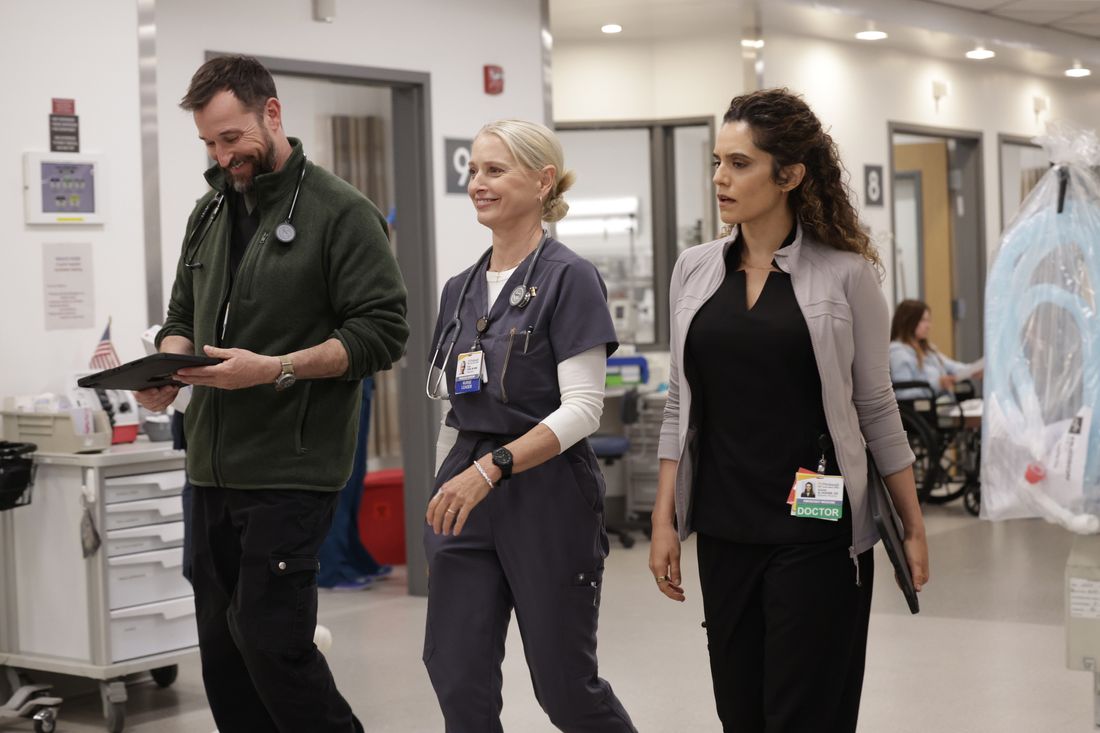
After a surprisingly successful first season, the show The Pitt now faces a challenge few programs get to experience: following up an incredible hit. Most TV shows, especially procedural dramas, aim for consistency and gradual development. But The Pitt immediately grabbed attention with its high-stakes, intense storytelling – its debut season culminated in a dramatic mass shooting scenario that felt like a bold, all-in move. The question now is, can the show maintain that level of excitement and keep viewers engaged over the long term?
The second season picks up ten months later, during a busy Fourth of July, and finds its footing by staying true to its strengths. Noah Wyle returns as Dr. Michael “Robby” Robinavitch, alongside the familiar team of doctors, nurses, interns, and students, dealing with typical holiday emergencies – barbecue accidents, firework injuries, and the usual challenges of the emergency room. While a few new medical students arrive and one character is missing, the show largely maintains the fast-paced medical accuracy and engaging character interactions that made the first season so compelling. There’s a significant plot twist mid-season, but it doesn’t quite have the same impact as the one in the first season.
Something has changed with The Pitt. After a successful night at the Emmys, where star Chris Wyle dedicated his award to essential workers, the show now feels overly self-assured and morally righteous, similar to The West Wing. While this isn’t necessarily a bad thing – The West Wing presented a more optimistic view of government – it’s also not automatically a strength. The new season, starting January 8th on HBO Max, often crosses the line from doing what’s right to feeling too good about it.
The show The Pitt always felt like two programs at once. One was a realistic medical drama, dedicated to accurately portraying the difficult realities of emergency medicine – so much so that doctors felt it finally captured their daily experiences. The other was similar to The West Wing, but set in a hospital: a hopeful vision of good people doing important work, believing in skill, strong organizations, and the power of good intentions. This combination isn’t accidental, as the show shares a creator, John Wells, who also worked on both ER and The West Wing. Aaron Sorkin’s The West Wing portrayed government as being run by virtuous people who overcame corruption with strong morals and clever dialogue, but it also regularly addressed important issues like gun control and the value of public service. The Pitt does the same. Its doctors aren’t just skilled, they’re essentially flawless, and any personal struggles they have only highlight their inherent goodness. Because the emergency room sees people from all walks of life, and is affected by decisions made outside the hospital, the show also tackles broader issues like cuts to funding, essential services, and support for sexual assault survivors.
The first season’s biggest success was seamlessly blending fast-paced, real-time drama with the familiar enjoyment of police procedurals. This created a unique and captivating structure, especially in today’s television landscape. Being on Max allowed the creators to be more realistic than traditional broadcast television, and the show’s raw, visceral depiction of emergency medicine and physical struggle gave it a powerful sense of moral weight. This realism made even the more dramatic or emotional moments feel believable and urgent; the accurate medical details and heartfelt scenes worked together to enhance each other. The gritty realism grounded the emotional moments, and those emotional moments gave the realism a meaningful purpose.
The first season of the show felt carefully measured in its emotional impact. However, in the second season (based on the nine episodes available for review), that control starts to slip, and the show becomes less balanced. The performances and the complex relationships between characters remain strong – we see Shabana Azeez as a driven but inexperienced resident grappling with privilege, Patrick Ball’s character seeking to rebuild his reputation, and Isa Briones confidently playing her role. But the show now often feels like it’s showing off its intelligence rather than developing its characters. While the show continues to address important issues, notably with a sensitive storyline about a sexual assault examination, it sometimes comes across as preachy and overly eager to impart a lesson. Although it’s natural for a teaching hospital setting to include instructional scenes, the show frequently goes beyond what’s necessary for the plot and becomes distractingly didactic, even condescending.
The show’s second season kicks off with Dr. Baran Al-Hashimi (played by Sepideh Moafi) arriving as Dr. Robby prepares for a sabbatical. Dr. Al-Hashimi is a strong believer in the potential of AI to improve medical care, while Dr. Robby is more grounded and skeptical. Predictably, the AI system Dr. Al-Hashimi introduces has flaws, leading to errors with patient data and seeming to prove Dr. Robby right. While it’s satisfying to see this happen, the storyline feels biased. Instead of exploring the complex relationship between doctors and AI—many doctors are already using this technology—the show seems determined to prove a point about the dangers of AI. This shift marks a change in the show’s overall tone. The first season felt curious and exploratory, trying to earn the audience’s trust, while the second feels more self-assured, as if it already believes it has all the answers.
This strong sense of self-belief sometimes creates limitations in perspective. While The Pitt shows great understanding and compassion for its main characters – even portraying Dr. Robby as a deeply flawed but saintly figure – its kindness towards patients feels inconsistent. At times, the show seems to view certain Americans with a detached, judgmental lens, treating them as problems to be solved rather than individuals to be understood. For example, a family in Georgia who share medications is presented with a subtle condescension, as if they are amusing rather than desperate. Similarly, homeless patients are often either sensationalized or used simply to highlight the nurses’ caring nature. These moments feel jarring when compared to the show’s more heartfelt depictions of patients like Louie, an elderly alcoholic who is a recurring character and seen as a familiar face in the emergency room. The issue isn’t that some portrayals are better than others, but rather the inconsistency – the show’s empathy seems to depend on whether it truly bothers to understand the people it’s depicting.
The show’s tendency to favor certain perspectives weakens its exploration of complex ethical and professional dilemmas. This is noticeable even in the first season, but becomes more apparent in the second, as seen when Dr. Robby becomes intensely frustrated with the mother of a child with measles who refuses his recommended treatment. While his reaction is understandable – emergency rooms are overwhelmed, misinformation is widespread, and healthcare workers are exhausted – and given he’s already dealt with mass shooting victims and a personal loss, the parents are portrayed too simply as obstacles. The show fails to explore why they hold their beliefs. Is it solely misinformation, or have they had negative experiences with the medical system? Regardless, they’re not treated as people shaped by larger problems the show aims to examine, but rather as hurdles for Robby and his colleagues to overcome. The show seems to have already made up its mind and isn’t interested in adding nuance or complexity to the situation.
It feels unfair to criticize a show like The Pitt, which is so genuine, politically aware, and supportive of healthcare workers, especially when public health systems are facing challenges. Plus, the show’s traditional production methods are bringing much-needed jobs back to Hollywood. However, even with all that’s good about it, the show isn’t beyond critique. The first season’s fast pace and newness initially masked its earnestness, but the slower second season highlights its weaknesses. What seemed like strong moral principles now occasionally feels like an overbearing need to rescue others.
Read More
- United Airlines can now kick passengers off flights and ban them for not using headphones
- Crimson Desert: Disconnected Truth Puzzle Guide
- All 9 Coalition Heroes In Invincible Season 4 & Their Powers
- Grey’s Anatomy Season 23 Confirmed for 2026-2027 Broadcast Season
- Mewgenics vinyl limited editions now available to pre-order
- Viral Letterboxd keychain lets cinephiles show off their favorite movies on the go
- Does Mark survive Invincible vs Conquest 2? Comics reveal fate after S4E5
- How to Get to the Undercoast in Esoteric Ebb
- Assassin’s Creed Shadows will get upgraded PSSR support on PS5 Pro with Title Update 1.1.9 launching April 7
- All Golden Ball Locations in Yakuza Kiwami 3 & Dark Ties
2026-01-06 19:55