I.
‘I Happen to Adore You, Justin’
Blake Lively and Justin Baldoni first met in December 2022 at Lively’s New York City apartment, which she shares with her husband, Ryan Reynolds. Lively was pregnant with her fourth child and thinking about her next film project. Baldoni hoped she would star in his movie adaptation of Colleen Hoover’s popular novel, It Ends With Us. The story follows Lily Bloom, a Boston florist who discovers her seemingly perfect relationship with a neurosurgeon named Ryle Kincaid is actually abusive. Baldoni intended to direct the film and play the role of Ryle himself. They had a three-hour conversation at Lively’s home, and it went so well that Baldoni immediately texted his colleagues at the production company: “Blake is in!”
Blake Lively and Jason Baldoni started their working relationship with a lot of mutual support. They helped each other out with personal needs – Lively found Baldoni a trainer, and Baldoni offered Lively advice from his holistic healer when she was sick. Baldoni adjusted the filming location to be closer to Lively’s children, and Lively invited him to join her on a trip to Los Angeles so they could continue working on the script while he visited family. After Lively had a baby, she seemed self-conscious about getting back in shape, and Baldoni reassured her she’d look great and shouldn’t worry. She appreciated it, but also pointed out the realities of Hollywood. While they both valued inclusivity and body positivity, she acknowledged the film had specific visual expectations, and she was comfortable with that as part of her job.
Their conversations revealed a developing creative connection as they explored the shifting power balance between them – they were romantic leads, actor and director, and a major star working with someone less established. At one point, Baldoni texted about writing with Lively in mind, then quickly realized “fun” wasn’t the right word to describe a script dealing with domestic violence, so he changed it to “exciting.” Lively reassured him he was safe to be open with her. Their messages often switched between genuine moments and playful banter.
“Thank you for your collaboration,” Lively wrote. “I’m really proud of what we’re doing.”
“I like sentimental blake,” Baldoni said.
“Never met her.”
“I also like asshole blake … don’t worry.”
“I’ve met her. So have my suppositories.”
They often sent each other long voice messages. Lively explained to Baldoni that she felt like they were friends now. Baldoni replied that he loved receiving her voice notes and eagerly anticipated them. Lively was hoping Baldoni could adjust their filming schedule by a few weeks, but she was worried about seeming like she was exploiting their budding friendship. Baldoni reassured her, saying he could sense her good intentions even though they hadn’t known each other for very long.
After just a few weeks, Baldoni felt comfortable enough to send a very enthusiastic message to Blake Lively’s husband. He texted Ryan Reynolds, saying he’d asked Blake for his number over a month ago and had been wanting to reach out, but was too nervous. He explained it was an awkward message simply to say he’d like to be friends, and he was glad there wasn’t a way to simply accept or reject the offer.
Reynolds replied, thrilled with B’s involvement. He said having her creative input behind the scenes was incredibly valuable. He also expressed his gratitude for how well things were progressing, praising Justin’s character. “Being a good person is everything, and you’ve been that from the start,” Reynolds wrote, adding, “I truly adore you, Justin.”
On the first day of filming, Baldoni expressed his gratitude to Lively for giving him the opportunity. Lively responded with enthusiastic encouragement, saying, “Let’s get started!”
In a later legal deposition related to Lively’s lawsuit against Baldoni – where she accused him of harassment and retaliation for speaking out – Lively explained that it took her time to fully understand her discomfort with his behavior. She said she was initially confused by actions and words that didn’t match Baldoni’s public persona, and it wasn’t until later that she began to connect the dots. She recalled an odd moment during their first meeting in Tribeca, when Baldoni unexpectedly shared personal information about being circumcised while they were discussing potential parenting choices. Lively said she found this disturbing, but initially hoped it was a one-time occurrence because Baldoni otherwise seemed pleasant.
The legal battle between Lively and Baldoni continues, filled with confusing incidents where it’s unclear who is at fault. Lively accuses Baldoni of predatory behavior and damaging her reputation, while Baldoni claims Lively was a controlling bully over minor disagreements. Although a judge dismissed Lively’s sexual harassment claims on technicalities and removed some defendants, a jury will now decide whether Lively’s contract was breached and if she was subjected to retaliation. She alleges Baldoni, along with his PR team and an anonymous online operation, worked together to ruin her career.
After a long and contentious legal battle, both sides are significantly damaged. Accusations have flown – Reynolds implied Lively’s career might be over, and Baldoni relocated from California to Nashville. The case has revealed a lot about the inner workings of Hollywood power and the challenges celebrities face with online scrutiny, thanks to the thousands of emails, texts, and documents made public. While on-set problems aren’t uncommon in filmmaking, this dispute has been unusually public and repeatedly fought over in the media, the courts, and online, potentially making it the most dramatic Hollywood scandal ever seen. This account is based on official court records, and those involved declined to comment publicly.
II.
‘I Am Fine Showing My Butt (Female Gaze)’
At 42, Justin Baldoni seemed an unexpected choice to lead the film adaptation of It Ends With Us, a book that actually sold more copies than the Bible in 2022. Given that Colleen Hoover’s readership is overwhelmingly female, and Baldoni is not, it was a surprising match. He was also relatively unknown when his production company, Wayfarer Studios, secured the rights in 2019, having first connected with Hoover through their shared literary agent before the book exploded in popularity on TikTok during the pandemic. Baldoni had previously acted for five seasons on the CW’s Jane the Virgin and directed two films, but It Ends With Us offered the chance to significantly boost his Hollywood career. Jamey Heath, CEO of Wayfarer and a close friend of Baldoni’s, texted him, expressing excitement about the project’s potential: “If we nail this movie… wow.”
Baldoni also became known for challenging traditional ideas about masculinity. In a popular 2017 TED Talk, “Why I’m Done Trying to Be ‘Man Enough,’” he urged men to reconsider what it means to be a man, asking questions like, “Can you be brave enough to show vulnerability?” and “Are you strong enough to be sensitive?” He then built a successful platform around the idea of men supporting women, featuring a man-bun in his video podcast and writing a memoir, both titled Man Enough.
In 2019, Baldoni co-founded Wayfarer, an organization influenced by his Baha’i faith. Baha’i, a religion that originated in 19th-century Iran, has several million followers globally and focuses on the importance of unity and harmony between all faiths. Baldoni launched Wayfarer with Steve Sarowitz, a fellow Baha’i and the billionaire founder of the HR company Paylocity, who invested over $125 million in the venture. Baldoni explained to Colleen Hoover his goal for any adaptation of It Ends With Us: to create meaningful content that reminds people of our common humanity. Hoover had initially hoped a female director would helm the movie, but Baldoni persuaded her he was the right person for the job, and she later said he was one of the few men she would trust with the project.
When Lively joined the film project, she was already a well-established actress in Hollywood, known for her roles in movies like The Sisterhood of the Traveling Pants and the TV show Gossip Girl. She was close friends with Taylor Swift and part of a prominent Hollywood couple. Reynolds, meanwhile, had become a successful actor, producer, and businessman – famous for playing a Marvel superhero, starring in comedies, owning a soccer team, and creating a popular gin brand. Lively assured director Baldoni that Reynolds’s company, Maximum Effort, would offer as much or as little promotional help as needed, and that they provided this support for friends and colleagues without charge, jokingly comparing it to a “family” operation.
Early signs of friction between director Michael Baldoni and actress Blake Lively appeared during rehearsals for the film’s intimate scenes in spring 2023. Baldoni frequently stated his intention to film the movie from a female perspective, emphasizing Lively’s comfort level. However, he also had specific ideas of his own. He envisioned the first sex scene as a way to showcase the evolving power balance between the characters, with Lively’s character initially dominant before the male character takes control, describing it as “two strong personalities coming together.” His detailed notes included instructions for a scene where the character would kiss down Lively’s body, focusing on intimate areas, with the camera zooming in on her reaction. In other notes, Baldoni outlined the body parts he wanted to feature, suggesting close-ups of side breast and buttocks, contingent on Lively’s approval, and offering to show his own body as a reciprocal gesture to maintain the “female gaze.”
Blake Lively voiced strong objections to several suggestions in the script. She specifically requested a clause stating no depictions of oral sex, and limited nudity to what would be visible while wearing a bikini. The 38-year-old actress also didn’t want to film a scene involving an on-screen orgasm, telling director Justin Baldoni she felt it was inappropriate for her age. She also expressed concern that certain scenes, like one where her character pretended to be a provocative doctor, were becoming overly explicit.
I was really struck by some of the details coming out about the director’s vision for the film. Apparently, he shared with Blake Lively that he’d struggled with pornography addiction and was acutely aware of how damaging that kind of content can be. She actually responded by saying she’d never watched it, which is a pretty direct attempt to change the subject! He then explained he wanted to film intimate scenes that felt genuinely female – moments women haven’t typically seen portrayed on screen. He described wanting a scene where the male character brings the female character to orgasm, then gently refuses her attempt to return the favor, simply saying he found watching her enough. There was even a scene scripted for simultaneous orgasms. He defended these choices by sharing personal experiences, explaining that pleasuring his wife without expecting anything in return had been incredibly meaningful for them, and that they often climaxed together. He even directly asked Lively if she and Ryan Reynolds ever had that same experience. It’s a really interesting – and frankly, a little unsettling – look into his creative process.
Blake Lively was starting to worry about how the movie was going, and she and her co-star, Justin Baldoni, were subtly disagreeing about its creative direction. A few months into the project, Lively texted Taylor Swift to vent about the director, calling him a “doofus” and mentioning he was coming over to discuss the script. (Swift’s team later stated that requests for her texts with Lively were a publicity stunt, aiming to generate tabloid headlines.) Lively had rewritten a key scene – the first meeting between the characters Ryle and Lily on a rooftop – and was trying to convince Baldoni to use her version. She asked Swift to casually mention to Baldoni that Lively was very enthusiastic about the scene, hoping Swift’s praise would influence him. Lively believed that having Swift, a renowned storyteller, seemingly credit Baldoni with the scene’s success would be very helpful.
“I’ll do anything for you !!” Swift said.
During the meeting, both Reynolds and Swift complimented Lively’s revised work. Afterward, Lively texted a friend, excitedly saying that Lively felt incredibly grateful and lucky. She described the situation as someone being tricked but also fighting back, and expressed immense appreciation for her friend’s support, saying she felt like she’d won the lottery.
“I WON THE LOTTERY,” Swift wrote back. “You are the COOLEST PERSON IN THE WORLD and you like me !!”
A few days later, Lively learned that Baldoni hadn’t actually needed Ryan Reynolds and Taylor Swift to vouch for her script – he already liked it. She explained that in the past, some directors had underestimated her, seeing her only as an actress and not valuing her creative input. She felt fortunate to have Reynolds and Swift as strong creative allies who supported her vision, as they are both highly respected in the industry. Jokingly comparing herself to Daenerys Targaryen from Game of Thrones, Lively said she, like the character, had powerful allies – her ‘dragons’ – who helped protect her and those she championed. She playfully added that everyone benefited from having those ‘dragons’ on her side. 😆
Just a few weeks before filming began, Lively received a call from her trainer, Don Saladino, who she had suggested to director John Baldoni. Saladino explained that Baldoni had called with a strange request: he wanted to know Lively’s expected weight at the start of production. Baldoni mentioned a dance lift in the script and explained he had a history of back issues.
Blake Lively wondered if Justin Baldoni had a hidden reason for his comments. She’d shared with friends that he’d mentioned his own low bone density, which struck her as odd. Lucy Damon, Matt Damon’s wife, was shocked, joking that Baldoni was essentially admitting to being fragile. When Baldoni came to New York for another meeting, Lively directly confronted him. She told him she didn’t want any help from him on the film, just for him to stop making her feel bad about herself. Ryan Reynolds, who was present, angrily demanded to know why Baldoni would even ask about Lively’s weight. Baldoni reportedly became emotional during the conversation, but Lively remained firm. She later texted that he was being ridiculous, but admitted it still stung to be subjected to such comments, especially as a woman in the film industry.
III.
‘I Guess I Missed the Sexual-Harassment Meeting’
Production began in May 2023, and issues arose quickly. When photos from the first day of filming surfaced online, fans heavily criticized Blake Lively’s clothing, causing concern at Sony, the film’s distributor. Director Michael Baldoni visited Lively’s trailer the next day to discuss the situation, admitting to a friend he was worried about saying the wrong thing. They spoke for an hour and a half, during which Baldoni became emotional again. Lively reportedly felt Sony was manipulating the situation and explained that the photos were taken during a scene depicting her character having just experienced abuse, so a glamorous appearance wasn’t the intention.
That evening, Heath went to Lively’s trailer to discuss the wardrobe problem again. He found Lively getting her body makeup removed, and she says she was topless, only wearing a thong. Heath knocked and entered, but the women inside – a makeup artist and hairstylist – yelled at him to leave. Heath claimed he thought they had told him to come in, and the stylist quickly grabbed a robe to cover Lively. Heath pushed to have the meeting immediately to avoid delays. Lively asked him to look away while the makeup artists finished. She says she then saw Heath staring at her in a mirror. She told him to leave, and later, when she confronted him about it, he apologized, explaining he just liked making eye contact.
A week later, Lively wore a blue corduroy jacket to rehearsal, borrowing it from her husband. When she bent over, the jacket fell open, revealing the low-cut dress she’d chosen that day for easier breastfeeding. Lively said Baldoni commented, “I like your outfit,” and made a gesture towards his chest, prompting her to quickly grab a coat to cover up. Later, while filming a scene where her character wears a onesie to a sports bar, Baldoni asked Lively to remove a coat she was wearing over it. The coat was open low enough to show a bit of her lace bra underneath.
“Pretty hot,” Baldoni said.
“Not what I’m going for,” Lively said.
“Sexy?”
“Not that, either.”
When the director started commenting on the actress’s appearance, Jenny Slate, who had a role in the movie, intervened. She explained that such comments make people uncomfortable. The director, seemingly unaware of the issue, joked that he must have missed a training session on harassment. He left the situation, later apologizing and claiming it was a simple miscommunication – he thought he was just discussing the actress’s costume as part of his job.
Both Lively and Slate began to doubt Baldoni’s carefully crafted public persona as an open-minded and understanding person. There was also an incident where Baldoni commented that Slate looked “sexy” in leather pants for a scene, then quickly clarified he could say that because his wife was present. Slate also relayed to Lively that Baldoni had been overheard privately complaining to a male colleague that he was worried about saying the wrong thing and facing consequences or losing his job. (Baldoni disputes having said this.) After Slate shared these concerns with producer Alex Saks, Saks sent a direct message to a Sony executive, Ange Giannetti, just two weeks into filming, stating that they should replace the director.
Giannetti had just finished a long phone call with Lively, who had voiced a number of issues. The movie set was disorganized and unusual, reflecting the personalities of both Baldoni and Heath, who shared similar spiritual beliefs. One notable aspect was the frequent hugging. Lively’s manager, Justin Grey Stone, recalled visiting the set and seeing groups of people hugging Baldoni. While Lively wasn’t against hugging in general, she felt the set lacked professionalism and noticed Baldoni would sometimes become upset if she didn’t accept his hugs. Later, when Lively’s lawyer asked Baldoni to estimate how many times he’d hugged Lively during filming, he couldn’t give a clear answer, repeatedly saying, “I don’t know.”
A particularly upsetting moment for Lively involved a childbirth scene. She anticipated wearing a hospital gown, but director Baldoni urged her to perform the scene nude, claiming it wasn’t realistic for women to give birth clothed and sharing that his own wife had removed her gown during labor. Lively, a mother of four, was surprised by this suggestion. They eventually agreed she would cover her breasts with a gown, while a prosthetic belly was visible and a piece of fabric concealed her lower body. The scene took hours to prepare and film, and Lively later discovered the actor playing the doctor, positioned between her legs which were in stirrups, was a close friend of Baldoni’s. Baldoni later defended his choice, stating the actor was a highly trained Shakespearean performer with an MFA from UCLA.
The following day, Baldoni asked Heath to do him a favor. He wanted Heath to show Lively a video of his wife’s home birth, explaining it matched the way he envisioned a birthing scene in a project they were working on. Heath approached Lively during her lunch break and asked if she had a moment to look at something on his phone. Lively was shocked when she saw a nude woman on the screen and immediately asked him to stop, believing he was showing her pornography.
By late May, filming was struggling. Lively asked Sony to step in, but Giannetti explained she couldn’t directly help because Baldoni’s company owned the film and was responsible for all production issues. Giannetti also didn’t think the reported problems were serious enough to warrant HR involvement. She later admitted the situation was chaotic, but felt the incidents didn’t justify contacting HR. Lively was trying to maintain a positive working relationship with Baldoni, but when Slate suggested early publicity for the film, she strongly objected. In a text message, she stated she didn’t want to work with Justin Baldoni, calling him a hypocrite and rejecting the image he was trying to create as a supporter of women. She felt he was completely disingenuous.
Though Baldoni was supposed to be leading the project, he quickly felt like he was constantly having to defend himself. He confided in friends that the numerous issues they were facing directly played on his biggest fears. He described navigating difficult personalities and dealing with damaging conversations that threatened his reputation. Baldoni explained that Steve Sarowitz, who was funding the project, had offered to come to the set to assert his control, but Baldoni managed to dissuade him, hoping to avoid making things worse. Giannetti was shocked by how quickly the situation had spiraled out of control, telling Saks that problems just kept piling up and were relentless.
IV.
‘Everyone Knows How Incredibly Well You Are Handling This Sicko’
When the 2023 Hollywood strikes paused production on It Ends With Us, Blake Lively joined Ryan Reynolds in London, where he was filming Deadpool & Wolverine. Lively seemed happy to have a break, and the time off allowed both of them to express their frustrations through creative work. The plot of Deadpool & Wolverine involves Reynolds’s character, Deadpool, traveling to an alternate reality and meeting different versions of himself, including a particularly notable one called Nicepool. Reynolds plays Nicepool as overly positive, sporting a man-bun, and constantly emphasizing his feminist beliefs, even when it’s inappropriate. In one scene, Nicepool refuses to fight due to “low bone density.” When mentioning another version of himself, Ladypool, he jokes about her recent childbirth, then justifies the comment by saying he “identifies as a feminist.” Ultimately, Ladypool, voiced by Lively, attacks and shoots Nicepool while he’s standing near a flower shop. When Deadpool & Wolverine was released the following summer, shortly before It Ends With Us, Lively encouraged women to see it, explaining that it offered a commentary on “nice guys” who misuse feminist ideas.
With filming temporarily stopped, the director, Baldoni, began editing the footage he had. Blake Lively, however, was becoming increasingly concerned. She’d asked to see the raw footage (‘dailies’) but felt Baldoni was excluding her from the process. Lively pointed out to her agent, Warren Zavala, that Baldoni had promoted himself as collaborative and supportive of women, yet wasn’t letting her view the film. A particular scene—a flashback of her character, Lily, losing her virginity—especially worried her. While the script was suggestive, Baldoni’s edit showed the moment of intimacy explicitly, which Lively found disturbing and made her consider leaving the project. The actress who played young Lily later recalled Baldoni telling her and her male co-star after filming the scene that it was ‘hot,’ despite knowing he shouldn’t say that. Lively hinted to Zavala that she might not fully support the film’s promotion if Baldoni didn’t include her more, and she even considered declining a potential cover for Vogue. She also informed her agent that she had prepared a report for HR.
The strikes ended in November 2023, and Blake Lively and the film’s producers were quick to resume filming. However, Lively’s lawyer immediately sent an email stating her concerns about the production and outlining 17 requirements for her return. One specific request was that no one be allowed near her trailer while she was changing. Additionally, she demanded a guarantee that there would be no negative reactions or retaliation if she spoke up about any inappropriate behavior on set.
Justin Baldoni was deeply stressed and reached out to a group of close friends for support. This group included several members of the Baha’i faith, his friend who was the on-set OB/GYN, and actor Rainn Wilson, known for his role as Dwight Schrute in The Office. Baldoni texted the group that the past few days had been incredibly difficult. He felt a 17-point list presented to him was an attempt to control him, and believed Blake Lively was threatening to quit the film if he didn’t comply. He wrote that the document implied accusations of sexual harassment and that Lively was using the threat of going public as a way to manipulate him, even though he didn’t think she would actually follow through. Baldoni had named their text message thread “Prayers and Support,” and Rainn Wilson offered to include him in his daily prayers.
A few weeks later, Baldoni texted his WME agent, Danny Greenberg, to say things weren’t improving. He told Greenberg he’d had a very difficult week. As part of the deal, Baldoni’s lawyers had already agreed to remove the controversial scene involving the young actress, Lily. “I’m giving in to almost all of her demands just to end this, but it’s been a really tough process,” Baldoni explained.
Greenberg, who also represents Lively, called the situation ‘insane’ and praised the person’s handling of a difficult individual, saying, ‘Everyone knows how incredibly well you are handling this sicko.’
On January 4, 2024, the day before filming was scheduled to restart, Lively invited Baldoni to her apartment for a much more strained meeting than they’d had before. Baldoni texted friends asking for prayers for protection and peace of mind as he traveled there, and Wilson confirmed he was already praying. When Baldoni arrived with several colleagues – including Heath, Giannetti, Saks, and new producer Todd Black, who was brought on at Lively’s request – she explained she wanted to address some issues. Baldoni later remembered her saying the film had been a deeply negative experience for her. She then detailed a long list of complaints, reading some directly from her phone. Her grievances included the fact that no one would share explicit videos, discuss personal issues like porn addiction or sex lives, or even disclose whether they were circumcised. She specifically asked that Baldoni stop having long, private meetings in his trailer where he would cry. Baldoni had previously told Lively he was communicating psychically with her deceased father, and she asked him to stop doing that.
Reynolds also joined the meeting and sharply criticized Baldoni, explaining that the production was failing and Lively and he were now taking over to fix it. Black described the meeting as extremely tense and one of the most difficult he’d ever witnessed.
Baldoni felt caught off guard and unable to respond effectively, describing the situation as an ambush in a long message to his friends from the film set. He explained he was overwhelmed and couldn’t find the words to address the accusations, which focused on his past behavior and how it had made Lively feel unsafe. He felt like Ryan was treating him like a child and lecturing him. Both Baldoni and Heath thought Lively’s claims were often based on misinterpretations or were overstated, with Heath noting Lively disliked Justin’s emotional displays. Despite their disagreements, they decided the best course of action was to agree to Lively’s demands in order to complete the film.
The five weeks of filming in early 2024 were surprisingly calm, a stark contrast to the issues that had plagued the production beforehand. Blake Lively texted Jenny Slate, letting her know things were different and that she wouldn’t need to worry about awkward interactions. Lively continued to have a strong influence on the movie, subtly rewriting scenes she shared with Justin Baldoni to reflect their strained relationship. She described one scene as a tense, personal “standoff,” and emphasized the importance of physical constraints to heighten the drama, suggesting their characters were “trapped in truths.” She also asked Baldoni to wear clothes instead of going shirtless in one moment and requested a kiss be removed from another scene, which he didn’t object to, stating he didn’t want to kiss her. Baldoni had come to terms with his lack of control over the film and warned the producers to be cautious, saying everyone was aware of Lively’s capacity for unexpected actions.
V.
‘I Have Never Felt More Like Khalessi’
Once filming finished in February 2024, Baldoni planned to spend a few months editing the movie privately. However, Lively unexpectedly asked to join him in the editing suite. Baldoni felt he couldn’t refuse, and she arrived prepared with seven pages of notes after seeing an early version of the film that he and the editors had assembled.
Blake Lively didn’t return to work after the first day of filming. She wanted to edit the movie herself, believing the current version, directed by Baldoni, focused too much on the abuser’s perspective and portrayed his character with unnecessary sexual content. Wayfarer Productions gave her ten days to create her cut, and a film editor flew from Los Angeles to New York to help her. The editor explained they wanted to accommodate Lively’s wishes to keep the project moving forward.
“For the record,” Baldoni said, “she’s been getting what she wants this entire movie.”
Even Sony was growing frustrated with Blake Lively, who found fault with nearly every aspect of the film, from its planned release date to the fact that a test screening of the director’s cut had happened without her knowledge. After her initial ten-day commitment, Lively requested an extension. Sony executive Sanford Panitch jokingly described her as a “terrorist” in a text message to another executive, Giannetti.
While editing the film, Blake Lively reached out to her friend Taylor Swift for help. Sony had sent Lively an early cut of the trailer set to one of Swift’s songs—a great promotional move that required a favor from the singer. Lively texted Swift, “I’m finally able to edit this alone. No Justin [Timberlake]!” and added, “I’m going to make this movie a success, even if it’s the last thing I do.” She wanted Swift’s opinion, as someone deeply knowledgeable about pop culture—and asked her to share it with Travis Kelce as well. Ultimately, though, Lively emphasized that the final decision about the song was up to Swift. Lively was conflicted, wanting to both stand up to those who had wronged her and ensure the movie’s success.
Swift wrote back three days later: “😎 welcome to Hollywood Justin.”
Lively responded, saying she was struggling and couldn’t breathe. She jokingly compared herself to the character Khalessi from ‘Game of Thrones,’ saying she felt powerful like she had dragons. Swift added that Lively having one of her songs in the movie was a win for both of them. Swift then commented that if Justin Bieber had been thinking strategically, he wouldn’t have included Taylor Swift’s music in the trailer, implying Taylor was supporting Lively, not him.
“Get yourself a best friend who thinks like the actual Roman Empire,” Lively said.
Honestly, as a big fan of the book, I was really bummed to hear about the issues with the movie trailer. It seemed like a lot of the director, Justin Baldoni’s, input hadn’t been considered, and they’d cut down on some of Ryle’s key lines. He felt strongly that Sony needed to support his vision, especially since he’d put so much work into the project and didn’t want his contributions minimized. Apparently, Blake Lively also asked him to remove a credit in the trailer that identified the film as “A Film by Justin Baldoni.” He ended up giving in on that one, just wanting to avoid a bigger conflict and get everything finalized. He just wanted peace and for the whole thing to wrap up.
I was really surprised to hear about a dinner Baldoni had with Colleen Hoover in L.A. back in May. Apparently, he knew Hoover would be a big part of getting the movie noticed, since she has so many followers. He decided to be upfront with her about some issues he and Lively were having, wanting her to hear it from him first. He told her they weren’t saying Lively was a narcissist, but that she was showing some narcissistic tendencies. Hoover seemed really bothered by the whole thing. She barely knew Lively and felt like Baldoni was trying to get her on his side and make her dislike Lively before she’d even formed her own opinion. It was strange, especially coming from someone who often talks about empowering women – it felt like he was trying to manipulate her into not liking Lively.
I heard that Hoover reached out to Lively through their agents to tell her what Baldoni was saying. Apparently, Lively immediately told Taylor, and Taylor was SO supportive! She basically told Hoover to stand her ground and not let anyone push her around. Taylor was like, ‘Seriously, nobody should ever try to challenge you!’ It was awesome to see her backing her friend up like that.
While Blake Lively was still finalizing her work, Baldoni continued his own, and the stress was really getting to him. He texted his friends, saying he was facing one of the hardest challenges of his life, something that felt destined to happen. He described the movie as a series of his worst fears coming true, and told Heath it felt like confronting a deep self-loathing stemming from childhood mistakes that damaged friendships. Despite the difficulty, Baldoni was trying to focus on the positive, believing that being put through such a trial meant he must be deeply loved. However, he also confessed that Hollywood could be a very negative and difficult environment.
“Prayers coming,” Rainn Wilson said.
While the film was being edited, Lively and Reynolds sought feedback to get everyone on the same page. They showed a rough cut to friends and family in New York, including Bradley Cooper and Hoover, and asked Matt and Lucy Damon, as well as Ben Affleck and Jennifer Lopez, for their thoughts. Reynolds jokingly told the Damons the movie had been incredibly chaotic both during and after filming. He described director Baldoni with harsh words, accusing him of having no boundaries and comparing him to a cult leader. Lively also said the experience was extremely difficult and likened Baldoni to a self-proclaimed prophet leading a cult. Damon offered to have Lively make her next film with his production company, playfully suggesting they were “a cult, but a nice one.” Lively even joked about titling a documentary about the whole ordeal “Lights, Cult, Action.”
Both Baldoni and Wayfarer had final say over the movie alongside Sony, and they decided to show test audiences both versions to see which performed better. Baldoni’s version had already received positive feedback at a screening in Orange County, with 66% of viewers saying they’d recommend it. Before Lively’s screening, Sony’s Josh Greenstein informed her that Baldoni’s contract stated his cut would be used if it scored at least seven points higher with audiences. Otherwise, Sony would make the final decision. Lively responded with a text saying she was going to bed and looking forward to having the decision behind them.
After midnight, Greenstein texted that the movie screening went well and he was awaiting the official scores. Two hours later, Lively followed up, asking for an update. Greenstein replied with mixed news: Lively’s version had passed the minimum score of seven points, but it scored four points lower than Baldoni’s. Greenstein explained the main feedback was that viewers didn’t connect with Lively’s portrayal of the relationship between Ryle and Lily as much. Around 4 a.m., Lively texted Greenstein again, saying she’d spoken with the author, Colleen Hoover. “She agrees with me,” Lively said, “and I’m still moving forward with my cut.”
VI.
‘It Was the Best Day of My Life’
Everyone involved in the editing process was completely worn out. Blake Lively later shared she was only getting between one and three hours of sleep each night while preparing her version of the cut. Meanwhile, Jason Baldoni told his publicist, Jennifer Abel, that he’d gone to Mexico for stem cell treatment and to try and calm his nerves. Tensions were still high, as Baldoni had just discovered that Ryan Reynolds had blocked him on Instagram. Abel responded with disbelief, questioning if Reynolds was acting like a child. Baldoni was concerned Lively might do the same and wanted his team to be prepared, explaining that having a plan would help him feel more relaxed.
As the movie’s promotional tour neared, Baldoni was worried about how to address criticisms he anticipated. He proposed appearing on a psychology-focused podcast to discuss his neurodiversity and explain that many of the complaints against him stemmed from social awkwardness and speaking impulsively. However, it became apparent that Lively was trying to exclude him from the publicity. Abel discovered that Reynolds’s production company was organizing promotional photos with the other cast members, excluding Baldoni. He also learned Lively, not him, would be at an advance screening at Colleen Hoover’s Book Bonanza event in Texas. Lively’s version of the film, which Baldoni hadn’t seen, received a standing ovation, and Hoover later called it the best day of her life. Feeling increasingly sidelined, Baldoni asked Abel for a lawyer’s contact information.
Just weeks before the movie’s release in July, Ryan Reynolds pushed his agency, WME, to support Blake Lively in a dispute with another colleague. He told WME’s top executive, Patrick Whitesell, that the other person should be issuing lengthy apologies to Lively to resolve the issue, stating he’d defend Lively’s reputation at any time. According to the colleague, Reynolds also privately called him a “deranged predator” during a conversation relayed through his agent, Danny Greenberg. Greenberg then informed Whitesell that Lively, and possibly other cast members, were threatening to boycott the premiere if the colleague attended. Greenberg added that Lively had been carefully orchestrating this situation with the other actors for some time.
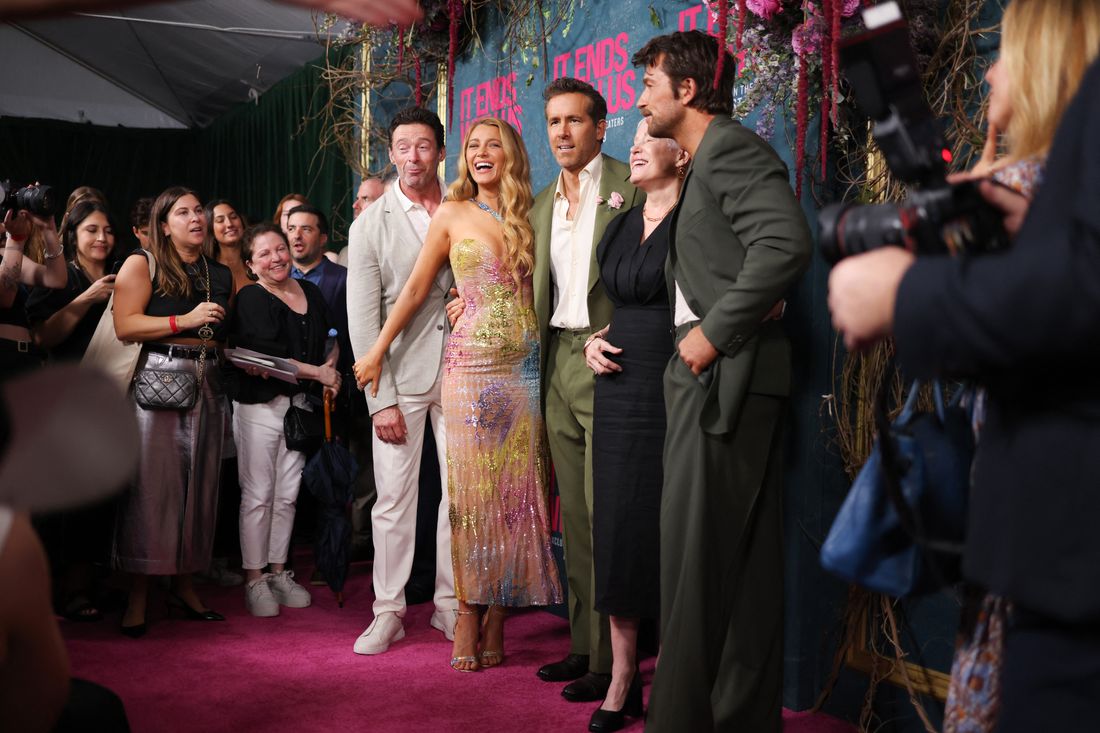
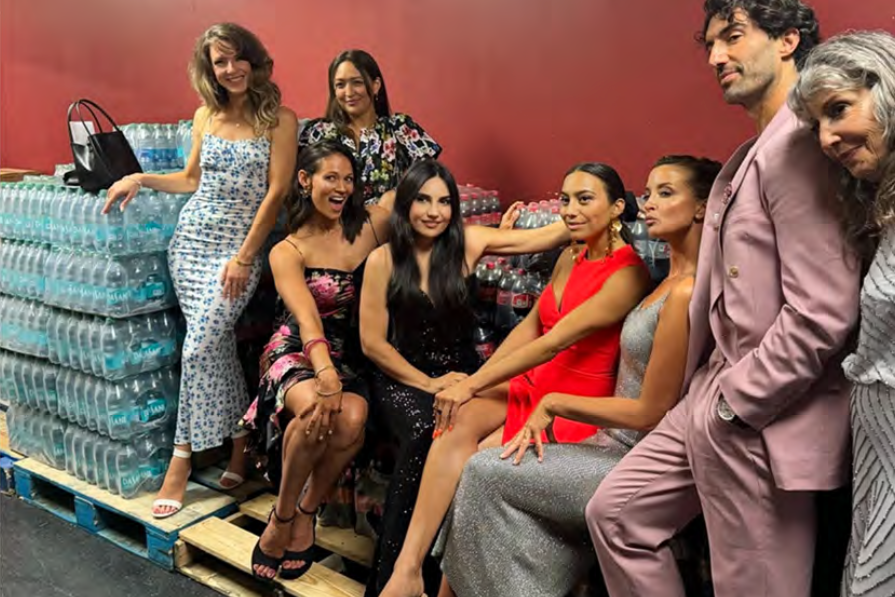
Baldoni challenged Lively’s threat to boycott her own film. The two hadn’t spoken for months, but their representatives worked out a deal. Baldoni arrived at the premiere in a pale-pink suit and walked the red carpet, but says Lively had him and his group moved to a basement room filled with cases of Coke and Dasani. They watched the movie in a separate theater before attending their own after-party. Later, Hoover confessed that she likely would have refused if Baldoni had asked for a photo.
VII.
‘He Wants to Feel Like She Can Be Buried’
It quickly became clear to online fans that there was trouble brewing. Blake Lively and Justin Baldoni, the movie’s stars, hadn’t been photographed together at the premiere, and Lively wasn’t following Baldoni or the rest of the cast on Instagram. While Baldoni publicly praised Lively—saying she improved everything she touched—he worried she might start a subtle campaign against him. He explained to his publicist that the tactic would be to drop small hints, encouraging fans to investigate further, a strategy he referred to as ‘the Taylor model.’
Baldoni and his team were preparing to address the growing online drama surrounding Blake Lively. Jamey Heath had asked someone at Wayfarer to create a timeline, which included negative comments and alleged conflicts Lively had with other celebrities. Baldoni shared a tweet with Abel, detailing accusations of bullying against Hailey Bieber, suggesting a pattern of behavior. As speculation increased, Abel informed Heath and Wayfarer employee Mitz Toskovic that she was meeting with a writer for People, Us Weekly, and other publications. Abel explained that the writer was fully aware of the situation and prepared to publish a story portraying Lively as misusing feminist ideals, as soon as they gave the go-ahead. She emphasized the writer’s strong dislike for Lively and willingness to help. Toskovic responded with an excited GIF.
Baldoni sought additional support, and Abel connected him with Melissa Nathan, a crisis communications expert from the Agency Group (TAG). Nathan had previously represented high-profile clients like Drake, Travis Scott, and Johnny Depp during his legal battle with Amber Heard. TAG created a plan outlining potential responses. One strategy they suggested was to highlight Baldoni’s strong reputation and history of advocacy, while contrasting it with what they described as Lively’s less positive standing in the industry. The plan also proposed subtly spreading stories about how feminism could be used negatively, and suggested that people close to Lively, like Taylor Swift, had been accused of using aggressive tactics to get their way.
Baldoni remained unconvinced and told Abel he wasn’t impressed with the prepared statement. He felt his attempts to protect himself weren’t strong enough. Abel countered that honesty was his best defense. However, she also shared Baldoni’s anxieties with Nathan in a text message that would later become a key piece of evidence in Lively’s accusations, stating, “He wants to feel like this can all be put to rest…”
Nathan agreed, but cautioned that sending documents didn’t allow them to promise any specific actions, as that could create legal problems. She specifically stated they couldn’t put in writing anything about harming the person in question. Nathan worried about sensitive requests appearing in the wrong hands, dismissing the memo as simply paperwork. She alluded to their ability to make problems disappear for others, but emphasized she couldn’t explicitly state that in writing. She playfully told Abel she had a gift, but jokingly assured him it wasn’t something drastic – she hadn’t harmed anyone and sent them in a package.
Leaked text messages show public relations teams working hard to influence how reporters covered the story, each trying to favor their client. When the film came out, both The Daily Mail and Page Six published competing articles about a disagreement between cast members. The Page Six article was written by Nathan’s sister, Sara Nathan, a senior editor at the New York Post, and alleged that Baldoni had made Lively feel uncomfortable and that the rest of the cast didn’t get along with him. Melissa Nathan felt betrayed, claiming her sister had shared confidential information. She texted, “I don’t understand where you got this information, because some of it I told you in confidence.” Sara responded that Lively’s publicist had provided the details weeks earlier, stating, “She said Blake felt uncomfortable. She even called him a sexual predator!”
Around this time, Melissa Nathan introduced Baldoni and Wayfarer to Jed Wallace, who ran a company that helped people manage crises. Nathan had worked with Wallace before. Wallace founded Street Relations and has worked as a publicist for a diverse range of clients, including Crunch Fitness, a Beverly Hills plastic surgeon, and a motivational speaker who focuses on anti-bullying. However, his work goes beyond typical public relations. He once described himself online as a “hired gun,” and others have referred to him as a fixer. It seems part of his business involves resolving online issues for clients. His legal team has stated that Street Relations assists people who are being unfairly attacked, extorted, doxed, swatted, scammed, or need help with frightening situations.
Since Lively’s complaint, the Baldoni group has maintained that Wallace was hired only to “monitor” online discussions – a description that seems understated given the $30,000 monthly fee Baldoni agreed to pay him, on top of the $15,000 already going to Nathan. Meanwhile, TAG actively promoted Wallace’s skills to Wayfarer, calling him and his team “absolute magicians” capable of “directly influencing online forums to shape the conversation about Justin and Wayfarer in real time.” Nathan assured them that all of this would be done discreetly and untraceably. Wallace expressed his enthusiasm to Baldoni’s team, stating that this type of work was his team’s specialty and that he was prioritizing it across all his platform specialists, adding that they were working at full speed.
Text messages show that Baldoni and his team believed they had hired someone capable of significantly influencing online content. One employee at TAG struggled to find social media posts about a negative Daily Mail article concerning Baldoni, leading her to speculate if “Jed” had been asked to hide the link. Baldoni’s team sent links to the digital team, asking them to promote the content or encourage comments. Baldoni specifically asked his team to increase views of a TikTok video from a user named @thickjewishgirl, who was critical of Lively. Shortly after hiring Wallace, the TAG employee noted a change in social media, attributing it to Jed and his team’s efforts to focus attention on Blake and Ryan.
Baldoni was also worried people might think his team was trying to harm Lively’s reputation. A week after the film’s release, he shared a podcast clip with Abel where the hosts expressed surprise at the overwhelming support he was receiving. One host explained that the intensity of the support felt unrealistic, and compared it to accusations that Johnny Depp used fake accounts during his legal battle with Heard.
“Are we doing anything to influence this stuff?” Baldoni asked.
Abel firmly stated he wanted genuine support, emphasizing, “No bots, no fake accounts – just real people defending you.” Nathan corroborated this, swearing that during Johnny Depp’s case, the team consisted of “four real women” and absolutely “no Russian bots.” When Baldoni pointed out suspicious comments from anonymous accounts defending him, Nathan assured him they weren’t involved. He explained that modern digital teams are sophisticated enough to avoid using such an obvious tactic, suggesting the opposing side was behind it.
“Okay,” Baldoni said, seemingly mollified. “Thank you 🙏♥️️.”
VIII.
‘We Are Going to War. I Feel So Alive Hahahahah’
Despite the controversy surrounding it, the movie It Ends With Us was a major success, earning over $50 million in its first weekend and ultimately grossing $350 million globally. However, the negative attention nearly overshadowed the positive results. An analysis by Sony of online conversations after the opening weekend revealed a significant imbalance: 89% of social media discussions were supportive of actor Brandon Baldoni, while only 4% favored Blake Lively.
Initial criticism of Blake Lively focused on the seemingly lighthearted way she promoted her film, considering its serious subject matter of domestic violence. A promotional video where she encouraged viewers to “grab your friends, wear your florals” was widely criticized online. Lively later explained that she and the cast were simply following the marketing strategy, which specifically asked them to avoid discussing the film in a way that felt depressing or overly serious. Meanwhile, Justin Baldoni, a key figure involved with the film, instructed his social media team to share impactful stories from survivors of domestic violence, emphasizing the importance of the next 36 hours. This contrast quickly led to comparisons on TikTok, highlighting the difference between Lively’s cheerful approach and Baldoni’s more earnest one.
Rumors began to surface about a power struggle behind the scenes of the film, and criticism of Blake Lively focused on the idea that she had mistreated and excluded director James Baldoni, even preventing him from participating in promotional events. A Sony executive, in a text message, noted the irony that despite the film’s huge success (projected to earn over $300 million), Lively’s career might suffer as a result, though he pointed out that Anne Hathaway had overcome a similar situation. He felt the situation was particularly unfortunate because Lively seemed to have created the problem herself. According to the executive, if Lively had simply allowed Baldoni to attend the premiere, hadn’t orchestrated a social media campaign against him, or generally prioritized the film’s success over personal feelings – as is common in the entertainment industry – the controversy never would have happened.
Reynolds, as he had done previously, attempted to rally support for Lively. He sent a lengthy message to their WME agent, Warren Zavala, explaining how to address the growing crisis. “Sorry for the long message,” he began, before sharing a 1,049-word text detailing his plan. Reynolds believed Baldoni and others should be the ones to address the rumors and gossip directly, and insisted Lively shouldn’t be asked to fix the messy situation. He argued that if Baldoni truly believed in the principles he discussed on his podcast, he would take responsibility. Reynolds also noted that many of Lively’s production complaints hadn’t become public yet. Zavala agreed with Reynolds’ assessment of Baldoni, calling him dishonest, but cautioned against rushing into action. He worried that speaking out might be a mistake and could backfire.
A few days later, Reynolds contacted Zavala and WME chairman Whitesell, expressing his frustration. He admitted to being angry, but said he was holding back even more intense feelings. He was upset about the negative attention his wife was receiving, especially after being asked to compromise throughout the film’s production, only to then be publicly criticized. Reynolds also hadn’t been able to celebrate the success of Deadpool & Wolverine, which was projected to earn over a billion dollars. He felt both he and his wife were missing a strong defense from the company and described the situation as deeply troubling. He specifically wanted the company’s CEO, Ari Emanuel, known for his aggressive approach, to take decisive action.
WME offered to discuss a statement with Baldoni and Wayfarer. The proposed statement acknowledged that the production of It Ends With Us had issues and that WME took full responsibility. It also stated that any criticism directed at Lively, Hoover, or others working on the film was their responsibility to address.
I couldn’t believe what I heard when they shared their idea. Baldoni’s wife, Emily, was immediately furious, saying something like, ‘Absolutely not!’ She felt this person had created their own problems and now had to deal with the consequences, and she was ready to stand up and fight for what she believed in.
“You heard her,” Baldoni said. “Let’s fight.”
Melissa Nathan also dismissed the idea, reacting with strong disapproval. She told Abel it was a statement that could ruin someone’s career.
“We are going to war,” Abel said. “I feel so alive hahahahah.”
By the end of August, Baldoni was still having nightmares and worried Lively might try to harm him. Nathan reassured him, saying the public had lost interest in the situation. “I honestly don’t know what she’ll do next,” Nathan added.
Baldoni explained that, knowing her personality, this person truly believes she is correct and that everything happening to her is unfair. He finds it difficult to accept that she’s finished with whatever she’s doing.
IX.
‘I Think This Bitch Knows Something Is Coming’
In July 2024, before the movie became a public issue, Abel informed her manager, Stephanie Jones, that she was leaving Jones’s company, Jonesworks, to launch her own public relations firm. Jones was a well-known, aggressive publicist who represented major celebrities like Dwayne “The Rock” Johnson, Jeff Bezos, and Tom Brady. Abel had been the main contact for actors Baldoni and Wayfarer, and it appeared she would be taking their $20,000 monthly contract with her. Jones reacted negatively, telling Abel that no one else would support her as she had and that Abel would eventually realize this.
In August, Abel visited the Jonesworks office in Beverly Hills. She met with a lawyer and an IT specialist in a conference room. Unfortunately, she gave them her company iPhone – a phone she’d had since high school and used for personal communication. This gave Jones access to all of Abel’s texts, calls, and emails, including her conversations about Baldoni and Lively. Jones then contacted Abel’s friend, Ashley Avignone, an interior designer who also knew Lively and Taylor Swift. Swift later texted Lively, shocked that Abel had called asking for information about Blake [Lively].
“It changed my life,” Lively said.
Lively had suspected for some time that Baldoni was responsible for the negative online attacks she was receiving. On the opening night of her movie, she texted her agent, claiming he’d even hired a crisis management team, similar to the one used by Johnny Depp, to spread false information about her and boost his own reputation. Now, she believed she had proof. Conversations referencing efforts to damage Lively’s career, and the work being done by Jed Wallace and his team, appeared to confirm a deliberate campaign against her. Lively’s lawyers used this evidence to obtain the text messages through a legal request, intending to use them in a possible lawsuit without Baldoni knowing they had them.
By the end of 2024, the people behind the movie It Ends With Us were experiencing great success. Both the studio, Sony, and the production company, Wayfarer, were projected to earn substantial profits, and Colleen Hoover was even discussing luxury car purchases with a Sony executive just before Christmas. She asked for advice on whether a Lamborghini Urus would be a good choice, expressing some concerns about its interior. Meanwhile, actor Justin Baldoni received an award recognizing his work in supporting women and fighting against gender-based violence.
In December, Taylor Swift texted Blake Lively, sharing a People magazine interview where Justin Baldoni discussed experiencing sexual trauma in college. Swift speculated that Baldoni might suspect something was happening, joking that he seemed to be preparing a defensive reaction. When Swift asked if preparations were on schedule, Lively confirmed a minor delay but assured her it would be worth it, explaining they were finalizing a legal complaint that would include several text messages. Swift responded positively, saying it was perfect and that using Baldoni’s own words was the best way to expose dishonesty and hypocrisy.
Lively wondered if you could picture feeling as sure of success as a predator, believing you’ll never be caught.
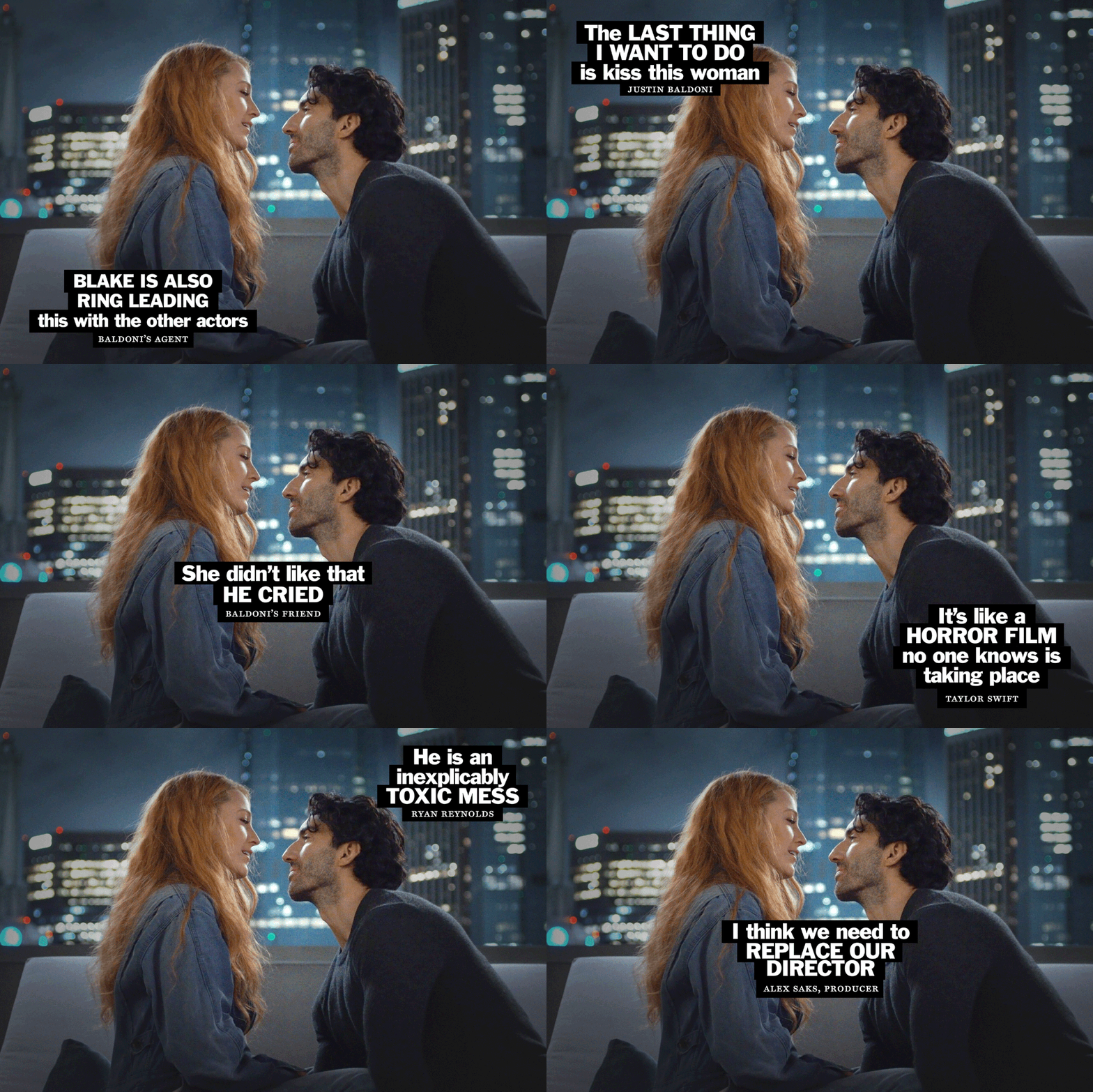
“It’s like a horror film no one knows is taking place,” Swift said.
“Oh but they will,” Lively said.
Just before Christmas 2024, Lively took legal action against Baldoni and others. She described upsetting incidents that happened on set and claimed Baldoni and his team tried to damage her reputation afterward. These claims were publicized in a major New York Times article, co-written by Me Too investigator Megan Twohey, which shifted public perception from Lively being embarrassed to appearing victorious – for herself, and for others who had been publicly attacked. The cast of The Sisterhood of the Traveling Pants all voiced their support, as did Amber Heard, who had previously been involved in a legal battle with Johnny Depp. Baldoni’s talent agency, WME, quickly ended their relationship with him. Taylor Swift told Lively, “You did it. A cancellation has never been overturned so quickly.”
X.
‘Right Now I Am in the Mindset of My Name Is Onigo Montoya’
Melissa Nathan was talking with a colleague while she and Baldoni discussed how to react to the article in the Times. Baldoni had brought in Bryan Freedman, a Los Angeles lawyer with a reputation for being extremely aggressive. Freedman had previously told The Hollywood Reporter that anyone who crossed his client would face serious consequences, and he seemed to be advising Baldoni to respond forcefully.
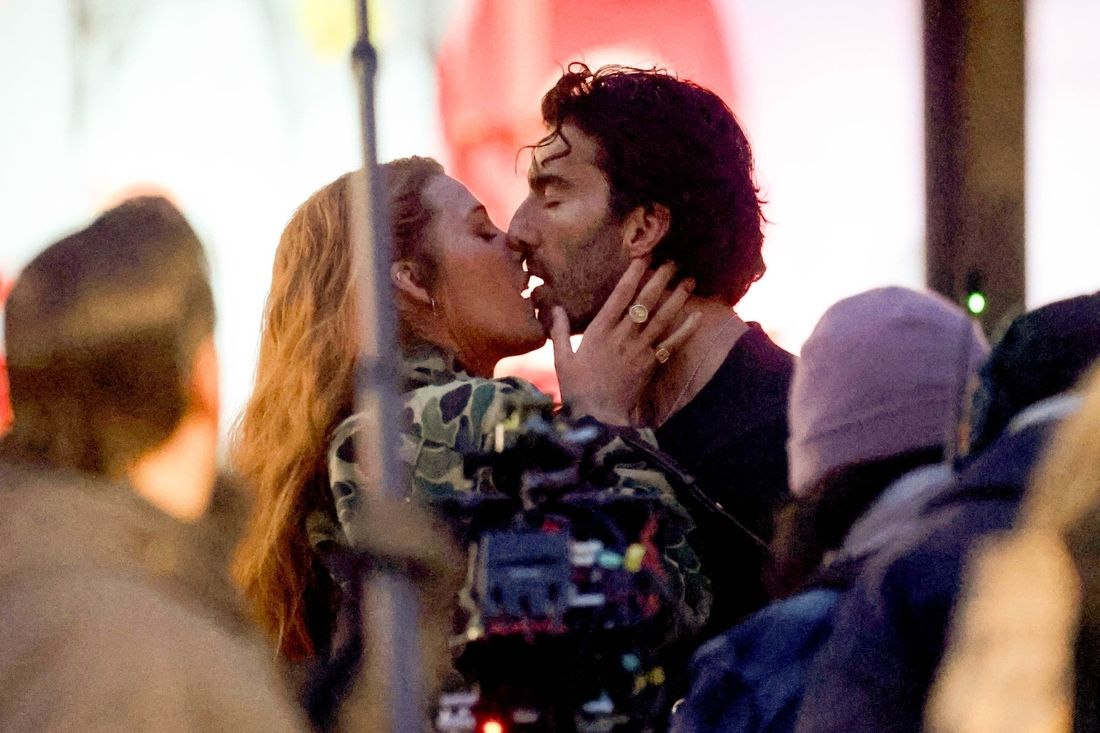
Following Blake Lively’s initial complaint and subsequent lawsuit, Jason Baldoni’s team responded with a defamation countersuit and a detailed 168-page timeline. This timeline included a large amount of texts, emails, and documents that complicated some of Lively’s claims. Lively had said she felt uncomfortable with Baldoni and Heath entering her trailer without permission while she was breastfeeding, but Baldoni presented a text message where Lively invited him in to rehearse lines while she was pumping. Lively also alleged that Baldoni unexpectedly bit and sucked on her lower lip during a scene. Baldoni countered that Lively initiated unscripted kissing during filming, kissing him once in one take and twice in another, with his lawyers pointing out that the number of kisses seemed to change based on her preference.
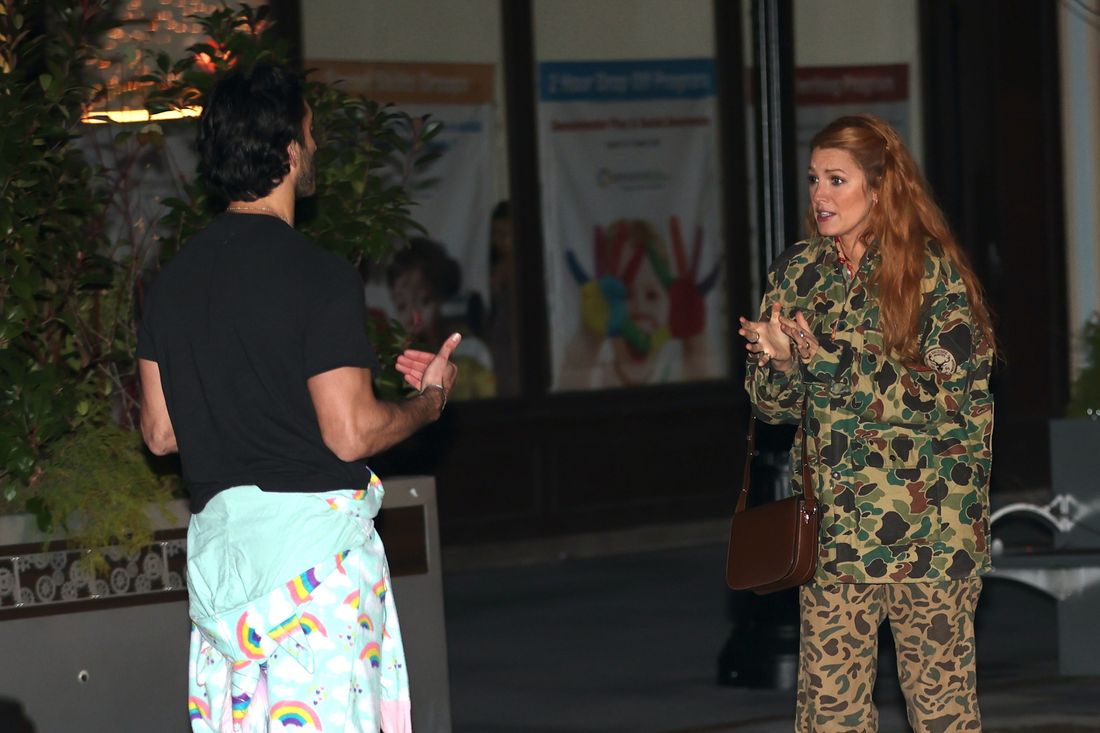
A major point of contention revolved around a dance scene. Lively alleged that Baldoni made unwanted, improvised advances – like kissing her forehead, pressing his face against hers, and touching her lips – which made her feel uncomfortable. He also complimented her scent. Baldoni’s legal team responded by releasing ten minutes of footage from the scene. While viewers could interpret Lively as being uncomfortable, it was also possible to see Baldoni simply acting and improvising within acceptable limits. He did admit to complimenting her, but only after she joked about getting spray tan on him. Nathan Fielder reported to Page Six that the dance video was gaining 2,000 views every minute. This public legal battle appeared to be shifting public opinion back in Baldoni’s favor, even though his countersuit was ultimately dropped. Lively’s lawyer, Freedman, publicly stated his intention to depose Lively at Madison Square Garden.
Both sides in the dispute were firmly committed to their positions and had the means to continue fighting. After Blake Lively voiced her concerns, Sarowitz jokingly referenced the movie The Princess Bride in a text to Rainn Wilson, saying he was ready to defend his company. He had previously told Justin Baldoni’s agent he was prepared to spend $100 million to protect the company if needed. This threat led to a disturbing incident where someone firebombed Sarowitz’s home and threatened his daughter, referencing the $100 million figure. Amid the controversy surrounding the film It Ends With Us, Sarowitz met with filmmaker Claire Ayoub, who asked that Baldoni not promote her upcoming movie. Ayoub recorded their conversation, during which Sarowitz issued a stark warning, comparing his defense of the studio to Israel’s response to Hamas, stating there would be “two dead bodies” – though he later clarified he meant people being professionally ruined, not literally killed.
The legal costs were clearly adding up quickly. As I reviewed the case files, it seemed like more and more lawyers were getting involved. There were 27 from seven different firms just trying to coordinate a time and place for a deposition. Another 29 were emailing about a video of a home birth, making sure they had the right one. Thirty-two more were discussing whether confidential information had been accidentally shared between legal teams. I thought I’d reached the end of the list when I saw 37 lawyers on an email about a subpoena for the gossip blogger Perez Hilton, but then I found another 38 debating whether a deposition should start at 8 or 9 a.m. The case was growing out of control – one exhibit even had its own sub-exhibit! When the lawyers for one side asked for information about how a certain platform was created, the opposing lawyers argued that this information was proprietary, as the platform was now part of the larger Marvel Cinematic Universe.
XI.
‘I Think Blake Lively Is Ready to Direct’
In April, Judge Lewis Liman dismissed several of Lively’s accusations, including those related to sexual harassment. The key issue now is whether Baldoni’s public relations efforts went too far – specifically, if they moved from typical PR into a retaliatory smear campaign. The judge stated that there’s a point where defending oneself becomes actively seeking revenge, and a jury could see Baldoni’s actions that way. Lively must prove that Baldoni and his team deliberately stirred up negative online reactions against her. (Baldoni and Abel are no longer part of the lawsuit, leaving Wayfarer, TAG, and the movie’s associated LLC as the official defendants.) Lively has presented evidence suggesting an unusual surge of negative comments on TikTok and Reddit. Baldoni will likely argue his team was simply managing a public relations crisis and protecting his reputation, and that any negative reaction to Lively was genuine. Jed Wallace, Baldoni’s digital strategist, claims in court documents he didn’t post anything online or ask anyone else to. He’s essentially argued his company had very limited capabilities, even describing them as “minimal” when questioned by Lively’s lawyer about what his company could do.
While the winning side will likely celebrate, it’s unlikely either party will escape the situation without some damage to their reputation.
Baldoni hasn’t become the successful director and leading man he aimed to be; instead, he’s become ostracized in Hollywood. Following Blake Lively’s accusations, Ari Emanuel even mockingly referred to him as “Baloney” in public. Although the harassment claims were dismissed, his on-set behavior remains widely known and remembered, particularly by women in the industry, and has become his defining characteristic. He owns the rights to the sequel to It Ends With Us, a project that would likely be very profitable given the success of the first book, but it’s unrealistic to expect the original cast and crew to work with him again. Baldoni himself hinted at this at the premiere, suggesting someone else should direct and even praising Blake Lively as a potential director for the sequel.
At $350 million, the movie was expected to launch Lively into A-list stardom, but her career is now uncertain. Despite opportunities to move forward, Lively repeatedly chose to intensify the conflict, seemingly believing traditional Hollywood tactics – publicity and legal force – would win a battle already raging online. Now, with Baldoni fighting back just as strongly, the outcome rests with a jury. Lively insists the issue is larger than herself, stating she will continue to fight against those who harm and silence victims, emphasizing her privilege to do so. She concluded her statement with a dragon emoji.
Read More
- Netflix’s Little House On The Prairie Reboot: Release Date, Cast & Everything We Know
- Off Campus Season 1 Soundtrack Guide
- YouTuber arrested after viral AI bodycam videos spark real police complaints
- Silver Rate Forecast
- Prime Video’s New R-Rated Spy Thriller Is Officially No.1 On Streaming Despite Poor Reviews
- Brent Oil Forecast
- Peaky Blinders: The Immortal Man’s Tommy Shelby Is a Better Father Than Michael Corleone
- Gold Rate Forecast
- EUR ZAR PREDICTION
- Bulgakov’s Take: Koreans Bet the Farm on Chips, Crypto, and Chaos
2026-05-01 15:11