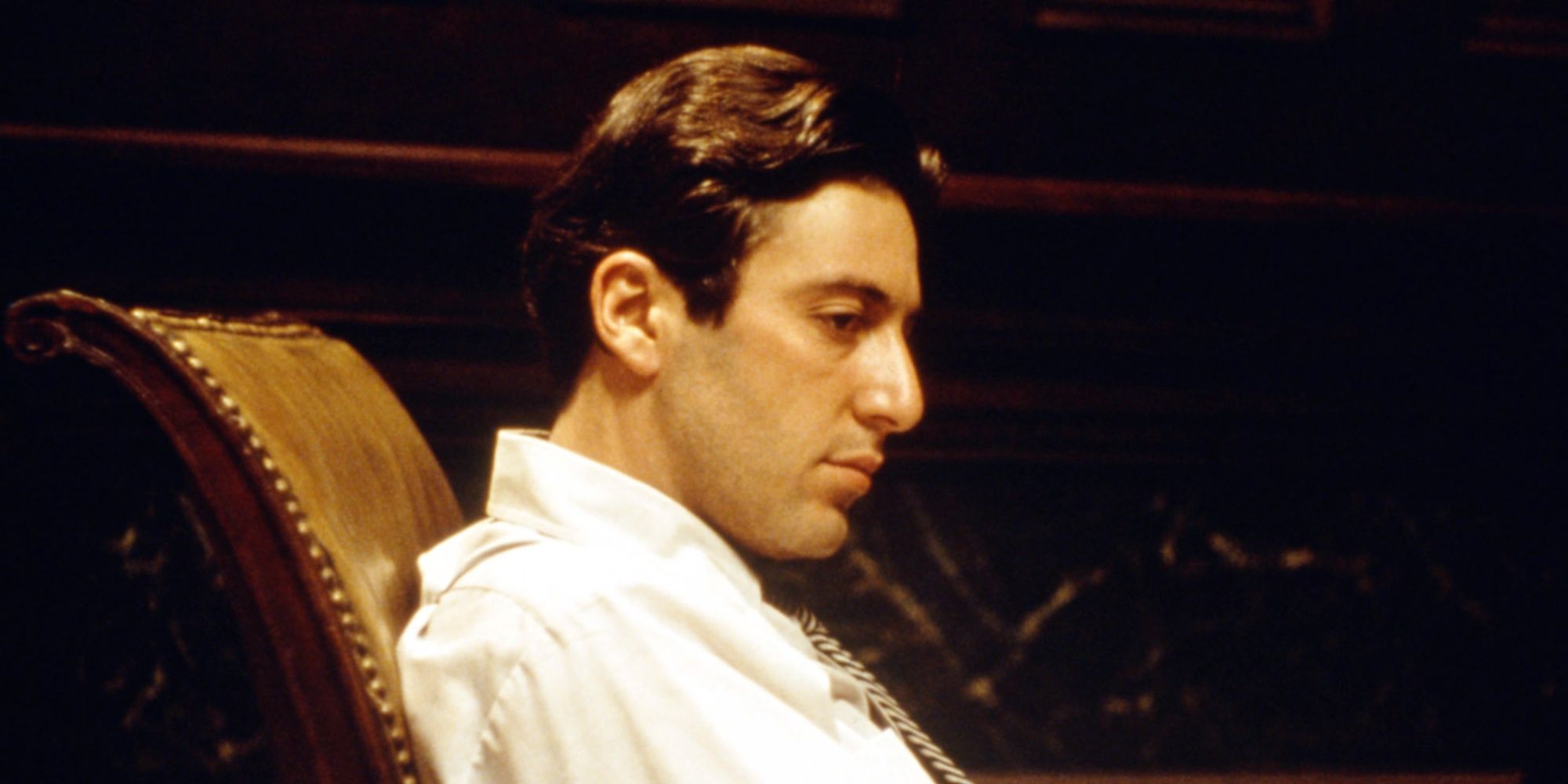
Francis Ford Coppola is best known for The Godfather, a film that revitalized his career after a string of unsuccessful projects. This brilliant adaptation of Mario Puzo’s novel not only launched the careers of Al Pacino and Diane Keaton but also stood out from other gangster films by deeply exploring the complex relationships within a crime family. One specific scene, in particular, elevated The Godfather to the status of a true masterpiece.
Michael Corleone experienced the biggest change of anyone in the family throughout the movie, ultimately becoming the ruthless head of the Corleone Mafia. The contrast between the sacred setting of his godson’s baptism and the violent acts he orchestrated outside the church was brilliantly portrayed. This masterful editing and direction created one of the most iconic and powerful climaxes in film history.
The Baptism Montage Defines The Godfather
The scene started peacefully with Michael being named godfather at a baptism. However, the mood quickly shifted as the film cut back and forth between the ceremony and unsettling images of violence being prepared. While Connie lovingly held her baby (played by Sofia Coppola), we saw Michael’s men arming themselves and preparing to kill his rivals. Accompanied by ominous organ music, this juxtaposition made it clear that something dreadful was about to occur.
Despite publicly rejecting sin and violence while in church, Michael Corleone was secretly orchestrating a ruthless plan to solidify his control over his family and the Mafia. He ordered the brutal killings of the heads of the other Sicilian families, along with former allies like Moe Greene and Tessio, for their disloyalty. The shocking violence of these murders sharply contrasted with the peaceful setting of his nephew’s baptism, creating a disturbing irony. While Michael outwardly professed repentance, he knowingly authorized terrible acts to be committed in his name.
This scene is incredibly powerful. The actor brilliantly conveys a huge internal conflict just through subtle facial expressions, showing that his words and actions don’t match up. Even when he’s chosen as the baby’s godfather, it’s obvious he’s far from the virtuous man the priest expects him to be. His controlled performance and skillful delivery create a sense of dread, even when he isn’t directly involved in violence.
Most of The Godfather unfolds slowly and in order, but this particular scene is much faster thanks to its editing. It combines around 67 shots, cutting back and forth between a baptism – attended by the entire Corleone family – and a series of brutal killings. These killings target anyone who stood in the way of Michael Corleone’s ambition, and are depicted with shocking violence – people are shot in the eye, the heart, in their beds, and even in the street.
After the baptism and returning home, Michael wasn’t finished with his business. He questioned Carlo about Sonny’s murder, assuring him he would simply be exiled. But as soon as Carlo confessed, Michael had him killed by Peter Clemenza, a shocking act considering Carlo was family through marriage.
Michael Corleone’s Transformation Was Complete In This Scene
Michael’s baptism was a pivotal moment, symbolizing his complete descent into the world of the Mafia and his full assumption of the Godfather role, not just for his niece, Connie’s child, but as the new Don himself. Throughout the film, Michael had been steadily moving towards ruthlessness, and the baptism marked the point of no return. Initially, he was a war hero hoping to live an honest life, separate from his family’s criminal activities, a path his father, Vito, encouraged, wanting a legitimate success story for the family.
The environment the Corleone family operated in made it incredibly difficult for Michael to avoid becoming involved in criminal activity. When Barzini and Sollozzo tried to kill Vito, Michael was forced to step up and protect his father, eventually taking control of the family’s operations. While Sonny was still alive, his impulsive temper made him an unsuitable leader. Michael, in contrast, was both strategic and ruthless, making him a far more formidable figure than either his father or brother.
Michael’s ruthlessness became clear when he deliberately killed two men, despite knowing it violated Mafia code. He showed no mercy, then fled to Sicily. However, he soon had to return home after Sonny and his wife, Apollonia, were killed in a bombing intended for him. This event set Michael on a relentless pursuit of power, abandoning the restraint his father had shown as the family’s leader.
During Vito’s time as Don, a silent understanding of respect existed, and he would never have harmed other leaders to increase his own power. Michael, however, took a much more violent path to secure his position, and the scene during his nephew’s baptism perfectly symbolized his complete descent into ruthlessness. The honest and principled man he once was had vanished, replaced by someone cold and merciless.
Michael Goes Cold, Even To His Family
Okay, let’s talk about the ending of The Godfather. For me, the baptism scene coupled with what happens immediately after is where the film truly shifts. We spend so much time seeing the Corleone family emphasize loyalty and protecting each other, and even Michael initially enters the ‘family business’ claiming it’s for their safety. But that all goes out the window. It’s not about family anymore, it’s about power. And the moment he has Carlo Rizzi murdered? That’s the point of no return. He promised Carlo protection, then breaks his word instantly. It’s a chilling display, and it completely seals Michael’s descent into moral darkness. It’s a masterful, if disturbing, conclusion.
Michael showed no remorse for the deaths he’d ordered, not even when it came to Carlo. He lied without hesitation to Kay and Connie when questioned about Carlo’s murder, and remained completely unaffected by Connie’s obvious pain.
I always found it chilling how Michael’s early decisions hinted at the darkness to come. Seeing him order the death of his own brother, Fredo, in The Godfather: Part II – it was brutal, born from a feeling of betrayal. But what really struck me was how that act haunted him. It wasn’t a clean victory; it slowly eroded him, and you could see the weight of it all in The Godfather Coda: The Death Of Michael Corleone. It truly weakened him as he aged, and it was heartbreaking to witness.
Michael’s ambition for power and safety ultimately cost him his humanity, as he became consumed by the ruthless demands of his business. Unlike his father, Vito, who skillfully balanced strength with compassion as Don, Michael couldn’t find that equilibrium. The irony was stark: he’d publicly denounce the Devil and his sins in church while simultaneously destroying families – even his own – through his actions.
Michael’s past actions ultimately led to his ruin, but the baptism scene was brilliantly done. Through careful editing and powerful imagery, The Godfather revealed the inner thoughts of its ruthless characters and foreshadowed the events that would cause Michael’s demise.
Read More
- United Airlines can now kick passengers off flights and ban them for not using headphones
- Crimson Desert: Disconnected Truth Puzzle Guide
- All 9 Coalition Heroes In Invincible Season 4 & Their Powers
- How to Get to the Undercoast in Esoteric Ebb
- Warframe Voruna Prime access begins on April 8 for all platforms, new deluxe cosmetic Warframe skins revealed
- All Golden Ball Locations in Yakuza Kiwami 3 & Dark Ties
- Zendaya’s 4 Big 2026 Movies Could Beat Brie Larson’s Box 2019 Office Record
- Dakota County’s plan to end hunger involves locking mayors in escape rooms
- Katanire’s Yae Miko Cosplay: Genshin Impact Masterpiece
- Mewgenics vinyl limited editions now available to pre-order
2026-01-06 01:09