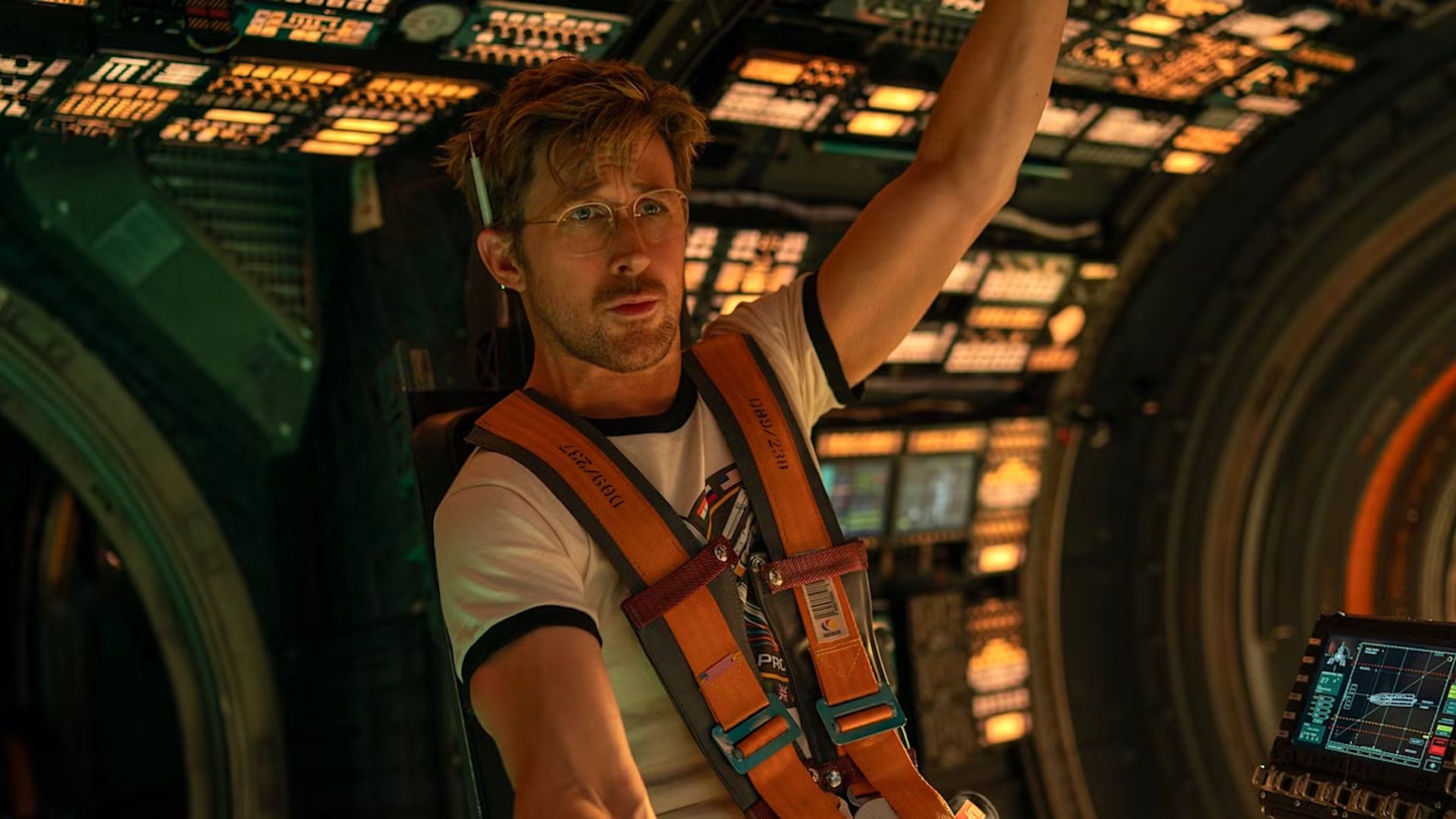
The real excitement in the sci-fi adventure Project Hail Mary doesn’t come from whether astronaut Ryland Grace can succeed in his dangerous mission to save Earth. Instead, it stems from the creative dynamic between the book’s author, Andy Weir, and the film’s directors, Phil Lord and Chris Miller.
Andy Weir’s realistic and scientifically detailed writing first captured audiences with 2015’s The Martian, which cleverly showed how to survive on Mars using resourceful methods. In contrast, directors Phil Lord and Christopher Miller, known for the playfully self-aware humor of 2014’s The LEGO Movie, bring a very different style. This seems like an odd pairing, given how much science is in Weir’s book. While the directors mostly respect the original story, the movie’s blend of science, comedy, and emotion doesn’t always flow perfectly. However, their direction is fantastic, creating stunning visuals that easily overshadow any minor tonal issues.
The film boasts stunning visuals thanks to cinematographer Greig Fraser and production designer Charles Wood, who create a believable and detailed world, from the scale of space to the interiors of the spaceship. However, Ryan Gosling’s performance is the true standout. He delivers a charismatic and funny performance, easily carrying the film as a leading man. It’s a shame this levity occasionally clashes with the movie’s serious premise. This is immediately apparent in the opening scene, where Grace (a name that feels overly symbolic) awakens from a coma, confused and trapped on a spaceship. He soon discovers he’s the sole survivor of a desperate mission to save Earth from tiny microbes that are blocking out the sun.
When adapting Andy Weir’s novel, screenwriter Drew Goddard (an Oscar nominee for The Martian) subtly references classic science fiction films like Steven Spielberg’s Close Encounters of the Third Kind. At times, Project Hail Mary captures a similar sense of wonder and discovery as Spielberg’s film. The movie, which is best experienced in IMAX, powerfully portrays the immense pressure faced by the protagonist and the vastness of his surroundings. It also echoes Spielberg’s E.T. when the protagonist’s ship meets another vessel carrying a single traveler on the same critical mission.
Amazon MGM Studios
Okay, so there’s this passenger on the ship, and he’s amazing! He’s like a rocky spider with five legs, and Grace ends up calling him Rocky. It sounds weird, but even though he doesn’t have a face, you totally believe he’s alive and that Grace is really connecting with him. Honestly, their relationship is what the whole movie hinges on – these two people, both trying to save their planets, finding each other. But sometimes the directors play it a little too much for laughs. Once Grace figures out how they can talk, Rocky becomes super chatty (James Ortiz does his voice!), and that’s when things get a little less compelling. It’s like they become just roommates, and I kind of lost some of that emotional connection then, though it wasn’t a huge problem.
The connection between Grace and Rocky, with their shared dancing, has some sweet and friendly moments. However, it occasionally feels a bit too fantastical and emotionally distant, making us miss the intense, realistic problem-solving that the director is known for. Thankfully, those moments of urgency are still present. While the movie understandably simplifies the complicated ideas from the book, it remains intelligent and engaging, particularly in the flashbacks that explain how Grace became humanity’s final hope.
Amazon MGM Studios
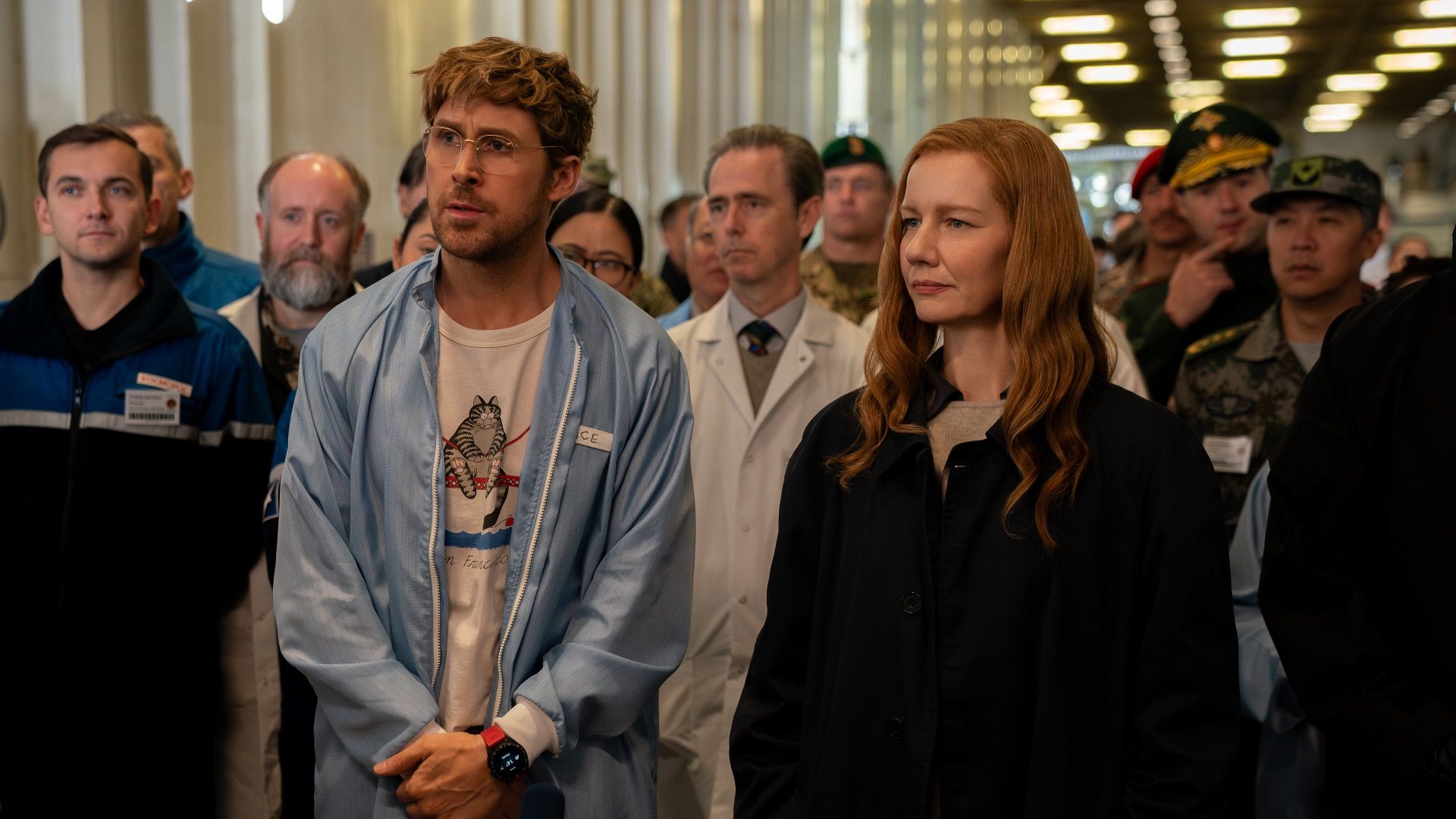
Sandra Hüller, fantastic as always, plays Eva Stratt, the determined leader of a desperate mission to save Earth. She recruits Grace, a former science teacher, to investigate a rapidly dimming sun that threatens humanity with extinction within 30 years. Even if the complex science goes over your head, it’s thrilling to watch Grace use simple tools like duct tape and foil to uncover the cause: a microscopic organism called Astrophage that’s feeding on the sun’s energy. When scientists realize the distant star Tau Ceti is unaffected, Grace is sent on a one-way trip to find out why, becoming humanity’s last hope.
Subscribe to the newsletter for richer film and science insight
Join the newsletter to dive into how directors, performances, and scientific ideas shape movies. Subscribe for thoughtful analysis and context that illuminate films like Project Hail Mary and broader cinema-science conversations.
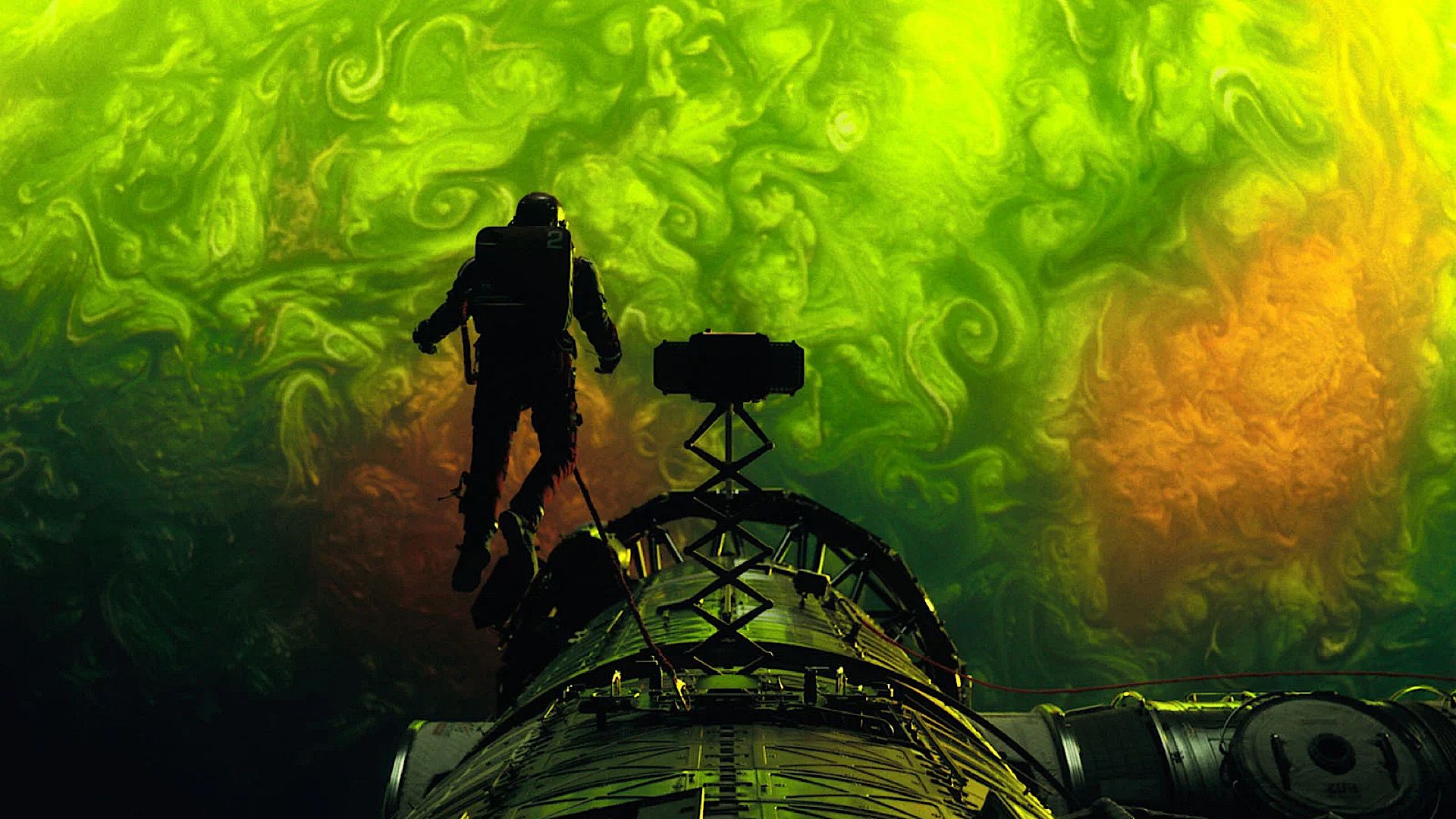
It’s been a while since directing duo Lord and Miller brought us a live-action movie – their last was the funny 22 Jump Street in 2014. Now, they more than make up for that gap with incredible visual imagination, leading to a truly stunning scene where characters Grace and Rocky fly along the edge of a planet’s atmosphere to gather a crucial microbe. Project Hail Mary feels as epic and ambitious as Christopher Nolan’s Interstellar. While the film’s mix of grand spectacle and scientific accuracy sometimes clashes with lighter, less serious moments – particularly when Rocky, a believable alien, tries to be funny – it’s a small trade-off. The movie is visually beautiful, champions teamwork, and treats science with respect, making it well worth watching.
Read More
- United Airlines can now kick passengers off flights and ban them for not using headphones
- Crimson Desert: Disconnected Truth Puzzle Guide
- How to Get to the Undercoast in Esoteric Ebb
- All 9 Coalition Heroes In Invincible Season 4 & Their Powers
- All Golden Ball Locations in Yakuza Kiwami 3 & Dark Ties
- All Itzaland Animal Locations in Infinity Nikki
- Katanire’s Yae Miko Cosplay: Genshin Impact Masterpiece
- Warframe Voruna Prime access begins on April 8 for all platforms, new deluxe cosmetic Warframe skins revealed
- HBO’s Harry Potter Is Already Breaking My Heart
- Zendaya’s 4 Big 2026 Movies Could Beat Brie Larson’s Box 2019 Office Record
2026-03-13 20:49