In the labyrinthine realm of digital chimeras, the so-called Pi Network, a project as controversial as a chess game played with a deck of cards, has once again unfurled its banner of clarifications. The Core Team, those self-proclaimed custodians of cryptographic dreams, have deigned to issue a more “comprehensive” guideline-a term as inflated as their promises-for the beleaguered users attempting to navigate the second migrations. A task, one might add, as straightforward as deciphering a palimpsest written in invisible ink.
Meanwhile, the native token, PI, continues its balletic descent, shedding value like a deciduous tree in autumn. An 8% drop in the past week alone-a performance more tragic than a Nabokov protagonist’s love life.
The Second Migrations: A Kafkaesque Odyssey
On the hallowed Pi Day (March 14), a date as arbitrary as the project’s roadmap, the team regaled their followers with a celebratory post. They extolled the “ecosystem developments”-a phrase as vague as a foggy morning in St. Petersburg-and unveiled the much-anticipated second migrations. This feature, we are told, is the key to unlocking the Mainnet, a destination as elusive as Lolita’s innocence. Yet, the process has left users mired in a quagmire of KYC pages, their tokens trapped in a digital purgatory.
Over 119,000 pioneers, a term as grandiose as it is ironic, have reportedly completed the migration by the end of March. Yet, the chorus of discontent grows louder, with comments on X (formerly Twitter) resembling a Greek chorus lamenting their fate. Months, even years, of waiting, only to be ensnared in the bureaucratic web of two-factor authentication (2FA). Ah, the irony! A security measure designed to protect, yet it binds like a straitjacket.
In response, the Core Team has graciously published new guidelines, decreeing that Pioneers “must set up Pi Wallet two-factor authentication (2FA) through Step 3 of the Mainnet checklist.” A step, they assure us, to “further strengthen the account and wallet security”-a phrase as reassuring as a dentist’s drill. One cannot help but wonder if this is a security measure or a Sisyphean task designed to test the limits of human patience.
To complete first or second migrations, Pioneers must set up Pi Wallet two-factor authentication (2FA) through Step 3 of the Mainnet Checklist.
This step is required to further strengthen account and wallet security before real Pi is transferred, an irreversible and immutable…
– Pi Network (@PiCoreTeam) April 2, 2026
PI’s Plunge: A Token’s Tragic Ballet
The PI token, once a darling of the crypto sphere, peaked in mid-March at a modest $0.30, buoyed by Kraken’s announcement of its listing. Yet, as is often the case in this theater of the absurd, the bears emerged from their hibernation, and the classic “sell-the-news” event sent the asset tumbling to under $0.20 within days. A fall as precipitous as Humbert Humbert’s moral decline.
Since then, PI has been mired in sideways struggles, a dance as aimless as a butterfly in a hurricane. The past week has been particularly unkind, with an 8% drop and a nearly 4% fall in the last 24 hours. It dipped to $0.167, a level as precarious as a tightrope walker without a net, before rebounding slightly. Yet, the $0.17 level remains as elusive as a coherent plot in a postmodern novel.
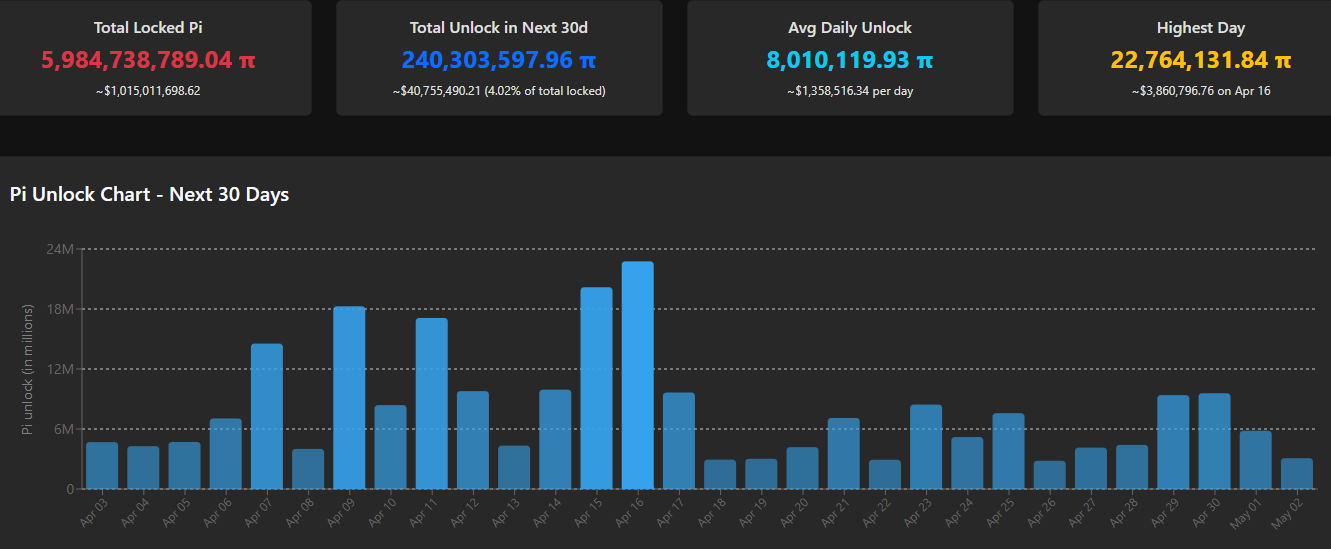
Warning signs abound, like red flags at a bullfight. The token unlock schedule looms large, with an average of 8 million coins set to be released in the next month. And on certain days, a deluge of 18 million or more tokens will flood the market, intensifying the selling pressure. A spectacle as inevitable as the climax of a Russian novel.
Read More
- United Airlines can now kick passengers off flights and ban them for not using headphones
- Crimson Desert: Disconnected Truth Puzzle Guide
- How to Get to the Undercoast in Esoteric Ebb
- All Golden Ball Locations in Yakuza Kiwami 3 & Dark Ties
- Katanire’s Yae Miko Cosplay: Genshin Impact Masterpiece
- All 9 Coalition Heroes In Invincible Season 4 & Their Powers
- All Itzaland Animal Locations in Infinity Nikki
- HBO’s Harry Potter Is Already Breaking My Heart
- Zendaya’s 4 Big 2026 Movies Could Beat Brie Larson’s Box 2019 Office Record
- The Vanishing Context: When AI Minds Lose Focus
2026-04-03 12:40