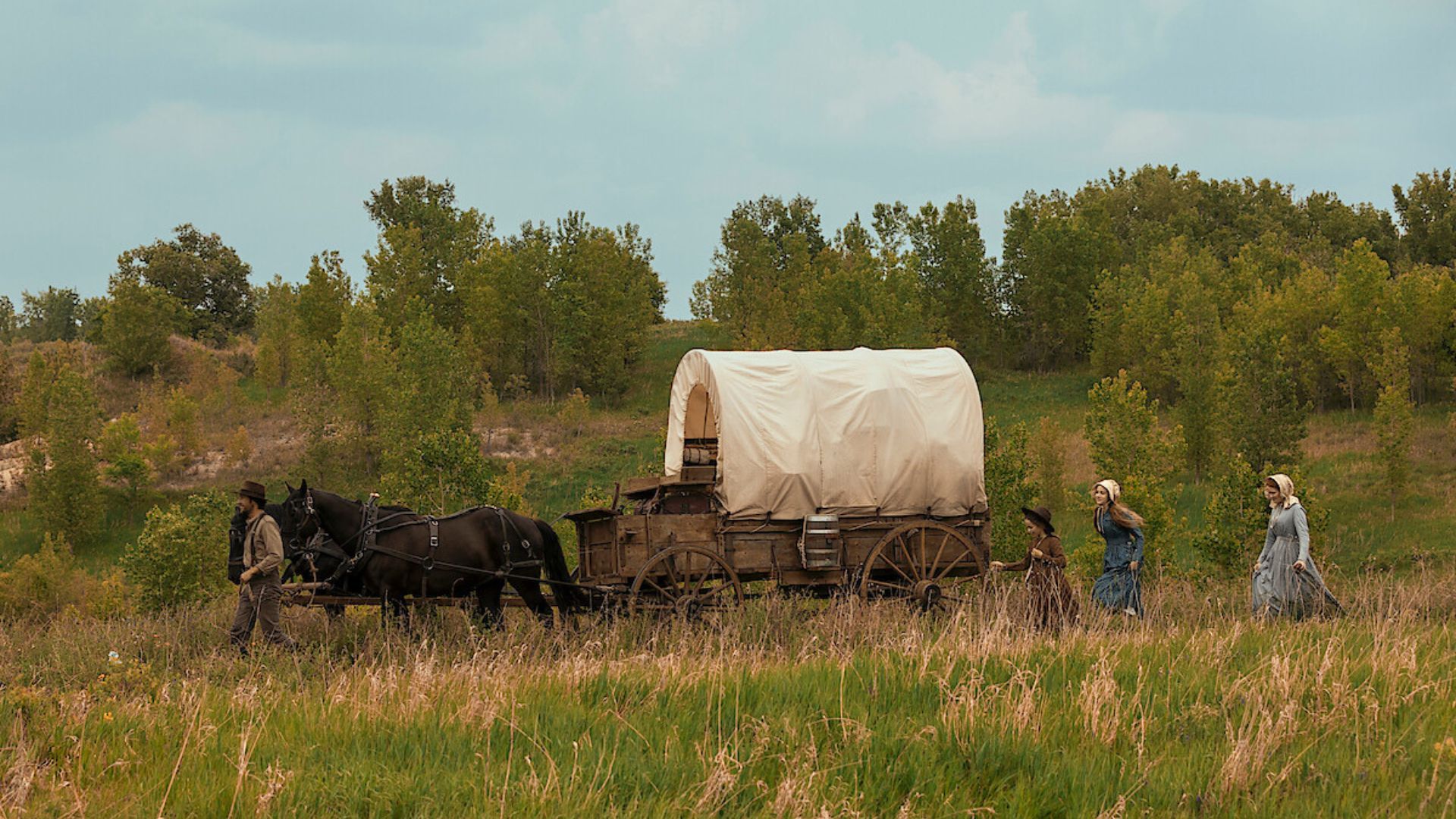
Since it moved from sending DVDs in the mail to offering instant streaming, the platform has become a haven for TV shows to find new fans. Shows that were no longer being shown on regular television have reappeared there, reaching audiences they hadn’t before. Plus, canceled series like Lucifer, Manifest, and Arrested Development were even given additional seasons to continue their stories and provide satisfying conclusions.
Many people fondly remember the NBC show that aired from 1974 to 1983, which made Michael Landon a beloved star. The series was a huge success on network television and continued to be popular in reruns for years after it stopped filming. As a child, I always felt Michael Landon could do no wrong. He was good-looking, wholesome, and a sincere actor, writer, and director. Attempts to revive the show seem misguided to me, especially considering another similar project faced difficulties. What viewers of the original Little House series might not know is that the TV show differs significantly from the books it was based on. This difference is precisely why the new Netflix version has the potential to become as iconic as Landon’s classic.
The Long, Controversial History of Little House on the Prairie Novels
Many common beliefs about Laura Ingalls Wilder’s books—only two of which are actually titled “Little House”—aren’t accurate.
These stories are highly fictionalized and often present a romanticized view of the past. They’ve also been criticized for how they portray Native Americans. However, a 2008 doctoral study by Amy S. Fratzinger revealed that Wilder actually included scenes that strongly…
A debate over the books started in 1998 when a girl reading them on the Upper Sioux Reservation in southwestern Minnesota came across the line, “The only good Indian is a dead Indian.” This quote presents a difficult problem for readers. While the language is clearly hurtful, it’s meant to reflect the prejudiced views held by a character in the story.
As a long-time movie buff, I’ve noticed this author, like many writers tackling difficult histories, uses language that was common back then – language that definitely feels jarring and even hurtful today. But it’s important to understand, the author isn’t agreeing with those old, problematic views, they’re simply trying to accurately represent the time period. In fact, Fratzinger originally set out to completely dismantle Wilder’s work, but she ended up discovering something totally unexpected along the way.
The pointless debate surrounding the Netflix adaptation focused on concerns that it was overly simplistic. However, like the original Star Trek series, both the TV show and the source material already fit that same oversimplified—and potentially prejudiced—label.
As a movie and book lover, I’ve always appreciated seeing characters of color who weren’t just one-dimensional. And honestly, Laura Ingalls Wilder’s books, while definitely a product of their time, did a surprisingly good job portraying the Osage people with some depth. You get their perspective, at least as seen through Pa’s eyes and the way Wilder tells the story, which was pretty unusual for books written back then. That said, it’s important to remember when you read them now that the whole idea of ‘Manifest Destiny’ – the belief that settlers were meant to take over the land – feels really problematic by today’s standards. So, while it was good for the time, it doesn’t quite hold up perfectly now.
The way the Osage people are portrayed in the original books helps explain the Ingalls family’s strong beliefs in individual freedom and their distrust of a powerful central government. The new Netflix series seems likely to highlight this aspect of the story. The Ingalls family moved west to escape what they saw as excessive control from both big businesses and government authorities.
Pa’s description of Manifest Destiny essentially shows how Native Americans were repeatedly displaced because the government consistently favored white settlers’ claims to land. In the story, the Osage people are forced from their home and lose their way of life so families like the Ingalls can settle and seek freedom. Ironically, the Ingalls family themselves constantly move west throughout the series, trying to escape the growing presence of civilization.
NBC’s Little House Series Shifted Its Dramatic Focus With a Mixture of Success and Failure
Laura Ingalls Wilder published her books in the early 1900s, a time when stories about the American frontier were incredibly popular. Although her books generally expressed skepticism towards the government, she conveyed her most forward-thinking beliefs through the character inspired by her father. This character’s distrust of authority stemmed from his observations of how the government treated the Osage Nation.
The US government broke agreements, and settlers like the Ingalls family were living on land they didn’t legally own. Laura Ingalls Wilder portrays the displacement of Native Americans as a reason for her family’s distrust of the government, but she doesn’t address how the settlers themselves participated in the unfair treatment. When the Osage tribe leaves, passing the little house in the woods described in the first book, Pa acts as if he understands their hardship, but this overlooks the settlers’ role in causing it.
Michael Landon was the face of Little House on the Prairie on NBC, but he did much more than just act. He also oversaw the show as an executive producer, and wrote and directed a huge number of episodes. Instead of closely following the original books, Landon used the series to tell stories with deeper meaning, often reflecting issues of the late 20th century. Plus, Little House stood out from other Westerns of the time by avoiding common negative stereotypes.
As Fratzinger pointed out in her research, the show surprisingly leaned into harmful stereotypes instead of avoiding them. While it aimed to move away from portraying Native American characters as simple, savage villains, it unfortunately ended up creating the same kind of distant and alienating effect.
The NBC show offered a critical look at those in power – wealthy business leaders and government officials – but used symbolic storytelling to reflect the upheaval of the 1970s and early 1980s. A particularly memorable episode involved the characters demolishing their houses after a heartless businessman took over their property. Even with some bleak scenes, I still have warm memories of watching it.
The stories I remember were feel-good tales that emphasized the importance of family and community. This same gentle approach carried over to Landon’s next show, Highway to Heaven. Even the show’s biggest weakness – a tendency to avoid difficult situations – came from a good place: a desire to teach viewers kindness and respect. While it’s charming, critics are right to point out that this approach sometimes removed the challenging and meaningful conflicts that made his earlier work so powerful.
A 21st Century Reboot of Little House on the Prairie Could Resonate in the Current Moment
The story embraces a warm and optimistic feeling, portraying a family bravely venturing into a new and uncertain future in pursuit of a better life. It reminds me of the cozy, heartwarming experiences many people my age had watching Landon’s shows with their families.
The new version of this classic series is being defended by those who say it stays true to the original books. The creators could have chosen a simpler path, avoiding the more difficult themes of westward expansion, unfair government practices, and greedy business owners. Instead, they could have simply told a heartwarming story about family life, beautifully filmed against the backdrop of the unspoiled Western landscape.
It probably won’t accurately reflect what made Wilder’s work special, or capture the emotional tone of Landon’s series. This is especially true considering that, for the second season, Landon moved away from Wilder’s straightforward storytelling and instead focused on stories with symbolic meanings that related to current events.
It’s good news for Netflix, but troubling for the rest of us, that the ideas in Laura Ingalls Wilder’s books still resonate so strongly today. Many people can identify with the Ingalls family’s wish for a secure and reasonably priced home, and their desire to be left alone. We’re also seeing parallels with current attempts to unfairly target a particular group, even though they share the same hopes and face the same challenges as everyone else in pursuing the American dream.
To truly surpass all previous versions of Little House on the Prairie, the Netflix reboot needs to powerfully portray the struggles of settling the American frontier in a way that feels relevant to modern audiences. The series is set during a time when the country was expanding to its furthest limits.
The Ingalls family constantly faces the consequences of the government’s policies, as they repeatedly displace the people already living on the land they settle. If the new Little House on the Prairie series on Netflix can successfully blend the family’s personal story with these broader historical forces, it has the potential to be one of the best reboots of recent years.
A new version of Little House on the Prairie will premiere on Netflix on July 9, 2026. You can still enjoy the original series starring Michael Landon by purchasing it on DVD or Blu-ray, or by streaming it on Peacock.
Found an error? Send it so it can be corrected.
Read More
- Off Campus Season 1 Soundtrack Guide
- X-Men ’97 Finally Gave Gambit the Hero Moment He Deserved
- Chainsaw Man Volume 24’s Cover Art Reveals a Brand-New Denji
- 46 Years Later, The Mandalorian & Grogu Answers A Major Empire Strikes Back Question
- 10 Worst End-Game Couples In Sitcom History
- HoI4 fans harsh reactions to the announcement of another DLC pack
- DoorDash responds after customer uses AI to make food look bad and get a refund
- Gold Rate Forecast
- Emily Henry Says to ‘Trust the Vision’ For Beach Read Adaptation
- Dragon Quest II HD-2D Remake: Where to get the Magic Key
2026-04-18 13:39