Whitney Halberstam is facing a crisis. Throughout the fourth season of Industry, he’s transformed his banking firm, Tender, from handling shady transactions to becoming a promising new player in the financial world. However, this success has made him a target for Harper Stern, who is determined to prove Tender is a sham and profit from its downfall. When she discovers that much of the company is built on false pretenses, she publicly exposes it, threatening to destroy Tender. Whitney, a cunning and deceptive figure reminiscent of Tom Ripley, understands his scheme has been uncovered.
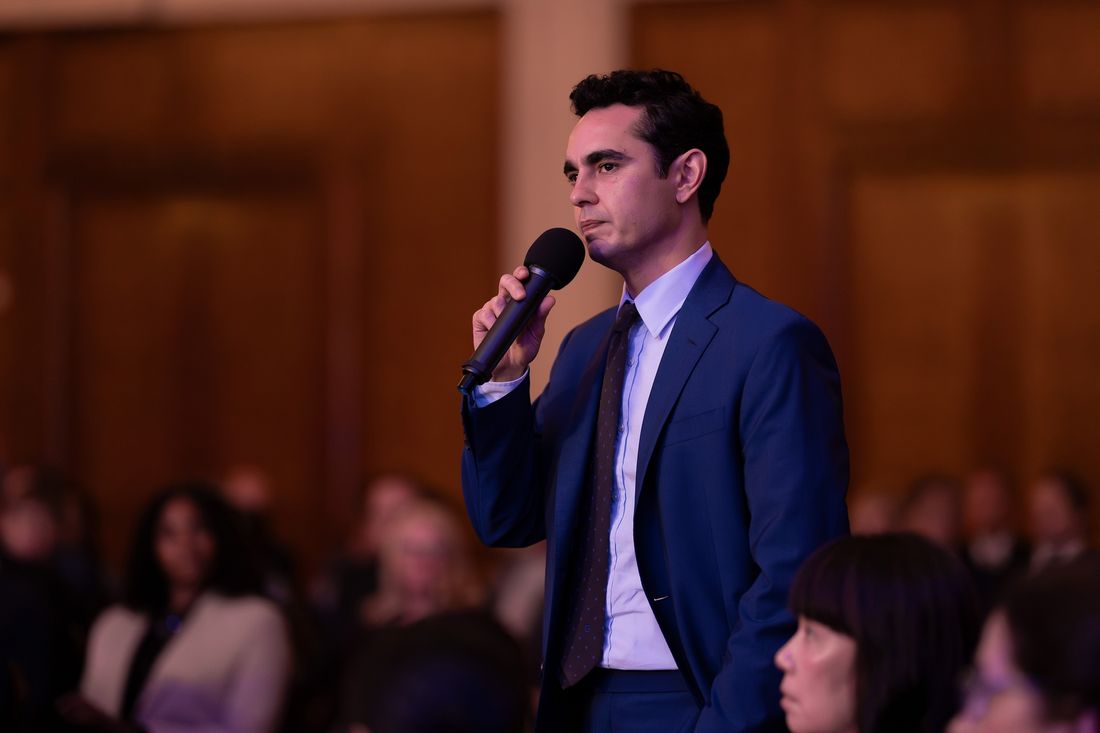
Last Sunday’s episode, the second-to-last of the season, showed Whitney desperately trying – and failing – to find a way out of his situation. He attempted to escape, but his colleagues threatened him. His plan to buy another company to mislead investigators also fell through, even though he gave a passionate speech trying to convince everyone it would work. Meanwhile, his business partner, Henry Muck (played by Kit Harrington), despises him, and Henry’s wife, Yasmin (Marissa Abela), is secretly working to destroy the company from within. Actor Max Minghella, known for his roles in The Handmaid’s Tale and The Social Network, portrays Whitney as completely stunned – he can’t accept that his good fortune has ended, because he’d never considered it luck in the first place. Minghella enjoyed playing Whitney at his lowest point, finding it surprisingly relatable. “I’m much closer to that vulnerable side of Whitney as a person,” he explains, “and it was easy for me to tap into those feelings.”
My friends are huge fans of the show Industry. They watch it together every week and are really passionate about it. Because they love it so much, I felt a lot of pressure while working on it – more than I’ve ever felt on a job before. I really didn’t want to disappoint them by doing a bad job.
I was curious about how Whitney was first described to me when I initially met with the show’s creators, Mickey Down and Konrad Kay. I actually watched all available episodes before my formal conversation with them. They shared the first few scripts and a brief character description outlining their vision. We then had a lengthy phone call right after the Christmas break, discussing the character in detail and their plans for his development. He’s a very complex person, so that conversation only provided a basic understanding.
As a fan, I always thought Whitney’s American identity was central to who he is. It was actually really interesting to me that the show, being set in London, cast a British actor and then had him do an American accent! When I first read the script, I loved how Mickey and Konrad saw my experience – I’m English, but I’ve mostly played American roles, and they thought that blurring of lines could really work for Whitney. He’s not exactly genuine, and we quickly realize he’s constructing a version of himself, so the fact that I, as an English actor, was already doing a bit of ‘faking’ with the accent felt like a perfect fit. It gave me a great starting point to play with that inauthenticity.
In the season’s first episode, Whitney sleeps with Harper and then asks her to peg him. It makes you wonder what his motivation was. Whitney often acts with a hidden agenda, and I think this was another strategic move. It seemed like he was trying to both empower Harper and exploit a weakness he’d noticed. He’s very perceptive and, despite his faults, he’s good at reading people and understanding what they really want or what they’re insecure about.
The dynamic between Harper, Whitney, and Eric really highlights the clash between American ambition and the British class system this season. As a British person who’s spent most of my life in America, it was interesting for me to play an American character and explore that cultural divide – the show is full of that tension. It reminded me of a film called France, where Léa Seydoux’s character felt like a representation of the country itself, and I was very aware of portraying Whitney as distinctly American.
Something really struck me while watching. Whitney actually used the phrase “fake news” at one point, and given how the show was exploring his ideas about what it means to be American, it felt significant. It wasn’t a one-off, either – he’d used that language before this season. Honestly, watching him felt like watching America itself – all its complicated sides. It’s a bold move to make a character like Whitney the focus of a fourth season of a show people already love. It asks a lot of viewers to spend so much time with someone who’s so…intense, and frankly, not always easy to root for. He definitely demands attention, and he doesn’t necessarily want your sympathy.
Whitney’s character reminds me of Tom Ripley – he’s skilled at becoming different people and seems particularly drawn to Kit Harrington’s character, Henry Muck. It was actually easier to connect with Henry when reading the script because Whitney is such a distant, abstract character. I strongly identified with Henry, seeing a lot of my own experiences reflected in him. So, I channeled any emotions Whitney feels towards Henry by focusing on how I, myself, would react in that situation.
I’ve always been fascinated by the character archetype similar to Ripley, and it appears in many stories. The key difference between Whitney and Tom Ripley is that Ripley lacks self-assurance and tends to dominate attention. Whitney, however, is incredibly confident and comfortable taking center stage. In fact, portraying that confidence was the biggest acting challenge for me.
You’ve described him as more of an idea than a fully developed person. Does that change how an actor would approach building the character, beyond just creating a typical history? Also, Whitney has an incredible amount of dialogue. I decided to really lean into that, letting it guide my performance and avoiding being overly precise. I wanted each take to be fresh and different, not repeating anything. It wasn’t until I watched some of the episodes during post-production sound work that I truly understood how Whitney physically moved and interacted with his surroundings.
I was really surprised by a lot of things while watching. There’s a scene in episode four where Whitney encourages Henry before his speech, and when we filmed it, it felt very real to me. I believed Whitney was feeling insecure compared to Henry, and that Henry had the potential to be the public face of the company in a way she didn’t. But seeing it edited, the scene feels completely different – it comes across as Whitney manipulating Henry, knowing exactly what to say to control the situation. It was interesting how I became so immersed in the character that my own interpretation shifted as the scene played out.
In episode seven, Whitney faces immense pressure while giving a speech at a large conference, and it looks like he might fail. But then, he unexpectedly pulls it off. I was asked about how we portrayed that change. I really loved that scene. Nia DaCosta, a close friend of mine, Mickey, and Konrad, directed it. The writing in the show is incredible – I doubt I’ll ever get to speak such beautifully crafted lines again. I wasn’t surprised later about how fortunate I was to be a part of it; I knew every day on set that it was a special opportunity and made sure to enjoy it.
There’s a powerful scene where his attempt to escape fails, and he’s forced back into the car, realizing he can’t just run away. It’s a moment where the harsh truth hits him. Looking back, that day was particularly impactful because it showed the character at his most vulnerable. I didn’t fully understand the weight of the scene until I watched it back. There’s a moment where Whitney simply steps out of the car, and he looks utterly helpless and like a child. It’s a huge shift from his confident start to the season. It’s compelling to see a character who believes they can get away with anything finally face reality.
When Henry tells someone they can’t create a world without genuine feelings or live without them, it’s clearly aimed at Whitney, but does Whitney even notice? I don’t think Whitney reacts emotionally. He’s easily frustrated by vulnerability and doesn’t seem to care about being sensitive. I actually wanted Whitney to be a likable character – someone almost admirable for being so unbothered by the things that usually upset people. As someone who is very sensitive, I found that moment particularly interesting.
He starts to realize the plan is failing in episode six, while on the plane and looking at the emergency escape kit. Although he initially believes he’ll succeed, moments of panic begin to surface, and you can see his growing disbelief and questioning of how things went wrong in that scene.
You’ve worked on projects like Industry and The Social Network that explore the stories of ambitious, and sometimes ruthless, young people as they become powerful, and both were based on real-life events. What are your thoughts on that connection? What’s striking about both projects is how intelligent they are. While I’m not young anymore, Industry centers on young people, and neither film talks down to its characters. Both take their ambition seriously and feel very modern. It was unusual making The Social Network because Facebook was so new then – it would be like making a movie about TikTok today, but Facebook was even less established at the time. It was a really daring concept.
What I find exciting about this show is how relevant it stays to what’s happening right now. It constantly pushes us to stay current. The latest season has actually connected with audiences even more than we expected.
Read More
- United Airlines can now kick passengers off flights and ban them for not using headphones
- Crimson Desert: Disconnected Truth Puzzle Guide
- All 9 Coalition Heroes In Invincible Season 4 & Their Powers
- Mewgenics vinyl limited editions now available to pre-order
- The Boys Season 5 Spoilers: Every Major Character Death If the Show Follows the Comics
- Invincible Season 4 Episode 6 Release Date, Time, Where to Watch
- Grok’s ‘Ask’ feature no longer free as X moves it behind paywall
- Assassin’s Creed Shadows will get upgraded PSSR support on PS5 Pro with Title Update 1.1.9 launching April 7
- ‘Timur’ Trailer Sees Martial Arts Action Collide With a Real-Life War Rescue
- Grey’s Anatomy Season 23 Confirmed for 2026-2027 Broadcast Season
2026-02-26 21:56