The show gained a dedicated following over its six seasons, but opinions on how it ended were often sharply divided. Regardless of how viewers felt about the finale, most agree the first season was among its best. Across those 25 hours, the series presented all of its most intriguing puzzles. Interestingly, John Locke—in just one line during the second part of the pilot episode—essentially revealed the core theme of the entire show. Despite his eventual importance, Locke doesn’t feature prominently in the two-hour pilot.
J.J. Abrams, directing and co-writing with Damon Lindelof, crafted episodes that brilliantly juggled a large ensemble cast and their interwoven stories, even jumping around in time. Locke was a particularly heartbreaking character, and in the first season, he uniquely sensed a bigger reason for the survivors being stranded. While Jack and the others frantically searched for a way off the island, Locke remained calm and thoughtful, even passing the time playing backgammon on the beach. Whether the creators had fully developed the show’s complex mythology from the beginning is debatable, but this scene demonstrates that Abrams and Lindelof were beginning to uncover it.
Lost Was Never Supposed to Make it to TV or be a Hit
Despite becoming one of ABC’s most famous shows, Lost wasn’t expected to be a hit. It was created simply because its creator wanted the freedom to make the type of television he envisioned.
Braun envisioned a show that blended the dramatic storytelling of the film Cast Away with the survival challenges of Survivor—a show he’d tried to acquire for ABC but was denied by Bob Iger. Since Michael Eisner purchased ABC, the network hadn’t been performing well for Disney. Iger strategically distanced himself from ABC and subtly positioned Braun to be blamed for its struggles, effectively setting himself up as Eisner’s successor.
Ultimately, Braun proved successful. Even the show’s creators, Damon Lindelof and J.J. Abrams, were impressed. They joined the project after an initial attempt with writer Jeffrey Lieber (who also receives credit as a co-creator), giving them a very short timeframe – just weeks – to accomplish what typically takes other shows months.
The team developed the concepts for a broader series, assembled a diverse cast, and, with Braun’s complete backing, created a show that was unlike anything typically seen on network television. Even with challenges like bad weather and Braun’s eventual dismissal, they finished filming the pilot episode, leaving its future in the hands of ABC’s decision-makers.
Although Lindelof and Abrams didn’t use a draft written by Lieber, they were only credited with 40% of the series’ creation. A Writers Guild review found that Lieber’s script contained elements – some common to stories about being stranded – that deserved recognition. Interestingly, the very first fan website dedicated to Lost appeared while the pilot episode was being filmed, as detailed in the documentary 815 – The Story of the Lost Pilot.
After the initial version of the pilot episode appeared online and received overwhelmingly positive feedback, ABC needed a new show for its fall lineup. This led to Lost being approved – if it didn’t do well, the previous executive could take the blame, but if it succeeded, the new team would get the credit. Ultimately, Lost became ABC’s first successful show in four years.
John Locke Explained Lost’s Central Struggle to Walt like a Cosmic Game of Backgammon
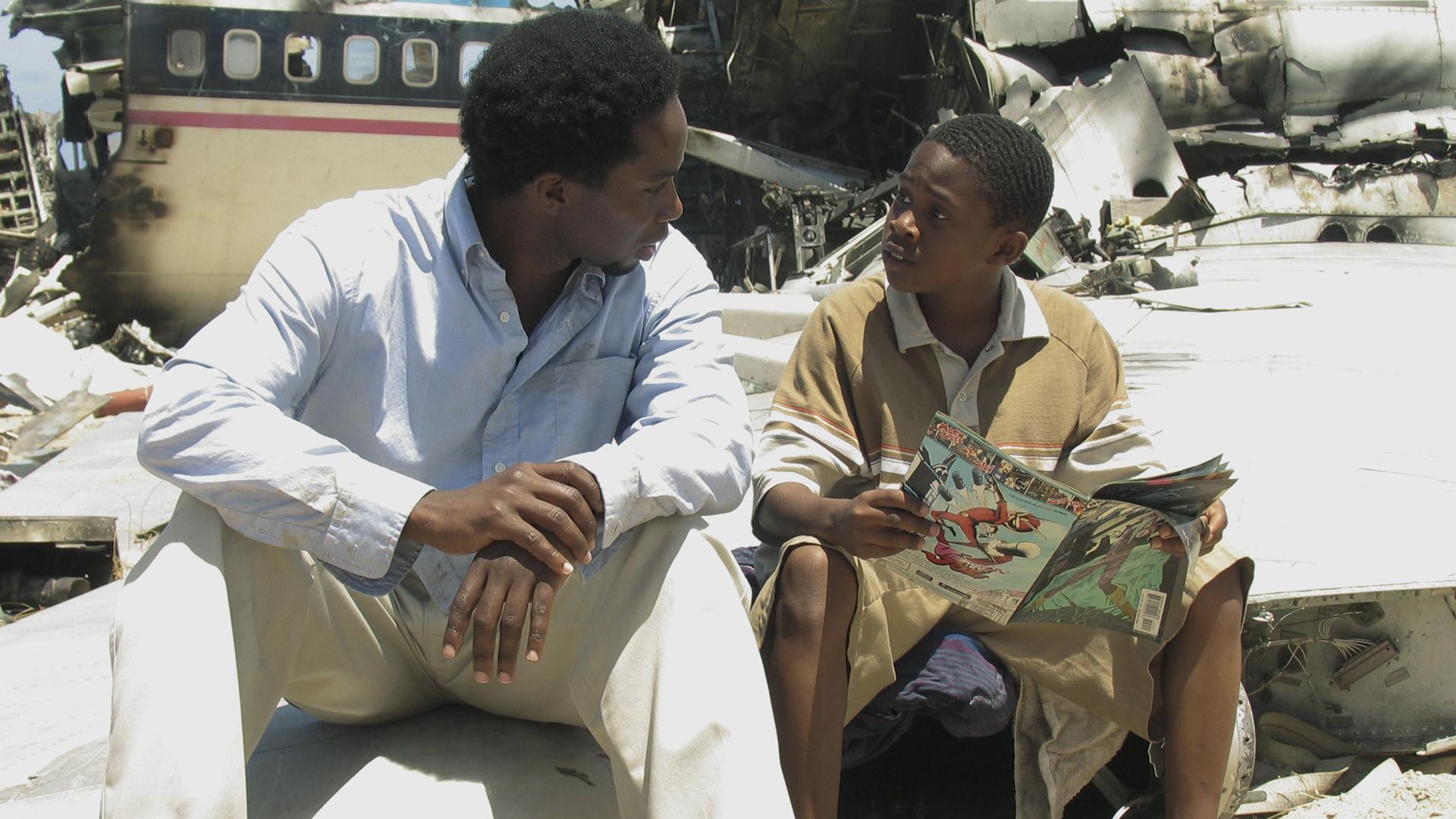
John Locke remains silent throughout much of the story. It isn’t until the second part that Walt discovers him on the beach, calmly setting up a backgammon board. Even in their desperate situation, Walt is still a child, and he’s simply bored. Seeing this composed man—who has a scar similar to Anakin Skywalker’s—preparing a game, Walt wants to join in.
Locke compared the game favorably to checkers, then shared some of its history. He explained that backgammon is considered the oldest game ever discovered, with sets found in the ancient ruins of Mesopotamia – even older than the time of Jesus. It’s a two-player game with opposing sides, traditionally represented by light and dark pieces.
Locke and the Man in Black are two of the most enigmatic characters in the first season of Lost. What seems like a simple conversation about backgammon is actually quite significant. It shows us that Locke enjoys games and has a curious mind, taking the time to learn about the origins of things – hinting at deeper layers to the show’s main struggles.
He discovers purpose in this, and the scene culminates with him asking Walt if he’d like to hear a secret. That secret is revealed to be that John Locke was unable to walk before the plane crash, due to a spinal injury. The island miraculously restored his ability to walk. Lindelof, in commentary for the pilot episode, described this as “the greatest secret ever.”
But the scene also hinted at a much larger secret: the island’s strange power was actually controlled by two powerful beings who used people’s lives as pieces in a game of backgammon. This crucial information wasn’t fully revealed to viewers until the very last episode of Season 5.
Locke’s Backgammon Lesson Explained Lost’s Struggle Between Dark and Light
During the third season of Lost, the character of Jacob was established as a spiritual leader for the Others and their dedication to protecting the island. However, viewers don’t actually see Jacob or his enemy until the very last episode of the fifth season.
Jacob and his brother, who can transform into the Smoke Monster, are both known as “The Man in Black.” This scene reveals that Jacob brings people to the island, while the Man in Black intends to kill Jacob and believes humanity is inherently destructive.
Neither of them is truly good or evil, but they represent the opposing forces at play. The Man in Black accuses Jacob of continuing to try and disprove him, pointing out that new people always arrive, struggle, cause damage, and ultimately lead to the same outcome.
This scene strongly suggests that Jacob and the Man in Black are much older than ordinary people. Jacob explains that life has no true end, only continuous development until a single, final moment. Later, in the final season of Lost, viewers discover the two are actually brothers.
The children are raised by a woman who is deeply suspicious, dangerous, and possesses magical abilities. She actually murdered their biological mother. This woman also makes a strict rule: the children are forbidden from harming one another. Later, the Man in Black decides he wants to leave the island, despite generally disliking other people.
Despite his deep dislike of the island, Jacob cherished it. He rescued people struggling with their lives and brought them there, but instead of telling them what to do, he let them make their own decisions. This created an opportunity for his brother, who existed as the Smoke Monster, to take on the forms of those who had died, essentially ‘infect’ them, and scare them with a terrifying, booming presence.
Lost Later Introduced ‘Adam’ and ‘Eve,’ Buried With Backgammon Game Pieces
The backstory of Mother, the Man in Black, and Jacob was revealed in three episodes leading up to the show’s final episode. Interestingly, two of those three characters had actually appeared briefly way back in Season 1, Episode 6, titled “House of the Rising Sun.”
In Season 1, Jack found the freshwater caves, which became the group’s main headquarters. The producers chose this location because it was easier to film scenes indoors. Later, while running from bees, Jack and Kate stumbled upon the remains of a man and a woman hidden within a small alcove in the cave. They were buried with a single black and a single white backgammon piece, which Locke jokingly referred to as “our own Adam and Eve.”
This comment feels like a quick, passionate insight into Locke’s strong belief in the island’s importance. Similar to his conversation with Walt, it hints at future events. The deaths of Mother and the Man in Black are now in motion, though the specifics aren’t yet known. Apparently, Mother killed the other people the Man in Black lived with because they discovered a source of energy at the island’s center and tried to escape.
Filled with rage over his betrayal, a son physically attacks his mother. Surprisingly, she responds with love and gratitude. Meanwhile, Jacob, consumed by anger, violently confronts his enemy, throwing him towards the mysterious light source he desperately sought. The man strikes a rock, suffers a fatal blow, and is swept away by the water towards the light.
A few moments later, the Smoke Monster dramatically appeared. Jacob had secretly buried his brother and mother in those caves, along with a backgammon set – the only game they’d ever shared. It felt right that they continued playing it even after death. Interestingly, Jacob continued to influence events only after the Man in Black killed him, by manipulating the remaining candidates to take his place.
The Backgammon Scene Was the Beginning of Crafting the Island Mythology
The show Lost evolved significantly as it went on, largely because Damon Lindelof was a first-time showrunner unsure if the network, ABC, would even order a full season. During the break after the initial episodes, Lindelof and co-showrunner Carlton Cuse created the show’s core mysteries and mapped out a plan for the first three seasons.
The show was incredibly popular, and the network wanted to keep it going for as long as possible. However, Lindelof and Cuse, the creators, needed to plan for the ending and start building towards it. They did something unusual by negotiating a fixed number of seasons – six in total – from the start. Interestingly, a comment about an “Adam and Eve” storyline suggests they had the core idea for the ending in mind from the very beginning.
The backgammon scene’s details were a bit unclear. Lindelof primarily wrote the scene, but Abrams suggested ending it with Locke offering to tell Walt a secret. Lindelof, curious, asked what the secret was. This led to a more significant discussion between Lindelof and Abrams about the character of Locke.
According to Damon Lindelof, in the pilot commentary for Lost, they intentionally blended Terry O’Quinn’s skill at explaining things with the mysterious nature of his character, Locke. This made it seem like he truly understood whatever he was discussing, whether it was something simple like backgammon or the island’s secrets. The character was always intended to be the one who felt most connected to everything around him.
According to writer David Fury, the idea that Locke was the man in the wheelchair glimpsed on the beach in the very first episode came from Damon Lindelof. That wheelchair was originally just a background prop, added without any specific plan for its significance. The main focus for the early episodes and the first season was developing the characters and revealing their histories.
What connected all these characters was their inner battle between good and evil. It doesn’t matter if the writers always intended to link this to the story of Adam and Eve, or added those details later. The important thing is that it fit with the show’s main idea: people conquering their inner demons and choosing good over evil.
The Backgammon Scene in the Lost Pilot Foreshadows John Locke’s Fate
The backgammon scene in the pilot episode of Lost is particularly well-done because it hints at what’s to come for John Locke. Originally, Locke was envisioned very differently – as a young, successful businessman meant to contrast with the other survivors’ leader. But the character evolved significantly during the show’s creation.
I always saw Locke as someone deeply connected to the island, and he really took the lead in the beginning, helping all of us. But he got so focused on finding answers that it unfortunately made him easy for people like Ben and the Man in Black to control. It was incredibly moving when Jack finally admitted, in the end, that Locke had been right all along – it felt like a real acknowledgment of everything he’d gone through and a validation of his beliefs.
The character of Locke was shaped by Terry O’Quinn’s performance. Whether planned or not, an early scene hints at Locke’s eventual downfall. It starts with him arranging the white game pieces, but as he shares his backstory with Walt, he begins to place the black ones. Locke started as a heroic figure, but ultimately his journey ended due to the schemes of others.
Initially, the show’s plan was to present Locke as a villain right away. However, the writers decided on a more subtle approach. In the first season, Locke appeared kind and supportive, helping the other survivors deal with their personal problems. He only started to change when he became fixated on the hatch and what he believed was his larger purpose.
Locke’s personality changed in a quiet way, eventually leading him to rejoin the other survivors. He thrived when collaborating with them, particularly Jack Shephard. When he left the group and sided with the mysterious “Others,” he ultimately set himself up for disappointment.
It’s striking that viewers could hear the Smoke Monster’s sound during John Locke’s first flashback. Locke is a deeply tragic character on Lost, and his manipulation by the Man in Black is a major reason why. It’s particularly heartbreaking that he understood the central conflict of the show from the very beginning, yet couldn’t recognize how he was being used himself.
Despite his flaws, Locke found redemption through a peaceful acceptance of death, symbolized by the flash-sideways world in Season 7. Ultimately, his impact motivated Jack to save the island – and perhaps the entire world.
You can buy the entire Lost series on DVD and Blu-ray, or watch it online through streaming services like Hulu, Disney+, and Netflix.
Read More
- Off Campus Season 1 Soundtrack Guide
- Chainsaw Man Volume 24’s Cover Art Reveals a Brand-New Denji
- 46 Years Later, The Mandalorian & Grogu Answers A Major Empire Strikes Back Question
- X-Men ’97 Finally Gave Gambit the Hero Moment He Deserved
- 10 Worst End-Game Couples In Sitcom History
- HoI4 fans harsh reactions to the announcement of another DLC pack
- Katanire’s Yae Miko Cosplay: Genshin Impact Masterpiece
- DoorDash responds after customer uses AI to make food look bad and get a refund
- Gold Rate Forecast
- Emily Henry Says to ‘Trust the Vision’ For Beach Read Adaptation
2026-05-17 02:42