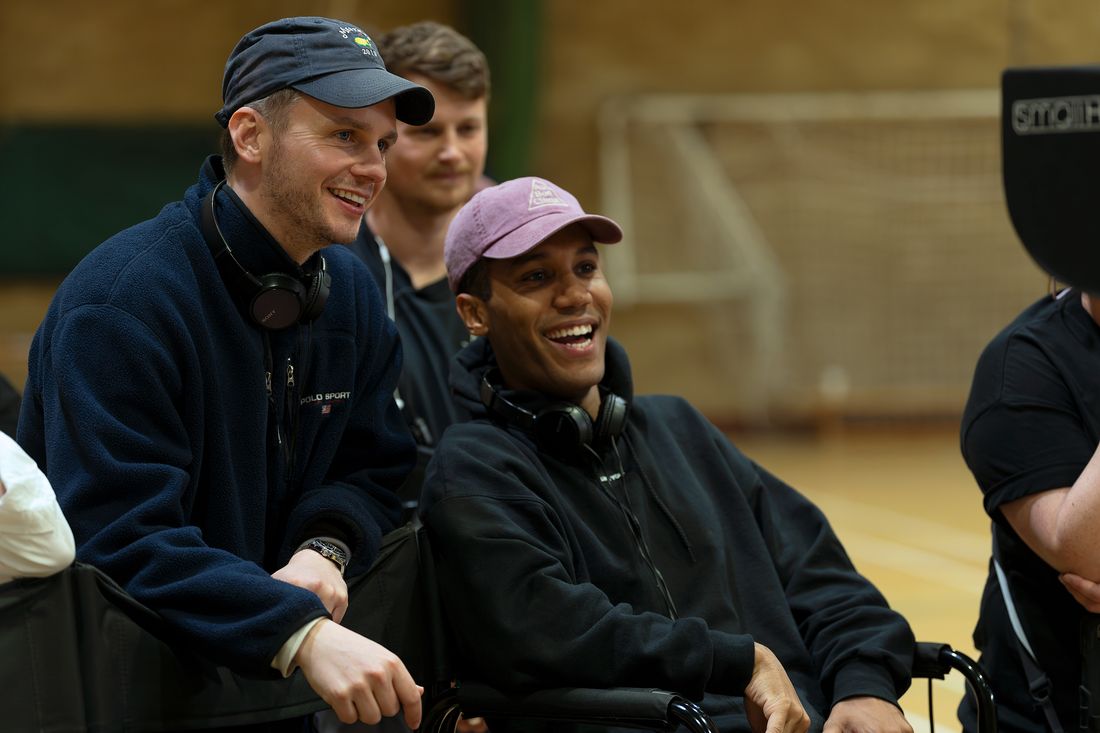
Just finished the final episode of Industry season four, “Both, And,” and wow! If you haven’t watched it yet on HBO, be warned – there are definitely spoilers ahead if you keep reading! It premiered on March 1st and left me with a lot to think about.
The show portrays capitalism as a dangerous and unsettling system, constantly threatening to expose hidden problems. In the season finale, the consequences of the fraudulent company Tender are fully felt. Whitney Halberstram has escaped, leaving Henry Muck to face legal trouble. The British government appears weak for having supported Tender, potentially benefiting extremist politicians. Meanwhile, Henry’s wife, Yasmin, has taken control of Whitney’s exploitative scheme, ironically becoming involved in the same harmful behavior she once despised. Harper Stern profits from the collapse of Tender, enjoying a luxurious lifestyle, but finds herself isolated after losing her close relationships with Eric Tao and Yasmin.
Yasmin and Harper have always had a complicated, competitive relationship, and in the latest episode, their differences reach a breaking point. Yasmin defends her controversial new role, explaining that the world isn’t simply about taking advantage of others or finding opportunities – it’s both. She refuses Harper’s offer to leave, signaling a deep rift. The creators of the series describe Yasmin and Harper as its emotional core and central love story, and this episode feels like a painful turning point for them. It’s likely their breakup will be a major focus in the upcoming fifth and final season – a season the creators didn’t even know they had planned while making this one. In fact, the renewal for a fourth season was unexpected, and it allowed them to shift the show’s focus from the British bank Pierpoint to broader themes of class, family wealth, and personal identity. The resulting episodes are a harsh critique of both established and newly acquired fortunes.
I’ve been really thinking about that moment in “Both, And” when Yasmin tells Harper about Eric and the teenager. Is she deliberately trying to drive a wedge between them, or does she actually believe Eric is capable of something like that? It’s so interesting because the creators, Down and Kay, have said they intentionally left Yasmin’s motivation unclear. They didn’t tell Abela (who plays Yasmin) how to play the scene, wanting her to bring her own interpretation. Down explained they want Yasmin to remain complex – if they defined her feelings too clearly, it would limit where the character could go. Kay even joked that if they get another season, they’ll have to decide for sure! Luckily, now that the show has a proper ending planned, they’ll finally get the chance to explore that fully.
I noticed while watching this season that the story felt similar to a 2023 New Yorker article about Wirecard, a German payment company involved in fraud. Both stories share elements like connections to Russian intelligence, journalists investigating, and people betting against the company. Was Wirecard an inspiration for this season, and if so, how did using it help expand the world of the show?
Mickey Down: It wouldn’t be honest to say we didn’t see the similarities. It’s not a direct adaptation of the Wirecard story, but when you’re creating a show about modern London finance and its relationship to power, media, and politics, it’s hard to avoid drawing from real-life events. We were very interested in the Wirecard case and the people involved.
After finishing the third season, we started thinking about how to refresh the show, as we weren’t sure if it would be renewed for a fourth. We wanted to create something drastically different, focusing on conspiracy, espionage, and the hidden influence of powerful organizations. Throughout the series, we’ve always explored where the money goes, starting with the closed world of a trading floor and gradually expanding our view of finance in London and the UK. Cases like Wirecard perfectly illustrate how these things really operate.
I don’t believe the rumors about Jan Marsalek and Markus Braun, but with people like that, you can imagine anything. The story’s progression, and how it involved German regulators, Angela Merkel, the German government, and BaFin, was really helpful to follow. Wirecard was a star on the stock exchange, and its audacity—how openly it operated and how connected it was to those in power—was fascinating. It was a major story in Europe, but surprisingly hasn’t gotten much attention in the U.S. The season explores storytelling and identity, but also the reasons why people tell the truth or lie. It’s about understanding who benefits from honesty and who profits from deception, and how that imbalance revealed the truth. So many people had invested so much in Wirecard’s success, and that created a compelling and complex story.
You’re absolutely right about Wirecard – the system that rewarded certain behaviors was even stronger there than at Tender, simply because it was a much larger company. There was a lot of deliberate avoidance of the truth happening with Wirecard. It’s really surprising how, in the later episodes, every time SternTao flagged potential fraud, the stock price actually increased. That’s because people were motivated to ignore the warnings. We aimed for a classic underdog story, a clear division between ‘us’ and ‘them’. While ‘Industry’ tries to be complex and nuanced, that central conflict provided a solid foundation for the season’s narrative.
A major difference between Wirecard and the situation in Industry is their approach to dealing with wrongdoing. Wirecard attempted a large-scale acquisition – trying to buy Deutsche Bank – near its collapse. In contrast, the characters in Industry believe they can move past their fraudulent actions by changing direction. They hope to successfully reinvent themselves, leaving the original fraud behind and escaping scrutiny altogether.
In the season finale, Henry and Whitney have a final conversation where Whitney asks Henry to run away with her. We’ve talked about the movie Michael Clayton throughout the season, and I noticed its influence in that scene, especially in the line, “I’m your leverage, I’m the guy you hide behind or trade away.” Was that confrontation intentionally inspired by Michael Clayton? If not, how would you describe that last moment between Henry and Whitney?
KK: I don’t think it was directly inspired by that film. I love that scene because it really captures the core idea of the show. Henry looks at two passports – one for someone with no status, and one for someone with his background – and realizes he’s willing to be fooled on almost anything, but he won’t accept becoming just an ordinary person with no power. That moment highlighted his awareness of class. The underlying meaning became very clear, which is something the show hadn’t always done so well. We enjoyed framing it like a scene from Clayton, Bourne, or even a Bond movie.
Mickey and I agree that the show’s dialogue has never felt completely realistic. Some viewers have commented that the writing feels more elaborate this season, but we don’t see it that way. The character Whitney is a bit different, though. He’s almost a commentary on the creators themselves, drawing heavily from references – like American Psycho – and building his identity through the same sources we used. He naturally speaks in a sophisticated way, believing it’s attractive and demonstrates his intelligence, similar to Henry in season three. While his speech sometimes feels like jargon, it also conveys a sense of capability. Whitney was always intended to be a highly stylized character. Max initially felt he didn’t quite fit within the show’s world, existing almost outside and above it, possessing a heightened sense of unreality. We refined that idea, and ultimately, his character became symbolic of the season’s overall themes.
We jokingly compared the character to Michael Fassbender’s robot from Prometheus. The idea was that he absorbs personality traits from his surroundings and culture. That’s how we developed him – as a mix of many different influences, which really reflects the overall theme of the season.
Okay, so there’s this scene with Henry, and it totally threw me. He’s refusing to leave with Whitney, which feels almost noble, but his reason is… he doesn’t want to lose his privileged position! I found myself strangely caught up rooting for a guy who’s essentially arguing he deserves to stay an aristocrat. It’s messed up, because logically, you’d think, ‘He should face the music!’ But it’s so compelling. What’s really clever, and we were joking about it, is that all season Henry gets away with everything. Then, when he finally faces consequences – being exiled, basically – he falls back on the very thing that protected him from consequences in the first place: his status. It’s a brilliant move, turning the underlying message into something explicit. Konrad pointed out that it really highlights how everything, at its core, comes down to class, and I completely agree. It’s a very ‘Industry’ moment, where social standing dictates everything.
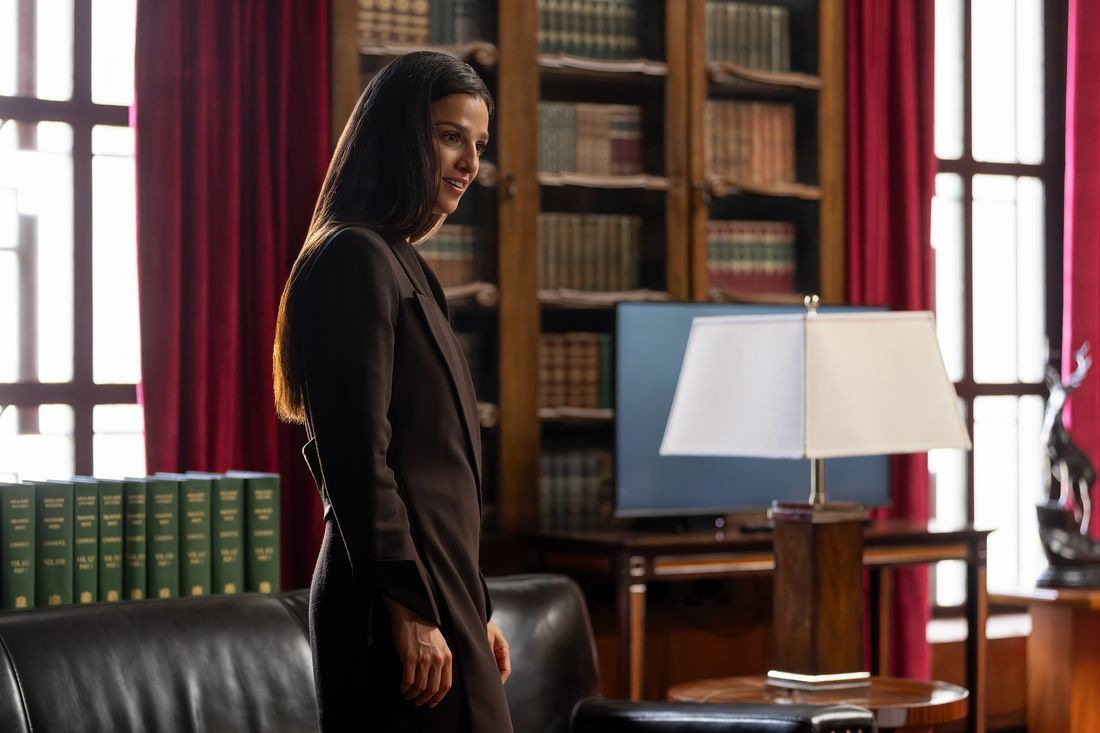
A key moment in the finale is the conversation between Yasmin and Harper in Paris, where it’s revealed Yasmin has taken over Whitney’s business and is now running the blackmail operation. Yasmin claims Eric knew Dolly was underage, but the writers intentionally kept her motivations unclear. The actor playing Yasmin, Marisa, was also kept in the dark about the full truth. The show’s creator, MD, explains this was deliberate, mirroring how trauma can create fragmented and unreliable memories. They didn’t want to give Marisa a definitive backstory, believing it would result in a less nuanced performance. The show often uses ambiguity, allowing viewers to interpret scenes in their own way, and the creator prefers to avoid overly explicit explanations.
What do you remember about filming the scene?
KK: It was long!
The scene was lengthy and had a strange vibe. We were filming something very dark, but it was also the last day of shooting, so everyone was in a celebratory mood. We were determined to get it right and dedicated a lot of time to it. Marisa and Myha’la know their characters so well that they rarely need much direction. We discuss the scene in detail beforehand, and usually, the first or second take is exactly what we need. We might ask for small adjustments – a little more intensity or ambiguity – but they usually deliver quickly. It’s one of my favorite scenes to direct. We enjoy energetic, complex scenes like club settings, but sometimes, the most powerful moments come from just two fantastic actors sharing a scene with a rich history. This scene felt like a perfect ending to the season, showcasing incredible performances, intimacy, and scope. It really captured what makes the show special: the relationships between the characters.
When actors have been playing a character for a few seasons and are as talented as Myha’la and Marisa, it’s best to give them space. We have a lot of respect for their skill and how thoroughly they prepare, so they often know exactly what the scene needs. They’re very precise performers – a small adjustment to a single line can completely change the scene’s feel. We initially wrote a version of the scene, but our executive producer, Kathleen McCaffrey, suggested we focus more on the emotional impact. After four seasons, Mickey and I have learned to appreciate that kind of feedback. She specifically encouraged us to ‘push it further,’ and we did. For example, the line ‘take my hand’ – a classic fantasy trope we usually avoid – came from her note. Adding that simple moment made the scene feel more fundamental and heightened the stakes, making it feel like a life-altering decision for the characters.
In past seasons, people often called Harper a sociopath, which felt like an exaggeration. However, this season, her statement to Eric – “Crucially, we are not lying to the world to profit off it” – reveals a clearer moral stance. She’s horrified to discover Yasmin’s association with neo-Nazis and her exploitation of young women. The creator discussed how they developed Harper’s morality this season and defined her limits. They agree that the ‘sociopath’ label was misused in earlier seasons to describe someone ambitious in a competitive environment. The term implies a lack of emotional responsibility, but Harper always seemed to have a conscience, even when she was being dishonest. There was always an internal sense that her actions were wrong.
Myha’la delivers some of her most powerful and emotionally raw acting in the final scenes. These moments reveal a new depth to her character that hasn’t been fully explored before. Removing Pierpoint from the equation allowed us to explore whether Harper’s struggles stemmed from the environment around her or her own drive. We’ve shown her achieving significant wealth and success, giving her the space to reflect on what truly matters. It’s in this moment of reflection that she realizes the personal cost of her choices – she’s isolated and the people around her have changed. That experience fundamentally alters her perspective after the first three seasons.
Everyone agrees that insider trading and lying are wrong. But this season, Harper faces a much more difficult situation: witnessing something she believes is human trafficking, involving powerful and dangerous individuals. Unlike Yasmin, who is gradually drawn into this world by her ambition, Harper is confronted with it directly. The show suggests anyone in her position would feel the same – horrified and wanting to escape. Harper attempts to rescue Dolly from this situation, but Dolly has been manipulated to the point where she wants to remain involved.
Someone online pointed out that our work has created a new kind of TV and film they’re calling “financial horror,” which I think is a great description. Mickey and I recently watched the finale again on a large screen, and even though I’ve seen it many times, I felt genuinely scared during the scene with Harper at the table. I hadn’t experienced that feeling while editing or filming, but watching it like that, I realized she’s trapped in a terrifying situation, completely unaware of the danger, and essentially the last one standing against everyone else who is, well, not so nice. It’s a really engaging and thought-provoking experience.
People ask me all the time how much of the show is actually real. It’s a tricky question! It started as something super grounded, based on my and Mickey’s own lives – almost like a documentary, but with a bit more flair thanks to the music and, well, the intimate scenes. But now I see it differently. It’s less about strict reality and more like a distorted reflection of it – a funhouse mirror, if you will. Everything is exaggerated, a heightened version of things that actually happen, which is kind of our style. There’s a core of truth there, but we amplify it for dramatic effect, aiming for a really big, cinematic feel. It’s actually more truthful emotionally than ever, even though it’s not necessarily ‘real’ in a traditional sense. Honestly, I don’t think that’s as contradictory as it sounds.
Whitney’s last name, Halberstram, is inspired by the last name of an American Psycho character whom protagonist Patrick Bateman keeps getting mistaken for; in Bret Easton Ellis’s novel, all Wall Street guys are so vacuously empty as to be somewhat interchangeable.
Read More
- United Airlines can now kick passengers off flights and ban them for not using headphones
- Solo Leveling’s New Manhwa Chapter Revives a Forgotten LGBTQ Story After 2 Years
- The Boys Season 5 Spoilers: Every Major Character Death If the Show Follows the Comics
- Grok’s ‘Ask’ feature no longer free as X moves it behind paywall
- Assassin’s Creed Shadows will get upgraded PSSR support on PS5 Pro with Title Update 1.1.9 launching April 7
- How to Get to the Undercoast in Esoteric Ebb
- Mewgenics vinyl limited editions now available to pre-order
- All Itzaland Animal Locations in Infinity Nikki
- Nintendo Officially Rewrites Princess Peach After 41 Years
- ‘Timur’ Trailer Sees Martial Arts Action Collide With a Real-Life War Rescue
2026-03-02 06:57