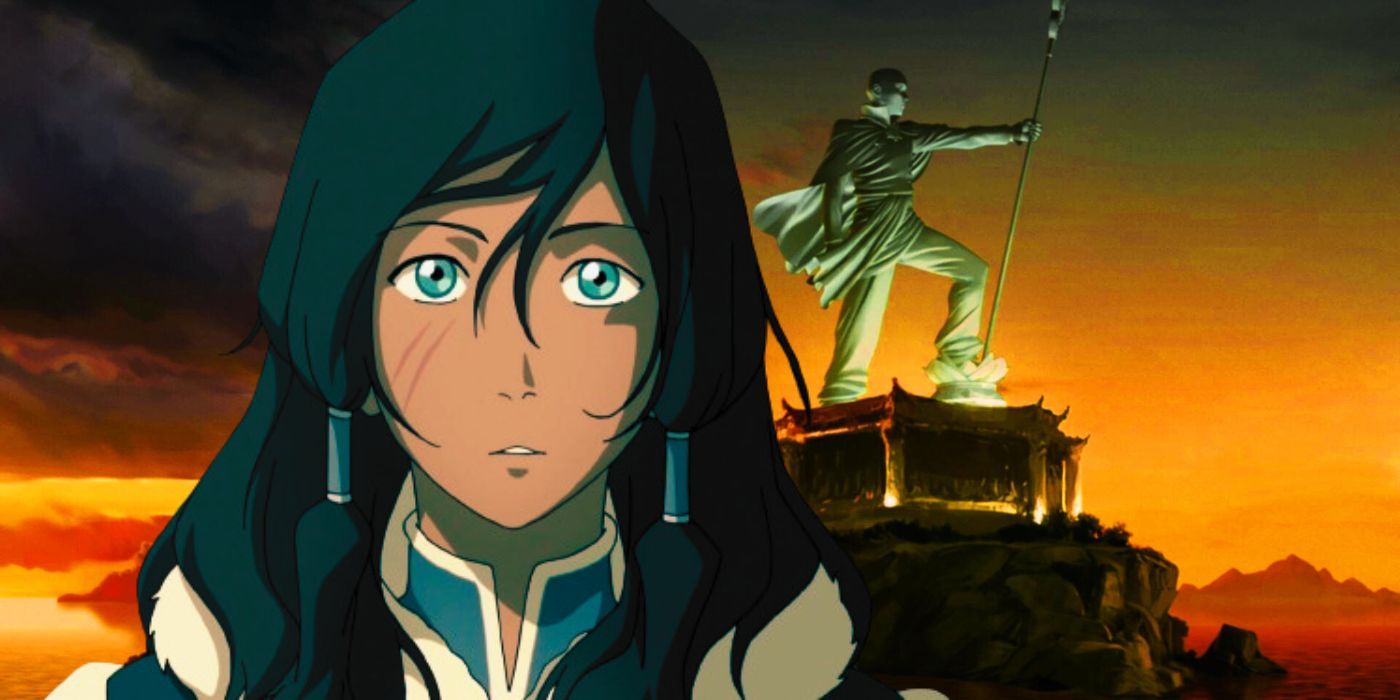
The recent release of Avatar: The Last Airbender on Netflix, and plans for three new movies, have excited fans. Nearly 20 years after the original series first aired on Nickelodeon, the franchise remains incredibly popular and impactful.
The show’s follow-up series has also been incredibly popular, even years after it ended. Interestingly, despite its later success, the network didn’t initially give the series the support it deserved when it first aired in the early 2010s.
The Legend of Korra Was a Worthy Successor to Avatar: The Last Airbender
The Legend of Korra takes place almost 70 years after the first series. It follows the new Avatar, a teenage girl from the Southern Water Tribe, after the death of Aang.
Throughout the series, Korra works to restore balance to a world facing spiritual and political turmoil, relying on her abilities and the support of her friends and Tenzin, the youngest son of Aang. Familiar faces from the original Avatar series – including Katara, Toph, and Zuko, now older – also make appearances to assist Korra.
The show explored complex and surprisingly grown-up ideas during its time on air. Many episodes and storylines dealt with issues like social hierarchy, difficult family histories, misuse of power, the effects of trauma, and the struggles of war. It was also consistently praised for its positive and realistic portrayal of LGBTQ+ characters and stories.
The show was a complete package, offering laughs, excitement, stunning visuals, and satisfying nods to its fanbase.
A Disastrous Season 2 Was the Result of a Fickle Nickelodeon
Even though Avatar: The Last Airbender was popular, Nickelodeon executives didn’t initially believe in the show as much as its audience did, a fact well known by those who worked on it.
During a 2013 interview, Yoo Jae-Myung, a producer and director on the show, revealed that Nickelodeon was initially unsure about moving forward with Korra. He explained that during the first season’s production, the network paused work, citing “” as the reason.
He explained the situation using a film analogy: it’s like choosing a lead actor and then halting production simply because the studio doesn’t like them. Originally, the show was planned as a short, limited series. While Nickelodeon quickly approved Avatar for three full seasons with 60 episodes, Korra never had a guarantee of continuing beyond its initial season.
Because of this, the first season of Korra was designed as a complete story with a definite start and finish. Amon, with his power to take away bending abilities, was intended to be the main villain and the season’s biggest challenge for Korra. As a result, a lot happened in season one, and it was quite intense – Korra lost her bending, learned airbending, and regained her bending all within the final episode.
I really enjoyed the first season, but season two just didn’t hit the same way. It felt… rushed. Turns out, the creators weren’t even sure if the show would get renewed, so they were basically scrambling to make it happen when Nickelodeon finally gave the go-ahead. There wasn’t much time to plan things out properly, and you could definitely feel the pressure in the writing. It’s a shame, but it explains a lot!
Similar to season one, season two felt like its own separate story. While elements from it do appear later in the series, seasons three and four are the only ones that truly connect and build on each other.
The Legend of Korra Wasn’t Treated as Well as Avatar by Nickelodeon
Even though Nick wasn’t confident about the show, it quickly became a hit. The first episode attracted over 4.5 million viewers, and it soon became the most popular animated show on cable. Originally airing on Saturday mornings in 2012, the show moved to Friday nights after the season finale, which featured the deaths of the villains Amon and Tarrlok.
The show was moved because network executives thought its content was too mature and provocative for a Saturday morning audience. While season 2 finally arrived in September 2013 after a long 18-month wait, many viewers worried about its new timeslot on Friday nights. That night had a bad reputation for low viewership, and was jokingly called “the death slot.”
The show’s declining popularity was made worse by a lack of promotion – Nickelodeon stopped advertising it much before its eventual decline in viewers. Things took a further turn for the worse with Season 3 when several episodes were leaked online months before they were scheduled to air, even before a premiere date had been set.
Because of the positive reaction, Nick decided to release the season’s trailer sooner than expected, and the show premiered just two weeks after that. The season aired on Fridays, with two new episodes shown each week. However, fans were surprised to learn that the final five episodes wouldn’t air on TV; instead, they would be released online.
After that happened, the episodes pretty much disappeared – the network didn’t really advertise them at all. Thankfully, they eventually showed up on Nicktoons, which was a relief for fans like me!
Despite its Poor Promotion, Nickelodeon Couldn’t Stop Fans’ Love For The Legend of Korra
The reason The Legend of Korra didn’t perform as well on Nickelodeon was a lack of promotion; the network didn’t believe the show aligned with its overall brand. Both Avatar: The Last Airbender and Korra appealed to an older audience than typical Nickelodeon programming.
Expanding to reach more viewers is generally positive, but while networks like Cartoon Network and Disney took risks with their content in the 2010s, Nickelodeon appeared hesitant to do the same, especially considering its young audience.
Some at the network worried a female lead would alienate male viewers, but that didn’t happen at all. Just like Aang before her, Korra was popular with everyone – boys, girls, and fans of all ages. Despite Nickelodeon not fully supporting Korra, its fanbase remained incredibly loyal.
Despite a lack of promotion when the later episodes of Season 3 and Season 4 were released online, the show’s loyal fans still found ways to watch. Nickelodeon seemingly tried to downplay the series, but its online community remained as engaged as ever. This lasting popularity proves that a passionate fanbase can be more influential than any television channel or streaming platform.
The Comics Were Able To Continue Korra’s Adventures Without the Show’s Restrictions
Although the television broadcast of The Legend of Korra had some problems, the story continued successfully in a comic book series. The first comic, Turf Wars, immediately follows the show’s finale, with Korra and Asami beginning a vacation together in the Spirit World.
This series delves into the spirits’ reactions to Harmonic Convergence and finally explores the developing romance between Korra and Asami, including some sweet moments between them. The story continues with three additional graphic novels, Ruins of the Empire, which reintroduces Kuvira.
Despite challenges from Nickelodeon, The Legend of Korra managed to tell amazing stories and create compelling characters. It remains a beloved sequel within the Avatar fanbase, and many feel its biggest issue was simply airing on the wrong channel at the wrong time.
If Netflix’s live-action Avatar series does well, fans are hoping a potential live-action The Legend of Korra would be handled with more care than the original animated series was by Nickelodeon. They’re hoping for a respectful adaptation, not one that misrepresents the story.
Read More
- Off Campus Season 1 Soundtrack Guide
- 46 Years Later, The Mandalorian & Grogu Answers A Major Empire Strikes Back Question
- X-Men ’97 Finally Gave Gambit the Hero Moment He Deserved
- 10 Worst End-Game Couples In Sitcom History
- Chainsaw Man Volume 24’s Cover Art Reveals a Brand-New Denji
- HoI4 fans harsh reactions to the announcement of another DLC pack
- DoorDash responds after customer uses AI to make food look bad and get a refund
- Katanire’s Yae Miko Cosplay: Genshin Impact Masterpiece
- Emily Henry Says to ‘Trust the Vision’ For Beach Read Adaptation
- Hatsune Miku cosplayer goes viral selling $15 cups of “foot juice” to thirsty anime fans
2026-05-15 23:39