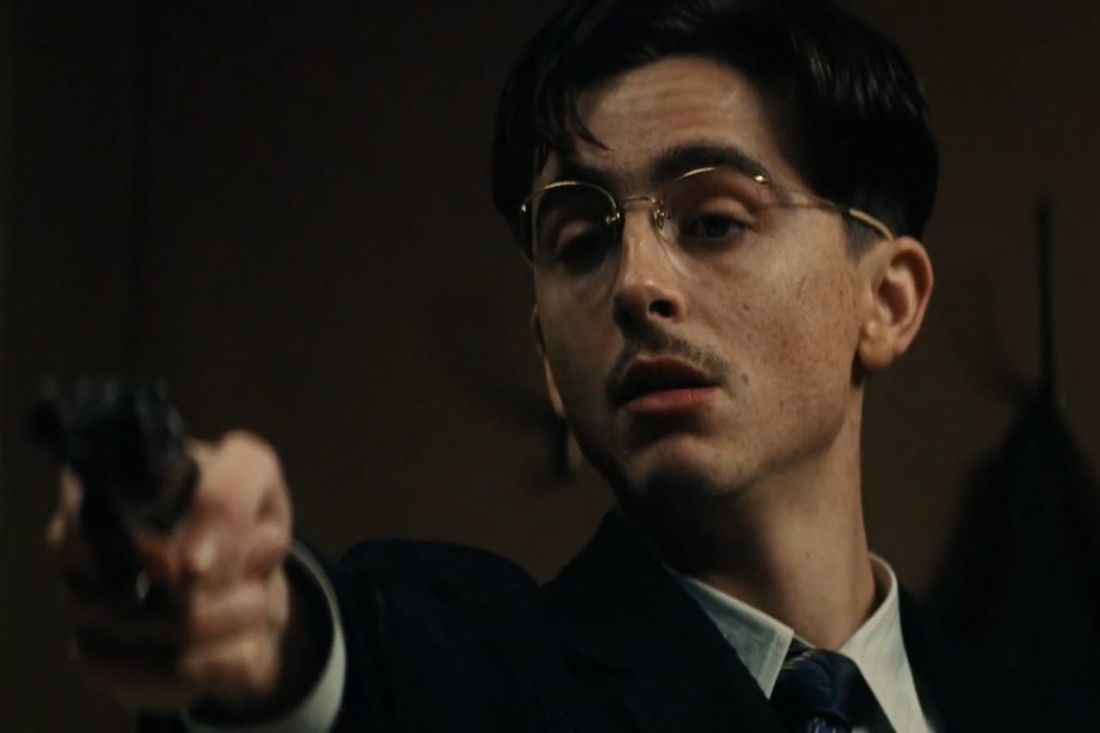
While having dinner with a friend in Chicago, we discussed Timothée Chalamet’s seemingly boastful admission of his creative limitations. In a recent interview with Matthew McConaughey for Variety, Chalamet appeared to be campaigning for an Oscar, and during the conversation, he stated he wouldn’t want to pursue careers like ballet or opera, implying a lack of public interest in those art forms.
He immediately followed up, saying, “I have a lot of respect for people in ballet and opera… I shouldn’t have said what I did.” But it was too late. Chalamet’s initial comments came across as disrespectful and dismissive, a stark contrast to what he’d said earlier during promotion for Marty Supreme. He’d previously emphasized his connection to the art form, explaining, “My family has a long history with the New York City Ballet—my grandmother, mother, and sister all danced there. I practically grew up backstage at the Koch Theater, and I feel like I’ve benefited from a unique blend of both modern and classic culture.”
Many actors have successfully transitioned from ballet and other dance forms, bringing with them a deep awareness of how the body can tell a story. That’s why Timothée Chalamet’s recent comments about the state of the arts caused such a strong reaction. Arts funding is dwindling in this country, and wealthy individuals are no longer supporting cultural organizations. Instead, they seem more interested in displaying their wealth and appearing sophisticated. However, Chalamet’s comments were noteworthy for another reason. The film industry is clearly facing serious challenges, both creatively and financially, and seems to be in decline. This isn’t just a U.S. problem; the entire film industry is struggling due to changes in technology and the high cost of production worldwide. But right now, Hollywood – and independent American cinema – is in a particularly precarious position.
As a lifelong movie fan, I’ve always known Hollywood’s been through rough patches. Seriously, since the very beginning! It feels like there’s always something threatening it – from the old censorship rules and legal battles, to things like the rise of TV and video games. Now we’ve got streaming and AI to worry about, plus it sometimes feels like people just aren’t as interested in the same kinds of celebrities anymore. It’s kind of built into the nature of filmmaking, always chasing the next technology and relying on money, so panic about the future is always there. But honestly, the challenges facing the industry now feel different – and genuinely scary – compared to what it’s dealt with before.
Throughout awards season, Timothée Chalamet has focused as much on promoting his film, Wonka, as he has on defending the continued relevance of movie stars. He’d likely be more effective focusing on supporting fellow actors and advocating for better working conditions than criticizing other forms of entertainment he isn’t involved in. However, his awkward public statements hint at a deeper worry. He acknowledges admiring those who publicly champion movie theaters and specific genres, but also believes that if a film like Barbie or Oppenheimer is truly compelling, audiences will seek it out regardless. He may not realize it, but this reveals a fear shared by many in his position – a concern that the public’s enthusiasm isn’t guaranteed, and that relying on appeals to tradition may not be enough.
Hollywood is facing a serious financial downturn, caused by complex problems like studio executives trying to avoid any risk when making films. But there’s also a creative problem: too many movies don’t connect with what it means to be human today – our worries, joys, and complexities. Adding to this, many actors have altered their appearances to fit a very narrow and unsettling standard of beauty – one that emphasizes extreme thinness, whiteness, and a rejection of aging. The goal isn’t to make films only for a small audience; movies should still be relevant and appealing to a wide range of people.
Many filmmakers, like Christopher Nolan, emphasize how special movie theaters are, offering an affordable and shared experience. However, it’s fair to ask why audiences should keep supporting American cinema when so few films actually deserve their time and money. What happens to an art form when everyday people can’t participate, whether they live in cities or elsewhere? Does it become solely reliant on funding from the wealthy? If an art form survives only through the generosity of rich patrons in today’s economic climate, it will inevitably decline – creatively, philosophically, and ultimately, practically disappear.
Timothée Chalamet’s recent remarks reminded me of Otto Friedrich’s 1986 book, City of Nets. It details how Hollywood changed after the huge successes of 1939, and the difficult decade that followed. The careers of many skilled people were harmed by fears about communism, and the old studio system ended due to antitrust laws. In the book, Friedrich shares a story about David O. Selznick, an independent producer known for films like Alfred Hitchcock’s Rebecca (1940), which won Best Picture.
David O. Selznick once glumly told Ben Hecht, while walking through the empty streets at dawn, that Hollywood was like ancient Egypt. He believed it was filled with decaying monuments and would eventually collapse, with only remnants left scattered in the wind. But before that happened, he predicted everything would be destroyed and replaced with something new.
As a film lover, it’s always a little heartbreaking to think about how much of Old Hollywood has vanished. The incredible mansion Billy Wilder used for Sunset Boulevard is gone – demolished in ’57 for the Getty building. Even more amazing, that house had a history! It was originally built by Alla Nazimova in the ’20s, complete with a swimming pool shaped like the Black Sea, and later became the famous Garden of Allah Hotel. Think Scott Fitzgerald and Robert Benchley hanging out there! But that is now a bank. It doesn’t stop there, sadly. Bette Davis’ Hollywood Canteen is a parking garage now, the Mocambo nightclub is just another parking lot, and the Trocadero? Only the front steps remain. It’s a stark reminder that the glamorous places we see on screen aren’t always around anymore.
On the other hand, the nostalgia business has become very profitable in Hollywood.
Published before I was even born, this book makes me wonder how much these places have changed over the years. But the author’s final thoughts on nostalgia feel just as relevant as a warning from Selznick. Hollywood frequently rewrites history to make money, and this is always inaccurate. When filmmakers simply recreate a fake version of the past, they don’t understand what their industry has gotten right – or wrong. The current state of Hollywood, including actors like Chalamet, seems to be accelerating its own decline. While film as an art form will likely endure, I’m skeptical that Hollywood, as it exists today, will.
This essay first appeared on Angelica Jade Bastién’s Substack, Madwomen & Muses.
Read More
- United Airlines can now kick passengers off flights and ban them for not using headphones
- All Itzaland Animal Locations in Infinity Nikki
- Katanire’s Yae Miko Cosplay: Genshin Impact Masterpiece
- How to Complete Bloom of Tranquility Challenge in Infinity Nikki
- How to Get to the Undercoast in Esoteric Ebb
- A Dark Scream Theory Rewrites the Only Movie to Break the 2-Killer Rule
- All Golden Ball Locations in Yakuza Kiwami 3 & Dark Ties
- Gold Rate Forecast
- 6 Ways Invincible Season 4’s Hell Episode Rewrites The Comics
- BloxStrike codes (March 2026)
2026-03-09 23:55