
It’s common to see older RPGs updated with remakes or remasters – we’ve even had an award for the best re-release for almost ten years. However, a game getting remade again is rare, which is why Dragon Quest VII Reimagined is notable.
Even if you’re new to Dragon Quest VII, you might be aware that it tells its story through many short, self-contained parts. It’s also a lengthy game – the original PlayStation version typically takes around 100 hours to complete, while the 3DS version is a bit shorter, at about 80 hours.
I’m mentioning the game’s length because when the remake was first announced, a key promise was a “more streamlined story.” This idea of ‘streamlining’ is central to the whole project. The remake makes noticeable changes to Dragon Quest VII – even removing some content – all to help players finish the game faster.
Dragon Quest VII doesn’t tell one continuous story. Early in the game, you gain the power to travel to the past. The game world is made up of islands floating on a vast ocean, and each island has its own self-contained story. By visiting these islands in the past and resolving their individual problems, you gradually reconnect the world. While a main storyline does appear later on, the heart of the game is really about these separate, island-based adventures.
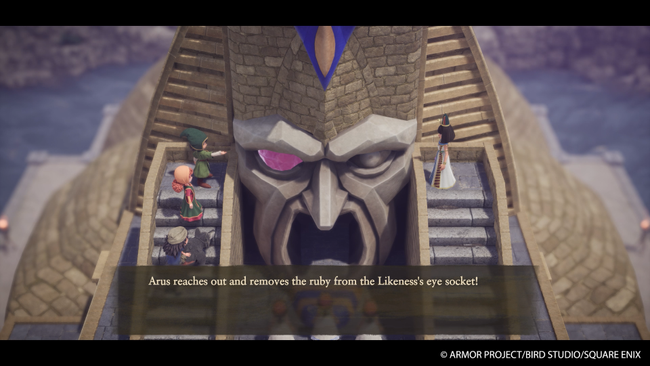
I remember when Dragon Quest VII finally came out in English on the 3DS back in 2016, and my feelings about it haven’t really changed. What struck me then, and still does, is that the way the story unfolds is a little different from most RPGs of that era. It might take a bit to get used to, but it’s really the stories of the people around you – the NPCs you meet in each town – that drive the game, not so much the story of your main party. These little stories are beautifully written, often really touching, and they don’t drag on. It all adds up to a game that feels wonderfully adventurous.
I previously praised the Greenthumb Gardens scenario in my 3DS review for its engaging story involving a complicated relationship between town residents. I also want to mention the Vogograd storyline, which has stayed with me. It’s compelling to see how the townspeople unknowingly commit terrible acts against one of their own, and how both the victim and the community deal with the aftermath – it’s a powerful story told without being overly dramatic.
What truly defines Dragon Quest VII, for me, isn’t the big final battle, but all the smaller, memorable moments along the way.
I often disagree with criticisms of Dragon Quest VII’s pacing. When people say a game has ‘poor pacing,’ they usually mean things take too long, are rushed, or don’t fit the story. But DQ7 isn’t like most RPGs with one continuous story. Most of the individual stories within the game don’t heavily connect to the overall plot, and none of them overstay their welcome. Interestingly, even a section commonly seen as a pacing issue – traveling the world to find elemental spirits – remains unchanged in the remake.
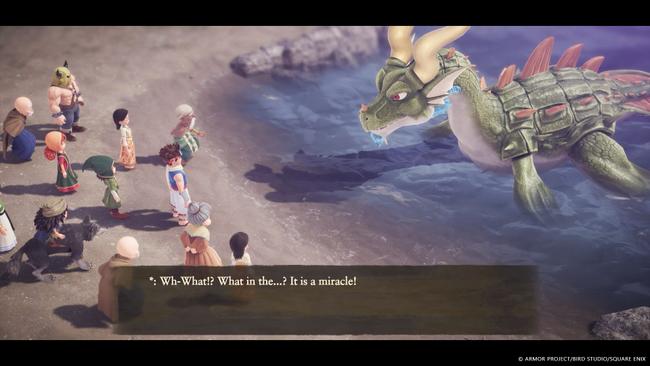
Square Enix trimmed some storylines from Dragon Quest VII to speed up the game, but the choices of what to remove felt random. For example, they cut the ‘El Ciclo’ scenario – a town stuck in a time loop, similar to the movie Groundhog Day. While it wasn’t essential to the main story, many other optional stories remained. I enjoyed ‘El Ciclo’ and its unique concept, and it’s disappointing to see it removed. It’s just a shame, really.
While some areas remain in the updated version, many have been shortened. For instance, the section of the Sunken Palace in the Hardlypool region – specifically the part where you explore the underwater city and fight Gracos – has been entirely cut. Now, the game takes you directly to the boss fight.
The game has been improved in a few areas by simplifying things. For instance, in older versions of Dragon Quest VII, players had to remember to talk to a specific character after a certain event to get an item needed to continue. It was easy to miss this, but the 3DS version had hints to guide you. Now, in the updated version, you automatically receive the item during a story scene, removing that potential frustration. These kinds of changes make sense, as the original game could be a bit confusing at times.
The changes to Dragon Quest VII aren’t limited to story cuts. The ‘streamlining’ affects everything, from combat to exploring the world. While these changes make the game faster to finish, they also remove a lot of what made it fun and engaging in the first place, essentially smoothing out any challenging or interesting elements.
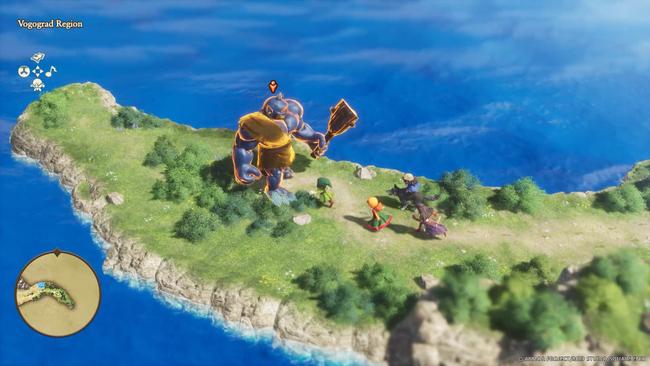
The game strongly directs players, almost afraid to let them explore or solve puzzles independently. Even disabling objective markers on the world map doesn’t fully remove the hand-holding; they still appear in every town, clearly indicating who to talk to next. The game’s menu also provides written instructions on your current objective. Like the 3DS version, the game automatically uses necessary items when and where they’re needed, removing the puzzle of figuring that out yourself – for example, it will automatically use Holy Water in Burnmount or Angel Tears in Greenthumb Gardens. Party members frequently offer hints, pointing you towards things like the Golden Horns for Hadid, medicine for Greenthumb Gardens, or Prism Dew in the Buccanham region. Even much of the party chatter consists of clues about where to go next.
The changes go beyond just making the story move forward. Exploration and battles have also been simplified. Finding collectibles like tablet fragments and Mini Medals is now much easier – the game lists them in the menu and guides you directly to their locations with a single click. These fragments even appear on your minimap, no matter your settings. The ‘Nose For Treasure’ ability has been improved to show items not just in your current area, but also in neighboring ones. You’ll find a lot more healing items like Medicines and Single Phials, and you don’t have to worry about individual inventories – all characters can use anything at any time. The Lucky Panel, a bonus game, has been expanded with more weapons, equipment, and stat-boosting seeds, and it’s completely free to play, letting you quickly earn useful items to keep or sell.
Okay, so playing this game is way more forgiving than I expected! There are tons of statues hidden around that fully heal you, which means I don’t have to worry about potions as much. Plus, I can level up two classes at the same time, so I’m getting vocation points super fast – and there’s no limit to how high I can go, unlike in the older versions. Honestly, my characters basically can’t stay down. If they hit 0 HP in a fight, they just get back up with 1 HP. And even if my whole party wipes, it’s not a huge deal. Instead of losing half my gold, I just pay 1000G to keep going. By the time you’re further in the game, 1000G is practically pocket change – I earn that back from a single battle or two!
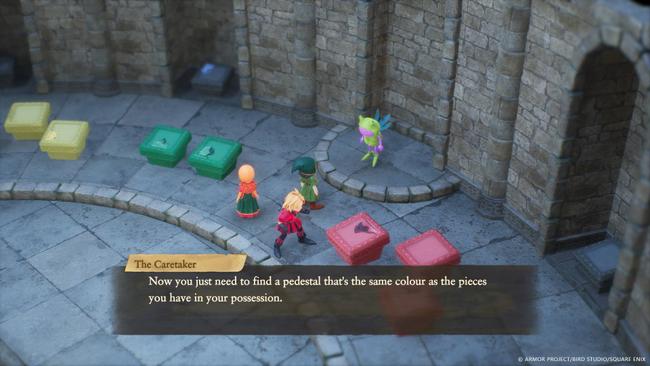
Ultimately, the game holds your hand too much, leaving little room for independent discovery. It constantly directs you, provides excessive assistance, and presents minimal challenges. While this creates a smooth experience, it’s not very rewarding. Though you can adjust the battle difficulty, this doesn’t make up for the lack of challenge elsewhere. Square Enix aimed to create a definitive version of Dragon Quest VII, but the result feels more like a simplified version instead.
Square Enix did improve the pacing of Dragon Quest VII, with the updated version’s main story now taking 40 to 50 hours to complete. However, a straightforward adventure feels less engaging than one where you have to explore and discover things on your own.
Square Enix says the updated version of the game includes new content to make up for some removed features. This includes a 10-minute scene explaining why Maribel stays with your group throughout the game – something that didn’t happen in earlier versions. There’s also a 30-minute section where you’ll see Kiefer as an adult, a character briefly shown in a previous trailer, and this new content features a stealth-based gameplay segment.
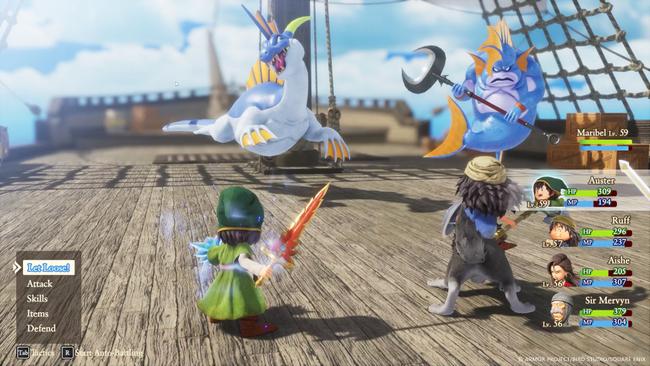
Dragon Quest VII Reimagined’s battle system is a standout feature, though it’s a bit of a mixed bag. Producer Takeshi Ichikawa aimed to make standard enemy encounters fast and simple, while boss battles would be more thoughtful and strategic – and he largely achieved that goal. The game feels much quicker overall because regular fights are easier to win or even avoid if you choose. Boss battles are where the game truly excels, even considering some balance issues. The post-game boss fights are genuinely difficult, demanding players carefully build their team with the right classes and gear, and then use smart tactics – exactly what you’d expect from a good turn-based RPG.
I have mixed feelings about the new visual style. While it looks fantastic during battles and the animated cutscenes, much of the game uses a simple top-down view with basic, repeating animations and no voice acting. This sometimes makes the game feel a little low-budget, and I occasionally wished they’d stuck with traditional sprites. I also found the blurry depth-of-field effect on the overworld map to be unnecessary and distracting.
Dragon Quest VII Reimagined retains the core appeal of the original, but it’s been significantly simplified. While this makes the long game faster to complete, it also removes much of the joy of exploration and challenge. Ultimately, it’s hard to say this new version is better than the classic.
7
We tested Dragon Quest VII Reimagined on PC. It’s also playable on PlayStation 5, Xbox Series X|S, Nintendo Switch 2, and the original Nintendo Switch.
Read More
- United Airlines can now kick passengers off flights and ban them for not using headphones
- Crimson Desert: Disconnected Truth Puzzle Guide
- All 9 Coalition Heroes In Invincible Season 4 & Their Powers
- Mewgenics vinyl limited editions now available to pre-order
- Grey’s Anatomy Season 23 Confirmed for 2026-2027 Broadcast Season
- Viral Letterboxd keychain lets cinephiles show off their favorite movies on the go
- The Boys Season 5 Spoilers: Every Major Character Death If the Show Follows the Comics
- All Golden Ball Locations in Yakuza Kiwami 3 & Dark Ties
- How to Get to the Undercoast in Esoteric Ebb
- Does Mark survive Invincible vs Conquest 2? Comics reveal fate after S4E5
2026-02-02 18:02