What to know:
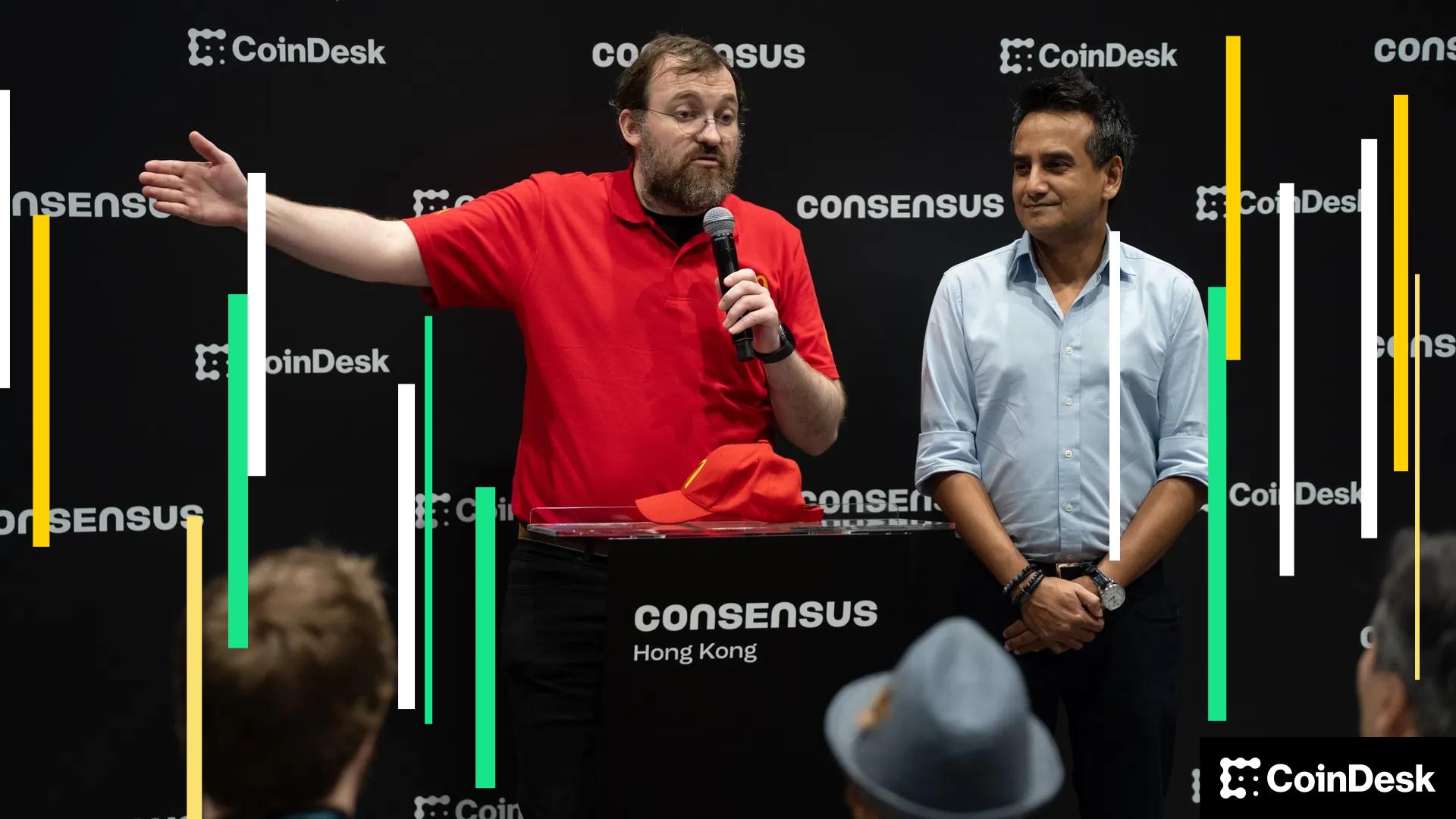
- At the fabled Consensus Hong Kong 2026, Cysic’s founder, Leo Fan, issued a cautionary parable against the perils of relying on the titans of hyperscaling-Google Cloud and Microsoft Azure-whose empires, though mighty, may yet crumble under the weight of their own hubris.
- Cardano’s Charles Hoskinson, ever the pragmatist, defended the alliance with these digital colossi, arguing that privacy’s holy grail demands the might of their data centers, while cryptography serves as a gilded gatekeeper, barring prying eyes from the sacred data.
- The feud between Hoskinson and Fan boils down to a philosophical quibble: whether decentralization is a matter of code or of hardware. Hoskinson champions cryptographic neutrality, while Fan, a purist, insists on a hybrid model where Big Tech is shackled, not shackled to the compute layer itself.
Leo Fan, Cysic’s visionary, warned that blockchain projects tethered to Google Cloud and Azure risked resurrecting the very single points of failure crypto vowed to eradicate-like a phoenix made of server farms.
Fan’s diatribe followed Hoskinson’s unveiling of Midnight, Cardano’s privacy-centric project, which boasted partnerships with Google and Telegram. Midnight’s mainnet, scheduled for March’s end, promised to be a marvel of computational alchemy.
Hoskinson, ever the salesman, contended that no lone blockchain could shoulder the burden of global, privacy-preserving systems. “When folks spend a trillion dollars on data centers,” he mused, “why not let them do the heavy lifting?”
Fahmi Syed, CEO of Midnight Foundation, hailed the network’s 10 federated nodes as a “responsible” step toward decentralization-a term that, in this context, might as well mean “modestly less centralized.” Google Cloud, of course, was among the early collaborators, its infrastructure now a cornerstone of this brave new world.
Justifying the Single Point of Failure
Hoskinson, with the flair of a stage magician, claimed Midnight offloads the heavy lifting-privacy and zero-knowledge cryptography-to cloud providers, which, he assured, would merely “provide the hardware” while the data remained cloaked in cryptographic veils.
During a demo, he showcased Midnight processing thousands of transactions per second, with Microsoft Azure as the silent, uncomplaining backend.
Fan, however, scoffed at this arrangement, likening it to a masquerade ball where the guests all wear the same mask. “If your validators are decentralized but all reside in the same data center,” he said, “you’ve just created a single point of failure-albeit one with a fancy name.”
Cysic, with its decentralized compute network, boasted that one client slashed proof-generation time from 90 minutes on AWS to 15 minutes. “We don’t need to defeat them,” Fan quipped, “just outpace them with a well-timed joke.”
How Decentralization Should Be Defined
Midnight, Hoskinson insisted, was not outsourcing its blockchain to Google or Microsoft. The base network ran its own nodes, and the hyperscalers, he claimed, merely provided “hardware,” not governance or protocol control.
He painted Midnight as a neutral coordinator, dynamically routing workloads between cloud providers, all while encrypted computation ensured the providers remained “just the hardware.”
Fan, ever the contrarian, focused on the compute layer. “Even if data is encrypted,” he argued, “relying on a handful of global giants concentrates power like a black hole in the cosmos of decentralization.”
The disagreement, he noted, was less about technical centralization and more about semantics. Hoskinson prioritized cryptographic neutrality; Fan demanded decentralization extend to the very bones of the system.
“Use big vendors sparingly,” Fan advised, “but don’t surrender your soul to them. After all, what’s a community if not a group of people who refuse to be herded?”
As blockchain networks chase enterprise glory and global reach, the rift between building parallel infrastructures and cozying up to Big Tech may define crypto’s next chapter-a chapter penned by those who know the difference between a server and a serf.
Read More
- United Airlines can now kick passengers off flights and ban them for not using headphones
- Katanire’s Yae Miko Cosplay: Genshin Impact Masterpiece
- All Itzaland Animal Locations in Infinity Nikki
- How to Complete Bloom of Tranquility Challenge in Infinity Nikki
- How to Get to the Undercoast in Esoteric Ebb
- Gold Rate Forecast
- All Golden Ball Locations in Yakuza Kiwami 3 & Dark Ties
- A Dark Scream Theory Rewrites the Only Movie to Break the 2-Killer Rule
- Fire Force Season 3 Part 2 Episode 24 Release Date, Time, Where to Watch
- BloxStrike codes (March 2026)
2026-02-17 19:10