Forecasting ED Crowds: Can Machine Learning Predict Hospital Admissions?
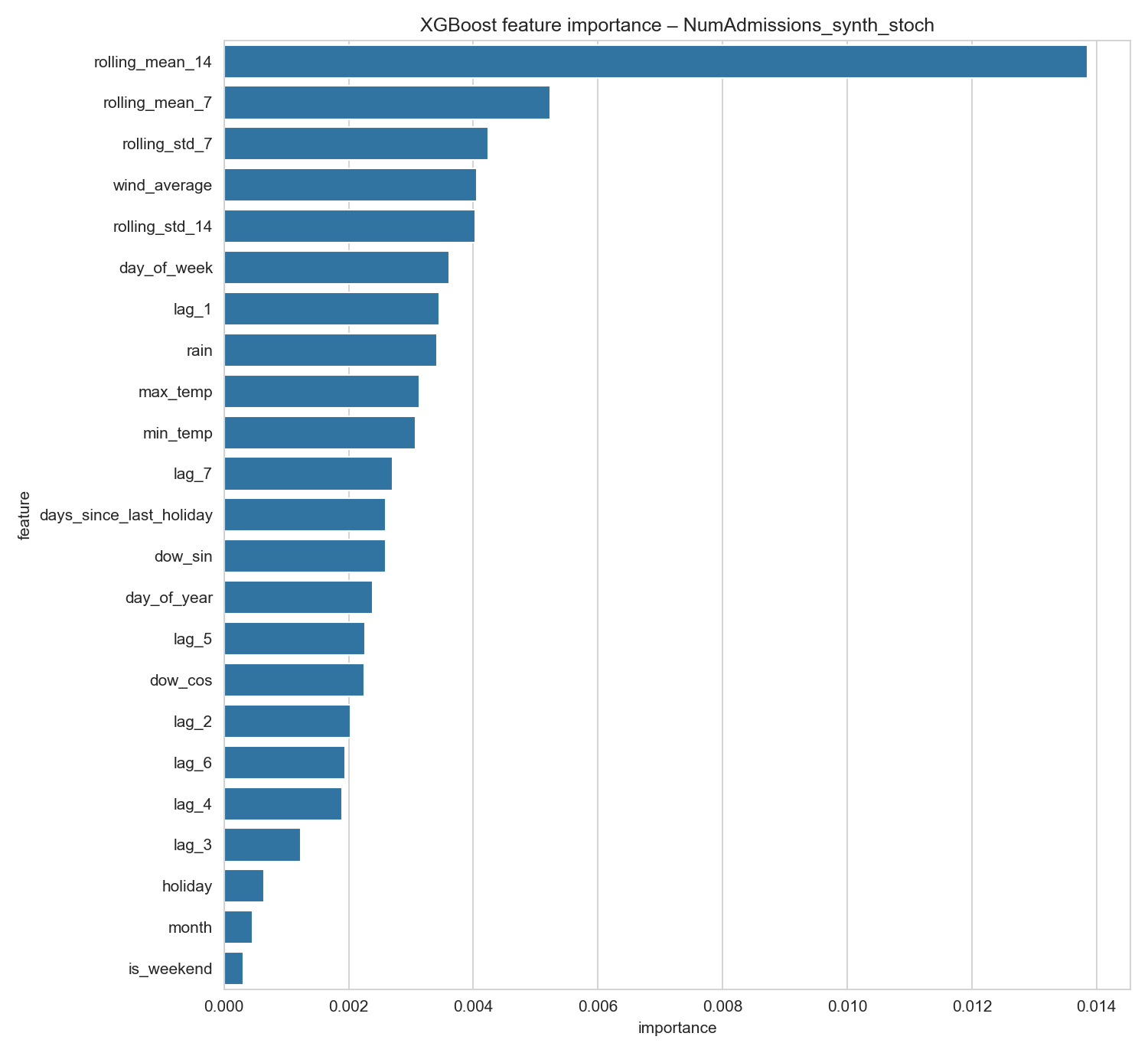
New research explores the potential of machine learning models to accurately forecast daily arrivals in emergency departments, offering insights for improved resource allocation.
![Phi-SegNet employs bi-feature mask formers and attention-guided skip connections to integrate encoder features, then refines segmentation through phase supervision and reverse Fourier attention [latex] \mathcal{R}\mathcal{F} [/latex] modules-a spectral filtering approach designed to sharpen boundary localization despite the inevitable complexities of production deployment.](https://arxiv.org/html/2601.16064v1/Figures/total_architecture.jpg)
![Aeon’s query latency distribution reveals a system designed for speed-achieving sub-millisecond response for the vast majority of requests [latex] (85\%) [/latex]-but acknowledging the inevitable cost of occasional, longer delays [latex] (up to 2.5ms) [/latex] when cached data is unavailable, a characteristic notably absent in the consistently stable, yet slower, [latex] 1.5ms [/latex] response time of HNSW.](https://arxiv.org/html/2601.15311v1/figures/latency_cdf.png)