Chatbots for All: Scaling AI Support to Small Businesses
This industry case study details a practical and secure approach to deploying AI-powered chatbots for small businesses using distributed, cloud-native technologies.
This industry case study details a practical and secure approach to deploying AI-powered chatbots for small businesses using distributed, cloud-native technologies.
A new machine vision system, built using a custom convolutional neural network, is showing promise in the early detection of skin lesions.
![As semantic density increases-measured by ρ-neural accuracy rapidly declines, evidenced by a sharp decrease in N50N\_{50}, which validates the Orthogonality Constraint by demonstrating that higher densities lead to increased key overlap and subsequent interference; achieving values below [latex]\rho < 0.3[/latex] proved unattainable with realistic fact structures.](https://arxiv.org/html/2601.15313v1/fig_density_vs_collapse.png)
New research reveals a fundamental constraint on how neural networks store information, explaining why they falter when faced with complex, overlapping memories.
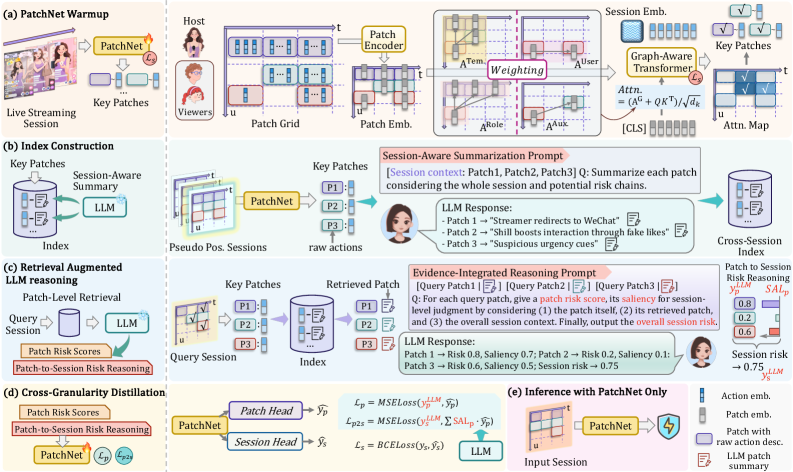
A new framework uses artificial intelligence to predict and mitigate risks in live streaming by analyzing patterns of behavior across multiple sessions.
Researchers have developed a lightweight model to better understand gene expression within the physical context of tissues, paving the way for more accurate biological insights.
![The model distinguishes itself from traditional Federated Graph Neural Networks by establishing a communication structure-indicated by sequential exchanges [latex]❶[/latex], [latex]❷[/latex], and [latex]❸[/latex]-between server and clients, fundamentally altering the flow of information during the learning process.](https://arxiv.org/html/2601.15722v1/x1.png)
A new approach drastically cuts communication costs in federated graph learning, enabling more practical and privacy-preserving analysis of complex network data.
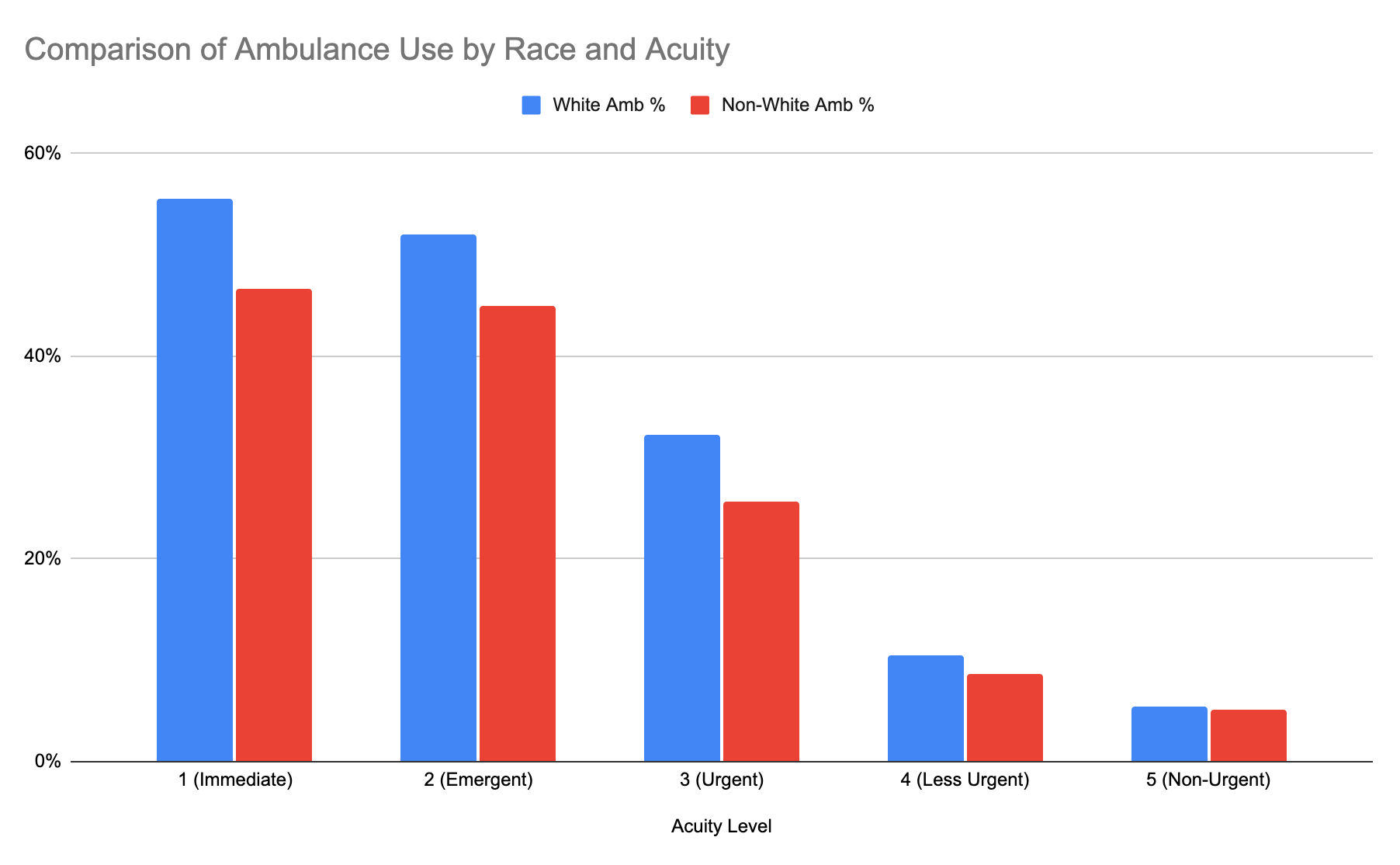
New research reveals that artificial intelligence systems used to prioritize patients in emergency rooms can exhibit subtle biases, potentially leading to unequal care.
A new framework focuses on quantifying uncertainty directly in the learned representations, leading to more stable, calibrated, and robust AI models.
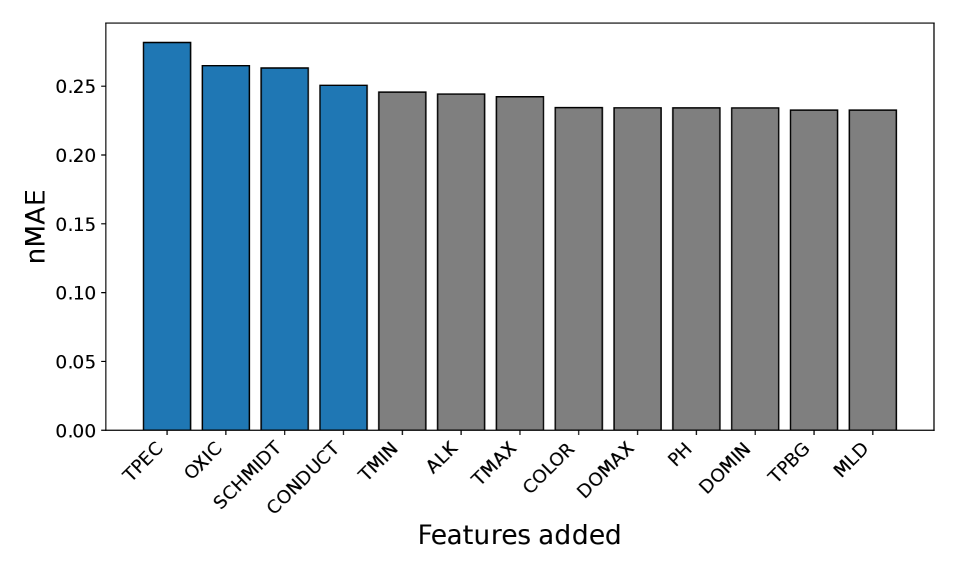
A new machine learning framework pinpoints the minimal data needed to accurately predict lake water clarity, streamlining monitoring efforts and improving resource management.
![The weighting function [latex]\Omega(p_t, f_c)[/latex] demonstrates an asymmetric relationship between prediction confidence [latex]p_t[/latex] and class frequency [latex]f_c[/latex], utilizing a pivotal point ω to differentiate low-confidence regions and facilitate smooth transitions between patterns characteristic of both tail and head classes.](https://arxiv.org/html/2601.15924v1/wireframe.png)
A new approach dynamically adjusts training to prioritize challenging examples from underrepresented classes, improving performance on imbalanced datasets.