Taming the Noise: A New Approach to Signal Forecasting
![A causal Wiener filter, implemented via a spectral transformation incorporating parameters [latex]\alpha = 0[/latex], [latex]\beta = 0.9[/latex], and [latex]\omega_0 = 5[/latex] rad/s, effectively estimates a scale-free signal [latex]S_{xx} = A\gamma^{2}/((|\omega|-\omega_{c})^{2}+\gamma^{2})[/latex]-where [latex]\gamma = 2\pi[/latex] rad/s, [latex]A = 0.9[/latex], and [latex]\omega_c = 10 \cdot 2\pi[/latex] rad/s-from noisy measurements characterized by a power spectral density of [latex]S_{nn} = 5/\omega^{1.8} + 0.01[/latex], achieving performance comparable to a non-causal Wiener filter with relative error power spectral densities demonstrably reduced through Welch’s method averaging across approximately 250 logarithmically spaced bins.](https://arxiv.org/html/2601.22294v1/x1.png)
A novel method overcomes limitations in forecasting signals obscured by complex, scale-free noise, opening doors for more accurate predictions in diverse applications.
A novel method overcomes limitations in forecasting signals obscured by complex, scale-free noise, opening doors for more accurate predictions in diverse applications.
New research reveals that large language models are surprisingly more likely than humans to perpetuate harmful misconceptions about autism spectrum disorder.

New research evaluates how well artificial intelligence can anticipate security vulnerabilities based on bug reports.
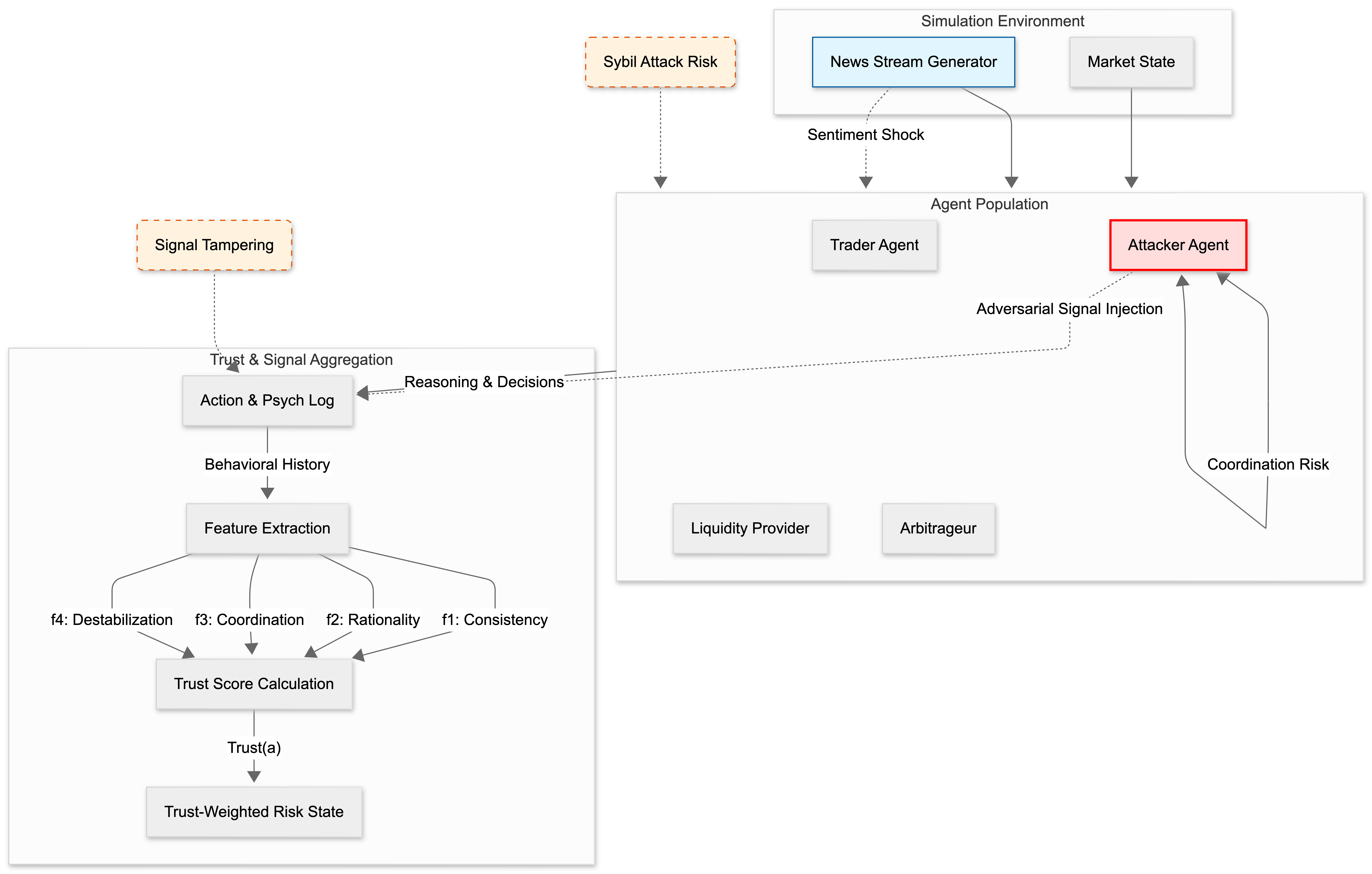
New research details a novel approach to building more resilient stablecoin systems using collaborative, trust-weighted data aggregation.
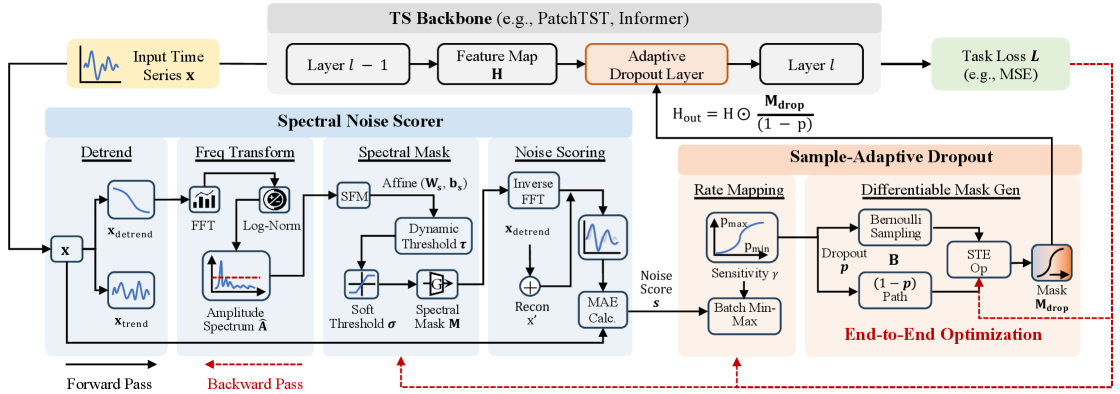
A new approach dynamically adjusts regularization to improve the accuracy and robustness of time series predictions.

Researchers have developed a novel method to forecast how cells will respond to genetic or environmental changes, leveraging learned patterns from existing data.
Researchers have proposed a generalized loss function rooted in pattern correlation that aims to improve training across both traditional Support Vector Machines and modern Deep Neural Networks.
Researchers have developed a novel framework that leverages semantic topology learning to improve air quality predictions worldwide, even in areas with limited data.
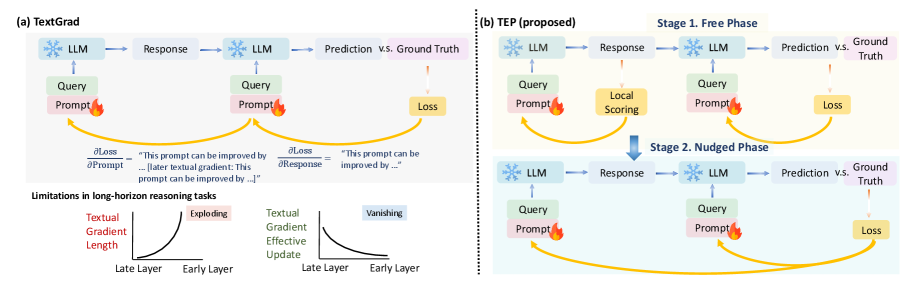
A new approach to training complex AI models overcomes the challenges of vanishing and exploding gradients by propagating updates through textual representations.

New research demonstrates that the initial noise used in image generation models can reveal whether a specific image was part of their training dataset.