Seeing the Danger Ahead: Smarter Navigation for Aerial Robots
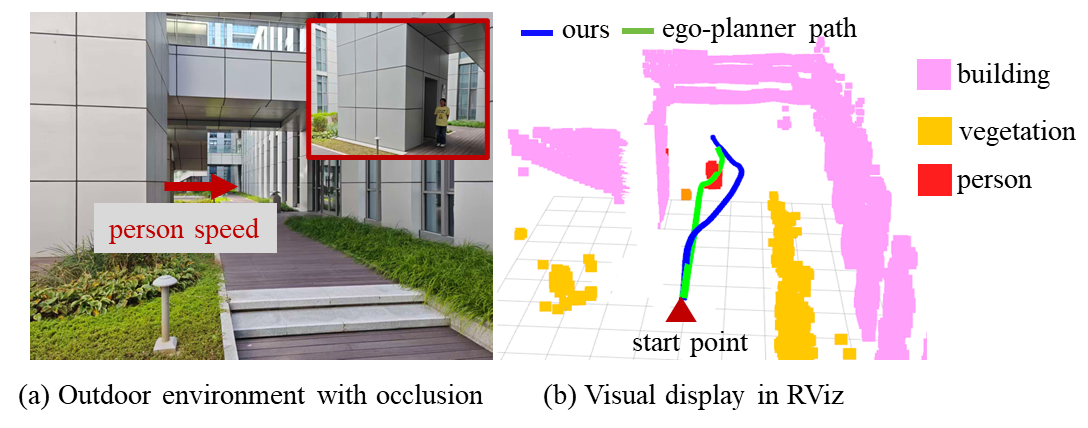
A new system leverages semantic understanding of surroundings to enable aerial robots to proactively avoid hazards and navigate complex, unpredictable environments.
A new system leverages semantic understanding of surroundings to enable aerial robots to proactively avoid hazards and navigate complex, unpredictable environments.
![The study demonstrates a method for assessing the constraining power of a C3NN model by subjecting training maps to phase randomization within their Fourier transforms-a process involving Fast Fourier Transforms (FFT), uniform phase distribution between 0 and [latex]2\pi[/latex], and inverse FFT-effectively testing the model’s reliance on subtle, potentially illusory, correlations within the cosmological data.](https://arxiv.org/html/2602.16768v1/x8.png)
A new framework uses convolutional neural networks to extract richer information from weak lensing data, potentially unlocking more precise measurements of cosmological parameters.
New research introduces a dynamic approach to prevent performance degradation and maintain safety standards as large language models are refined for specific tasks.
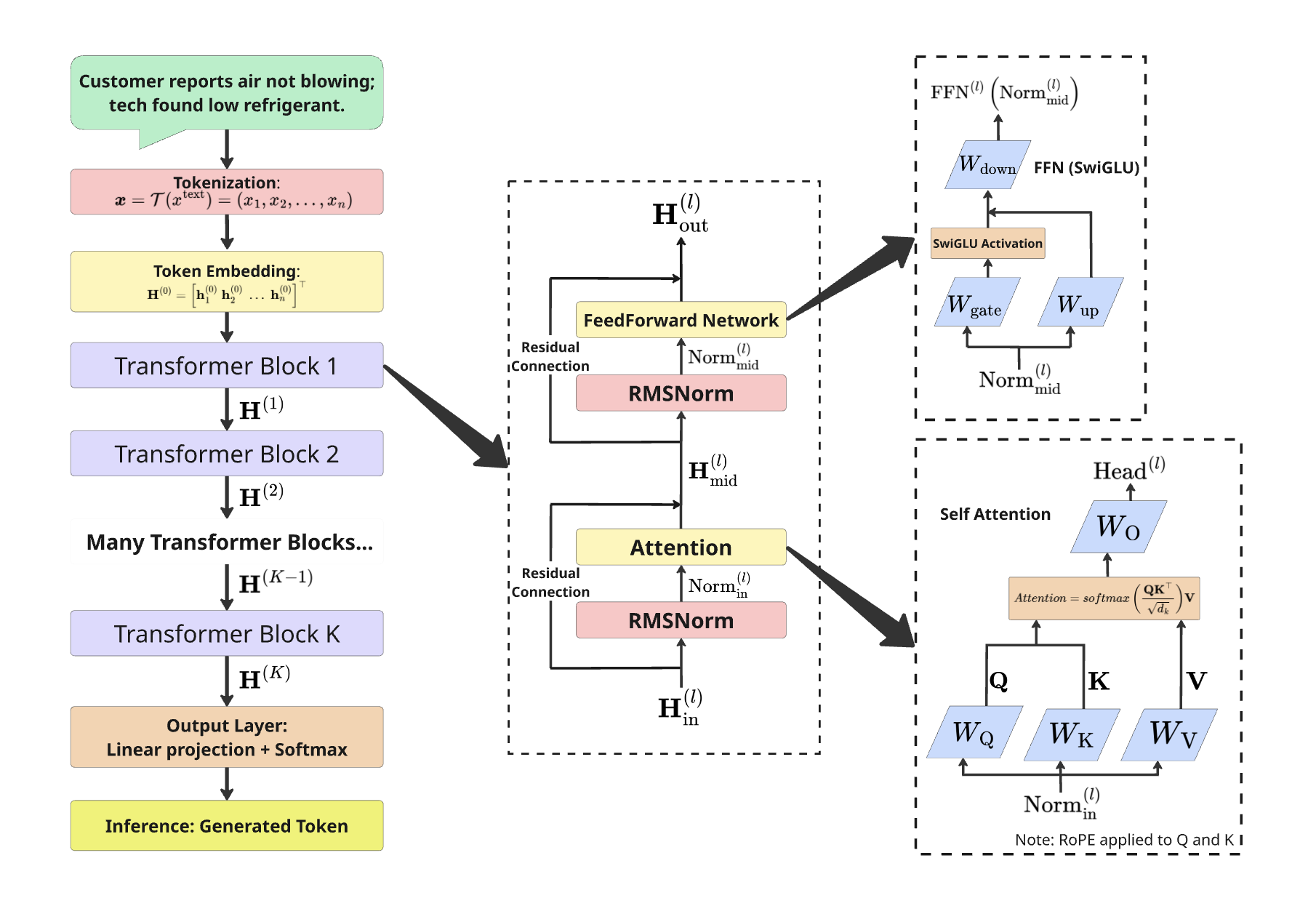
New research demonstrates that fine-tuned artificial intelligence models can accurately forecast corrective actions for warranty claims, paving the way for truly automated processing.
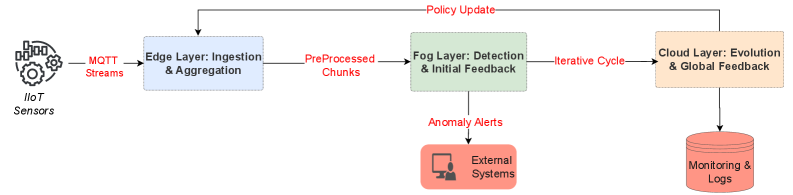
A new approach to predictive maintenance leverages self-evolving multi-agent systems to enhance reliability and minimize downtime in industrial IoT environments.

Researchers are harnessing the power of distributed learning and advanced neural networks to improve the accuracy of lung disease diagnosis while safeguarding patient data.
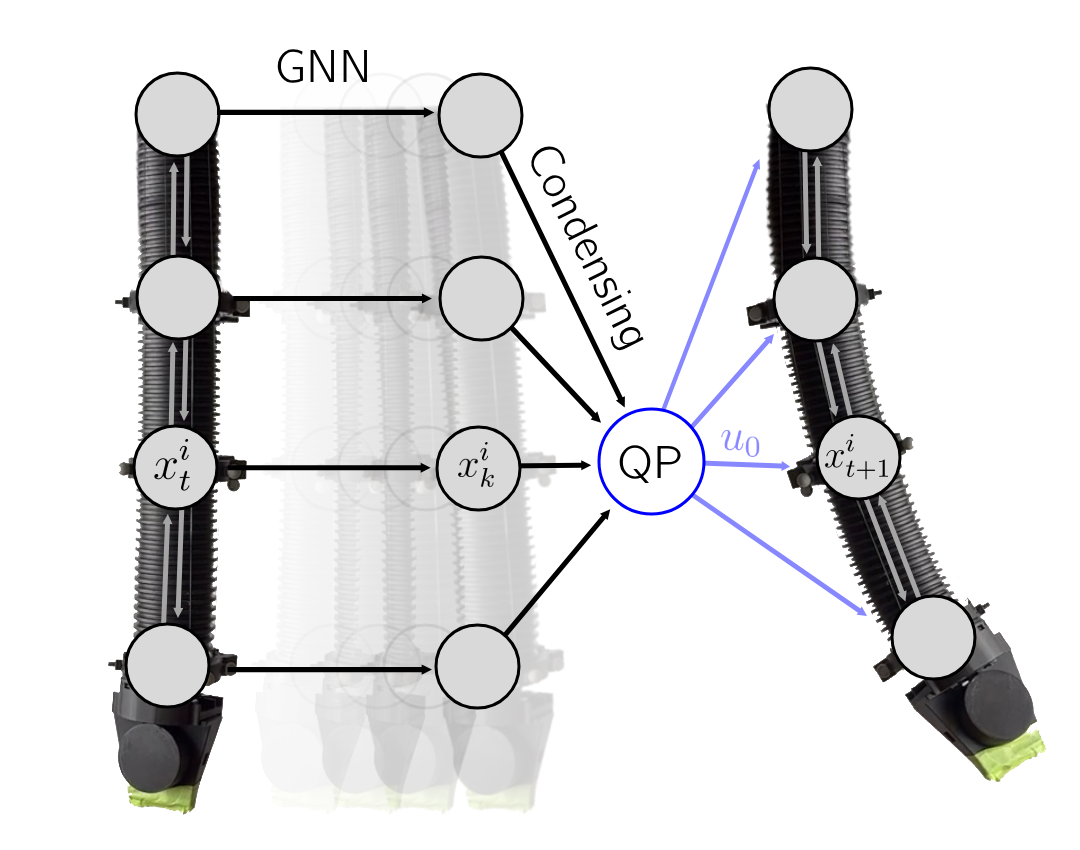
A new approach combines graph neural networks and model predictive control to enable real-time command of complex systems like soft robots.
New research reveals that common methods for evaluating AI safety are easily bypassed, exposing a hidden vulnerability in large language models.
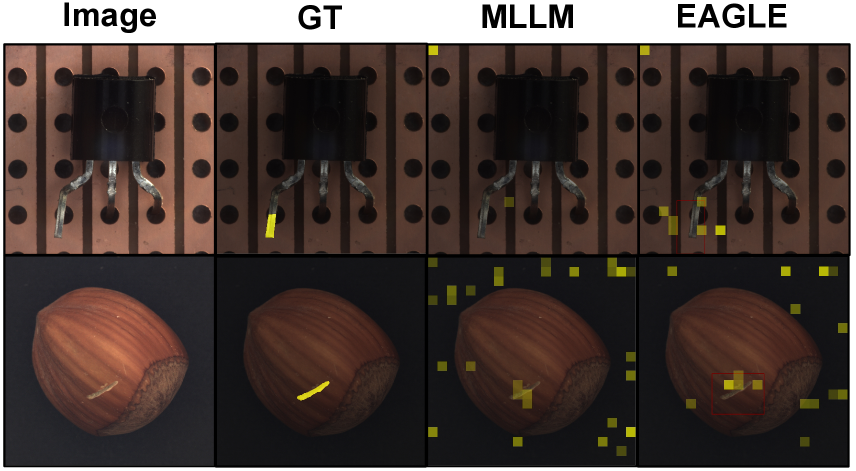
A new framework leverages expert knowledge to help artificial intelligence reliably detect anomalies in complex industrial processes without requiring extensive model training.
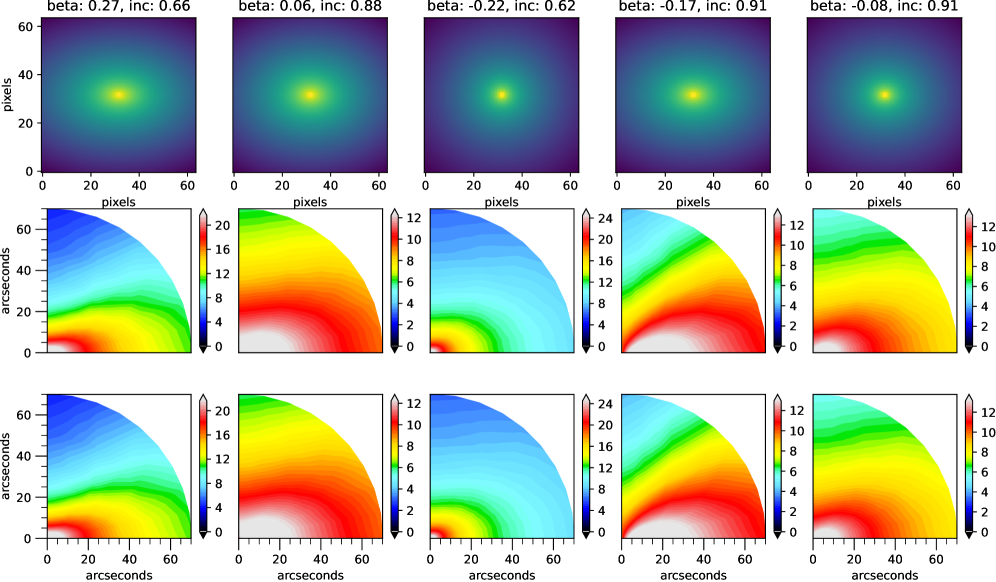
A new approach leverages neural networks to rapidly and accurately determine the internal motions of galaxies, offering a significant speedup over conventional methods.