Market Signals and the White House: Decoding Policy’s Impact

New research reveals how financial markets react to presidential policy communication, showing a shift towards predictable volatility in the early stages of a term.
New research reveals how financial markets react to presidential policy communication, showing a shift towards predictable volatility in the early stages of a term.
Researchers have created a challenging benchmark to assess whether large language models can accurately verify financial statements against complex accounting rules.

Researchers are combining the strengths of survival analysis and machine learning to build more accurate and interpretable early warning systems for chronic illnesses.

Researchers have developed a novel system that combines blockchain data with off-chain intelligence to identify and predict fraudulent ‘rug pull’ schemes in decentralized finance.

A new approach tackles the problem of ‘lookahead bias’ in large language models, ensuring more reliable predictions for time-sensitive applications like financial forecasting.
New research reveals that advanced AI systems can recognize their own mistakes in critical decision-making scenarios, yet continue to make them, highlighting a fundamental limitation beyond simply needing more data.
A new study details how advanced seismic monitoring, powered by deep learning, provided crucial real-time insights during a period of intense volcanic unrest at Santorini, Greece.

Researchers are leveraging deep learning to accurately forecast the behavior of complex, nonlinear systems while also quantifying the inherent uncertainties in those predictions.
As artificial intelligence rapidly advances, blockchain technology offers a crucial pathway to counteract data monopolies and reshape the power dynamics of the digital world.
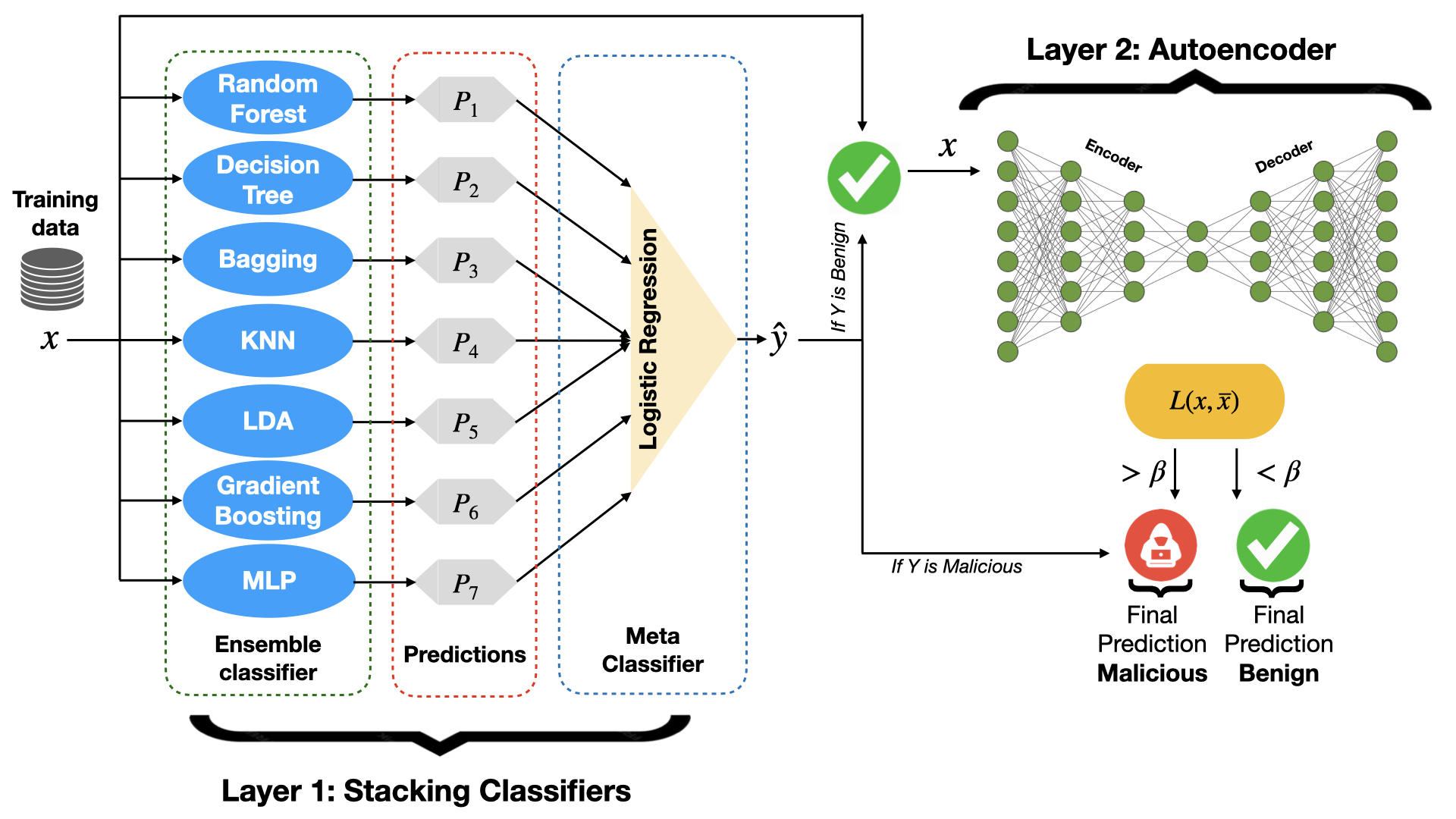
As cyberattacks become increasingly sophisticated, machine learning-based intrusion detection systems are facing a new wave of threats from adversarial examples.