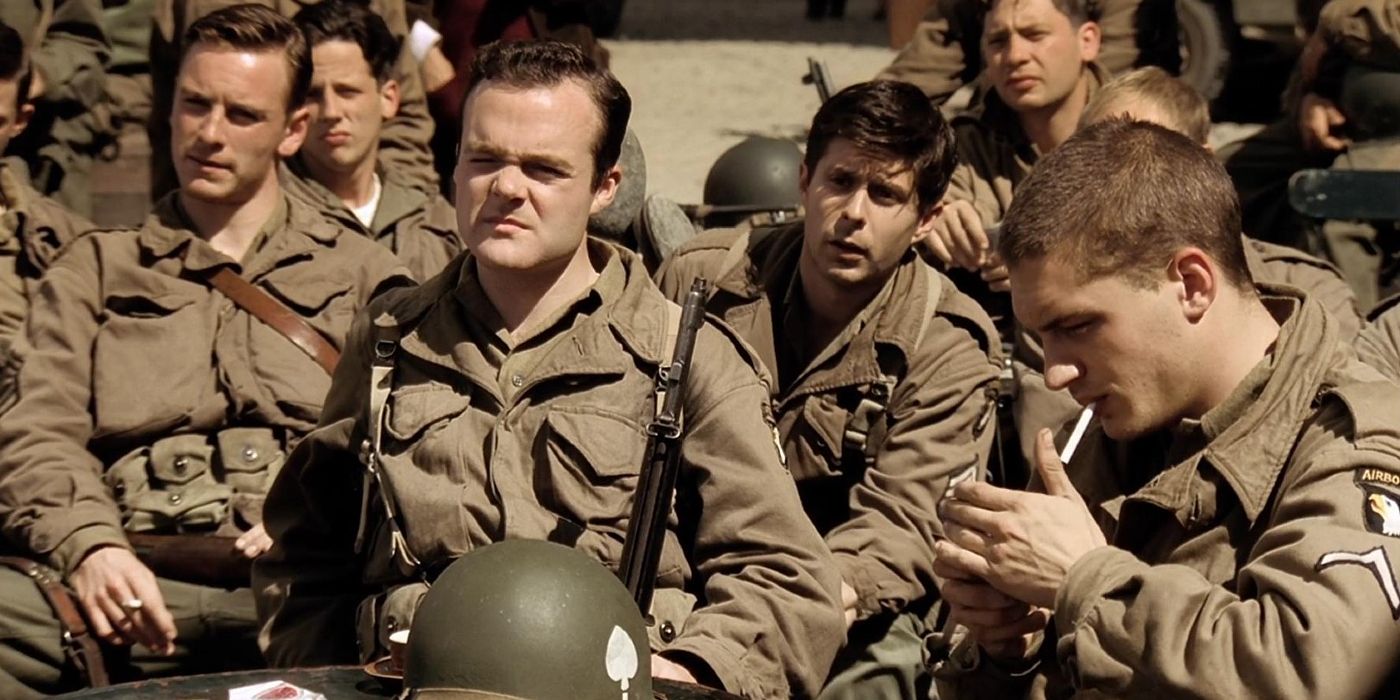
Beginning with Saving Private Ryan in 1998 and continuing with Masters of the Air in 2024, Steven Spielberg and Tom Hanks have collaborated on a series of impactful World War II dramas, effectively creating a connected cinematic world. Many consider their 2001 HBO series, based on the work of historian Stephen E. Ambrose, to be their most critically acclaimed project.
I absolutely love Band of Brothers, but I’ve always known it takes liberties with history, and that’s okay with me. It’s based on a true story and features real people, but it prioritizes emotional impact over strict accuracy. Take Lieutenant Norman Dike, for example. The show paints him as someone who couldn’t handle the pressure, but the real man was a hero – wounded in action, decorated with two Bronze Stars, and credited with saving multiple lives! And the discovery of the concentration camp in the episode ‘Why We Fight’ feels almost accidental in the show, with the soldiers not realizing how widespread the horrors were. In reality, it was the 12th Armored Division who actually found that camp, and Soviet troops had liberated others nearly a year before. But honestly, I think the show understands that ‘accuracy’ and ‘authenticity’ aren’t the same thing. That episode, more than any other, isn’t about what happened, but about how the war changed the men of Easy Company, even as it was ending. It’s a powerful look at the toll war takes on the human spirit.
‘Why We Fight’ Focuses on How the War Changed the Flawed Men of Easy Company
Despite the immense suffering and fear surrounding the events, the documentary “Why We Fight” delays showing Kaufering – the site where approximately 15,000 people perished – until 36 minutes into its 55-minute runtime. The initial two-thirds of the episode present a significantly different tone compared to the first eight parts of the series.
The show shifts from the bleak, muted tones of previous locations to the bright, sunny atmosphere of Berchtesgaden, Germany. However, despite the change in scenery, the men of Easy Company are feeling more troubled than ever, with perhaps the exception of Private John Janovec. Band of Brothers accurately portrays the reality of war: long stretches of dullness, hardship, and fatigue broken by moments of intense, life-threatening danger.
Sergeant Perconte angrily confronts a new soldier who’s excited to get into the fighting. Captain Nixon is deeply upset and drinking a lot after a parachute jump goes horribly wrong – his plane was destroyed, and almost all of his men were killed. Major Winters is frustrated and concerned, particularly because Nixon’s condition has led to a reduction in rank.
He also learns his wife is divorcing him, and she’s taking the house, their child, and even the dog. Unlike when they were actively fighting, soldiers now have time to really think about everything they’ve been through and what they’ve lost. While their bodies can rest, their minds are filled with anger and sadness, and it’s hard to see a way forward.
The title, which references Shakespeare’s Henry V, might give viewers the wrong idea. The soldiers are clearly pushing each other’s buttons, and their teasing quickly becomes harsh and unkind. They’re constantly snapping at one another.
Just a few months ago, these soldiers were crammed together in foxholes, trying to keep warm between battles. They’ve formed a strong connection, but this isn’t a story about friendship. Now that the German army has largely surrendered and the immediate danger has passed, the men of Easy Company are ready to finish the war and move on with their lives. They’re starting to understand that they’ve changed profoundly since leaving home.
The Concentration Camp in ‘Why We Fight’ Is Band of Brothers’ Most Powerful Moment
When Perconte, Nixon, and Winters reached Kaufering, they found the horrors never ended. Their anger gave way to sadness and compassion, a painful experience that proved they hadn’t lost their humanity. This tragedy remained a part of the world’s collective memory for over fifty years, finally coming to light with the release of “Why We Fight”.
While Easy Company wasn’t the first to discover the horrors of the concentration camps, the moment remains deeply impactful. Because viewers had already witnessed the brutal realities of war through their journey, the actors’ reactions to seeing the camp firsthand powerfully convey the unimaginable scale of Hitler’s genocide.
Before it first aired in the summer of 2001, Band of Brothers was the costliest TV series ever made. Its $125 million budget is fully realized in the show’s stunning visuals and realistic details. The extras portraying soldiers feel incredibly genuine, and the scenes depicting the deaths of prisoners are as disturbing and realistic as actual footage from the Kaufering concentration camp in 1945.
Considering the event had already been depicted and discussed for sixty years before the film “Why We Fight,” these scenes weren’t surprising. The images of people in Berchtesgaden burying bodies closely resembled actual news footage from the time.
The reasons for a war quickly become unimportant when you’re actually fighting in one—survival is all that matters. Since World War II, Nazi Germany has often been portrayed as the ultimate evil. It’s easy to see why. However, for the soldiers of Easy Company, their hatred of the enemy wasn’t about grand ideas—it was deeply personal.
For many, the Nazis seemed like remote villains whose sole purpose was to threaten the characters we’d come to know and root for. The liberation of the camp highlights the immense suffering these characters experienced, and perfectly justifies the film’s title, “Why We Fight.” While no war is truly good, bringing an end to this horrific situation made the sacrifices of WWII feel meaningful.
Band of Brothers Both Mythologizes and Humanizes the Soldiers Who Survived the War
Looking back, it’s tempting to create legends around the soldiers, workers, and ordinary people who fought in the war. However, war leaves lasting damage on everyone involved, and these individuals weren’t perfect heroes. The documentary “Why We Fight” actually shows them behaving badly – terrorizing and stealing from German civilians, and even making fun of fallen comrades, as seen with Nixon.
What sets Band of Brothers apart is its honest portrayal of the realities faced by soldiers. Showing these experiences doesn’t take away from their bravery; it simply acknowledges that combat affects everyone, even without visible or psychological wounds. The series authentically illustrates that deployment can be damaging in many ways.
Tom Brokaw’s book popularized the term “the Greatest Generation,” but the men and women of that era weren’t superhuman – they were simply people, just like us. The fact that the soldiers of Easy Company had flaws actually makes their accomplishments – and even just surviving the war – even more remarkable and inspiring. They were relatable human beings, not perfect heroes.
Despite facing immense fear, pain, frustration, and chaos, they overcame one of the most evil powers in recent history. Though they weren’t left without scars, they still managed to find happiness, connection, and humor, ultimately achieving a truly positive outcome by liberating Kaufering.
War is a common theme in stories, so it’s important to recognize the extraordinary experiences of those who live through it. Facing such intense violence is deeply unnatural, but what truly stands out isn’t the fighting itself. It’s the capacity of veterans to maintain their humanity – to still feel compassion, understand others, and care for those around them – even after everything they’ve endured.
At the start of “Why We Fight,” soldiers initially took things due to selfishness and rage. However, after freeing the prisoners at Kaufering, they began taking supplies – first food, then other property – to help people facing unimaginable hardship. Easy Company gained respect not for what they damaged during the war, but for the lives they saved.
You can find Band of Brothers on DVD, Blu-ray, and for digital purchase. It’s also streaming on HBO Max. If you or someone you know is going through a difficult time, please reach out for help. In the U.S., you can dial 988.
Found an error? Send it so it can be corrected.
Read More
- United Airlines can now kick passengers off flights and ban them for not using headphones
- Crimson Desert: Disconnected Truth Puzzle Guide
- All 9 Coalition Heroes In Invincible Season 4 & Their Powers
- Mewgenics vinyl limited editions now available to pre-order
- Grey’s Anatomy Season 23 Confirmed for 2026-2027 Broadcast Season
- All Golden Ball Locations in Yakuza Kiwami 3 & Dark Ties
- How to Get to the Undercoast in Esoteric Ebb
- Viral Letterboxd keychain lets cinephiles show off their favorite movies on the go
- Does Mark survive Invincible vs Conquest 2? Comics reveal fate after S4E5
- Fire Emblem: Path of Radiance Trial Maps Unlock Guide
2026-02-03 04:40