My dear readers, gather ’round, for I, in my infinite wit and wisdom, shall unravel the latest saga in the grand theater of blockchain. 🌟 In every industry, darling, specialization is the name of the game. Generalization? Oh, how passé! As systems grow more complex, it’s the tools with a singular focus that steal the show. Cloud computing? Split into storage, compute, and databases, of course. Chip design? CPUs, GPUs, and TPUs, my dear-no room for jack-of-all-trades here. And blockchain, you ask? Well, it’s simply following suit, darling. 🕶️
- As blockchain ecosystems mature, purpose-built networks (data availability, stablecoins, tokenized assets) outperform general-purpose chains, with proof verification identified as the next critical domain. 🧐
- High-volume proof generation from zkVMs, rollups, and zkML systems strains Ethereum’s L1 gas system, making verification costly, unpredictable, and inefficient for large-scale applications. 💸
- Specialized layers reduce cost and latency, support new proof types, and enable “verify once, use everywhere” across zkVMs, identity protocols, gaming, AI, and cross-chain applications, unlocking modular scalability and efficiency. 🚀
Ah, the blockchain ecosystem-ever fragmenting into purpose-built networks like a socialite’s wardrobe. Data availability, stablecoins, tokenized assets-each has its moment in the spotlight. And now, proof verification is poised to take center stage. It’s high time it had its own specialized layer, don’t you think? 🌟
Verification is the choke point
Zero-knowledge virtual machines, or zkVMs, and cryptographic applications are producing proofs like a Coward play produces wit-in abundance. Rollups, privacy-preserving apps, and zkML systems are all in on the act, generating proofs by the truckload. But the infrastructure for verifying them? Oh, it’s lagging behind like a forgotten chorus line. 🎭
On Ethereum, a single proof verification consumes around 200,000-300,000 gas. In times of network congestion, that’s $1-$10 or more per check. For applications requiring thousands or millions of verifications, the economics are as stable as a Coward cocktail party. One day it’s viable, the next it’s a disaster, darling. 🍸
Developers, ever resourceful, try to work around these constraints by aggregating proofs or converting them from STARKs to SNARKs. But let’s face it, it’s all rather inefficient. Newer proof types? They can’t always be verified on Ethereum. The bottom line? Our current infrastructure is buckling under the demand. 🏗️
Just add a verification layer
The solution, my dear, is specialization. A dedicated verification layer that can verify proofs at orders of magnitude higher volume, lower cost, and reduced latency. It’s not just about efficiency, though-it’s about composability, the very essence of web3. 🧩
Specialization also means dedicated support for newer versions of existing verifiers-updated frequently, of course. Support for new proof types allows projects to stay ahead of the curve. Picture it as a shared resource, darling, like a chic cocktail party where any application can mingle-identity protocols, zkVMs, gaming platforms, you name it. Verification becomes a plug-and-play primitive across the ecosystem. 🥂
Who benefits?
A dedicated verification layer has wide-ranging benefits, my dear. Let’s break it down, shall we?
zkVMs
Systems like RISC Zero or SP1 can avoid the costly detour of converting their STARK proofs to SNARK just to fit into EVM constraints. A verification layer lets them operate natively, improving performance and reducing costs. 🏎️
Identity and attestation protocols
Apps that need frequent proofs of authenticity can achieve them predictably and at a lower cost. Verification layers can support global-scale systems where billions of micro-proofs would otherwise be prohibitively expensive. 🌍
Gaming and entertainment
Online gaming often relies on randomness and fair play. With fast, low-cost verification, games can embed provable fairness into mechanics without breaking the flow of gameplay. Leaderboards, anti-cheating, and in-game economics all benefit from eliminating the need for trust. 🎮
AI and zkML systems
As AI becomes an increasingly prominent part of the tech landscape, proofs about model integrity or inference correctness can be batched and verified for cheap. This opens the door for more trustlessness in machine-driven decisions. Agents can communicate and collaborate effectively because there’s no need for trust. 🤖
Cross-chain applications
In a multichain world, redundancy is an increasing issue. A verification layer enables a “verify once, attest everywhere” framework, allowing a proof generated in one environment to be checked centrally and referenced across chains, potentially improving interoperability. 🌉
In short, anywhere that trust and efficiency intersect, proof verification becomes a critical enabler. 🔑
The next wave of purpose-built chains
As multichain ecosystems expand, we’ve already begun to witness the potential benefits of specialization. Celestia and EigenDA, for instance, have optimized for data availability, freeing applications from reinventing the wheel. Stablecoin-first chains like Arc and Tempo have tuned their infrastructure specifically for payments and exchange, illustrating how modularity and specialization can allow for more effective scalability. 🌊
Verification layers are the natural next step, long overdue to become the next area of specialized innovation. They slot into the composable stack alongside oracles, DA networks, and settlement layers. By handling proof verification as a specialized function, they address one of the most pressing bottlenecks facing the blockchain industry today. They can deliver proofs for $0.003 and integrate any proof type, avoiding the need for aggregation or STARK-to-SNARK conversion. 💡
If general-purpose blockchains broke the frontier, specialization will blaze future trails. Dedicated verification layers will improve efficiency and unlock entirely new design spaces for developers and users to ensure that web3 infrastructure is not only functional but optimized. 🌟
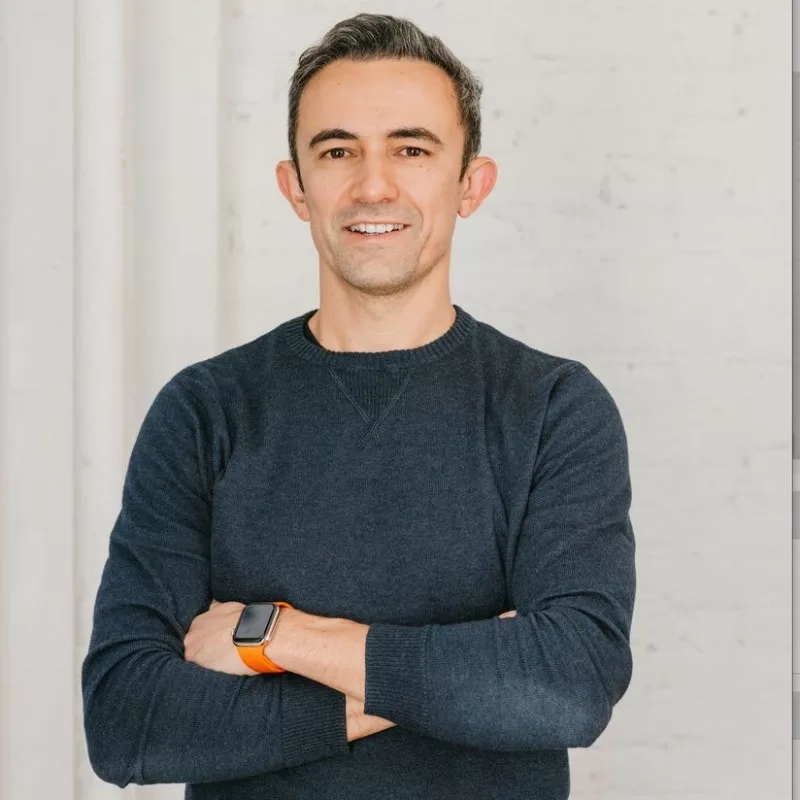
Rob Viglione is the co-founder and CEO of Horizen Labs, the development studio behind several leading web3 projects, including zkVerify, Horizen, and ApeChain. Rob served in the US Air Force for several years and was deployed to Afghanistan, where he supported Special Operations Task Force intelligence efforts. During this time, he developed an early interest in Bitcoin, recognizing its potential benefits for countries with unstable economies. Rob is deeply interested in web3 scalability, blockchain efficiency, and zero-knowledge proofs. His work focuses on developing innovative solutions for zk-rollups to enhance scalability, create cost savings, and drive efficiency. He holds a PhD in finance, an MBA in finance and marketing, and a Bachelor’s degree in physics and applied mathematics. Rob currently serves on the Board of Directors for the Puerto Rico Blockchain Trade Association.
Read More
- Netflix’s Little House On The Prairie Reboot: Release Date, Cast & Everything We Know
- Off Campus Season 1 Soundtrack Guide
- YouTuber arrested after viral AI bodycam videos spark real police complaints
- Silver Rate Forecast
- Prime Video’s New R-Rated Spy Thriller Is Officially No.1 On Streaming Despite Poor Reviews
- EUR ZAR PREDICTION
- Gold Rate Forecast
- Peaky Blinders: The Immortal Man’s Tommy Shelby Is a Better Father Than Michael Corleone
- Brent Oil Forecast
- Bulgakov’s Take: Koreans Bet the Farm on Chips, Crypto, and Chaos
2025-11-03 18:45