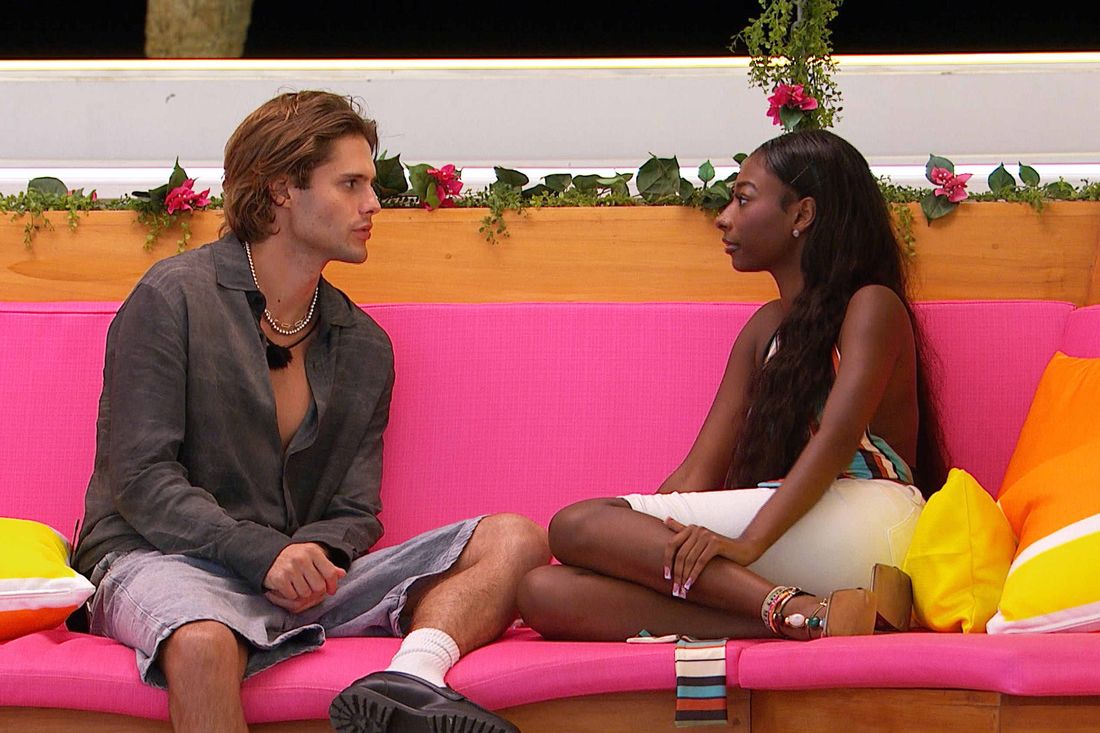
Typically, viewers vote for their favorite couples on Love Island USA, and the ones with the fewest votes are at risk of being eliminated. But sometimes, like in this situation, viewers get to choose which new arrivals couple up with existing Islanders – it’s almost like writing a fan fiction story with real people! This time, viewers paired Sol with Sincere, Caleb with Kenzie, and Jen with Gabe, leaving Melanie, Corbin, and Bea single. (Aniya & KC, Zach & Kayda, and Trinity & Bryce stayed together.) It feels a bit strange ethically, considering these people are actually sharing beds (though Melanie chose to sleep elsewhere). The show’s audience is known for making questionable choices (as seen with past seasons), and frankly, I wouldn’t want my potential partner to be chosen based on just 15 minutes of edited footage.