Want a deeper dive? Join Euphoria Club, our exclusive newsletter where we break down every detail of season three of Sam Levinson’s hit HBO show, just for our subscribers.
The third season of Euphoria was marked by a stark and pessimistic outlook. While the show has always been edgy, earlier seasons balanced that with moments of connection between the characters, offering some respite. This season, however, the characters felt more distant, leading to fewer of those lighter moments. After relentlessly presenting a bleak worldview for seven episodes, the finale surprisingly shifted towards themes of hope and redemption through Christian imagery, idealized Americana, and the importance of family. I admired the show’s late attempt to evoke emotion, but it felt out of place and didn’t resonate strongly, especially considering the season’s overall dramatic tone. The finale’s hopeful turn felt jarring in comparison to everything that came before.
The biggest problem with the finale, however, isn’t just what happens, but how it’s shown. Rue’s voiceover, which previously tied the different stories together, stops working effectively after her character dies about halfway through the episode. From that point on, the story is told from Ali’s point of view, which feels strange. Rue essentially passes the focus to him, despite Ali being a minor character and Cassie being central to the entire season. Once the show finishes exploring Cassie’s experiences with pornography, the writers seem to lose interest in her. The final shot of Cassie is fitting, though: after repeatedly showing her losing her inner life, we see her one last time through a window, surrounded by her belongings, looking like a doll on display.
Just a heads-up: Rue dies about 45 minutes into the episode. While it was clear something bad was coming – she’d started to feel hopeful about changing her life, which was a warning sign – the episode begins with her still believing things could get better. After Faye wakes Wayne up by yelling his name, Rue quickly acts. She hits Wayne in the knee, Faye in the face, and then runs. Wayne almost catches her when she gets stuck under a trap door, but she escapes, only to be caught by a rope thrown from a speeding motorcycle. She’s dragged along the ground until G shoots the motorcyclist from a nearby hill. After this near-death experience, even Alamo seems to soften towards Rue. He gives her a Mexican Coke, some money, and a painkiller, then sends her home to rest for a week. Alamo takes a pill himself, seemingly to reassure everyone the pills are legitimate, but it’s clear he’s hiding something. Initially, I thought he wanted to cloud her judgment to ruin the DEA raid, but he’s even more dangerous than that. The pills, it turns out, were laced with fentanyl.
The show introduces a potential fentanyl storyline as a medical van carrying the drug heads towards the US, labeled as “CNN.” However, the subplot about girls being trafficked turns out to be a false alarm. We never find out what Alamo was planning with the stolen IDs, what happened to Angel, or the specifics of any trafficking operation. Instead, Alamo successfully evades Laurie in Mexico. Back at the hospital, Eddy cleverly swaps vans with Bishop while Mitch retrieves the girls, ensuring Eddy’s van is free of drugs. This proves crucial when the DEA stops them at Laurie’s ranch – a search of the van reveals only a dead rat, successfully concealing the drugs.
Levinson builds tension skillfully, both at the border crossing and during the DEA raid. The animals in Laurie’s house sense something is wrong before anyone else, alerting the humans to the approaching patrol cars and helicopters. Wayne and Harley are baffled by Rue’s escape, with Wayne convinced Faye couldn’t have been involved since she woke him up. He examines a pill from Rue’s bag—which turns out to be the DEA’s supply of laxatives—and suddenly realizes they’re being framed. He and Faye flee the ranch, first on horseback, then by hitchhiking. The situation feels absurd – almost like a road trip with two unkempt criminals. Back at the ranch, Harley surrenders, and Laurie jumps off the roof, deciding she’d rather face the consequences than go to prison. While the DEA raid wasn’t a complete success, they did manage to capture one suspect. Ultimately, the chaos is enough to convince Eddy to leave his dangerous lifestyle, meaning something positive came out of it all.
Alamo is thrilled with the amount of fentanyl he’s obtained, unaware that Rue doesn’t know the drug raid she hoped would change her life was stopped. Rue spends the night at Ali’s, where he stitches up her hand and they discuss the existence of evil, with Ali jokingly offering Rue to God. This led me to believe Ali wouldn’t survive the episode. Instead, Rue restarts a Bible audiobook and contemplates her pills. We don’t see her overdose, but experience a final, realistic moment of consciousness that slowly reveals itself to be a hallucination or dream. The next morning, Ali finds Rue and learns Fez has escaped prison, prompting Rue to search for him. She drives through familiar places, recalling memories like leaving rehab and watching Jules bike ride. Rue flees from the police while trying to reach Fez, eventually ending up at her home, where she finds her mother reading the Bible at the kitchen table. They reach for each other, mirroring Michelangelo’s “The Creation of Adam,” and Rue also thinks of her father.
As the somber notes of Ave Maria play, Rue raises her bandaged hand. While it’s meant to be a powerful moment following the main character’s death, it feels surprisingly flat. The religious imagery clashes with a season that largely focused on meaninglessness. Throughout the season, Euphoria emphasized a lack of belief, making it difficult to accept Rue’s sudden faith. More importantly, Rue felt powerless all season, constantly influenced by others like Laurie, Ali, and the DEA. Her apparent religious awakening ultimately feels like a convenient way to signal her salvation, rather than a genuine step in her character’s growth. The show seems to rely on the idea of religious redemption as a stylistic choice, rather than exploring it meaningfully.
Ali best explains the show’s core idea after Rue’s death, telling his group that he’s lost faith in everything. He’s the one who has to deliver the devastating news to Rue’s mother, though we don’t see her reaction. We learn about the fentanyl in the Percocet he tested, and that it was the cause of Rue’s overdose. A couple of months after Rue’s death, Ali shares with the group that he used to believe in the power of empathy, but now struggles with the idea that understanding an addict means also understanding the person who supplied the drugs. He admits to having a drink—his first in a long time—after Rue died, and concludes that people either contribute positively or negatively to the world. He’s finished trying to do good by attending meetings and helping those who seem beyond saving, and is determined to find a different path.
Meanwhile, the story hints at a character taking matters into their own hands to defeat evil. We briefly see a glimpse of this through a prepared weapon, but let’s rewind to how Cassie found herself trapped. The episode begins with Cassie and Maddy, still shaken and injured after a failed blackmail attempt at the Sun Settlers construction site. A particularly heartbreaking moment occurs when Maddy, seemingly lost control, desperately asks Cassie for guidance. It’s a role reversal – Cassie has always relied on Maddy’s strength and advice since high school. Now, facing the overwhelming consequences of her actions, even Maddy feels helpless. Cassie responds by offering her support, holding her hand and promising they’ll find a way through it together.
Cassie and another person are turning Cassie and Nate’s old house into a place where young women create content for OnlyFans, similar to a popular influencer’s setup. They manage everything – from planning photoshoots to doing makeup – and the women pay them with a share of their earnings and free housing. Cassie tries to get Lexi involved as a creative storyteller, though it’s not clear what that would entail. When Lexi asks about Nate, it’s revealed that Cassie and Maddy kept a terrible secret: they saw his body in a coffin. Meanwhile, Lexi tells Cassie she finally read the Bible Rue left at her place. It initially unsettled her, but she surprisingly found some comfort in it, realizing it’s full of meaning, even with its violence and sexual themes. Cassie jokingly asks if it’s a new edition. They briefly discuss their father and Lexi’s regrets about her relationship with Rue, but Lexi says the Bible taught her to accept that “bad things happen” and to keep moving forward. While Lexi declines to join the OnlyFans project, she and her sister have repaired their relationship.
While Maddy is traveling to The Slipper with Bishop and his poodle, Snowflake, she’s delivering an envelope of cash – Alamo’s 20% share of Cassie’s income. At The Slipper, Alamo hands Bishop his gun holster and then leads Maddy into a private room. It quickly becomes clear Alamo wants to become intimate with her, and he openly tells her he envisions a future with her – four children, a white picket fence, and the perfect American life. Cassie warned Maddy that it would be easier to deal with Alamo if she just went along with what he wanted, so Maddy lets him continue fantasizing. Luckily, before things go too far or any papers are signed, they hear gunshots outside.
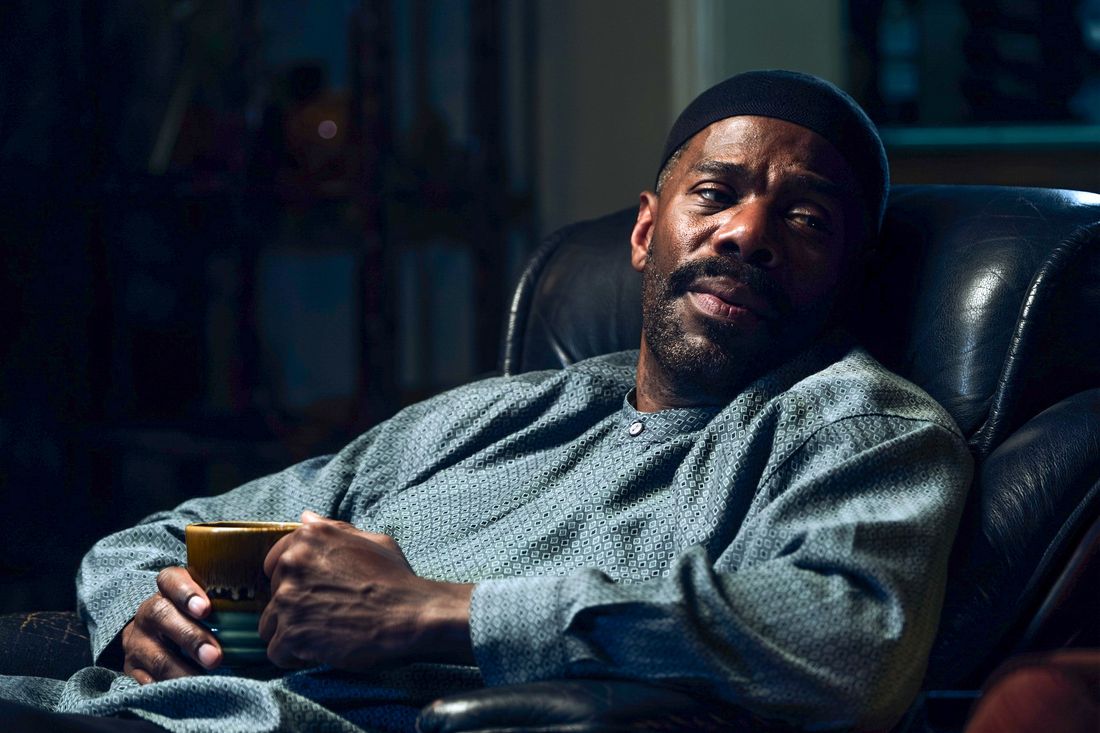
This is Ali. He walked into the club dressed in full military gear and quietly locked the doors behind him with a bike lock – nobody even noticed! It’s strange, considering how tightly secured the club usually is. We follow Kitty as she walks towards Ali for about ten minutes. He grabs her wrist and tells her to find the manager. Many of us thought the big showdown of the season would be between Laurie and Alamo’s groups. But honestly, I didn’t expect this at all: Ali being the one with the gun, and Bishop betraying Alamo. Ali questions G, who confirms Alamo owns the club, but only after Ali threatens him. Ali then shoots G when he casually mentions Rue simply overdosed on fentanyl, as if no one else was involved.
When Alamo bursts onto the main floor from the private room – after smashing through the separating partition – he proposes they settle their disagreement like a classic Western showdown. The rules: they’ll draw weapons when a champagne bottle, accidentally nudged off the bar by a frightened Kitty, hits the floor. Alamo pulls his gun before the bottle breaks, only to discover it’s empty – Bishop had removed all the bullets. Alamo furiously vows Bishop will pay for this, but Maddy simply smiles. Bishop responds with a prayerful, “May God have mercy,” to Ali, then politely offers Maddy and Kitty a ride home.
The storyline itself isn’t flawed – Alamo’s desire for revenge is consistent with his character, and his reaction to the threat feels natural. It’s good to see Maddy escape with her money, finally free from this man. However, Bishop’s betrayal feels unmotivated. We’ve never been given any indication he’d turn against Alamo. The writers seem to be relying on Bishop’s mysterious personality to explain it – he could have been planning this all along, apparently. While the moment was genuinely shocking in a season that has often been predictable, it doesn’t quite feel justified by what we’ve seen so far.
Levinson excels at showing why people act immorally, but less so at exploring their desire for self-improvement. Throughout the season, Laurie and Alamo’s motivations were much clearer than those of other characters, making them the most well-developed. The season concludes with a shot of the Miller family ranch, where Ali arrives and reveals himself as Rue’s father, Martin McQueen. The Millers welcome him, and he leads them in prayer before dinner – a prayer for mercy, delivered at the same table where they previously expressed prejudiced views. Rue narrates, “May God bless us all.” After everything that’s happened, the show ends with a scene of comfort and tradition: a traditional white Christian family, the American flag waving, a stark contrast to the previous struggles with sex work, drugs, and debt.
One for the Road
Last week, I was guessing we’d get about two minutes with Jules in the finale, and that she’d deliver some harsh truths. Honestly, she was on screen for less than a minute and didn’t say a word! Instead, we saw her painting Rue – a really striking image with Rue having kind of Medusa-like hair and a fiery red background. She was painting and clearly upset when Ellis came in, gave her a quick kiss on the head, and then made himself coffee. It just felt like Jules’ character deserved a more substantial arc. Hunter Schafer was incredible in the first season – a total standout – and it’s a shame the show didn’t really let her continue to grow and explore that character further.
The finale includes references to current events, like news coverage of the Trump-Harris presidential race and a speech by Ali about the complexities of the fentanyl crisis. You can feel the director, Levinson, wanting to say more about the factors contributing to the crisis and its devastating impact. Unfortunately, these thoughtful impulses were often overshadowed by unnecessarily graphic depictions of violence and sex.
Read More
- Off Campus Season 1 Soundtrack Guide
- 46 Years Later, The Mandalorian & Grogu Answers A Major Empire Strikes Back Question
- X-Men ’97 Finally Gave Gambit the Hero Moment He Deserved
- 10 Worst End-Game Couples In Sitcom History
- HoI4 fans harsh reactions to the announcement of another DLC pack
- Chainsaw Man Volume 24’s Cover Art Reveals a Brand-New Denji
- Hatsune Miku cosplayer goes viral selling $15 cups of “foot juice” to thirsty anime fans
- Katanire’s Yae Miko Cosplay: Genshin Impact Masterpiece
- Emily Henry Says to ‘Trust the Vision’ For Beach Read Adaptation
- Gold Rate Forecast
2026-06-01 09:57