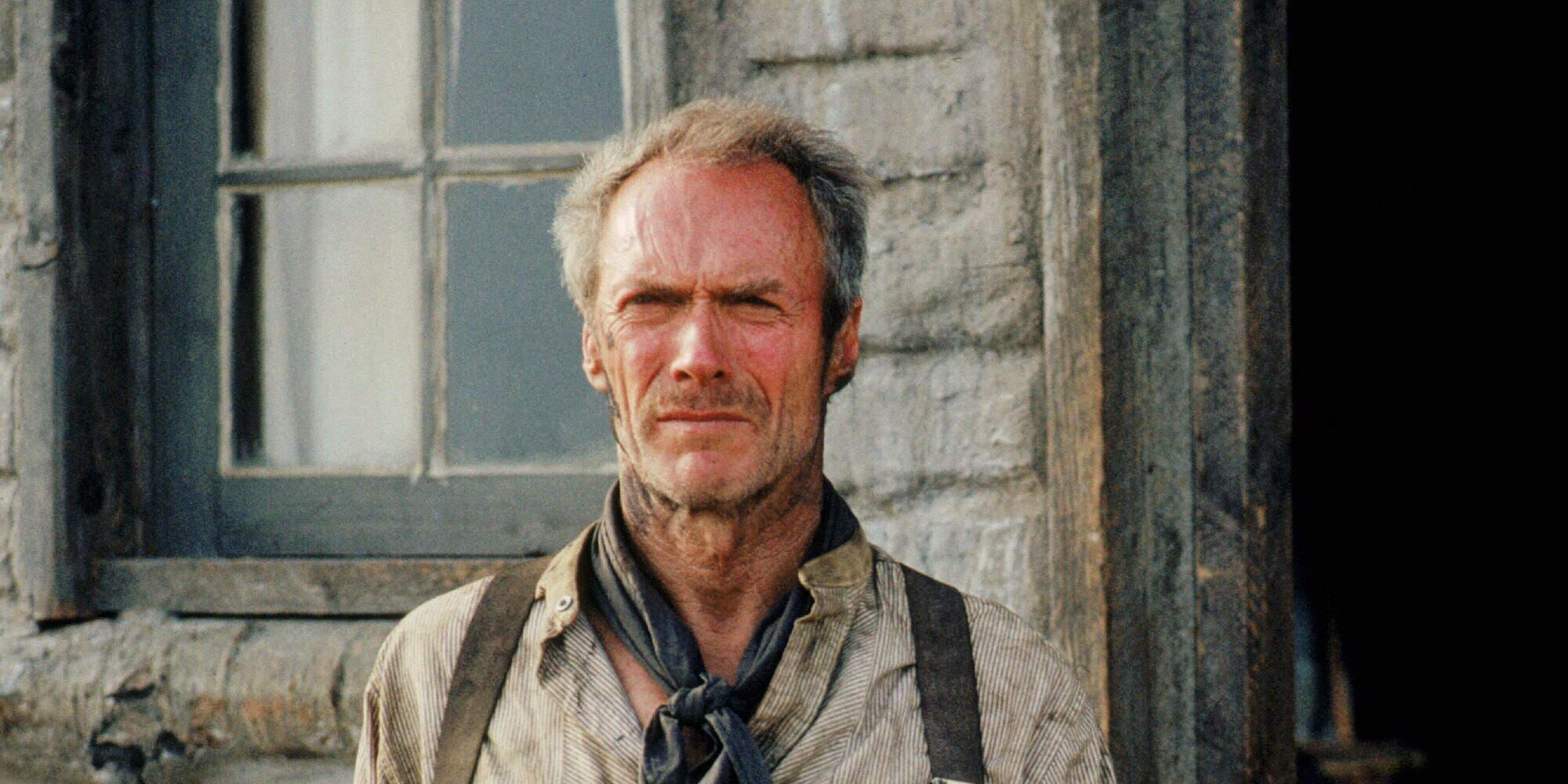
The Western genre experienced a comeback in the 1990s after being quiet for nearly twenty years. This decade brought back action-packed gunfights, popular actors, and visually impressive scenes, updating familiar Western themes for a new generation. Films like Tombstone perfectly capture the spirit of the ’90s Western and are still widely discussed today. However, Clint Eastwood’s Unforgiven is often considered the most important and defining Western film of that era.
Eastwood’s Unforgiven is a powerful and realistic take on the Western genre, focusing on an aging gunman who reluctantly takes on one last job. Unlike traditional Westerns like Tombstone which often portray heroic and larger-than-life figures, Unforgiven shows the harsh realities and moral complexities of the Wild West. It’s a bleak and gritty film that deconstructs Western myths, offering a more honest and unsettling portrayal of violence and its consequences, and is considered a must-see for any fan of the genre.
Unforgiven Is a Bleak Deconstruction of Western Tropes
A rude man violently injures a sex worker and receives only a light punishment. Seeking justice, the woman’s boss, Strawberry Alice, offers a $1,000 reward for the man’s capture. When a young, aspiring gunslinger, the Schofield Kid, learns of this, he seeks help from William Munny, a legendary former bounty hunter, promising to share the reward if they can bring down the violent attacker.
Munny is a former gunslinger, now a widower and regretful man, trying to live a peaceful life raising his children on a small, failing farm. When money gets tight, he reluctantly agrees to one last job and enlists the help of his longtime friend and former partner, Ned, to pull it off.
Eastwood’s latest film, which he also directed, cleverly breaks down the familiar patterns he himself helped establish earlier in his career. In films like The Stranger, The Man with No Name, and The Outlaw Josey Wales, he created an iconic, tough-guy image that deeply impacted the Western genre. Many subsequent emotionless, rugged gunslingers – including characters like John Wayne’s Rooster Cogburn – clearly show his influence.
Unforgiven both examines and enjoys classic Western themes. The character of Munny is a typical Eastwood figure, but with a new layer – he’s burdened by remorse and the lasting impact of his past violence.
Similar to the heroes who came before him, he’s a tough, realistic man who instinctively protects those in need. But this time, he’s also facing his own weaknesses. He’s getting older and slower – he often has trouble getting on his horse, and struggles to tend to his animals, now depending on a shotgun to help him aim. Clint Eastwood revisiting this type of role pays homage to his younger characters, while also dismantling the idealized image of the lone gunslinger.
As Munny grows older and we learn more about his past, it becomes clear he’s a man haunted by his violent history. The film’s final shootout, while exciting, isn’t a victory. Eastwood portrays it as a tragic return to Munny’s old ways, showing a man overwhelmed by regret and accepting that he’s lost any chance at peace. It’s a horrifying moment, revealing how accustomed he’s become to a life of violence despite his inner turmoil.
Eastwood didn’t just criticize traditional Westerns; he actively dismantled their common themes. Early in the film, the character Schofield boasts about being a ruthless killer, feared for his gun skills. However, when faced with actually killing someone, he’s unable to act. He confesses to never having killed before, which dramatically flips the typical cold-blooded violence often seen in Westerns and creates a surprisingly emotional moment.
What really struck me about Eastwood’s Unforgiven is how he handled the portrayal of prostitutes. Traditionally, Westerns always showed them as either pitiful figures or just…complicated, but never with any real dignity. But in this film, the whole story revolves around defending a prostitute’s honor – finally, someone saw them as people worthy of respect. It’s just one example, but within the film’s two-hour runtime, Eastwood really dismantles the romanticized image of the Wild West, and it’s incredibly powerful.
Unforgiven Is the Complete Opposite of Tombstone
Though released just a year apart, Unforgiven and Tombstone both entered a difficult market – Westerns weren’t popular at the time. Despite this, both films were successful: Unforgiven earned a 96% rating on Rotten Tomatoes and grossed $159 million worldwide, while Tombstone received a 76% rating and earned $73 million. Today, both are credited with bringing Westerns back to audiences.
It’s no surprise these two films are often compared – many articles and discussions have tried to decide which is the better Western of the 1990s. But honestly, it’s not a fair comparison. Both are fantastic and represent the genre well, but they’re very different movies.
George P. Cosmatos’ 1993 film is a beautifully made Western, successfully capturing the spirit of classic gunslinger stories with a grand, modern scope. However, it follows many familiar Western tropes – featuring solitary law enforcement and ruthless villains – and never aimed to break new ground. Despite often being labeled a revisionist Western, it was intentionally created and promoted as a traditional, myth-building story.
Unlike most Westerns, Unforgiven offers a starkly different perspective. While films like Tombstone present gunfights as exciting and stylish, Eastwood’s film reveals the grim reality of violence. Interestingly, Unforgiven, released before Tombstone, actually challenges the very style Tombstone brought back to the screen. Tombstone makes shootouts look cool and quick, but in Unforgiven, violence is painful and unsettling, and the consequences of William Munny’s actions overshadow any sense of triumph.
As a Western fan, I’ve always seen Unforgiven as the perfect counterpoint to films like Tombstone from that same era, and honestly, it’s one of the greatest Westerns ever made. It really dismantles all those old, romanticized ideas we’d seen a million times before. Instead of celebrating gunfighters as heroes, Eastwood’s film shows us the real cost of violence – the pain, the loss, and the lasting consequences. Knowing it was his last time directing in the Western genre makes Unforgiven feel like a true masterpiece.
Read More
- Off Campus Season 1 Soundtrack Guide
- X-Men ’97 Finally Gave Gambit the Hero Moment He Deserved
- Chainsaw Man Volume 24’s Cover Art Reveals a Brand-New Denji
- 46 Years Later, The Mandalorian & Grogu Answers A Major Empire Strikes Back Question
- HoI4 fans harsh reactions to the announcement of another DLC pack
- 10 Worst End-Game Couples In Sitcom History
- DoorDash responds after customer uses AI to make food look bad and get a refund
- Gold Rate Forecast
- Emily Henry Says to ‘Trust the Vision’ For Beach Read Adaptation
- Euphoria Season 3’s New R-Rated Sydney Sweeney Scene Proves The Show Is Trolling Us
2026-05-30 22:08