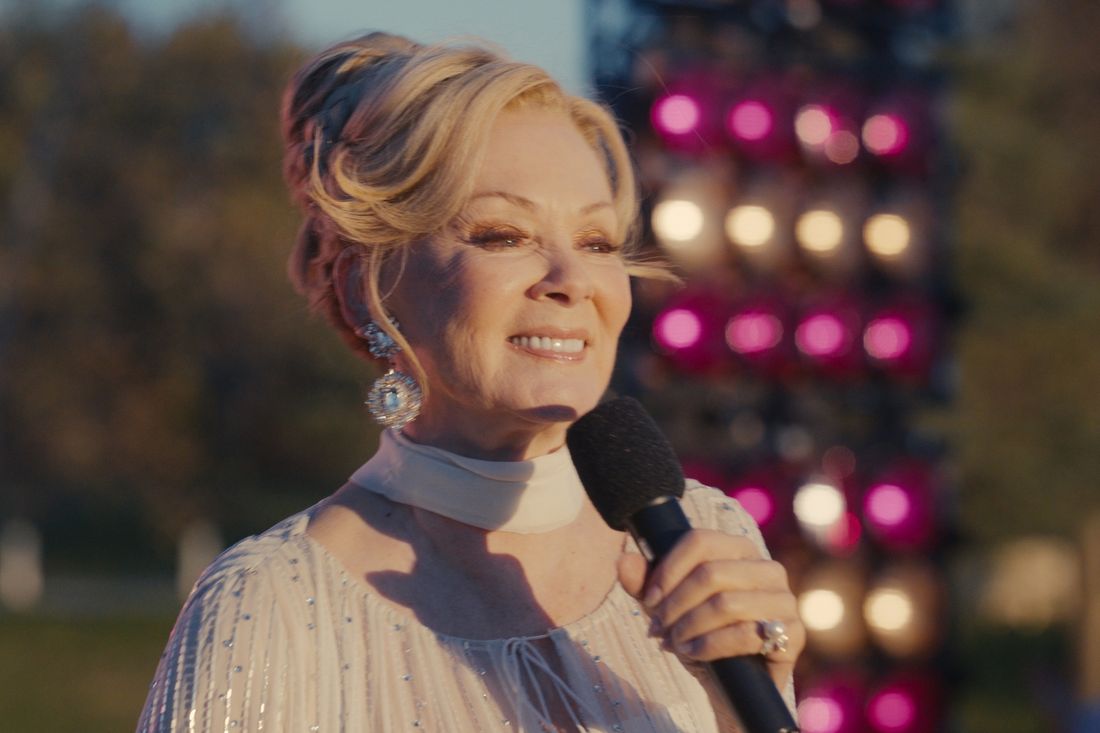
Spoilers ahead for the series finale of Hacks.
My immediate reaction at the end of Hacks was surprisingly harsh: I thought the character Deborah should have died. The finale built a beautiful, melancholic atmosphere, portraying Deborah as if she were enjoying her final moments, and every scene felt laden with the sadness of what was to come. It felt like the show was leading to a heartbreaking, but fitting, conclusion. However, in a predictable turn, Hacks pulled back from that emotional impact right at the very end.
As Deborah’s health declined, she told Ava, who was finally pursuing her dream career in television, that the surgery to remove her tumor hadn’t worked. Deborah had decided against further treatment, wanting to control how her life ended. Ava was devastated, caught between accepting the inevitable and refusing to believe she was losing someone she deeply cared for. They shared one last adventure together: a trip to Paris, followed by a train journey to a clinic in Switzerland where Deborah could end her life with assistance.
The series finale is a strong starting point for wrapping things up. Over five seasons, Hacks followed Deborah’s attempt to revive her career, and the fact that it ultimately leads to death raises a powerful question: what was the point of all her efforts? The finale mostly focuses on the central relationship of the show – the complex dynamic between Deborah’s independence and Ava’s desire to connect with her – and neatly concludes Jimmy and Kayla’s less essential storyline. Ava initially fights Deborah’s wish to die on her own terms, then tries to accept it, but ultimately can’t, and they find peace. It was always clear Ava would stay with Deborah until the end. The two share a touching time in Paris, enjoying museums and each other’s company. While waiting for a train to Switzerland, they playfully exchange jokes, even brainstorming material about what it’s like to be dead. When Ava steps away, Deborah instinctively grabs her notebook to jot down another idea, then pauses, seemingly wondering what’s the point of creating for a future she won’t see.
Just when the story seems headed for a difficult but honest ending, it takes a surprisingly hopeful turn. Deborah decides to seek treatment, not necessarily to get better, but to gain a little more time. While telling Ava she might not have decades left, but believes she has at least another hour, I found myself frustrated by this decision. It felt like she was avoiding the raw, emotional impact the story seemed to be offering.
Honestly, I should have seen this coming. Hacks often hints at exploring difficult emotions, then pulls back at the last minute. The show initially presented Deborah as a tough, uncompromising figure, similar to Joan Rivers – a woman made cynical by the harsh realities of the entertainment industry. However, Hacks didn’t delve into the complexities of that portrayal. Instead, it focused on Deborah as a representation of the challenges faced by female performers of her generation in a male-driven Hollywood. The writers clearly liked Deborah too much to make her truly flawed, and that ultimately makes her character feel somewhat underdeveloped.
What consistently frustrated me about Hacks is its unwillingness to lean into messiness. It seemed desperate to be universally appealing, and that really dulled the impact of its potentially compelling conflicts. Take, for example, the finale of season two where Deborah fired Ava, supposedly to let her grow, only for them to immediately fall back into their old dynamic. Or the season three cliffhanger where Ava blackmailed Deborah into a job, which was ultimately handled with such broad, cartoonish strokes. The show initially hinted at real depth – the death of Deborah’s ex-husband and his affair with her sister Kathy was genuinely intriguing. Season three revealed Kathy was only nineteen when Frank pursued her, suggesting a more complicated connection than he had with Deborah. But Hacks never truly explored those complexities. By the final season, Kathy felt reduced to a simple plot device, just another hurdle in Ava’s attempts to revive Deborah’s sitcom. It’s a shame, because the show clearly could have been so much more daring.
The show’s polished style is actually why Hacks hasn’t quite succeeded as a commentary on the entertainment industry. It doesn’t have enough bite or strong opinions to be truly satirical, and its insights into Hollywood are often superficial. For example, the recent ‘QuikScribbl’ episode, where Ava confronts a tech executive trying to use Deborah and her own material to create an AI comedy tool, perfectly illustrates the show’s weakness: it simply has Ava deliver the show’s political points, and those points aren’t particularly original. (It’s worth noting that this scene does a good job of explaining the threat AI poses to creative work, if you need to explain it to someone unfamiliar.) At its heart, Hacks is a surprisingly sentimental show that glosses over the harsher realities of Hollywood. This is especially evident in the final season with characters like Randi, Jimmy, and Kayla’s assistant, played by Robby Hoffman, who perfectly captures this view: “Once I started learning about Hollywood, I couldn’t stop. Such a fascinating mix of culture and business and art and history. It’s America.”
Despite its generally polished style, the ending of Hacks still resonated with me, which is typical of a show that consistently evoked emotion, even if unintentionally. While not a particularly strong comedy – the jokes were decent, but didn’t quite match the show’s critical praise – Hacks was always more interested in the relationship between Deborah and Ava than in being funny. That connection, shaped by the world of comedy, became the heart of the show, offering a comforting and warm experience for viewers. Beyond the story, the show was visually stunning – even simple scenes, like Jimmy and Kayla pushing their car, were beautifully shot – and its depiction of Las Vegas, Deborah’s home and a key metaphor, was both dazzling and insightful. Plus, the show presented a world of wealth and comfort, where characters mostly liked each other, and success in the entertainment industry was always on display.
While some see Hacks as simply a comforting, unrealistic portrayal of the entertainment world, it’s more compelling to view it as a poignant farewell to a bygone era. The show doesn’t quite succeed as satire, but considering how much the landscape of fame and comedy has changed during its run, it feels like a lament for a system that’s either gone or dying – much like the character of Deborah. It’s notable that Deborah’s goals throughout the series – a career-defining special, a late-night show, a sold-out Madison Square Garden – represent an older idea of success, where the rewards were clear and worth any sacrifice. What does success even look like today? A Netflix special quickly lost in the shuffle? A podcast? These feel inadequate for someone like Deborah. Even the appeal of Las Vegas has faded.
It’s hard to look at the entertainment industry today without a sense of melancholy. It feels like we’re witnessing the end of an era, like the golden age is behind us. The world Deborah knew is falling apart, and it’s unclear what will replace it. The ending of the show Hacks captures this uncertainty. We last see Ava and Deborah walking happily through Las Vegas, but Deborah’s future remains unknown – her treatment might not work. However, her choice to keep living feels different than the show’s usual cautious approach. Looking back, Hacks feels like a nostalgic, almost dreamlike memory of a world that may never have truly existed. The series doesn’t necessarily end with death, but with a feeling of acceptance of its approach. When faced with endings – whether it’s your own life or the end of a beloved world – you have choices: go out at your peak, withdraw before things get worse, or savor what remains for as long as you can.
Read More
- Off Campus Season 1 Soundtrack Guide
- X-Men ’97 Finally Gave Gambit the Hero Moment He Deserved
- Chainsaw Man Volume 24’s Cover Art Reveals a Brand-New Denji
- 46 Years Later, The Mandalorian & Grogu Answers A Major Empire Strikes Back Question
- HoI4 fans harsh reactions to the announcement of another DLC pack
- 10 Worst End-Game Couples In Sitcom History
- DoorDash responds after customer uses AI to make food look bad and get a refund
- Dragon Quest II HD-2D Remake: Where to get the Magic Key
- Emily Henry Says to ‘Trust the Vision’ For Beach Read Adaptation
- Hatsune Miku cosplayer goes viral selling $15 cups of “foot juice” to thirsty anime fans
2026-05-29 06:55