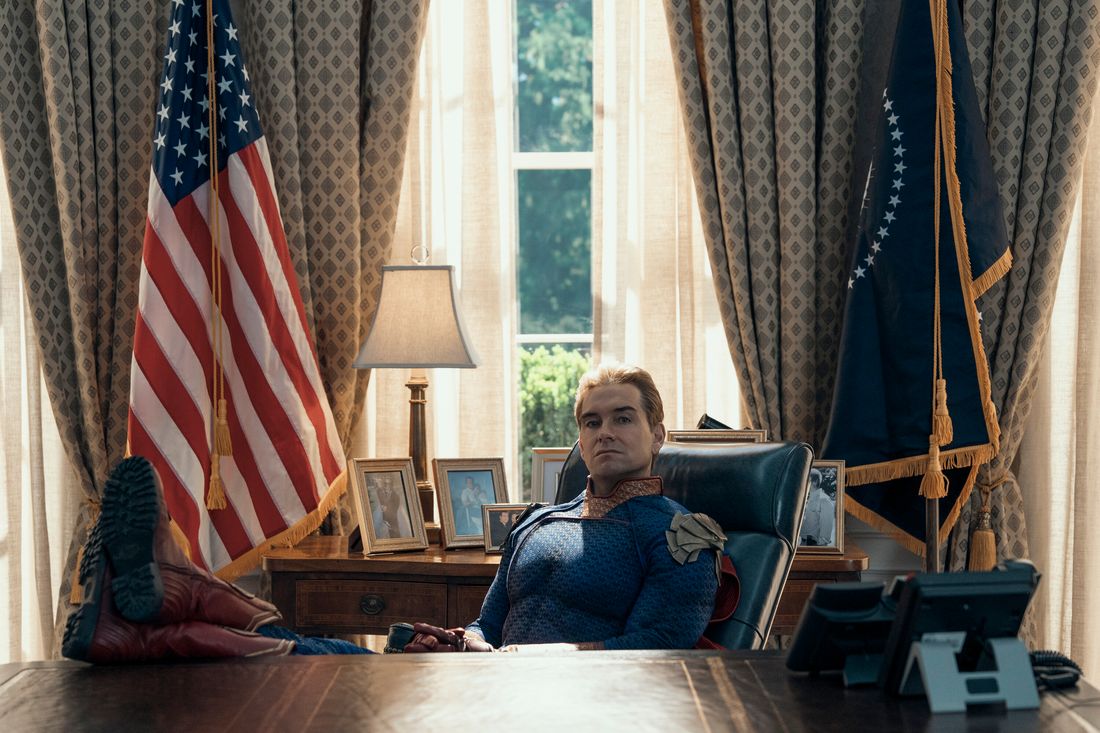
Looking back at recent seasons of The Boys has been a bit odd, particularly when judging each episode. Every hour of the show is usually enjoyable, consistently delivering comedy, action, intense violence, sharp satire, and provocative content. When the show is at its peak, it’s genuinely exciting, and I gave the last two episodes high marks despite some concerns about the overall story this season. I felt similarly about the shapeshifter plotline in season four – it was entertaining, even if it felt unexpected and raised some problematic questions.
Sometimes, a show’s ending needs to be more than just entertaining, and that’s definitely true for the finale of this series. “Blood and Bone” highlights problems that started back in season three with the writing. The plot became repetitive – for example, focusing on a storyline to kill off a character we knew would survive – and the show lost its focus on developing its characters. While the writers continued to give each character their own story, those stories lacked the depth and emotional resonance they once had, making the important moments feel less impactful than they did in the earlier seasons.
The finale really leans into emotional moments, almost to an excessive degree. It felt surprisingly sentimental, even starting with a funeral for Frenchie that didn’t feel essential to the story. The episode needed to move forward, and those attempts at pulling at heartstrings just didn’t land. It continued with Hughie trying to comfort Kimiko by reminding her of Frenchie’s belief in her humanity, and then things got even stranger with Frenchie appearing as a vision. We’ll get to that later.
Before the big showdown at the White House on Easter Sunday, the episode spends some time filling out the story. The attempts to connect to the show Gen V aren’t really working for most viewers, but Annie’s interaction with the young Godolkin kids nicely echoes her relationship with Starlight, offering fans a hopeful message. She emphasizes the importance of staying positive and helping others, even when things are tough. Meanwhile, Marie, Emma, and Jordan are eager to join the fight, but someone needs to focus on protecting the emotionally damaged students from the Homelander-aligned school.
Sister Sage quickly leaves for Harry Potter World, finally overcoming the challenges of being incredibly intelligent thanks to a hit from Kimiko. She avoids serious consequences for supporting a dangerous dictator and nearly causing a global catastrophe, but the story shifts focus. The main event is Homelander’s speech, after which he intends to eliminate millions of Americans who don’t fully worship him. It’s obvious how mentally unstable he is – if he ever was stable – especially after his son rejects him, simply calling him lonely and pitiful like everyone else.
I want to highlight Ashley, a character the show consistently portrayed well. She has a strong storyline in the finale, hesitant to act against Homelander or involve her husband unless she’s certain it will succeed. That’s perfectly in character for her, and I appreciated her arc’s conclusion. She finally shows some development, choosing to help our heroes escape when they’re trapped in the tunnels leading to the White House, but then refuses to take responsibility for her actions, which leads to her being removed from her position.
Many of the season’s conclusions felt disappointingly obvious. While I enjoyed seeing Deep’s downfall and another fight between Deep and Starlight, they didn’t live up to their previous encounters. Even the big showdown with Homelander – something the whole series led up to – played out much like we expected. Ryan intervened to help fight his father, Kimiko neutralized Homelander with a blast of energy, and Butcher delivered a final blow, declaring it was for his wife, Becca.
I have several problems with this storyline. The Frenchie-focused scenes feel cheesy and awkward, and the idea of Kimiko overcoming evil with love instead of revenge feels forced. Last week’s sudden introduction of the radiation plot felt like a convenient, last-minute fix. Ultimately, the entire season-long search for V-One was pointless, since Homelander’s immortality didn’t end up having any real impact.
Looking back, this season definitely had problems with its timing. Even though I enjoyed parts of it, key plot points felt rushed or saved for too late. For example, turning Butcher into a full-on villain right at the end felt like a missed opportunity – we could have explored that throughout the whole season. The finale – Butcher giving in to his worst impulses after losing both Ryan and his dog, then Hughie killing him to stop a global catastrophe – makes sense on paper, and has roots in the original comics. However, the emotional impact didn’t quite work because the show lost focus on Hughie and his relationship with Butcher. Those moments that were supposed to feel meaningful just didn’t connect as strongly as they should have.
Honestly, seeing where everyone ended up felt…too neat. MM getting back with his ex and taking Ryan in, Kimiko finding a peaceful life in Marseilles, even Hughie going back to a normal job – it all fit their characters, sure. And Annie continuing to be a superhero while pregnant with our daughter (who we named after Robin, which was sweet but also heartbreaking) – it was all…comfortable. But that’s the problem! This show was amazing because it was chaotic, unpredictable, and really poked fun at the whole superhero genre. This ending felt like something straight out of a Marvel movie, and that just doesn’t feel right for The Boys. It lost its edge.
I don’t mind that most of the heroes lived and the villains died, and that Vought remained powerful – we all expected Stan Edgar to regain control eventually. What bothers me is that the show doesn’t directly address this outcome. While Butcher’s plan for genocide was wrong, he was right about Vought’s continued existence and the inevitable rise of another figure like Homelander. Ultimately, the show leans too heavily into Hughie’s simple view of good versus evil, which weakens its satirical edge.
The show The Boys often draws inspiration from real-world events, particularly in its later seasons, but it doesn’t always fully explore the implications of those connections. The return of characters like Bob Singer and the Bureau of Supe Affairs felt a bit too on-the-nose, referencing current political themes. A montage showing things remaining unchanged – highlighting the persistence of corruption and unchecked capitalism – could have powerfully emphasized that removing one villain doesn’t solve systemic problems. Perhaps this was already clear, given the issues we face in the real world. The Boys has always been good at exaggerating existing realities, so it’s surprising to see it pull back from that approach at the end.
Extra Frames
It was a clever move for the show to poke fun at Elon Musk before ending, with a character clearly based on him – a wealthy, amateur space enthusiast with a large family and shockingly outdated views. The portrayal wasn’t far from the truth.
In this instance, MM significantly helped by stopping Oh Father from unleashing his characteristic, incredibly loud roar. He did this by quickly using his new ball gag to silence him – a pretty intense move!
Honestly, seeing Homelander completely helpless for those thirty seconds was amazing. He was just flailing around, trying to fly without his powers, and I could have watched that all day! I kept wondering what would have happened if Butcher had just left him powerless. A normal Homelander stuck in general population? The thought is just too funny. Though, he really did seem terrified and was practically begging, so maybe he would have ended things himself. Still, it was a glorious moment!
The funniest part of the episode was definitely Homelander’s outrageous offer on NNC – he volunteered to perform a shocking act on Butcher. I actually snorted with laughter when it first happened, but the way they cut to the censored version made me burst out laughing even more.
As a huge fan, I’m left wondering if Mother’s Milk really abandoned his plan to go after Stan Edgar and Vought, especially considering how strongly he felt about it during that intense conversation in the bunker. Honestly, I also would have loved to see some closure on his desire for revenge against Soldier Boy – it felt a little left hanging.
Overall, Homelander was the most well-developed and consistently portrayed character in the series. While his terrible actions became less surprising as the show went on, his reasons for behaving that way always made sense.
• To anyone who tuned into these recaps during the last three seasons, thanks so much for reading!
Read More
- Off Campus Season 1 Soundtrack Guide
- Euphoria Season 3’s New R-Rated Sydney Sweeney Scene Proves The Show Is Trolling Us
- Gold Rate Forecast
- All Golden Ball Locations in Yakuza Kiwami 3 & Dark Ties
- DoorDash responds after customer uses AI to make food look bad and get a refund
- Jon Bernthal Explains Why Marvel Let Him Make The Darkest Punisher Story Ever
- Dutton Ranch Review: Paramount+’s New Western Takes All The Best Parts Of Yellowstone & Makes Them Better
- Taco Bell combines two fan-favorite menu items in new Cantina Chicken Mexican Pizza
- YouTuber arrested after viral AI bodycam videos spark real police complaints
- 10 Most Universally Beloved Sci-Fi Movie Villains, Ranked
2026-05-20 16:59