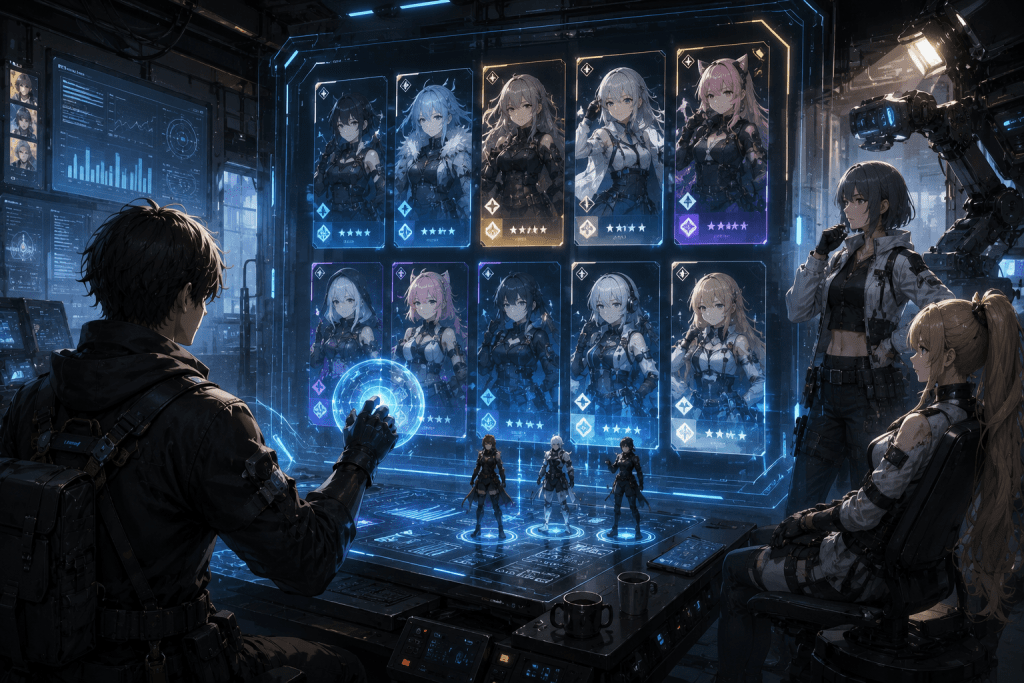
Trying to get the best characters, like Red Hood or Crown, in Goddess of Victory: NIKKE can feel like a frustrating gamble. You might get a long run of common duplicates, then suddenly pull a powerful, game-changing character. This is all by design – the game uses carefully planned probabilities to control how lucky you get, how rewarding it feels, and how quickly your characters improve.
Players often think getting new recruits is just luck, but it actually depends on complex math similar to what’s used in gambling and other risk-based games. If you’re interested in understanding how these systems work, looking at real-world examples – like the recent Metrotimes article on marketing promotions – can show you how companies use statistics to attract customers and manage risk.
Knowing how often items drop and how resources work lets players build effective teams instead of just hoping for the best.
The Economics of the Ark: Rate-Ups, Pilgrims, and True Probability
The NIKKE recruitment system is built around the idea of each pull having an independent chance of success. Normally, there’s a 4% chance of getting a top-tier (SSR) unit. During special events, this 4% is divided in half: 2% for the highlighted unit and the other 2% spread across all other available units.
But figuring out your chances changes a lot when you’re trying to get Pilgrim units. Because Pilgrim units are rare – they usually only have a 1% chance of appearing on special banners – the math becomes much more unpredictable.
Let’s break down how these odds work with different games. Here’s a look at the underlying structure:
| Recruiting System Element | Special Rate-Up Banners | High-Stakes Probability Platforms |
| Primary Base Rate | 4% Total SSR Pool (2% Featured Unit) | Fixed Statistical Variance / House Edge |
| Statistical Fallback | Gold Mileage Tickets (No Expiration) | Promotional Rollovers / Capital Backing |
| Target Acquisition Cost | 3,000 Gems per 10-Pull Multi | Variable Entry Stake / Account Bankroll |
| RNG Mitigation Tool | Manufacturer Wishlist Optimization | Structured Risk Hedging Systems |
To prevent players from getting discouraged during losing streaks, the game includes a special system called Mileage. Unlike most gacha games where a ‘pity counter’ resets when you get something good, NIKKE uses a permanent ticket system. Every time you try for a character on a special banner, you earn a Gold Mileage Ticket. Save up 200 tickets, and you can instantly purchase the featured character from the Mileage Shop, guaranteeing you get what you want without relying on luck.
The Wishlist and Risk Mitigation Strategy
After completing the initial tutorial, players can use the Wishlist feature in Ordinary Recruitment to choose five specific SSR units from each of the three main manufacturers: Elysion, Missilis, and Tetra.
The Wishlist is a key feature for reducing risk when trying to get powerful characters. It works by focusing the small chance of getting a rare character (SSR) on only the fifteen you’ve specifically chosen. This significantly increases the likelihood that any rare character you do get will be one you need to upgrade your team and overcome challenging game barriers.
This situation is similar to how companies predict risk. When you reduce the range of possible results, you actually increase the potential return on your initial investment.
Resource Hoarding as a Core Analytical Skill
To succeed in the late stages of the game, you need to think of your in-game currency as real money. Top players don’t spend it randomly. They have clear rules for how and when they use it, avoiding impulse buys.
- The Ticket Arbitrage Strategy: Using standard Recruit Vouchers solely to clear daily requirements while reserving all premium Gems strictly for limited or seasonal banners.
- The Mileage Reserve: Hoarding a baseline of 200 Gold Mileage Tickets exclusively for 1% Pilgrim banners, ensuring maximum purchasing power when the statistical odds are lowest.
- The Synchro Investment Ratio: Balancing the distribution of Core Dust and Credits against recruitment metrics to guarantee that squad levels scale perfectly alongside newly acquired character assets.
Whether you’re trying to figure out your chances of getting a specific item from a game banner, or comparing deals in the tech and gaming world, getting the best results always comes down to one thing: understanding how things work behind the scenes so you can turn uncertainty into something you can rely on.
Final Thoughts on Recruitment Mechanics
Modern gacha games are powered by carefully designed reward systems and clear odds. Understanding how items are distributed, how tickets work, and how developers influence results allows players to make informed decisions instead of just hoping for the best, effectively turning them into strategic collectors.
Gambling always carries some risk. It’s important to gamble responsibly and only bet with money you can comfortably lose. If you’re concerned about your gambling, resources are available at BeGambleAware.org or by calling 1-800-GAMBLER.
Read More
- Off Campus Season 1 Soundtrack Guide
- Euphoria Season 3’s New R-Rated Sydney Sweeney Scene Proves The Show Is Trolling Us
- Gold Rate Forecast
- All Golden Ball Locations in Yakuza Kiwami 3 & Dark Ties
- DoorDash responds after customer uses AI to make food look bad and get a refund
- Jon Bernthal Explains Why Marvel Let Him Make The Darkest Punisher Story Ever
- Dutton Ranch Review: Paramount+’s New Western Takes All The Best Parts Of Yellowstone & Makes Them Better
- Taco Bell combines two fan-favorite menu items in new Cantina Chicken Mexican Pizza
- YouTuber arrested after viral AI bodycam videos spark real police complaints
- The 2026 Cannes Film Festival Standing-O-Meter
2026-05-20 09:35