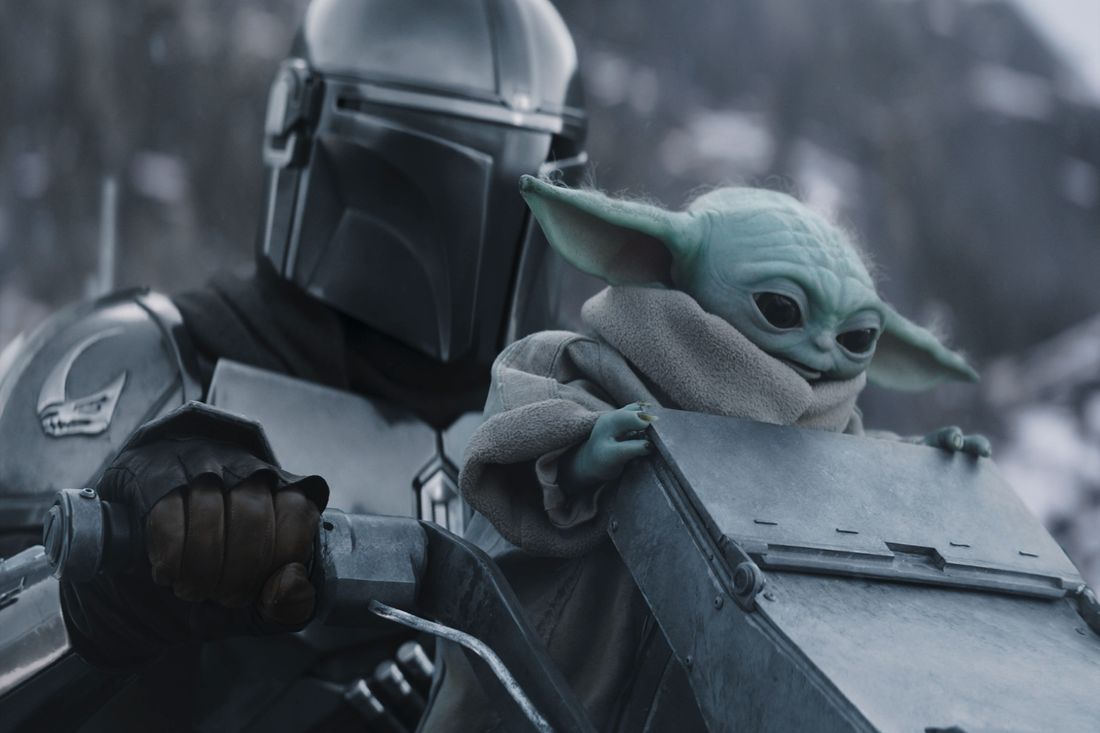
When people talk about making the original Star Wars in 1977, they often mention George Lucas’s favorite direction to the actors: “Faster, more intense!” And it clearly worked – Star Wars and its first two sequels were incredibly fast-paced, mirroring the energy of its young fans. But watching the newest Star Wars movie, The Mandalorian and Grogu, the first film since the divisive but successful The Rise of Skywalker (2019), it felt like director Jon Favreau might have been telling everyone to do just the opposite: “Slower, less energetic.”
Despite its familiar setting, The Mandalorian and Grogu doesn’t quite capture the excitement of the best Star Wars films. The action feels predictable, and the performances often lack energy. A major issue is the Mandalorian himself – a masked bounty hunter dedicated to protecting Grogu (formerly known as “Baby Yoda”). While Pedro Pascal voices the character and contributes to the acting, stunt performers handle much of the physical work. The intention seems to be to emulate Clint Eastwood’s iconic, stoic persona, but Eastwood’s expressive face was crucial to his impact. Without a visible face, and with dialogue added in later, the Mandalorian feels more like a suit than a character, and his limited lines feel more functional than meaningful.
The new character, Rotta the Hutt – the last of Jabba the Hutt’s family – is physically imposing, with a large, muscular body. The story begins with the Mandalorian tasked with finding Rotta after he’s kidnapped. The Hutts promise to help the New Republic find a former Imperial leader in return. The Mandalorian quickly locates Rotta, but discovers he’s found a new life as a gladiator and wants to stay, having escaped his father’s criminal legacy. Jeremy Allen White from The Bear reportedly voices Rotta, but the voice has been so heavily altered – slowed down and deepened – and lacks White’s usual acting style, making the casting seem unnecessary. With both the Mandalorian appearing rigid and Rotta being sluggish, it’s hard to feel invested in what’s happening on screen.
The action in the film feels flat, even though it’s well-executed. The Mandalorian moves through each scene with ease, getting into secure places and defeating enemies without much of a struggle. Because the characters lack compelling personalities or dialogue, and there’s no real sense of stakes, it’s hard to feel invested in the outcome. There are glimpses of what the film could have been – a massive, creepy snake-dragon provides a genuinely challenging fight, and the creature designs are strong. The scenery occasionally captures the stunning, alien landscapes that Star Wars is known for, and the music, with its surprising new wave influence, is enjoyable and energetic.
The film is surprisingly most effective when it takes its time. The strongest part is a quiet, extended scene where we simply see one character caring for another – I won’t spoil the details, but it showcases the impressive puppetry of Grogu and briefly recalls the playful spirit director Jon Favreau (known for Iron Man, The Jungle Book, and Made) once brought to his work. However, that moment doesn’t last, and the story quickly moves on. The Mandalorian and Grogu continues the Star Wars spin-off series The Mandalorian, but it often feels like a series of standalone episodes rather than a cohesive story. While these characters will likely return in future seasons, this film feels more like a temporary stopgap. As someone who enjoyed The Ewok Adventure and Ewoks: The Battle for Endor as a kid, I understand why fans, especially younger ones, might be excited, but ultimately, I wish the film had been stronger.
Read More
- Off Campus Season 1 Soundtrack Guide
- Euphoria Season 3’s New R-Rated Sydney Sweeney Scene Proves The Show Is Trolling Us
- Gold Rate Forecast
- DoorDash responds after customer uses AI to make food look bad and get a refund
- Jon Bernthal Explains Why Marvel Let Him Make The Darkest Punisher Story Ever
- Olympian Says Heated Rivalry Tugged At His Heartstrings
- All Golden Ball Locations in Yakuza Kiwami 3 & Dark Ties
- Dutton Ranch Review: Paramount+’s New Western Takes All The Best Parts Of Yellowstone & Makes Them Better
- ETH Holders Cash In: Is the Party Over, or Just Getting Started?
- Oh My God, It’s Her?
2026-05-19 16:54