
Dan Levy has a knack for writing memorable mothers. He first created Moira Rose in Schitt’s Creek, brilliantly played by Catherine O’Hara. Moira, a wealthy former actress who loses her fortune, became a pop culture icon and earned O’Hara an Emmy. Following O’Hara’s recent passing, Moira is remembered as one of her defining roles. Now, Levy is back with the Netflix comedy Big Mistakes, co-created with Rachel Sennott. He plays Nicky, a nervous gay pastor whose mother, Linda (played by the fantastic Laurie Metcalf), is running for mayor. Linda is a high-energy, divorced woman determined to present a perfect family image. While very different from Moira, Linda shares a similar drive and a touch of tragedy, remaining endearing even as she pushes her children hard. It’s exciting to see both O’Hara and Metcalf bring complex, mature female characters to life. Here, Levy discusses the creation of both Moira and Linda.
I first became aware of Catherine through her work on SCTV, but we didn’t really get to know each other until Schitt’s Creek. She initially helped us with a pilot presentation to try and sell the show, but it didn’t get picked up. At that time, the character of Moira wasn’t fully developed, and we were still figuring things out. When we decided to make the show ourselves in Canada and secured funding, we asked her to join again. She actually turned the role down at first, hesitant to commit to a project that could last for years. Once she agreed, I made a point of supporting all of her creative choices. She wasn’t making demands, she simply had a strong vision for the character. She shared photos of Daphne Guinness as inspiration and wanted to push Moira’s style to the absolute limit – something I was excited about, though surprised by. I immediately knew, after hearing her ideas, that this would be a completely different side of Catherine that audiences hadn’t seen before.
I’ll never forget filming the first episode. Annie Murphy, who played my sister, and I entered a room to find Moira in a complete panic, convinced her diamond earrings were missing. She did something different with every take – sometimes whispering, sometimes yelling from the roof! There was one take that actually made it into the show where she’s frantically searching through drawers, pulls out a lightbulb, stares at it, and then screams. It was so funny, I completely lost it! We had to use that take, even though I was laughing so hard I had to cover my mouth to avoid ruining the scene – I had to ‘Stefon’ my way through it, as if protecting her performance. That moment was a clear sign that her character was going to be incredibly unique and unpredictable.
I’ll never forget filming the scene where the characters try to make enchiladas in season two. It read as really funny – the idea of them attempting to cook, and her having no clue what she was doing – but you always had to wait and see what Catherine O’Hara would do with the lines. My dad, Eugene Levy, was watching on the monitors, and afterward, he told us it was one of the strangest, most memorable moments of the whole show. It was surreal for him to watch me acting with Catherine, a woman he’d worked with his entire career, in such a silly, clever scene. I felt like we were nailing it while we were shooting, and I think she did too. Catherine rarely broke character, and that scene was one of the few times it happened.
I was absolutely captivated by how Moira’s costumes transformed Catherine into a true fashion icon. She had this incredible ability to make anything look amazing. I remember seeing designs online – sometimes they were made of materials like bubble wrap and plastic! – and we’d somehow get them onto her, and she’d confidently stride onto set in towering heels. The crew would always gasp! It wasn’t just about the clothes though; she radiated this incredible confidence and desirability. Moira was undeniably sexy – she wasn’t afraid to show off her figure. And that final look… the pope outfit? It genuinely moved me. It was lit so beautifully, and it took Debra Hanson and me an entire season to create. Catherine actually came to us with the idea! She became this ethereal, breathtaking beauty that just took your breath away. It was truly special.
As a writer on the show, the hardest part was figuring out how to develop Moira as a character. Catherine O’Hara made it clear from the beginning that Moira never wanted to be stuck in Schitt’s Creek. We’d cautiously suggest maybe, just maybe, she could eventually warm up to the town, but Catherine was firm: Moira could have moments of appreciating, or even being amused by, the people there, but she’d leave if she could. We quickly realized that to get Moira to do things – like try out for the Jazzagals or even run for town council – we had to play to her ego. Her biggest weakness was being excluded, so that became our way of getting her involved, even though she didn’t want to be. Catherine really pushed us to be clever about how we connected Moira to the town, without ever letting her actually want to stay.
At the Actor Awards in March, Seth Rogen mentioned receiving notes from her on scenes for The Studio the night before, usually starting with a simple, “Gentlemen, some thoughts.” Hearing him say that immediately reminded me of my own experience. It made me eager to revisit my emails, where she’d send similar notes to my dad and me. Her feedback was always helpful – she consistently found ways to improve a scene, making it more engaging, funnier, and better overall. She had a remarkable instinct, and all it took was giving her the space to share it.
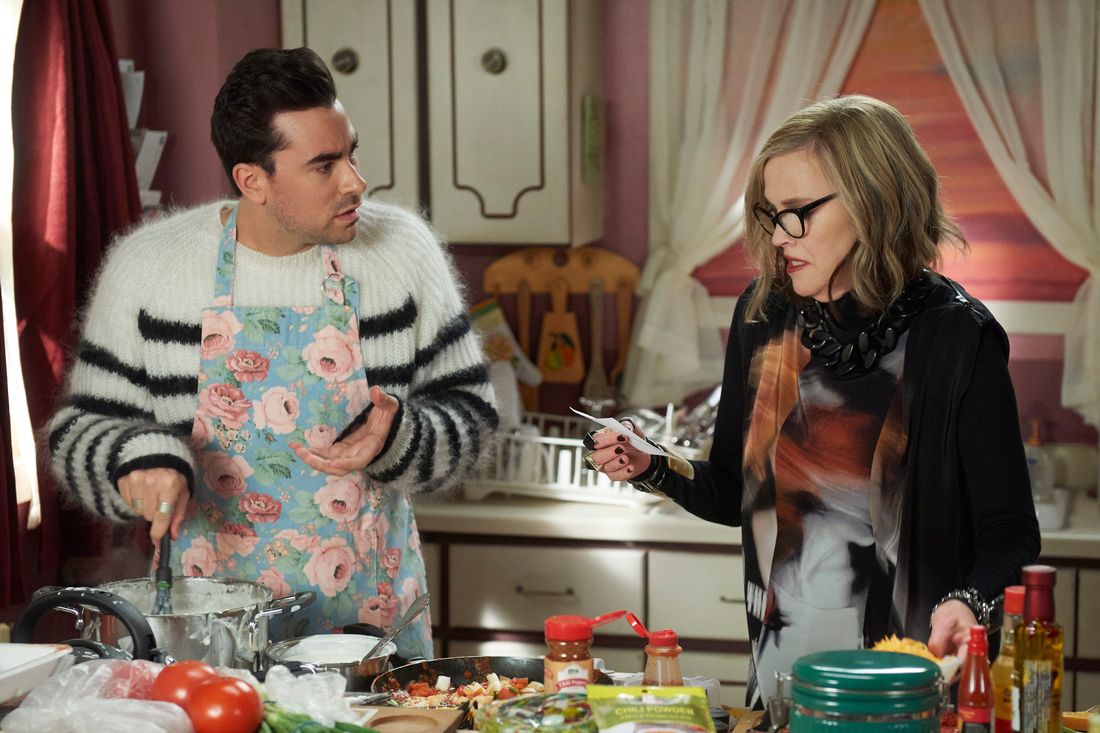
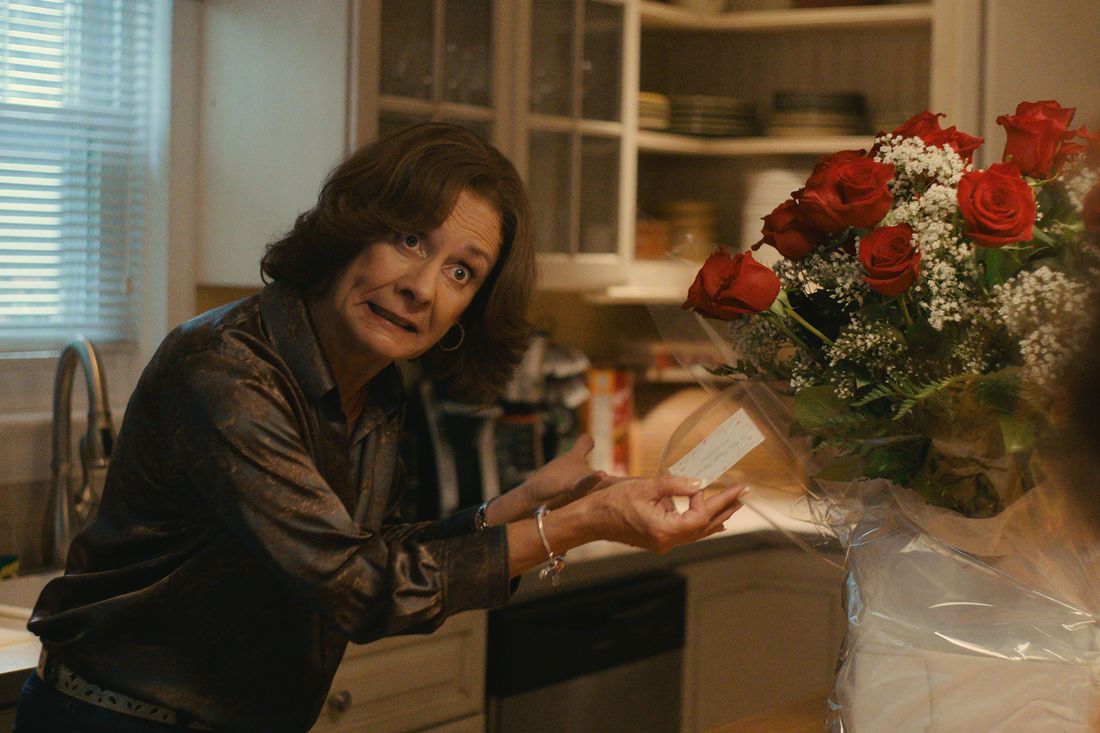
When I developed the character for Big Mistakes, I drew on familiar territory: a woman who always believed she was correct, never apologized, and was both affectionate and critical. I wanted to explore a character who was a bit more self-aware and insecure, and who came from a less privileged background. Even though my character, Linda, didn’t have much money, she still carried herself with confidence. Big Mistakes centers on a working mother in a typical middle-class family – a far cry from Moira Rose, but equally compelling. What’s enjoyable about Linda is that she has a longer journey of self-discovery compared to Moira, who was already quite self-assured.
I envisioned Linda as an obstacle for Nicky and Morgan, someone constantly filled with worry and frantic energy – she’s always on the move. She’d spent years taking care of everyone – first her children, then, after her divorce, her mother. I liked the idea of giving her a chance to break free from that pattern of caretaking and finally focus on her own needs. That’s why we wrote the storyline where she runs for mayor; it was a clear goal that represented her wanting to prove something to herself.
The core theme of Big Mistakes explores how we’re shaped by our families. The series starts with the family’s mother passing away, and the story unfolds from there. We practiced the initial hospital scene – where Linda asks her children to buy a birthday necklace for their dying mother – extensively beforehand. Initially, I didn’t want the directors present; I wanted the four of us – Abby Quinn, Taylor Ortega, Laurie, and myself – to work through the scene as a family, repeating it as much as needed. Laurie, with her theater background, had lots of creative ideas about her character’s actions and movement. She even suggested, “I think my character would bring a salad.” I immediately agreed, and she clarified she wanted “plain, dry lettuce, just in case I need to eat something.” These kinds of spontaneous details are impossible to plan for in a script.
When I was thinking about who should play the role, I immediately thought of Laurie Metcalf, who was fantastic in both Lady Bird and Roseanne. She’s a very natural performer – she doesn’t overanalyze things. I was worried she might not want to play a mother again, but after I sent her the script with a personal letter, she saw that this character was completely different from anything she’d done before. Laurie joined the project early on, which really helped shape the character of Linda and gave us a lot of creative freedom. We often wrote scenes specifically with her in mind. I approached writing for her the same way I did with Catherine – I wanted to make sure the scripts were polished and the dialogue was sharp. She’s a Steppenwolf actress, so I knew I had to bring my best work.
In episode four, while writing the mayoral debate scene, I wanted to clearly show the audience that my character understands her place in society – she feels outmatched by her opponent, someone with privilege, as highlighted by the line, ‘He has an Ivy League degree, and I sell shovels.’ To emphasize this, we paired her against a very confident and intimidating man. His mere presence throws her off balance. You can see she’s prepared, but his underhanded tactics catch her by surprise because she’s also somewhat inexperienced. It was painful to watch the actress playing her in that scene, trying to maintain a brave face while thinking of her daughter. Finally, when he speaks down to her one last time, she decides she’s had enough: ‘I’m going to take this guy down.’ That moment is what drives the rest of the season.
Later in the episode, her character has a romantic encounter with Andrei, a man who had just been released from prison. This reminded me of how often actresses of a certain age are only offered roles as non-sexual grandmothers. I actually think older women have a lot more to offer as sexual characters. Linda, my character, is still sexually active and enjoys having fun. Filming that scene was hilarious! The sounds of intimacy during my phone call were happening live, right behind the wall. I kept losing it and laughing so much that the director urged us to hurry up. I jokingly asked if they could tell the actors to stop having sex!
I don’t portray the mothers in my writing as simply ‘sweet’ women, and that’s true of the women in my life generally. They’re complex – they have strength, passion, and can be unpredictable. The idea of ‘sweetness’ feels too simplistic. Motherhood is demanding work, and while it’s incredibly rewarding, it doesn’t automatically make someone gentle or mild. I’m not drawn to portraying characters that way.
Read More
- Solo Leveling’s New Manhwa Chapter Revives a Forgotten LGBTQ Story After 2 Years
- Gold Rate Forecast
- All Itzaland Animal Locations in Infinity Nikki
- The Boys Season 5 Spoilers: Every Major Character Death If the Show Follows the Comics
- How to Get to the Undercoast in Esoteric Ebb
- Focker-In-Law Trailer Revives Meet the Parents Series After 16 Years
- Silver Rate Forecast
- Woman fined $2k over viral googly eyes graffiti on $100k statue
- ‘The Pitt’ Season 3 Is Repeating Season 2’s Biggest Time Jump Mistake
- CBR’s Official Spring 2026 Anime Series Power Ranking (Week 1)
2026-04-16 14:56