As a huge fan of Shakespeare’s Hamlet, one of the things I love most about new adaptations is seeing fresh takes on the story. It’s fascinating to see how directors reimagine those iconic scenes! I remember being so surprised when Ethan Hawke’s Hamlet delivered the ‘To be or not to be’ speech while wandering through Blockbuster – a really modern twist! Then there was Kenneth Branagh speaking it into a two-way mirror, and of course, Laurence Olivier’s dramatic delivery on the castle ramparts. Just last year, Chloé Zhao’s Hamnet cleverly referenced Olivier, but also offered its own beautiful variation with Paul Mescal by the river, and then another in the final act with the young actor playing Hamlet on stage, speaking directly to us. It really struck me that Hamlet, as both a play and a character, is endlessly adaptable and can be interpreted in so many different ways.
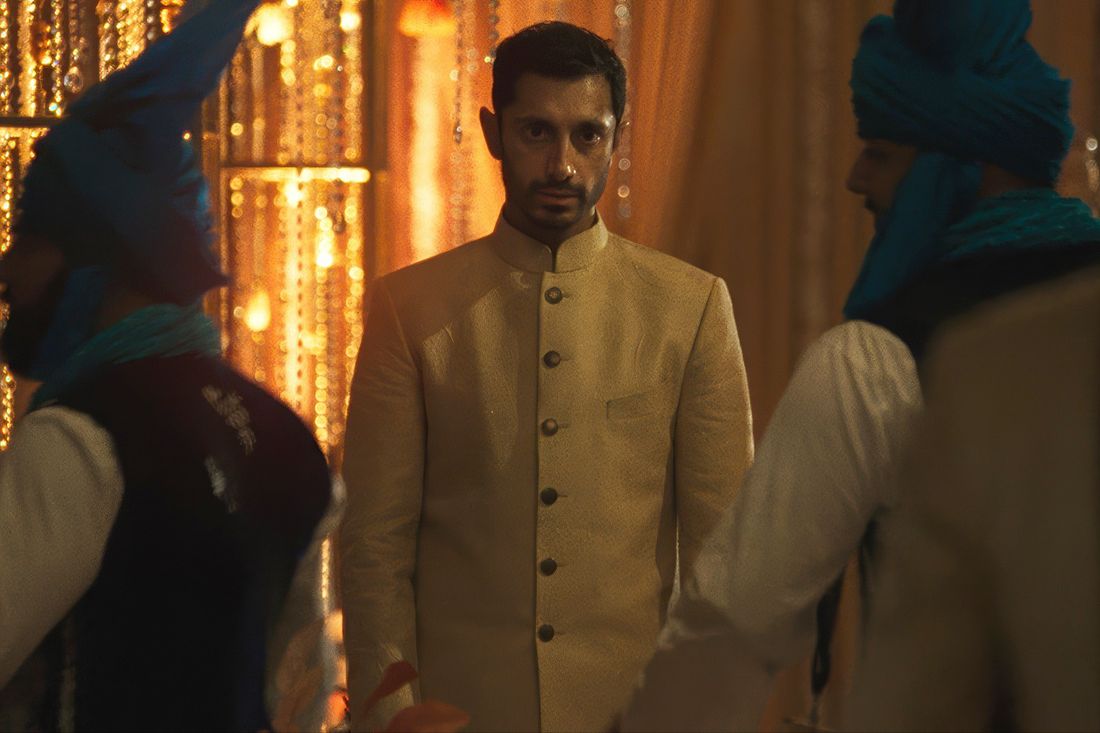
Director Aneil Karia’s new film, Hamlet, features Riz Ahmed as the Prince of Denmark, and offers a surprisingly fun take on the famous “To be or not to be” speech. In this version, Ahmed, who plays a troubled British Indian heir to a ruthless property development company, delivers the lines while speeding down a highway, briefly letting go of the steering wheel as the car swerves. It’s a lively and darkly humorous interpretation of a traditionally serious speech, and Ahmed clearly enjoys the performance. After so many adaptations of Hamlet, is it even possible not to try something new?
Karia and screenwriter Michael Lesslie don’t hesitate to make significant changes to the original play – and with Shakespeare’s longest work, some adaptation is always necessary. Branagh’s film famously attempted to include every single line, resulting in a four-hour epic that, while brilliant, felt like a one-time undertaking. These changes, however, go beyond simple edits; they’re substantial revisions. Traditionally, Horatio serves as Hamlet’s close friend and confidant, but this version distributes his lines among other characters. Ophelia (played wonderfully by Morfydd Clark) receives some, as does Laertes (a surprisingly poignant Joe Alwyn), and even Claudius (the excellent Art Malik, who portrays a remarkably dignified villain). The film also removes the usual supporting roles of attendants and guards, leaving Hamlet to encounter his father’s ghost alone on a deserted construction site, and it downplays his popularity with the people.
This Hamlet feels incredibly lonely, honestly. Ahmed really captures that, with his worried eyes and tight expression – he’s just a really compelling, sad figure. I actually think he’s strongest when he’s not speaking. The movie starts in silence, and seeing him go straight from his father’s body to finding out his uncle is marrying his mom (Sheeba Chaddha is great!) – his silent shock is so powerful. But once he starts reciting Shakespeare’s lines, it feels a little off. The words seem too planned out for someone who’s just been hit with such shocking news. In the play, those lines come after he’s had some time to process things, but here it feels rushed. It’s not a deal-breaker, but it’s something I noticed and it bothered me a little.
Karia’s film adaptation of Hamlet isn’t perfect, but it offers enough fresh perspectives to hold your attention. This version presents a Polonius (played by Timothy Spall) as a quietly imposing figure, more like a personal assistant than a loud, meddling advisor. His death isn’t a simple mistake, but a violent act of self-defense, depicted in a shocking and dreamlike sequence. This leads to particularly moving and realistic portrayals of Laertes’s grief and Ophelia’s tragic fate. Despite its flaws, the film is exciting because it dares to reimagine Hamlet in a bold way. I realize this might be an unpopular opinion among Hamlet fans – many seem to dislike any new interpretations of the play. Harold Bloom worried about seeing it performed, and William Hazlitt believed the play didn’t translate well to the stage. Everyone has their own vision of Hamlet, and seemingly, their own reasons for disliking everyone else’s.
For fans of Karia’s film, it must have been overwhelming to see so many Hamlet projects appearing all at once. Last fall, while Karia’s film was being shown at festivals, several other interpretations of the story emerged. These included Zhao’s Hamnet at Telluride, a documentary called King Hamlet following Oscar Isaac’s preparation for the role, and Mamoru Hosoda’s animated Scarlet, which reimagined the prince as a Danish princess. Earlier in the year, Grand Theft Hamlet documented an attempt to stage the play within the video game Grand Theft Auto during the UK’s COVID lockdowns. Beyond film, Hamlet is thriving on stage too. A new production is coming to BAM this month, the Royal Shakespeare Company is touring England, Eddie Izzard is performing Hamlet around the world, and Teatro La Plaza recently presented a unique version in New York. Hamlet has always remained popular, but right now feels like a particularly strong moment for its resurgence.
There are clear reasons why Hamlet remains so powerful. It’s not only considered Shakespeare’s best play, but it’s also deeply thoughtful and adaptable. Many even see it as strikingly modern, perhaps even ahead of its time. The play explores a huge range of human emotions – grief, anger, betrayal, doubt, fear, responsibility, sadness, insanity, and countless others – delving into the complexities of the human mind. This is likely why it continues to resonate with audiences and reveal new layers of meaning. As Harold Bloom noted, Hamlet is a foundational work for understanding how we developed a focus on individual consciousness. The play’s introspective protagonist, consumed by his own thoughts and paralyzed by his intelligence, feels surprisingly relevant in our self-centered world. However, unlike Shakespeare’s other tragic heroes, Hamlet also offers a sense of satisfaction. As Steven Berkoff wrote, Hamlet ‘sees into our hearts’ and ‘says what we wish we could.’ We experience a kind of emotional release through his struggles and fate.
What always strikes me about Hamlet is that, beneath all the royalty, it’s a story of rebellion. This new version, by Karia, Lesslie, and Ahmed, really gets that. Hamlet doesn’t kill the king for power, like Macbeth or Richard III – he does it because he believes it’s right. What’s really clever in this adaptation is how they’ve reimagined Fortinbras, the invading prince, as a group of activists displaced by a powerful corporation – the Elsinore Corporation, no less! It adds another layer, revealing that Hamlet’s family wealth is built on some pretty shady dealings. It makes his disillusionment feel incredibly relevant to what’s happening in the world today, but honestly, it fits perfectly with the character. People have always turned to Hamlet during times of trouble – think revolutionary America, Nazi-occupied Europe, Cold War Poland, even post-Tiananmen China. I’m sure some traditionalists will grumble, but they always do! It makes you wonder why this brooding Dane keeps resurfacing – because Hamlet reminds us that something’s fundamentally wrong, not just in Denmark, but pretty much everywhere.
Read More
- Off Campus Season 1 Soundtrack Guide
- X-Men ’97 Finally Gave Gambit the Hero Moment He Deserved
- Chainsaw Man Volume 24’s Cover Art Reveals a Brand-New Denji
- 46 Years Later, The Mandalorian & Grogu Answers A Major Empire Strikes Back Question
- HoI4 fans harsh reactions to the announcement of another DLC pack
- 10 Worst End-Game Couples In Sitcom History
- Gold Rate Forecast
- DoorDash responds after customer uses AI to make food look bad and get a refund
- Emily Henry Says to ‘Trust the Vision’ For Beach Read Adaptation
- Katanire’s Yae Miko Cosplay: Genshin Impact Masterpiece
2026-04-14 22:55