Murder mysteries often feel a little flat at the end. The actual solution rarely lives up to the exciting possibilities viewers have imagined during the investigation. However, even a disappointing reveal can still be powerful if it delivers a single, emotionally impactful moment. The show DTF St. Louis concludes with a strangely haunting depiction of male loneliness hidden beneath the surface of a typical American family. This is powerfully illustrated when Clark Forrest has a breakdown – while wearing only his underwear – at the local pool, unable to perform for his friend Floyd.
Earlier in the finale, Clark and Floyd share a heartfelt conversation in the woods, reminiscent of a scene from Stand By Me, but with two older, wounded men. Floyd finally explains the cause of his medical condition, comparing it to a devastating tornado. The series of unfortunate events leading up to this reveal culminates in an act of violence that we don’t actually see – a frustrating narrative choice. It’s revealed that Richard attacked Floyd with a baseball bat after overhearing his stepfather tell Floyd’s mother he wants to become a sign language interpreter, condemning her to a difficult life. Floyd describes the attack as something that stole all the joy and intimacy from their relationship, leaving them empty.
Clark jokes that he and Floyd met during a chaotic time. Throughout their friendship, Clark has sought fulfillment through Floyd’s vibrant personality. Despite a real connection, their relationship began with dishonesty and self-doubt. Every awkward and unfulfilled moment they’ve shared has culminated in this bizarre situation: they now believe their self-esteem and desire for intimacy hinge on whether Floyd can arouse him at the local pool.
Steven Conrad’s unique blend of quirky humor and darkness hasn’t always worked for me, though it’s often made better by the talents of Jason Bateman, David Harbour, and Linda Cardellini. However, the unexpectedly emotional scene featuring the awkward dance-off really encapsulated everything the series was about – its dark comedy, strange beauty, and underlying sadness. In that moment, Clark finally admits what’s been bothering him since a disturbing weather report led him to seek connection through an affair app: he’s simply lonely and lost. Bateman delivers these lines with heartbreaking vulnerability, as if playing a drained, regretful character who feels utterly empty. The journey Floyd, Clark, and Richard took to reach this point was driven by a desperate search for meaning, and it ultimately left all three of them worse off than they began. They represent different facets of broken masculinity in today’s world, meeting at a low point hoping to escape their pasts, only to find themselves still trapped by new limitations.
Richard is really struggling, and it was great to see actor Arlan Ruf bring that to the forefront in the finale. The reveal about Floyd’s past is as impactful as the details of his death, highlighting how his choices continue to affect Richard and Carol. It shows their difficulties are a direct result of Floyd’s decisions – the kind of burden often carried by the wives and children of immature men. When Richard discovers Floyd’s online profile while tracking his behavior, he’s reminded of the threat Floyd poses to him and his mother, invading their safe space with things he doesn’t comprehend. He lashes out again, breaking a window with a baseball bat, and subsequently receives mental health support. This isn’t a new behavior – we first saw him throwing rocks at the house in the first episode. But this time, his outburst isn’t played for comedy; it shows he understands his home is a delicate structure that only he and Carol can protect.
When Richard and his family get back home, he finds Floyd and Clark, the only male figures he looks up to, doing something strange while barely dressed at the pool. While it felt a little unbelievable that Richard would misinterpret a loving gesture as a sign for encouragement, it clearly shows how confusing Floyd’s behavior towards him was. Although Floyd wasn’t a great role model, the story offers a redeeming moment as we see Richard still using the balance beam skills Floyd taught him, hinting at a positive connection between them.
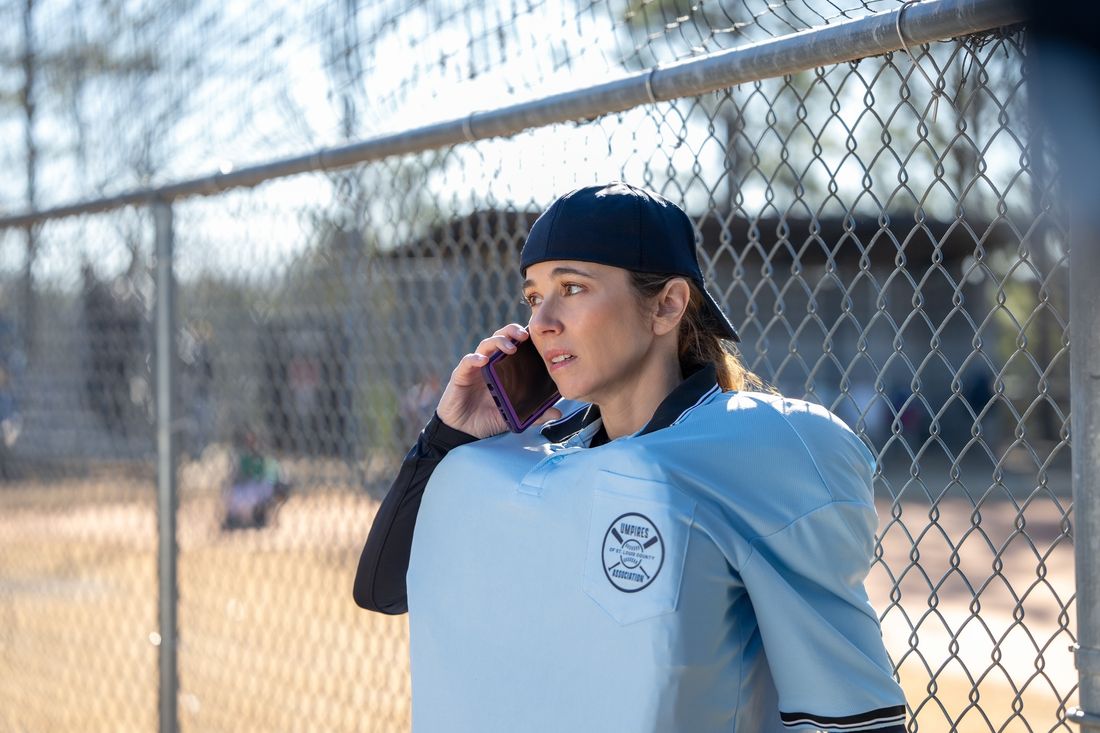
The investigation now confirms Floyd Smernitch died by suicide after Clark rode away on his bike. Richard witnessed Floyd drink a can of Bloody Mary that had been laced with Amphezyne. Additionally, a newly released police report proves Carol’s previous arrest was simply for stealing toilet paper for her family. Her former umpire boss, who clearly thought highly of her, explained she received the Umpire of the Year award because of her hard work and dedication to the game, especially considering she started with no prior knowledge. He also highlighted her kindness and support for struggling young players. Carol is a woman fiercely determined to provide for her family in difficult circumstances. Looking back, her behavior during police questioning – like asking them to speak up – seems like a result of having to rely on herself from a young age. While her story felt unnecessarily drawn out as a suspect, it’s possible it reflects a broader tendency to unfairly judge and blame women more readily than men.
As Plumb and Homer prepare to part ways, Plumb humorously explains current internet slang related to sex and kinks to a confused Homer, with a playful sendoff on the porch. While Joy Sunday and Richard Jenkins have brought charm to their roles throughout the series, their characters haven’t been deeply developed. Still, both actors have made the investigative scenes consistently watchable, even when they felt routine. Their final conversation, a humorous disagreement about acronyms, perfectly encapsulates the show’s central idea – and the episode’s title – that everyone has hidden quirks and that appearances can be deceiving.
From the outside, Clark Forrest’s neighborhood seems normal again. The weatherman involved in the case has been exonerated and is allowed home, but his house is empty. The swing set stands still in the backyard, a stark reminder that the image of a perfect family has vanished, replaced by an unsettling silence. Clark’s story shows how quickly a comfortable suburban life can unravel when feelings of isolation and helplessness are ignored, and instead masked by fleeting excitement – whether it’s an affair or endless online searching.
Read More
- Off Campus Season 1 Soundtrack Guide
- X-Men ’97 Finally Gave Gambit the Hero Moment He Deserved
- Chainsaw Man Volume 24’s Cover Art Reveals a Brand-New Denji
- 46 Years Later, The Mandalorian & Grogu Answers A Major Empire Strikes Back Question
- HoI4 fans harsh reactions to the announcement of another DLC pack
- 10 Worst End-Game Couples In Sitcom History
- Gold Rate Forecast
- DoorDash responds after customer uses AI to make food look bad and get a refund
- Emily Henry Says to ‘Trust the Vision’ For Beach Read Adaptation
- Dragon Quest II HD-2D Remake: Where to get the Magic Key
2026-04-13 06:05