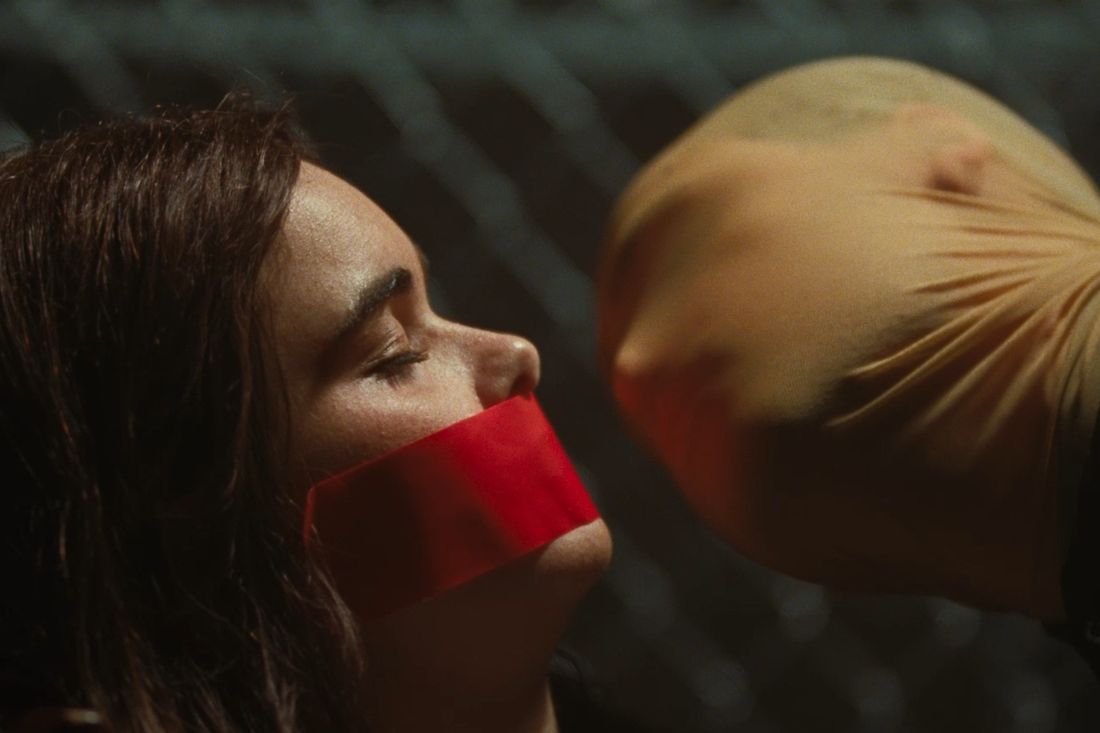
For almost 50 years, the movie Faces of Death has taken on a legendary, almost cursed status. It’s the kind of film passed around on old VHS tapes and talked about in whispers. While the internet has cleared up some of the mystery around the 1978 film – which claims to be a documentary showing real deaths of people and animals – many misunderstandings still exist, especially outside of horror fan circles. The new Faces of Death film, directed by Daniel Goldhaber and finally released in theaters after a long delay, probably won’t clear those up.
The new film isn’t a simple remake or sequel, which might be confusing for some viewers. However, the 2026 version of Faces of Death is surprisingly well-made. Knowing the history of the original film—including the decades of controversy surrounding it—will make you appreciate the new film even more, as director Goldhaber and co-writer Isa Mazzei have skillfully navigated a difficult balance. This article will explain why Faces of Death became so infamous and how the new version connects to the 1978 cult classic.
So what is Faces of Death?
The original Faces of Death is a 1978 horror film that falls into a category called ‘mondo’ – basically, shocking mockumentaries. These films often show violent or sexually explicit content, using a mix of real and staged footage. Faces of Death relies heavily on faked scenes. The film, written and directed by John Alan Schwartz, presents itself as the observations of a fictional pathologist, Francis B. Gröss (played by Michael Carr), who describes people’s horrifying deaths or what’s left behind. These are the ‘faces of death’ the title refers to, but the movie doesn’t really explain why we’re watching all this disturbing content.
How real is it?
I have to admit, watching Faces of Death was a really unsettling experience. It wasn’t just the shock value, but the sheer amount of genuine death on display that truly got to me. The autopsy scenes were particularly disturbing – I mean, seeing skin literally being cut open, and even peeled back from a skull… it’s something I can’t easily forget. Beyond that, the actual footage of victims from accidents like plane crashes and motorcycle mishaps was incredibly upsetting. And the scenes of animal slaughter, filmed using methods that thankfully aren’t common anymore, were especially hard to watch. It really stays with you, the rawness of it all.
Fortunately, most of the animal cruelty shown in the film Faces of Death is staged. While scenes like the dogfight and seal clubbing appear somewhat realistic, many are clearly fake, such as the notorious sequence of people killing a monkey to eat its brains. The human deaths are also exaggerated enough to usually seem obviously unreal – think a man being eaten by an alligator, an electric chair execution, or a cannibalistic cult. Despite including some actual death footage from 1978, the movie is largely ridiculous. (And, at a frustrating 105 minutes long, it’s also incredibly boring.)
You’re saying it’s not actually a snuff film?
Despite the rumors, true “snuff films” – movies depicting murder for entertainment – are largely a myth. While there’s a lot of disturbing real-world footage of death available online, actual films made to profit from or sexually gratify viewers with murder are rare. Most supposed examples have been proven to be fakes. The case of Luka Magnotta, who filmed himself abusing corpses and animals, gained notoriety through the Netflix documentary Don’t Fk With Cats: Hunting an Internet Killer. The 2026 update to the Faces of Death series references this case and the power of online investigations.
Then what made Faces of Death so controversial?
The controversy surrounding the film was definitely exaggerated. The original Faces of Death claimed to be banned in 46 countries, which wasn’t true. While it was banned or heavily censored in a few places, like the UK, this claim was largely a marketing ploy. Before the internet, rumors spread easily, and the film became more talked about than actually viewed. This created a reputation for being forbidden and led to exaggerated stories about its content. So, it’s understandable how a cheaply made, gory film gained such a fearful reputation.
Even though much of the 1978 film is fabricated, it’s undeniably insensitive and exploitative. It shockingly combines footage of genuine historical tragedies – including disturbing video from the liberation of concentration camps – with more recent events, such as the crash of PSA Flight 182, which occurred just weeks before the film’s release.
That’s pretty repulsive. And now there’s a sequel?
As a long-time fan of exploitation cinema, I remember a ton of Faces of Death sequels popping up over the years. Most of them just upped the ante with even more real-life footage, and a few were basically just compilations of the most shocking deaths from the earlier films. But this new Faces of Death is something different. It’s less a direct sequel and more of a follow-up that plays with the idea of the original film as a film within its own universe – a bit pretentious to say, I know! It’s similar to how Wes Craven’s New Nightmare or the 2014 The Town That Dreaded Sundown worked, acknowledging the previous films as movies themselves, not just events.
So it’s more of a reboot?
While connected to the original Faces of Death, this new film isn’t a reboot or continuation. It’s a completely different style of movie – a fictional story, not a fake documentary. Dacre Montgomery plays Arthur, a serial killer who is staging murders based on scenes from the original film. Ironically, Arthur is the one actually remaking Faces of Death, not the filmmakers. The movie, which also features Barbie Ferreira as a content moderator trying to stop him, explores how we’ve become less shocked by disturbing images – the kind of footage that caused outrage in the 1978 original. It’s a much smarter, funnier, and more insightful film than its predecessor, using the original as a starting point for a modern critique of media and our culture.
You’re saying I don’t need to see the first movie to understand this one?
Honestly, I wouldn’t bother with the original Faces of Death from 1978. It’s not that it’s traumatizing – though it’s infamous for that reason – it’s just not a good use of your time. It’s way more interesting as a piece of film history, knowing about it is enough. The new Faces of Death makes it clear whenever it references the original. If you’re curious about what director Daniel Goldhaber can do, I’d recommend checking out his 2018 film Cam instead. It’s another collaboration with Isabella Mazzei, and it’s a really smart horror movie that explores how we watch and share things online.
Read More
- Netflix’s Little House On The Prairie Reboot: Release Date, Cast & Everything We Know
- Off Campus Season 1 Soundtrack Guide
- YouTuber arrested after viral AI bodycam videos spark real police complaints
- Silver Rate Forecast
- Prime Video’s New R-Rated Spy Thriller Is Officially No.1 On Streaming Despite Poor Reviews
- Brent Oil Forecast
- Peaky Blinders: The Immortal Man’s Tommy Shelby Is a Better Father Than Michael Corleone
- Gold Rate Forecast
- EUR ZAR PREDICTION
- Bulgakov’s Take: Koreans Bet the Farm on Chips, Crypto, and Chaos
2026-04-10 16:55