The biggest gaming story of 2026 will likely be the 30th anniversary of . This makes sense, as the original games led to a massive entertainment franchise. However, it’s important to remember that back in 1996, there was a lot happening in gaming beyond just .
1996 was a hugely important year for Nintendo. While the Nintendo 64 was the exciting new console, Nintendo also kept supporting the Game Boy with the Game Boy Pocket. Even their older Super Nintendo system still saw the release of some fantastic games. It’s considered Nintendo’s most impactful year, and it really set the stage for the future of video games.
Pokémon Changed Gaming and Media With Its First Games
While the first Red and Green versions launched in Japan in 1996, they weren’t developed solely by Nintendo. Nintendo partnered with Game Freak and Creatures for their release. However, looking back, it’s clear that Pokémon has proven to be one of the most valuable properties Nintendo has ever had.
Although Pokémon became popular in the US right away, its success in Japan happened more gradually. The games were released when the Game Boy was nearing the end of its life, but Red and Green slowly gained fans. This was helped by things like rumors about a hidden Pokémon called Mew, the Pokémon anime series, and the release of the trading card game.
These elements expanded the world of the Game Boy games and drew more interest to the initial releases. Pokémon quickly succeeded in many ways, which contributed to its massive popularity today.
Nintendo Partied Like It Was 1989 With the Game Boy Pocket
In 1996, Pokémon gave a second life to the Game Boy. It arrived at a perfect time, as gamers were playing Red and Green on original Game Boys – a system that was already a bit outdated, having launched in 1989. Later that same year, Nintendo released the Game Boy Pocket, a redesigned version that was smaller, used less battery power, and featured a smaller screen.
While it appears the Pocket handheld was created to benefit from the popularity of Pokémon, another Game Boy title was the real reason for its development. Mario’s Picross, released in 1995 with help from Ape Inc., didn’t perform well in the United States, but it was a huge success in Japan. This success led Nintendo to postpone plans for a new handheld and instead extend the lifespan of the original Game Boy.
The Super Nintendo Remained Quietly Influential as It Neared Its End
While the Game Boy was still popular in 1996, Nintendo’s Super Nintendo, which first launched in Japan in 1991, continued to be important. Nintendo was already looking ahead to new systems by the mid-90s, but the SNES still had a lasting impact on the company for years to come.
So, this game was actually the last Mario title released for the SNES, which is kinda wild to think about. But it was also my first time playing a role-playing game starring Mario! It was developed by Square, and you can totally tell – they clearly took a lot of ideas from their Final Fantasy games, which I loved. It was a really cool mix!
Although Super Mario RPG didn’t get a traditional follow-up, Nintendo went on to create several other role-playing games featuring Mario. The popular Paper Mario and Mario & Luigi series, among others, likely wouldn’t exist if it weren’t for the original Super Mario RPG.
The game Harvest Moon is also important to note. While it didn’t sell incredibly well initially, it launched a successful series of games. More importantly, it was one of the first farm simulators and ‘cozy’ games, paving the way for popular titles like Stardew Valley and Animal Crossing.
The Nintendo 64 Played a Huge Role in Gaming History
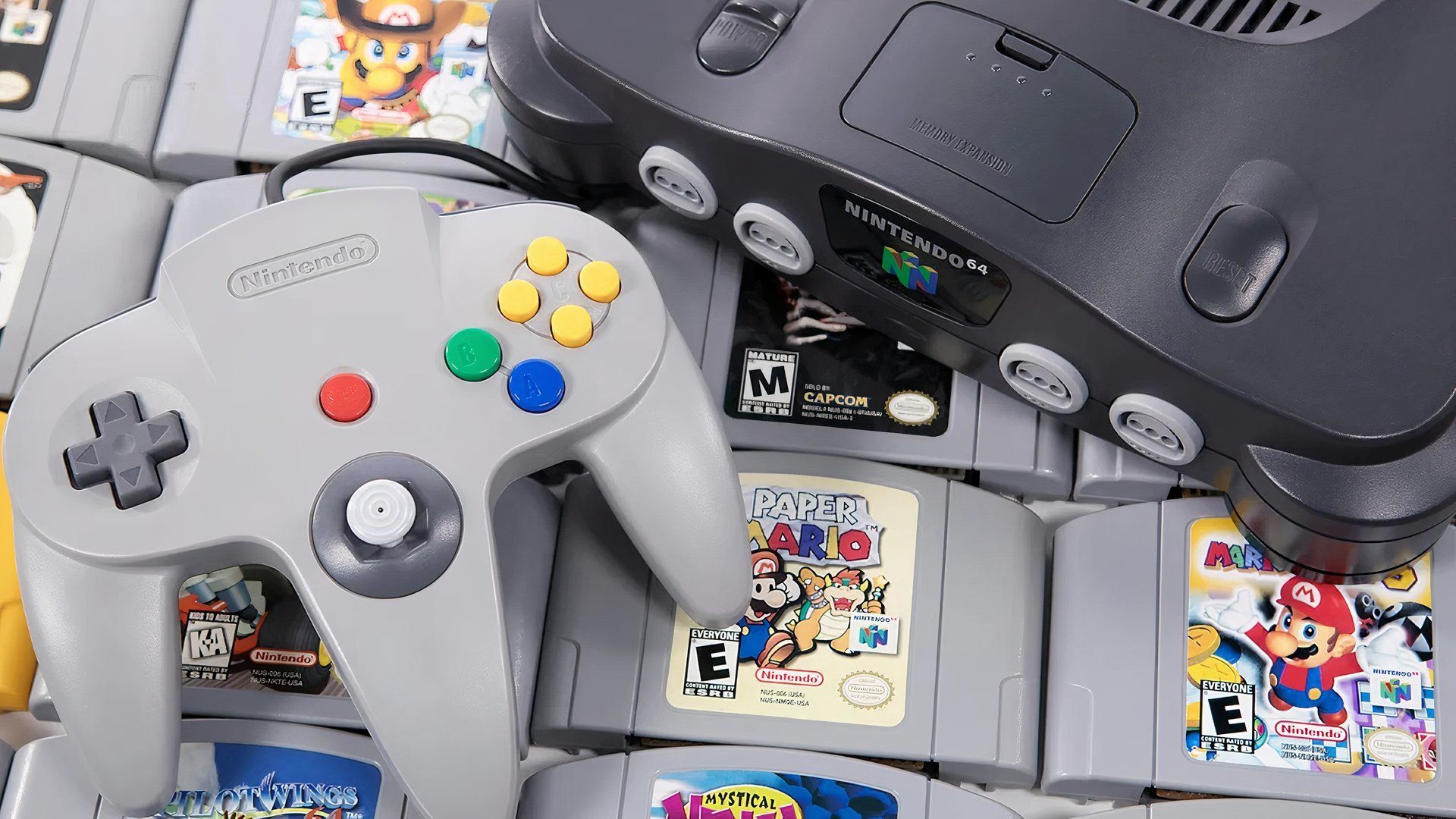
By 1996, Nintendo was primarily focused on its new Nintendo 64 console, with the Game Boy and SNES taking a backseat. The N64 had a somewhat uneven success story; it quickly became popular in the US, but didn’t do as well in Japan. Overall, it was significantly less successful than Sony’s PlayStation, selling around 32 million units compared to the PlayStation’s 102 million.
The Nintendo 64 was a truly innovative console. Its controller, in particular, was groundbreaking – it was the first to include an analog stick, making it much easier to move around in 3D games. The controller also had a port for connecting extra accessories, like rumble packs and memory cards. A popular feature allowed players to connect their Game Boy to the N64, most famously used with the game Pokémon Stadium.
Despite many similarities, one key difference allowed Sony to dominate that generation of consoles. The PlayStation used CDs for games, while the Nintendo 64 stuck with cartridges. Cartridges offered faster loading and were more reliable, but they were more expensive to make and couldn’t hold as much game data. This made the PlayStation a much easier and more affordable system for other game companies to develop for.
Super Mario 64 Was a Stellar N64 Launch Title
The Nintendo 64 really succeeded thanks to games made by Nintendo themselves. It started strong with Super Mario 64, which was released when the console first came out. Adapting the popular Mario series to 3D was a huge challenge – it meant taking a well-established and polished formula and applying it to a completely different way of playing.
Super Mario 64 was a huge success. Even though it was one of the earliest 3D platforming games, it felt remarkably refined. Controlling Mario was smooth and precise, and Nintendo did a great job with the camera, making it easy to navigate the 3D worlds.
This game laid the groundwork for future 3D Mario titles, which became some of the most popular games of all time. It really showed players what was possible with 3D gaming.
Nintendo’s Mario Kart 64 Was the Ultimate ’90s Racing Game
One game that really took off was Mario Kart 64, which launched in Japan in 1996 and came to North America in early 1997. It wasn’t as radically different from the original Mario Kart on the SNES, sharing many similarities. However, like Super Mario 64, it still managed to offer new and exciting features that the first game didn’t have.
The original Mario Kart on the SNES used a mix of 2D and basic 3D graphics, which didn’t always look polished. Mario Kart 64 on the N64, however, featured completely 3D environments, creating a much smoother visual experience. Combined with several iconic race tracks and a fantastic soundtrack, Mario Kart 64 was one of the most enjoyable racing games of 1996.
One Nintendo Icon Got His Start, and Another Was Born
A key innovation in Super Mario 64 was the introduction of voice acting to the Nintendo world. This game marked the first time Charles Martinet voiced Mario in a home console Mario game. For many years, Martinet went on to become the iconic voice of Mario, Luigi, Wario, and Waluigi in numerous Nintendo games.
In 2022, Nintendo launched two new games on the Switch: Mario Strikers: Battle League and Mario + Rabbids Sparks of Hope. When the previous voice actor needed to be replaced, Nintendo chose Kevin Afghani, a young and largely unknown voice actor in his mid-20s.
Interestingly, he was born on November 9, 1996, only a few weeks after Charles Martinet first voiced Mario in the North American release of Super Mario 64 on September 29th. Afghani’s own debut as Mario came much later, in 2023, with the Nintendo Switch game Super Mario Bros. Wonder.
After hearing Charles Martinet’s voice for so long, fans were understandably unsure about a new voice actor. However, Kevin Afghani does a great job sounding like Mario. Early reactions are very positive, and Nintendo seems confident he’ll be the voice of Mario for many years to come.
Found an error? Send it so it can be corrected.
Read More
- Netflix’s Little House On The Prairie Reboot: Release Date, Cast & Everything We Know
- Off Campus Season 1 Soundtrack Guide
- Silver Rate Forecast
- Prime Video’s New R-Rated Spy Thriller Is Officially No.1 On Streaming Despite Poor Reviews
- Gold Rate Forecast
- Brent Oil Forecast
- EUR ZAR PREDICTION
- Amazon Primes new GenAI cartoon looks like K-Pop Demon Hunters with aliens
- Inkford Hermitage Chest Locations In HSR (Honkai: Star Rail)
- KPop Demon Hunters Meets Avatar: The Last Airbender In Netflix’s 3-Part Fantasy Series
2026-04-07 00:43