As a researcher studying these cryptocurrencies, I’ve found that Bitcoin’s underlying design might limit how quickly it can evolve and gain wider acceptance. In contrast, Ethereum’s structure seems better suited for sustained growth and a stronger future position in the market.
Market analyst John Galt believes Bitcoin may eventually lose ground to Ethereum due to inherent weaknesses in its design. He points to Bitcoin’s update process, limited supply, and long-term security as areas that could make it vulnerable to future challenges. Ethereum, with its different approach to design and decision-making, might be better equipped to handle these issues with less disruption.
Ethereum’s Iterative Upgrade Model Seen as Advantage Over Bitcoin’s Rigid Approach
Galt notes that Bitcoin lacks a clear process for updating its security features across the entire network. This could make it difficult and time-consuming to protect Bitcoin from future threats like quantum computing, particularly when there’s a lot of instability or unpredictability in the world.
Bitcoin is facing three major problems which Ethereum has already solved.
Bitcoin faces challenges in adopting quantum-resistant technology. Unlike systems with central control, Bitcoin relies on community consensus, and its users tend to favor stability over rapid changes, making significant upgrades a slow process.
Inaccessible…
— John Galt (@lurkaroundfind)
Market analysts also highlighted Bitcoin’s cautious nature. They explained that its supporters often see slow development as a way to enhance security. However, this cautious approach can hinder quick responses when speed is essential. Major technical updates can face opposition and slow down decision-making, especially if the potential risks aren’t immediately clear.
Unlike some other cryptocurrencies, Ethereum has consistently improved over time with planned updates. The recent move to proof-of-stake is a prime example of its ecosystem successfully coordinating major changes, suggesting future upgrades will likely be well-planned and executed efficiently.
Dormant Bitcoin Holdings Seen as Potential Weak Point in Quantum Threat Scenario
Around 1.5 to 1.7 million Bitcoins are likely lost forever, meaning their owners can no longer access them. Galt suggests these long-untouched coins could be at risk if future quantum computing attacks were to succeed.
Sometimes, the network faces difficult decisions that could lead to disagreements. It would have to either allow potential misuse of the system or step in and potentially disrupt or redirect funds. Galt points out that these kinds of challenges can divide communities, similar to past conflicts like the debate over how much data the network could handle.
Ethereum has an easier time dealing with issues related to inaccessible funds compared to some other blockchains. This is likely because a smaller percentage of its total supply is locked up in inactive accounts. Because the problem isn’t as widespread, Ethereum can potentially resolve these edge cases through standard governance processes instead of needing to rush into emergency fixes.
Bitcoin’s long-term security is changing because of events called halvings, which reduce the rewards given to miners. According to Galt, Bitcoin is becoming more dependent on fees from transactions to pay miners and keep the network secure. However, these fees don’t consistently stay high unless there’s a lot of activity on the network.
This unpredictability makes analysts concerned about whether fees will consistently cover the costs of security over time.
Ethereum’s Economic Model Gains Attention as BTC Faces Long-Term Fee Uncertainty
Recent data shows roughly $92.7 million in fees earned over the last month, averaging about $1.33 million in revenue each day. This suggests consistent, regular use of the service, not just spikes in activity during unusual circumstances.
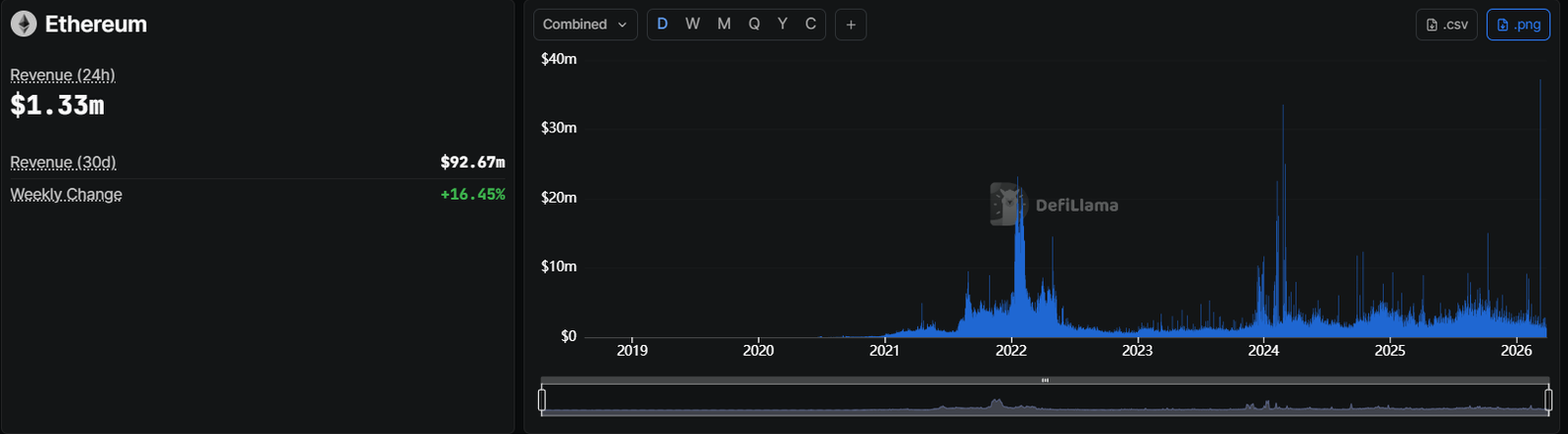
Image Source: DeFiLlama
Ethereum also alters how money works. A recent update, called EIP-1559, destroys a part of the transaction fees. When demand is high, this can actually reduce the overall supply of Ether, potentially even making it deflationary. This means the more people use Ethereum, the more secure the network becomes.
Bitcoin’s future relies on whether transaction fees increase enough to compensate for decreasing rewards. Ethereum demonstrates how active use of the network and its fees can affect the overall supply of the cryptocurrency.
As a crypto investor, I’m seeing more and more how culture plays a role in where the money goes. Galt points out that Bitcoin is attracting bigger, broader stories and getting attention from institutions. People like Michael Saylor are really influencing how the public views it, and it’s increasingly being seen as a safe place to store wealth, like gold.
Ethereum prioritizes flexibility and community control, staying true to its original, privacy-focused principles. This difference in approach could eventually affect how investors view Ethereum compared to other blockchains, especially as both face increasing challenges.
According to Galt, Bitcoin’s challenges could slow its adoption and create risks. This gives Ethereum an opportunity to become more popular as the market increasingly values long-term security and strong collaboration.
Read More
- Off Campus Season 1 Soundtrack Guide
- Chainsaw Man Volume 24’s Cover Art Reveals a Brand-New Denji
- X-Men ’97 Finally Gave Gambit the Hero Moment He Deserved
- 46 Years Later, The Mandalorian & Grogu Answers A Major Empire Strikes Back Question
- HoI4 fans harsh reactions to the announcement of another DLC pack
- 10 Worst End-Game Couples In Sitcom History
- Emily Henry Says to ‘Trust the Vision’ For Beach Read Adaptation
- DoorDash responds after customer uses AI to make food look bad and get a refund
- Hatsune Miku cosplayer goes viral selling $15 cups of “foot juice” to thirsty anime fans
- Gold Rate Forecast
2026-03-29 14:09