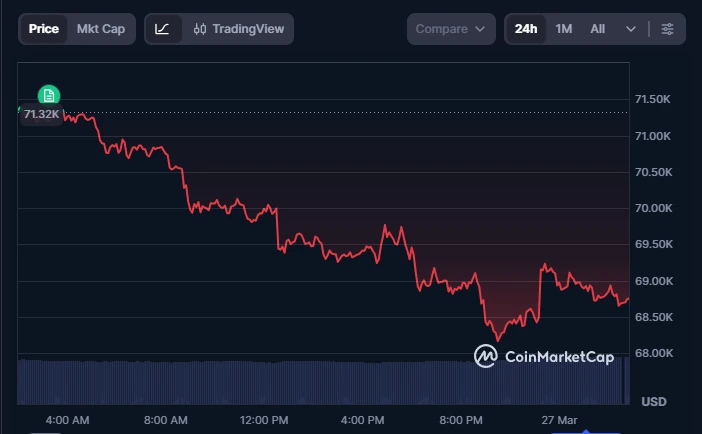
Bitcoin’s price has recently fallen below the $70,000 mark, currently trading at $68,739.30, which represents a 3.49% decrease over the last 24 hours.
This occurred shortly after the Pentagon announced potential plans for a major strike against Iran, coinciding with the nearing expiration of $16.4 billion worth of Bitcoin and Ethereum options contracts this Friday.
Bitcoin breakout signal
Even though the market’s been a bit shaky, I’m seeing some encouraging signs from on-chain data. It looks like the big players – those holding between 10 and 10,000 Bitcoin – have actually been buying more over the last month. They’ve added about 61,568 BTC to their holdings, which is around a 0.45% increase. That suggests they still have confidence in Bitcoin’s long-term potential.
Consistent accumulation is generally a sign that the market is ripe for bullish momentum.
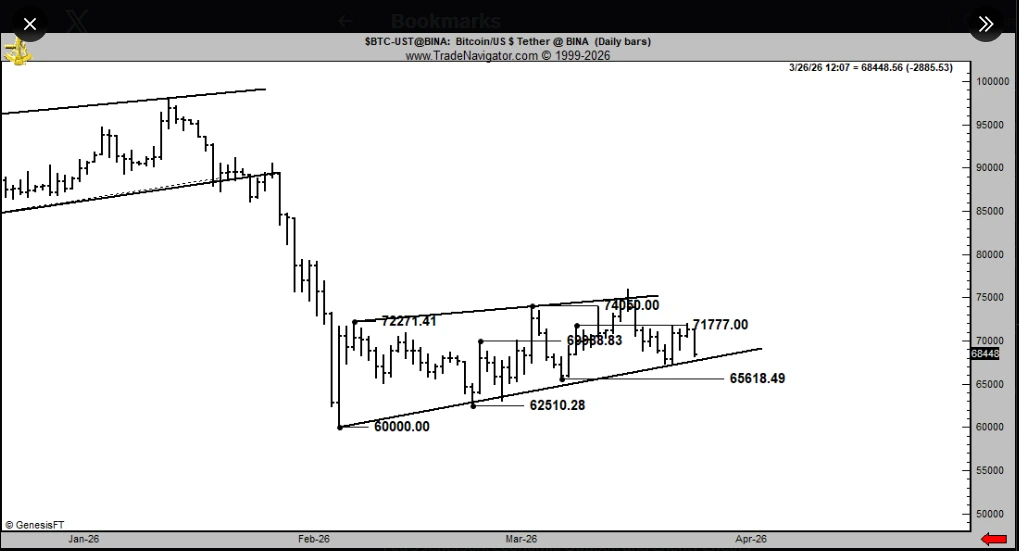
Despite this, the price of the digital asset has continued to fall slightly, and it hasn’t managed to rise above $75,000 in the last month.
In addition to general economic and global issues, worries among shoppers that they might miss out on deals are also causing prices to drop.
Data from Santiment shows that small Bitcoin holders are buying more coins at the same rate as larger investors – those with significant holdings. Over the last month, wallets containing less than 0.01 BTC have increased their Bitcoin holdings by 0.42%.
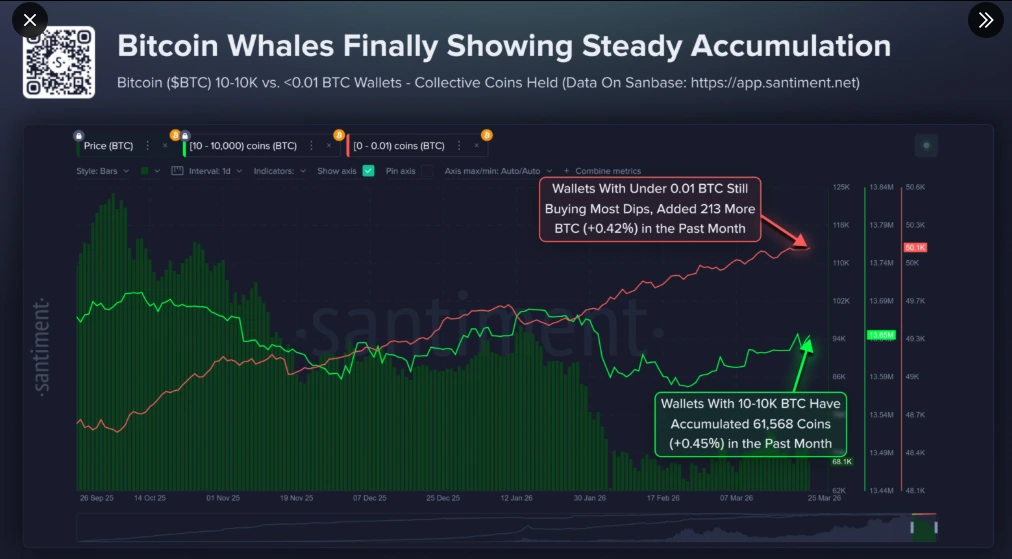
Historically, Bitcoin’s price tends to rise when long-term investors start buying while short-term investors are selling. This shift in behavior—long-term holders accumulating and short-term holders exiting—often signals a move from negative to positive price momentum.
Until a clear upward trend emerges, the digital asset will likely remain range-bound. Price swings will probably continue to be influenced by the Federal Reserve’s decisions, inflation data, and the situation with the US-Iran conflict.
Near-term BTC movement
Experts predict a significant drop in prices soon, based on past market behavior and current economic challenges.
One analyst notes that historically, when Bitcoin falls below $48,387 (the average price long-term holders paid) and then dips to around $36,657, it often leads to significant price increases – gains of over 300% within a year and a half have been common.
Bitcoin has historically started new price increases after falling below two key levels: around $48,387 (the average price long-term holders originally paid) and around $36,657. I’ll be looking for opportunities to buy Bitcoin at these lower prices, anticipating the next price surge.
— Ali Charts (@alicharts) March 26, 2026
The idea that Bitcoin is like ‘digital gold‘ is supported by the fact that Bitcoin’s price rebounded strongly after gold prices initially rose and then fell.
Experts are predicting a potential recession, driven by rising unemployment, changes in the economy, and ongoing conflicts in the Middle East.
Job losses are increasing, and global tensions are escalating. At the same time, oil prices and overall inflation are going up. Travel at airports is significantly decreasing, and the values of Bitcoin and stocks are falling. These signs often indicate that the current period of economic growth is ending, and a recession is likely on the horizon.
— Benjamin Cowen (@intocryptoverse) March 26, 2026
Read More
- Off Campus Season 1 Soundtrack Guide
- Chainsaw Man Volume 24’s Cover Art Reveals a Brand-New Denji
- X-Men ’97 Finally Gave Gambit the Hero Moment He Deserved
- 46 Years Later, The Mandalorian & Grogu Answers A Major Empire Strikes Back Question
- HoI4 fans harsh reactions to the announcement of another DLC pack
- 10 Worst End-Game Couples In Sitcom History
- Katanire’s Yae Miko Cosplay: Genshin Impact Masterpiece
- Emily Henry Says to ‘Trust the Vision’ For Beach Read Adaptation
- DoorDash responds after customer uses AI to make food look bad and get a refund
- Gold Rate Forecast
2026-03-27 04:08