Even small details in video games can really affect how players enjoy the experience. A great example is the little circles on the helmets in the game Helldivers 2. These seemingly unimportant markings have gotten players talking and speculating, showing how much attention to detail and good design can create a truly immersive world. We’re going to investigate what these helmet circles might do, how player theories add to the fun, and how design choices can change how players think and act. We’ll also look at helmet design in games generally, and how it balances looking good with being useful.
Key Takeaways
- Small details, big impact: Design elements like the circles on Helldivers 2 helmets demonstrate how seemingly minor details can capture players’ attention and fuel speculation, enriching the gaming experience.
- Helmets are more than protection: In games, helmets contribute to character identity, gameplay mechanics, and player immersion, showcasing the importance of balancing form and function in design.
- Good design guides players: Intuitive design choices, including clear visuals, help players understand game mechanics and features, creating a more seamless and enjoyable experience.
What Are Those Small Circles on the Back of Helmets?
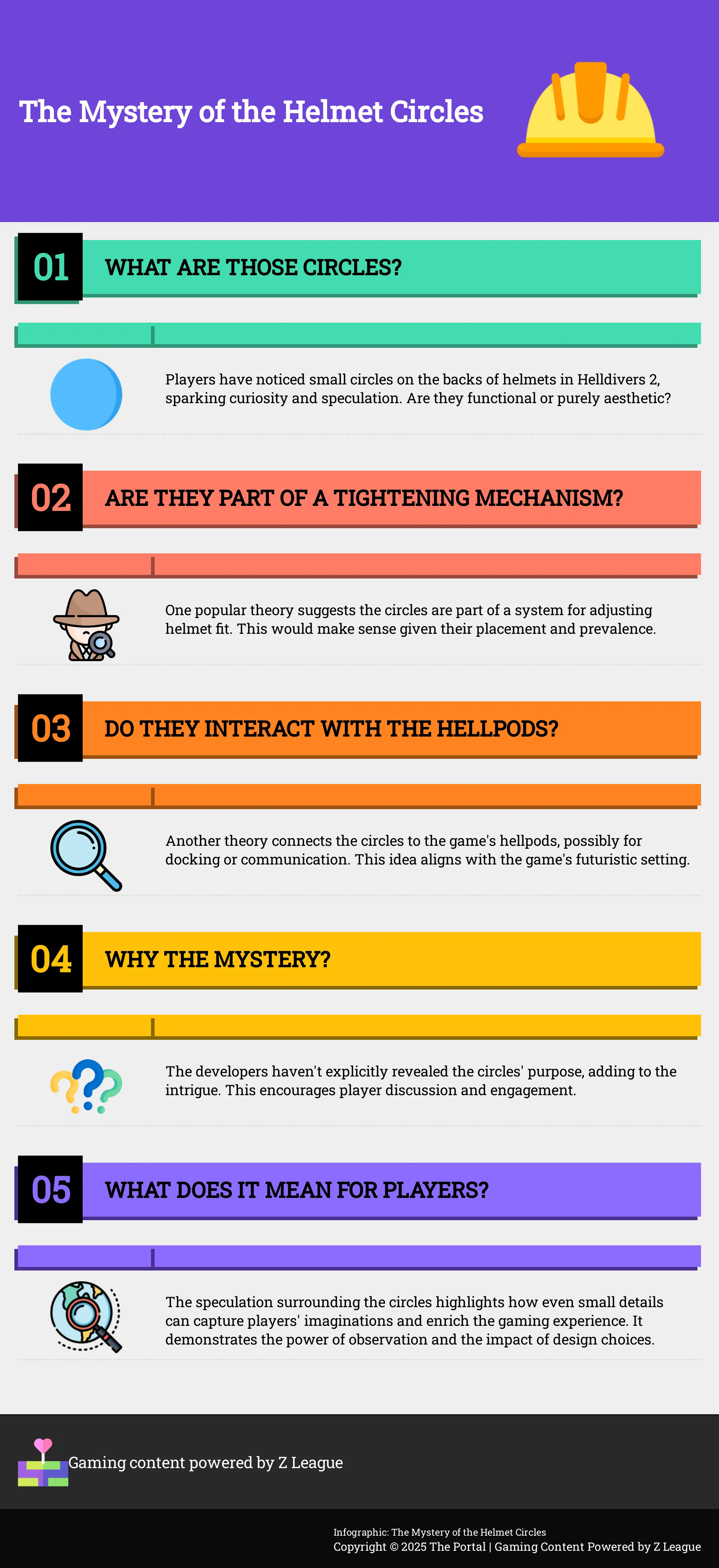
Sharp-eyed players of Helldivers 2 have spotted something interesting: small circles on the backs of many helmets. These little details have gotten people talking online, with players wondering what they mean and what function they might have.
There are a couple of popular ideas about what the circles on the helmets do. One is that they have something to do with how the helmets work with the game’s hellpods. Another idea is that they’re part of a system that lets soldiers adjust the helmet for a better, more comfortable fit. A Reddit user recently pointed out these possibilities, showing how much discussion and different interpretations there are surrounding these circles.
Though their purpose is still unknown, these small details add to the rich world of the game and demonstrate how even minor elements can really capture players’ attention. A recent article on N4G reported that the game’s Chief Creative Officer hinted at the reason behind this detail, which has only increased player curiosity. Whether they serve a practical function or are purely for looks, these circles have become a hot topic among Helldivers 2 fans. This highlights how important good game design and user experience are, and how even the smallest choices can significantly impact a game’s popularity and spark conversations.
Debunking Initial Assumptions
We’ve all seen the small circles on helmets and probably wondered what they’re for. A lot of people think they’re just for looks, or maybe to help keep the helmet cool. While cooling is often important, the real reason is more complicated. These circles actually play a role in safety, the helmet’s design, and even how helmets have evolved over time.
It’s a common mistake to think all helmets that look alike offer the same protection. In fact, the circular designs on helmets can show different safety levels and standards, which vary between brands. These markings are like hints about the technology inside, affecting things like how well the helmet absorbs impacts, distributes weight, and holds up in a crash. Just because two helmets look similar doesn’t mean they offer the same level of safety. It’s similar to game controllers – they all have buttons and joysticks, but the technology inside and how well they work can be very different.
I used to think those circular vents on helmets were just for keeping you cool, you know, letting air flow when you’re really going for it. But I’ve learned it’s way more than that! They actually help make the helmet lighter and improve the balance, which is huge if you’re wearing it for a long time – whether you’re biking, on a motorcycle, or even immersed in a VR game like I am. It turns out where they put those circles and how big they are can even affect how the helmet handles impacts, making it safer. It’s a really neat mix of how something looks and how well it works, kind of like how game designers carefully balance gameplay with graphics. And get this – it’s not a new idea! These designs come from older helmets that were built to be both protective and practical. So next time you see those circles, remember they’re not just there for looks – they represent a lot of history and clever design, just like the character designs we see evolving in all our favorite games.
Examining the Tightening Mechanism Theory
A fascinating theory proposes that the circles on the back of helmets weren’t just for looks, but actually helped tighten the helmet for a better fit. Someone on Reddit recently wondered if these circles were designed to adjust the helmet’s size, instead of being connected to the helmet’s internal padding (often called ‘hellpods’).
Many players have noticed small circles appearing on the backs of helmets in the game, leading to speculation about their purpose. A popular theory suggests these circles are related to the helmet’s tightening mechanism, potentially improving comfort and how well the helmet functions. Players first discussed this on a Steam forum, noting how often these circles appear. While the developers haven’t explained them yet, the idea makes sense to many, and the community continues to discuss and wonder what these helmet features actually do.
The Importance of Helmet Design in Games
Helmets do more than just keep players safe in games—they’re actually a key part of how games are designed. They affect how players feel and play, both through how they look and how they work, ultimately making a big difference in the overall gaming experience.
Balancing Looks and Function
Good game design relies on finding the right balance between how something looks and how it functions. A memorable helmet, like Master Chief’s from Halo, can become a symbol of a game or character. However, a helmet shouldn’t just look good – it also needs to be practical. Does it block the player’s vision? Does it suit the character and the game’s style? These details are important for making a game immersive and visually appealing, ultimately contributing to its success.
Impact on Player Immersion
Helmets aren’t just about protection; they play a big role in how connected players feel to a game. A helmet’s look – its shape, color, and style – can really draw players in and help them feel like they are their character. These visual details create a stronger, more immediate connection to the game, and also contribute to the lasting memories players have. A thoughtfully designed helmet can even reflect the game’s story and setting, making the experience more immersive and meaningful. Ultimately, focusing on these visual details makes the game more enjoyable and unforgettable.
User Expectations vs. Reality
It’s a familiar feeling for gamers: you spot an interesting item – maybe a helmet with strange markings – and immediately wonder what it does. Is it for cooling? Does it connect to some advanced tool? Usually, our first guesses about why things are designed a certain way in games aren’t quite right. This section looks at the difference between what players think will happen and the real reasons behind game design decisions.
Common Misconceptions
It’s easy to overlook the purpose of small details in games like the circles on a Warzone helmet, assuming they’re just for show. But even seemingly minor features can significantly improve your safety and performance. Not all in-game helmets are the same – different materials and technology affect how well they protect you. Just like real-world helmets, these in-game designs prioritize protection over appearance, and recognizing this highlights the careful design work that goes into creating a realistic gaming experience.
Bridging the Gap Between Design and Understanding
How players use items in games goes beyond simple actions – it’s a full experience influenced by feelings, how things look, and how clearly the game explains what things do. Great design makes players feel confident, letting them easily use features and understand how they help. A well-made weapon, for instance, can seem powerful just by looking at it – that’s how good design works. The key is to combine how something looks with how it functions, so players feel truly involved in the game and also enjoy the visual details. Like the music in Diablo 4, which adds a lot to the player’s experience. Ultimately, what makes a game enjoyable is a mix of clever design and how each player understands it, and recognizing that connection can make us appreciate games even more.
When Design Sparks Speculation
It’s amazing how even small design details in games can get players talking! Think about those debates over the purpose of the circles on the back of character helmets – were they just for looks, or did they do something? These kinds of discussions show that players don’t just passively experience games; they actively think about the design, create their own theories, and often come up with ideas the developers never even considered.
The Role of Player Theories
Game designers essentially predict how players will behave and build experiences based on those assumptions. While thorough research helps, players always find unexpected ways to interact with games. We often see this with things like unexplained details – players create their own theories about what they mean, sharing them online and inspiring fan creations. This shows how deeply games can capture our imaginations and how engaged players can be. Sometimes, this community-driven theorizing even impacts how the game is developed further, as designers consider player ideas for future updates.
How Speculation Shapes the Experience
Playing games isn’t just about completing tasks; it’s a deeply personal experience influenced by how we feel, what we expect, and the details of the game’s design. Think about something simple, like a helmet in a game – do players just see its appearance, or do they create their own meaning around it? Whatever a player believes, that becomes part of their unique experience. Great game design makes playing more fun and keeps players interested, and often that interest includes guessing, sharing ideas, and building theories. Even small details, like a helmet’s shape or a symbol’s location, can spark conversations and make the game more rewarding. These design choices, whether intentional or simply how players see them, can boost motivation and encourage more interaction.
Communicating Design Clearly
Good design, whether it’s a small detail like a helmet’s design or a complicated game feature, is essential for players to have a good experience. This idea applies to all kinds of design, both in the real world and in video games.
Clear Visuals in Games
When you enjoy a video game, it’s usually because it’s easy to use and looks good. Great game design and user experience are key to keeping players hooked – just like well-designed everyday objects clearly show you how to use them. If you can quickly understand what something does in a game or move around the menus easily, you’ll have a much more enjoyable and immersive experience. From how things look to how you interact with them, design choices are crucial to a game’s success. Effective design communicates information clearly and makes the game feel smooth and natural – it’s what takes a good game and makes it truly exceptional. It means the difference between feeling confused and feeling like an expert. And of course, strong visuals play a big role in making a game more engaging.
Intuitive Design
Intuitive design isn’t just about aesthetics; it’s about creating experiences that feel natural and easy to use. How people interact with digital interfaces should be immersive and enjoyable, influenced by their feelings and what they expect. This idea applies to all sorts of designs, from everyday objects like helmets to items within video games. When design is truly intuitive, it becomes almost invisible, letting players fully concentrate on playing. This smooth blend of design and function is what makes a game captivating. Good game design thoughtfully connects the game’s core features to what motivates players and keeps them engaged, ultimately helping them learn and improve. Just like helpful markings on a helmet, smart design choices subtly provide players with essential information, leading to a better and more satisfying experience.
Designing for Form and Function
Whether it’s the detailed construction of a knight’s helmet or the complex technology inside a space helmet, design significantly shapes how we see headwear. This is particularly true in video games, where helmets are often key to a character’s appearance and how the game is played. This discussion will look at how helmet design balances style and practicality, and how that affects players’ enjoyment.
Enhancing Gameplay Through Helmet Features
Helmets in video games can be much more than just something to make a character look good. They can actually play a big role in how the game is played. For example, in games like Escape from Tarkov, different helmets offer different levels of protection, directly affecting a player’s chances of survival. Choosing the right helmet becomes a key strategy, as players weigh how much protection they need against how easily they can move. As Team Wendy points out when discussing realistic helmet design, things like how much of the head it covers and how tough it is are important – just like in real life. This level of detail makes the game more immersive and encourages players to carefully consider their equipment. It’s not just about aesthetics; it’s about making smart choices that impact how you play, similar to the discussions we have on Z League about building effective loadouts, like our guide to the best Modern Warfare Warzone loadouts. Choosing the right gear is essential for winning.
Creating Appealing and Practical Designs
Helmets are visually striking and play a big role in how a character looks. Their shape, color, and texture can even tell you about who the character is or what side they’re on – a streamlined helmet might suggest speed, while a heavy one implies toughness. But a helmet should always be useful first. If it looks cool but blocks your view or doesn’t fit the game’s style, it can actually make the game less enjoyable. Design choices impact how players feel and behave, and good game design is key to keeping players engaged. The best helmets are both attractive and practical, adding to the player’s sense of being in the game. Just like a great soundtrack, thoughtful visuals are essential for a truly immersive experience.
The Psychology of Helmet Design
This section examines how helmet design – particularly visual elements like circular patterns – impacts players’ mental state. It’s more than just how helmets look; the design choices influence how players see the game, what they do within it, and how much they enjoy the experience.
How Design Influences Players
As a gamer, I’ve always felt like the stuff in games feels a certain way, and it turns out there’s a reason! It’s cool to realize how much shapes affect us. Like, a helmet with pointy edges just looks more intimidating than one with rounded curves, right? That’s not an accident. Designers intentionally use shapes – even something as small as circles – to give you hints about the game world without even telling you. They’re basically using what we know about shapes to help us understand how things work, almost like they’re leading us by the hand. It’s similar to how architects design buildings to make us feel a certain way. These details can really change how we play and how we see everything in the game. I’ve read about how shapes actually mess with our brains, and it totally explains why some game designs just work better than others.
Emotional Responses to Visuals
What players see in a game strongly influences how they feel. Things like color schemes, shapes, and overall visual style are key to keeping players engaged and making the game fun. Research consistently shows that a game’s look has a big impact, influencing both first impressions and how players remember the experience. Even details like a well-designed helmet, with careful attention to its shape and color, can help players feel more immersed. Good game design extends to all areas, including visual elements, and studies show that appealing visuals lead to greater engagement and a more memorable experience. When a game looks good, players are more likely to become invested and emotionally connected.
Helping Players Understand Design
Games can be complicated, with a lot going on at once that players need to understand quickly. Great game design considers what players need and uses clear visuals to help them. For example, knowing what something like circles on a helmet mean can really change how a player enjoys the game. Simple, understandable design choices like that make games more fun and keep players hooked.
Shapes are everywhere in our daily lives and help us understand things quickly. A red stop sign is a great example, as is a green light signaling ‘go’. Games also use shapes to communicate information. The design of a helmet, even small details like circles, can tell players what it does or who the character is. These visual hints can make games easier to understand and more enjoyable. For instance, different colored circles in a game might show which team a player is on.
Good design goes beyond just how something works; it’s about creating a feeling. For example, a helmet’s appearance can make a player feel powerful, scared, or anything in between. These feelings make the game more engaging and believable. When players understand why something is designed a certain way, they can better appreciate the skill and thought that went into it, strengthening their connection to the game. Think about how a character’s armor can make them seem more approachable or more impressive – that’s the power of design.
Even small details in game design, like a simple circle on a helmet, can actually help players learn and become more involved. It moves beyond just playing the game to also noticing and valuing the creativity behind it. This can lead to a better understanding of how the game works and why it was designed the way it was.
Frequently Asked Questions
Those little circles on the back of helmets in Helldivers 2 have become a surprisingly big topic of conversation. Players are fascinated by them because it’s not clear what they do, which has led to a lot of guessing and discussion. It just shows how even small details in a game can really grab people’s attention and get the community talking.
Those circles might look like just a design choice, but they probably do something useful. Players think they could be part of how the helmet works, maybe helping to tighten it or connect to technology within the game. It seems like even small details could have a hidden purpose.
The leading idea about what these circles do is that they’re part of a system for tightening the helmet, letting players customize the fit. This makes sense because of where the circles are located and the fact that you see them on many different helmet styles in the game.
How does the design of a helmet affect a player’s enjoyment of a game? A good helmet design can make a game look better, help define a character, and even change how the game is played. For example, the helmet worn by Master Chief in Halo is famous and a key part of what makes the game special.
Players sometimes misunderstand game designs because they come with their own ideas about how things should work. A detail that looks purely cosmetic might actually do something, or a feature intended to be useful might be overlooked. This difference between what designers intend and what players expect often leads to lively debates and interesting theories among gamers.
Read More
- Netflix’s Little House On The Prairie Reboot: Release Date, Cast & Everything We Know
- Off Campus Season 1 Soundtrack Guide
- Silver Rate Forecast
- Prime Video’s New R-Rated Spy Thriller Is Officially No.1 On Streaming Despite Poor Reviews
- Gold Rate Forecast
- Brent Oil Forecast
- EUR ZAR PREDICTION
- 币安人生 PREDICTION. 币安人生 cryptocurrency
- EUR USD PREDICTION
- KPop Demon Hunters Meets Avatar: The Last Airbender In Netflix’s 3-Part Fantasy Series
2026-02-21 11:18