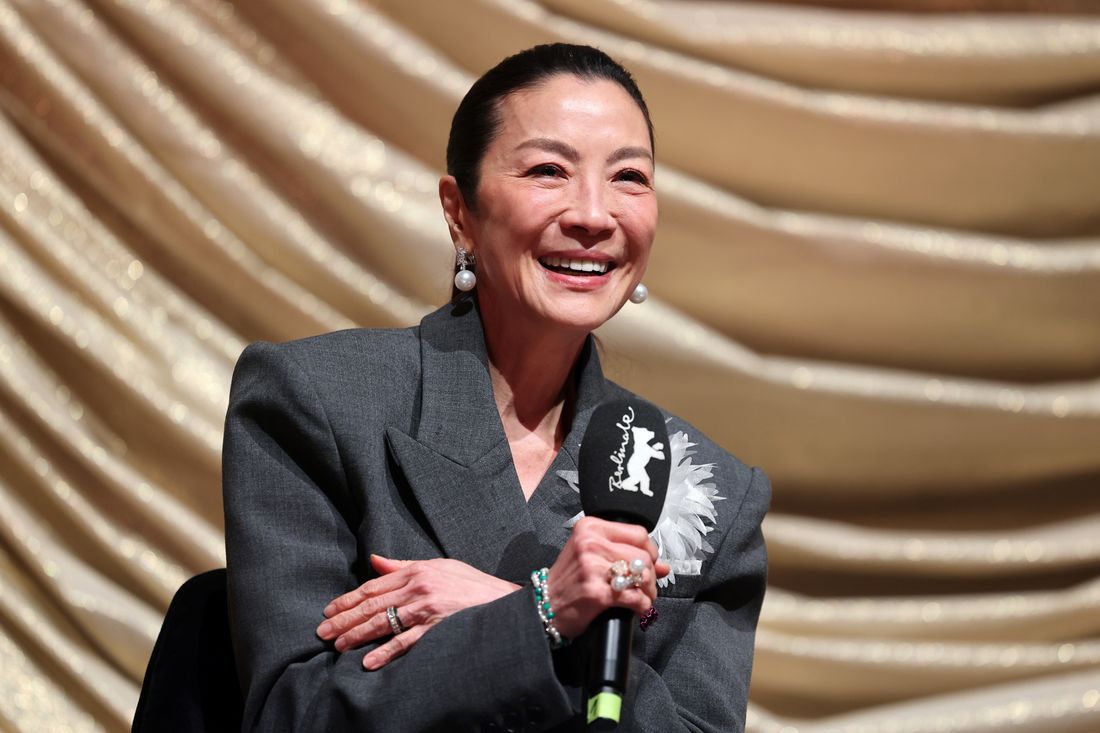
Picture this: a major international film festival, packed with stars and buzzing with anticipation for unique and thought-provoking films. Everyone’s craving something new to debate, a break from the usual awards show chatter. But this year’s Berlinale isn’t delivering. It’s not the movies, the fashion, or even the celebrities generating buzz—it’s what they aren’t saying. With five days still to go, the main topic of conversation is the surprising lack of political discussion. How did the festival get this reputation? It stems partly from the European festival circuit—Berlin, Cannes, and Venice—which traditionally includes formal press conferences where actors are expected to face tough questions from journalists. This format isn’t common at festivals like Sundance or Toronto. There’s a certain European tradition at play here, and we’ll do our best to break down who is, and isn’t, speaking up.
What is the Berlinale?
The Berlin International Film Festival, known as the Berlinale, takes place February 12–22 and is a major event in the film world. While not as highly regarded as festivals like Cannes or Venice, the Berlinale sometimes showcases films that go on to win awards – like If I Had Legs I’d Kick You last year. This year’s festival has had a mixed reception, with some promising films like Mouse from indie filmmakers Kelly O’Sullivan and Alex Thompson, alongside a few disappointments, including the heavily promoted Rosebush Pruning. There’s also a new film featuring Amy Adams, offering her a chance to return to leading roles.
Is this a particularly political festival?
Like many film festivals, the Berlinale often showcases politically charged films that might not get wide distribution. Recently, it’s been the focus of several controversies, largely concerning the situation in Gaza. In 2024, its Instagram account was hacked and posts calling for a ceasefire were labeled as antisemitic by festival organizers. Then, in 2025, the festival banned clothing deemed to be ‘political’ and incompatible with a ‘liberal democratic order,’ although their own guidelines state that political symbols of solidarity are allowed unless they are illegal, like the swastika.
So what’s going down at this year’s Berlinale?
This year’s Berlin International Film Festival has faced a lot of questions about freedom of speech, leading many celebrities and filmmakers to avoid commenting on the issue. Almost every press conference included discussions about the connection between film and politics.
I bet celebrities have done an awesome job responding to those.
Lol.
No, seriously, what are they saying?
The festival started off awkwardly with comments about avoiding politics. Jury president Wim Wenders stated they needed to stay neutral, and Neil Patrick Harris said he prefers projects that aren’t political. Michelle Yeoh felt unqualified to discuss U.S. politics, and Charli XCX applauded the festival for showing politically charged films. Rupert Grint declared his opposition to fascism, but hinted he’d address the topic later, and his comment echoed Sydney Sweeney’s previous statement about speaking out when she chooses. Focusing on Sweeney as the main point of comparison feels misplaced and highlights a larger issue with the conversation.
Wait, sorry, are movies political?
Everything is political!
Has anyone said anything useful?
Film festival press conferences aren’t usually known for insightful comments, but a few attendees recently shared some interesting thoughts. Tom Morello, guitarist for Rage Against the Machine and co-director of a Judas Priest documentary, stated that the band’s very existence is inherently political. He added that it’s a unique moment in time where you can both create a film about a beloved band and actively oppose fascism. Actor Ethan Hawke also expressed support for fighting fascism, but cautioned against expecting well-reasoned political analysis from tired or inebriated artists – a situation that often happens at these events.
Okay, but how hard is it for these celebrities to prepare something both anodyne but satisfying with their publicists?
Look: I agree with you.
Has anyone done anything, or is everyone just no-comment-ing their way through it?
Author Arundhati Roy dropped out of the jury after calling Wenders’s comments “unconscionable.”
I’m sure the festival itself has been happy about all of this.
Festival director Tricia Tuttle released a statement on February 14th, saying that she believes all filmmakers at the festival are aware of and concerned about global suffering – specifically mentioning Gaza, the West Bank, the Democratic Republic of Congo, Sudan, Iran, Ukraine, Minneapolis, and many other places. However, she also stated that artists shouldn’t be pressured to comment on festival-related controversies or every political issue unless they choose to. In an interview with Variety, she described the festival as a frequent source of debate, a sentiment I independently expressed before learning she had used the same phrase.
So that’s the end of it, right?
Is that what you’re asking?
Okay, so it’s ongoing?
On February 17th, Variety published an open letter signed by prominent filmmakers like Tilda Swinton, Javier Bardem, and Mike Leigh. The letter strongly disagreed with a statement made by Wim Wenders, the planned president of the 2026 Berlin International Film Festival, that filmmaking is separate from politics. The signatories argued that the two are inextricably linked. They also criticized the festival for not addressing the German government’s financial support of Israel’s actions in Gaza. The letter urged the festival to publicly support Palestinian rights, condemn the violence, and protect artists’ freedom to speak out – stating this was a minimum requirement.
And that’s that?
Absolutely not. On February 18th, Tuttle addressed the open letter in an interview with Screen Daily, stating it contained inaccurate information. However, she invited the letter’s authors to discuss their concerns with her directly. She urged them to “call us, ask tough questions, and see if you’re satisfied with our responses,” but stressed it wasn’t fair to spread falsehoods that could damage the festival and the wider film community. When questioned about why the festival hadn’t condemned the genocide, Tuttle explained they wanted to recognize that “many people in Germany are seeking a more nuanced understanding of Israel’s perspective than is currently common globally.”
Did she at any point use the phrase “holding space”?
Of course she did. A few times.
Are there any actual movies playing at the festival, or are people just doing press conferences where they take L’s for no reason?
There’s a highly acclaimed new film starring Sandra Hüller as a farmer who disguises herself as a man during the 1600s.
Seems kinda political, no?
Not now.
Read More
- All Itzaland Animal Locations in Infinity Nikki
- Paramount CinemaCon 2026 Live Blog – Movie Announcements Panel for Sonic 4, Street Fighter & More (In Progress)
- Cthulhu: The Cosmic Abyss Chapter 3 Ritual Puzzle Guide
- Persona PSP soundtrack will be available on streaming services from April 18
- Raptors vs. Cavaliers Game 2 Results According to NBA 2K26
- Spider-Man: Brand New Day LEGO Sets Officially Revealed
- Focker-In-Law Trailer Revives Meet the Parents Series After 16 Years
- Rockets vs. Lakers Game 1 Results According to NBA 2K26
- Dungeons & Dragons Gets First Official Actual Play Series
- The Boys Season 5 Spoilers: Every Major Character Death If the Show Follows the Comics
2026-02-18 20:55