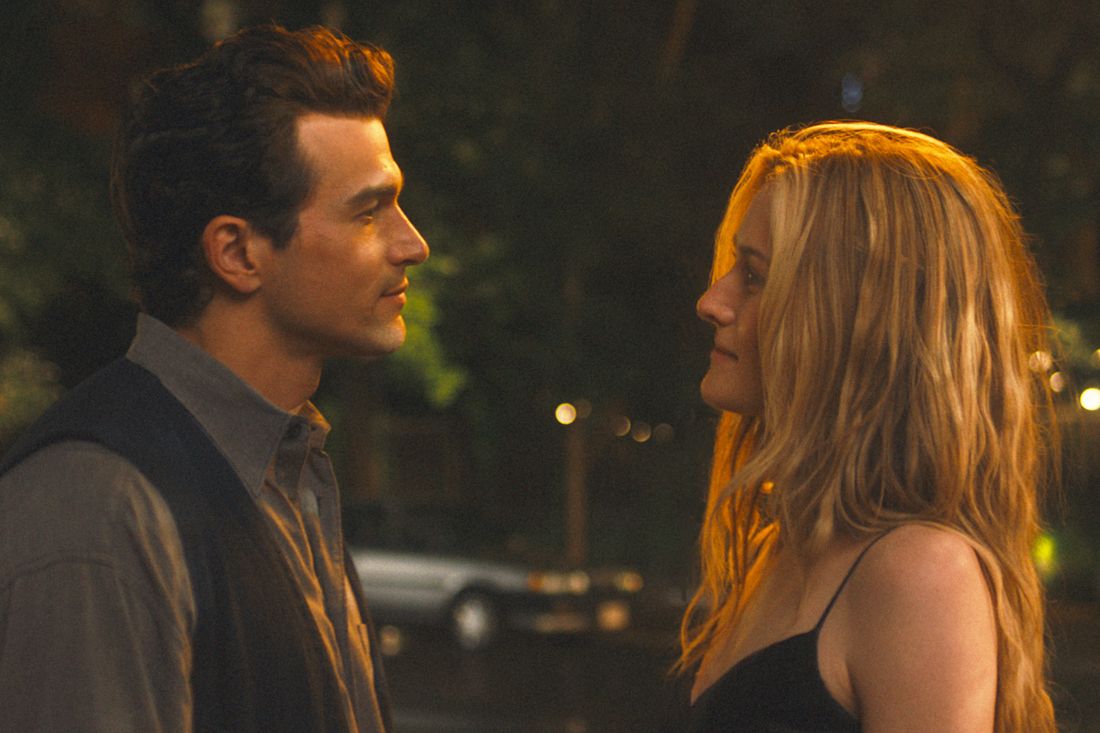
The first season of Ryan Murphy’s new show, Love Story, tells the story of John F. Kennedy Jr. and Carolyn Bessette’s relationship. The first episode ends with a scene between John (played by Paul Anthony Kelly) and his mother, Jackie Kennedy Onassis (Naomi Watts). The conversation revolves around a recent incident: Jackie turned the car around on the way to a wedding after finding out John was with actress Daryl Hannah (Dree Hemingway), whom he’d been dating for years. Now, Daryl wants to get married, and Jackie is so displeased that she’s acting out – refusing to be around Daryl and making family gatherings uncomfortable by constantly questioning John’s choice in partners.
Jackie never lost her calm, graceful voice, even when correcting her son. She often reminded him, “No one understands what it’s like to marry into this family.” She believed no amount of experience could truly prepare a woman for life as a Kennedy’s wife. Marriage to John wasn’t a partnership, but a sacrifice: a woman had to dedicate her life to supporting him, and the ideal wife would not only accept that, but embrace it. Above all, she had to love him despite his flaws. It was a huge ask. In fact, Jackie felt that, given these expectations, the perfect woman for John – affectionately known as John-John – might not even exist. And she was deeply disappointed that she couldn’t somehow be reborn to fulfill that role herself.
While Jackie shares the difficulties of being a Kennedy wife, we see Carolyn Bessette (Sarah Pidgeon) happily enjoying her independence. She’s out with friends, letting loose at a club after a successful day at work. This contrast – between the sacrifices expected of a Kennedy wife and Carolyn’s strong sense of self – forms the basis of their love story. Carolyn isn’t one to flatter or seek approval; in fact, she tells a friend that ignoring a man is the best way to get his attention. She doesn’t seem like someone who would easily give up her own life for another.
Carolyn and John Kennedy Jr. were one of the most famous couples of the 1990s, and their tragic deaths in a 1999 plane crash cemented their place in history. The new series Love Story begins with them preparing for a flight to Martha’s Vineyard for a Kennedy wedding – a glamorous and heartbreaking setup that’s sure to captivate viewers. The story reveals tensions in their relationship: Carolyn feels stifled by the constant demands of the Kennedy family and the need to maintain a polished public image. We see her subtly changing her appearance – switching from a bold red nail polish to a more subdued neutral shade – while dealing with the relentless paparazzi before heading to the airport.
The story jumps back seven years, to before John and Carolyn knew each other, when Carolyn had darker hair. John is struggling, having failed the bar exam twice, and his job at the District Attorney’s office is on the line because of a strict three-strikes rule. Meanwhile, Carolyn is thriving in her career. Her life feels incredibly glamorous, like a KT Tunstall song is about to start playing. She’s incredibly thin and tall, and seems to live on cigarettes and coffee. Despite staying up late, she always looks effortlessly put-together for work, getting ready in just a few minutes. Although she’s worked her way up from folding clothes at the mall, her job at the Calvin Klein showroom feels confining. She easily impresses Calvin Klein himself, Alessandro Nivola. Even with a difficult boss, Tanya, Carolyn is confident enough to challenge Calvin and suggest Annette Bening wear a suit instead of a dress to the premiere of Bugsy.
Carolyn approaches life with self-assurance, while John seems to be struggling and relying on luck. He realizes a career in law isn’t for him, and his current popularity – fueled by staged public appearances like touch football games with friends – won’t last forever. They meet at a charity event, where Carolyn confidently makes an impression on John despite arriving discreetly. Introduced by Calvin, she playfully refuses to give him her number, challenging him to find her if he’s truly interested – a typical tactic for her. Meanwhile, a kind and attractive man named Michael, whom Carolyn’s friends call “sexy doorman,” is completely infatuated with her, even following her home after she explains she only wants a casual connection and suggests they remain friends if he can’t handle that.
It’s clear John is falling hard. His cousin, Anthony, points out that John has never had to actively pursue anyone before. Trying to impress Carolyn, John goes to Calvin Klein to ask her to help him choose a new suit and manages to get a dinner date. However, he’s unaccustomed to putting in effort for a woman’s attention and arrives late to their meeting at Panna II. Despite this, he’s able to convince her to stay. Carolyn intrigues him by not being impressed by his famous name, and he’s particularly charmed by her dismissive attitude towards the tabloid press. The date goes well, so Carolyn is furious when she sees a photo of John with Daryl Hannah at Teddy Jr.’s wedding splashed across the front page of the New York Post.
Let’s talk about Daryl. She’s presented as Carolyn’s rival for John’s attention, but the character feels exaggerated, and while Dree Hemingway tries her best, Daryl isn’t very well-developed. Even though John repeatedly rejects her, Daryl is willing to work with the paparazzi and act like she’s John’s future wife. Things escalate in episode two when John comes home to find people doing drugs on a valuable family heirloom. The show suggests Jackie doesn’t oppose their relationship because of anything Daryl does—she’s actually quite encouraging, even seeing her own career slowing down as a good thing because it creates space for Daryl—but because Daryl is portrayed as somewhat clueless. Or maybe Daryl is right, and Jackie simply dislikes famous blonde actresses. Regardless, their relationship falls apart after Jackie refuses to join Daryl for dinner. Daryl recognizes the problems in their relationship, but she keeps returning to John. Even the fact that John was responsible for the death of her dog, Hank, isn’t enough to keep her away. In a shocking scene at the end of “The Pools Party,” Hank’s leash slips from John’s hand, and he runs into the street and is hit by a car. Years later, a report in “Page Six” revealed that John blamed Daryl for making him fly to Los Angeles for Hank’s funeral when his mother was ill.
Over episodes two and three, Jackie’s battle with non-Hodgkin lymphoma becomes a central part of the story. Meanwhile, Carolyn steadily climbs the ladder at Calvin Klein, ignoring John’s persistent attempts to reconnect – he keeps sending flowers and confusing cards to her office after publicly getting back together with Daryl. Elsewhere, Jackie ends up in the hospital after a fall from a horse, but insists she’s fine and just needs rest, despite her doctor wanting to keep her for observation. John has passed the bar exam, but instead of joining the District Attorney’s office, he’s focused on launching George magazine. He envisions a publication that blends politics and pop culture, leveraging his connections in both worlds. However, his investors are puzzled by his creative choices – specifically, why Cindy Crawford is dressed as a pilgrim on the cover (John explains she’s meant to be a Continental Army officer). They suggest a more conventional cover model, like Daryl Hannah dressed as a mermaid.
Okay, so things are definitely strained between Jackie and John. He’s thinking about jumping into the very industry that’s been capitalizing on their family’s pain for years, and she is not thrilled. We quickly realize some time has passed – almost two years, actually – between the first episode and this hospital scene. John, now 33, laments feeling the pressure of time, contrasting it with how young he felt in the pilot. But honestly, Jackie doesn’t seem to have much faith in either George or even her own son, really. He tries to impress her with everything their father accomplished by 33 – war hero, congressman, author – but she cuts him off, pointing out that success feels a lot less impressive when it’s just handed to you. The underlying message is clear: why bother striving for something new when the family would be perfectly content with him simply living up to their expectations? He wants to escape the shadow of his name, as Jackie puts it, but he’s clearly lost about how to do it.
John and Carolyn run into each other at a party celebrating a photography book put together by Kelly Klein, who is married to Calvin and a friend of Carolyn’s. John attempts to revive their past connection, but Carolyn gently reminds him that he’s already in a relationship and, more importantly, they’re simply not compatible. She feels they lead completely separate lives, and she exists in a world he doesn’t share. Later, Kelly cautions Carolyn about getting involved with people who seem glamorous, advising her that being loved is more valuable than loving someone.
Carolyn has a surprising connection with the building’s doorman, and their relationship grows when she uses her influence to get him modeling work for Calvin Klein. Calvin was looking for a new face for the brand, someone to replace a problematic previous model, and he increasingly relies on Carolyn’s eye for talent – she’s the one who originally championed Kate Moss, though Calvin happily takes credit for discovering her. Carolyn begins to cautiously open up to Michael, but hesitates to show too much affection. She’s also seen having lunch with Michael when John next encounters her. John, aware of Calvin’s preferences, has switched from sending red roses to white orchids, and during a conversation with John, Carolyn surprisingly mentions his mother.
Jackie’s health is declining, but she still can’t resist subtly putting down her son. She tells him, “You have so many options; you don’t need to rush into anything just to prove you can.” Watts portrays Jackie as outwardly composed but inwardly fragile, a woman holding herself together. In contrast, Kelly plays John as if he’s remarkably naive. He doesn’t seem to pick up on his mother’s thinly veiled condescension. She delivers lines like, “We love you anyway, you poor thing,” and he responds with a simple, “Thanks.” While John-John might have been a bit of a stereotypical athlete, everyone deserves some depth. Kelly’s portrayal of John, who mostly just accepts advice and criticism, feels strangely lifeless – like watching an old photograph come to life.
Honestly, as a movie fan, one of the biggest issues for me was the dialogue, especially between John and Jackie. It felt so… predictable and unnatural. The most compelling moment came when Jackie was destroying her letters, seemingly aware that people would be fascinated by her life after she was gone. She admitted she always craved the extraordinary, even more than Jack, who seemed happy with a simpler life of sailing and writing. But just when that interesting idea started to develop, the conversation would get bogged down in discussions about ‘the public’ and what people would think. It felt like the filmmakers were too eager to portray Jackie as simply heartbroken, and like Natalie Portman’s performance in the earlier Jackie film, they relied on shaky camera work and a dreamy atmosphere instead of really digging into her complicated feelings. It was tempting to just show her grief instead of exploring it.
John is really impressed by Carolyn’s honest and practical way of looking at things. While they’re talking in Washington Square Park one night, she helps him understand how fiercely his mother will protect him. She points out that a mother’s love is an incredibly powerful force, and then reveals her own father wasn’t always there for people. This is the second time she’s hinted at a difficult relationship with him. John walks Carolyn home, and they nearly kiss, but she holds back, not wanting to give him what he wants just yet.
The film then shows a drawn-out depiction of Jackie Kennedy’s failing health. We see her applying lipstick while learning her cancer has spread, and she requests a priest for her last rites, during which she seeks forgiveness and even offers forgiveness to God. In her final moments, she finds comfort in her friend and secretary, Nancy Tuckerman, and dies while gently touching a photo of her husband. This portrayal feels overly dramatic, and as John announces his mother’s death to the gathered press, it seems likely that he and his sister, Caroline, were touched by the public’s outpouring of sympathy. The film could have been more insightful by exploring the complicated ways the Kennedys benefited from their privileged lives. A particularly touching scene at the wake shows Caroline and John fondly remembering everyday moments, like when Caroline got into trouble for growing a plant at their Hyannis Port home. It’s a welcome change of pace to see them talking about something other than public scrutiny, the tabloids, or the burdens of their fame.
Daryl, always causing problems, unexpectedly appeared at the memorial service. Jackie, unfortunately, found her fears confirmed as Daryl immediately made the situation about herself. When John went outside to acknowledge the attendees, Daryl followed and conspicuously held his hand, seemingly taking advantage of a difficult moment to be seen with him. Luckily, this wasn’t broadcast on television – Carolyn was watching and was deeply moved by Ted Kennedy’s eulogy. He said of Jackie that she had a strong sense of self, a quality Carolyn also possessed. After the service, John frantically biked to Carolyn’s house in the rain. She comforted him, pinching his arm to help him calm down, just like she used to do when she was a child, as she once told Michael. He kissed her, but she initially pushed him away, only to kiss him back when she was ready.
Kennedy Memorabilia
I like that the show is taking the time to develop John and Carolyn as individuals before rushing their relationship. Understanding their backgrounds, needs, and flaws makes us care more about what happens to them. However, after the first episode establishes who they are – Carolyn as independent and John as lost – later events mostly confirm these traits rather than adding new layers. They tend to react to situations instead of actively shaping them. John doesn’t really try to attract or reject Daryl; she initiates contact and returns multiple times on her own. Similarly, Carolyn strives for career success, but keeps randomly encountering Michael. Hopefully, as they get closer, we’ll see more depth and complexity in their characters.
There are some interesting interactions between Caroline and Jackie. In one episode, Jackie reveals she surpassed her mother’s expectations of simply being a beautiful addition to a powerful man. However, when Jackie explains that all Kennedy marriages involve compromises, Caroline isn’t as quick to agree. She’s happily married to Edwin Schlossberg, even though Jackie initially had doubts about the match. The actress playing Kelly could learn from the nuanced way Gummer portrays Caroline’s quiet defiance; Caroline’s responses feel more genuine and engaged than John’s, even imagining he were more confident.
The story briefly touched on John’s desire for independence, hinting at how the magazine George played a role. At Panna II, Carolyn questioned John about what he’d do with complete freedom, and he expressed a wish to be an actor, a dream his mother previously discouraged. George later became a successful and personally meaningful project for John, but the narrative skips over the details of how it developed over those two years, leaving us wanting to know more.
Read More
- Netflix’s Little House On The Prairie Reboot: Release Date, Cast & Everything We Know
- Off Campus Season 1 Soundtrack Guide
- Silver Rate Forecast
- Prime Video’s New R-Rated Spy Thriller Is Officially No.1 On Streaming Despite Poor Reviews
- Gold Rate Forecast
- Brent Oil Forecast
- EUR ZAR PREDICTION
- EUR USD PREDICTION
- 币安人生 PREDICTION. 币安人生 cryptocurrency
- Amazon Primes new GenAI cartoon looks like K-Pop Demon Hunters with aliens
2026-02-13 08:58