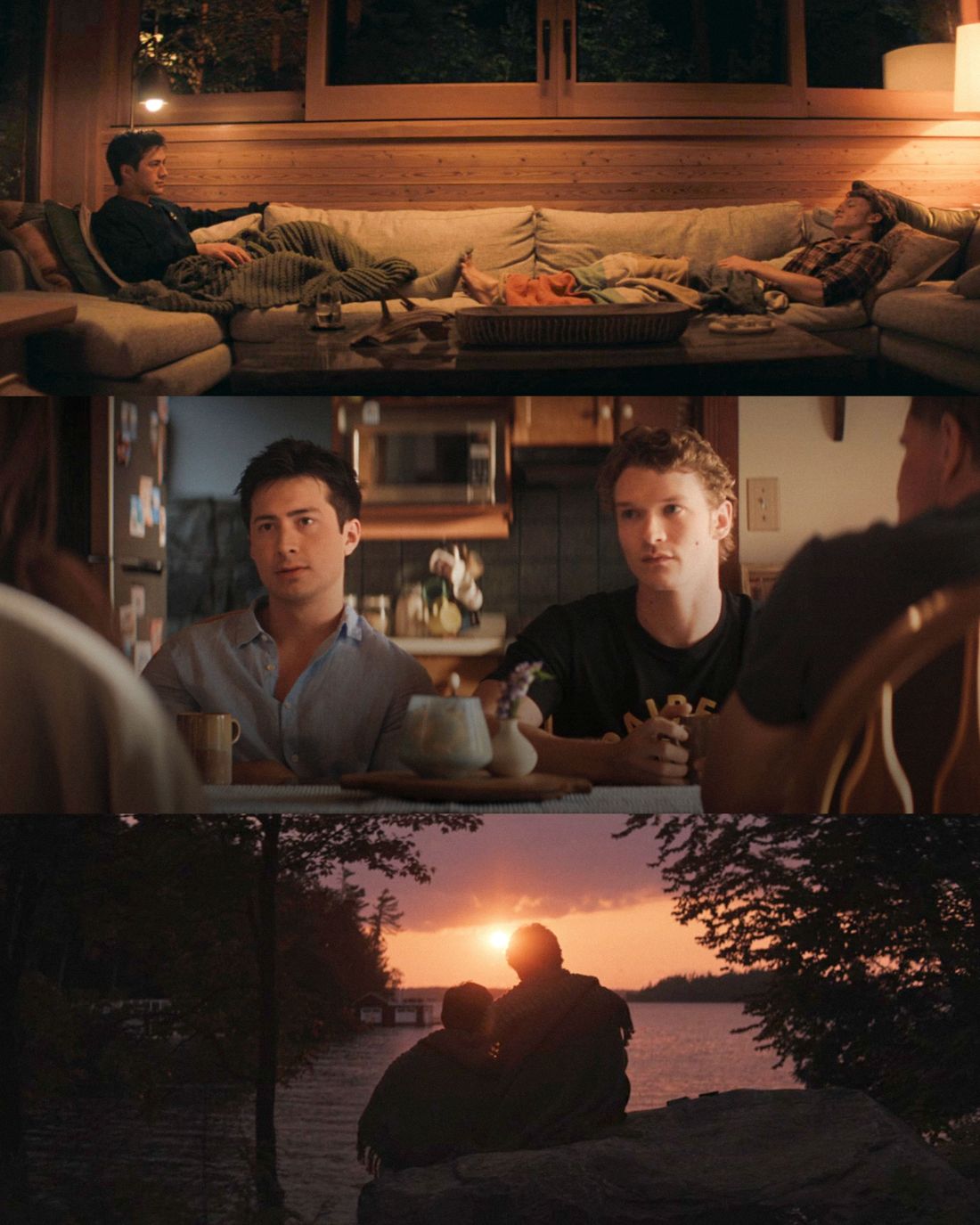
On his third day shooting Heated Rivalry, Jackson Parrell found himself lighting a Russian funeral in the dining room of an Italian restaurant in Hamilton, Ontario. The room was dim. A dozen mourners sat shoulder to shoulder, their faces caught in the low glow of table lamps. “I was like, fuck,” Parrell says. “This is one of the best scenes I’ve ever had the opportunity to light.”
When Parrell joined the team as cinematographer for the popular new hockey romance, he was initially concerned it would look cheap – a common worry in the film industry. He’d first heard about the project from a friend at a dinner in Toronto. It was a drama for Crave, based on Rachel Reid’s Game Changers novels, about two rival hockey captains falling in love. The story would be filmed in Montreal, Moscow, and Las Vegas, featuring glamorous locations like penthouses and arenas. Despite these ambitious settings, Parrell says it was likely the lowest-budget project he’d ever worked on, especially compared to the standards of a streaming service like HBO, where the show, Heated Rivalry, is available in the US. While he wouldn’t call it a favor, he admits he initially saw it as a chance to work with familiar faces.
The filming schedule was incredibly demanding, giving them just over a month to shoot the entire project at a rate of 10 to 11 pages per day. This was much faster than Parrell’s usual pace – he typically shoots four or five pages a day. The hockey scenes added to the challenge; a single action sequence, like Shane passing and getting checked, could take half a day to film when stunts were required. Despite this, Tierney had a reputation for speed and skill, something everyone Parrell knew who’d worked with him on Letterkenny confirmed. Parrell was doubtful, though. He thought, “This feels completely different from Letterkenny, and I’ll believe it when I see it.”
Unlike many productions where directors shoot extra footage to account for potential edits and network feedback, director Jacob Tierney had a clear vision for Heated Rivalry and allowed cinematographer Ben Parrell complete creative freedom. Parrell explains that Tierney knew exactly what he wanted and didn’t ask for anything beyond that, resulting in a much faster and more efficient shoot – scenes that typically take hours were completed in just 45 minutes, and they often finished filming early. Tierney and executive producer Brendan Brady encouraged Parrell to trust his instincts with everything from lighting to camera angles, essentially giving him free rein creatively. This positive atmosphere extended to the entire crew, who were encouraged to be expressive and enjoy their work. The only guideline was to be resourceful and make the show look good without appearing expensive. Parrell says they focused on maximizing their strengths and allowing the crew to be creative despite the limited budget.
The basics: “We wanted it to feel cinematic, even with our budget.”
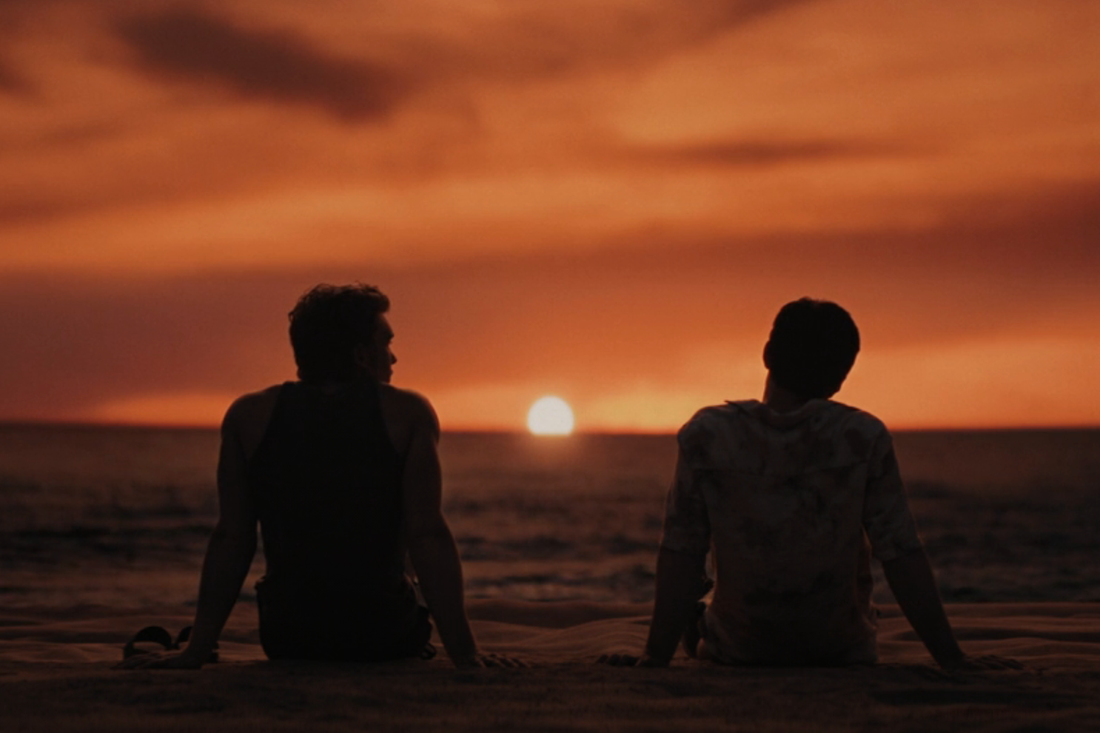
Parrell intentionally wants viewers to think deeply about the colors used in Heated Rivalry. The show’s color scheme mirrors the developing relationship between Shane Hollander and Ilya Rozanov, starting with shadowy scenes in hotels and blossoming into brighter settings – a detail present in both the script and the original novel. Beyond that, it’s a matter of artistic preference. Parrell aimed for consistently beautiful visuals, collaborating with colorist Maxime Taimiot to create a vibrant, saturated look. He specifically wanted to avoid the dull, washed-out style often seen in productions from larger studios, explaining, “That’s not how I want to live.”
Cinematographer Parrell filmed Heated Rivalry using two ALEXA 35 cameras, known for their excellent performance in low light. He explains this choice significantly expanded the show’s visual scope, helping it look cinematic despite budgetary constraints. However, the show’s distinctive look was primarily achieved through the lenses. Parrell selected Panavision’s T-Series anamorphics, which create a wide, film-like image and enable very tight close-ups. He describes this as a simple but effective way to greatly improve the show’s overall quality.
Creating the hockey scenes was costly, particularly showing large crowds, and the production of Heated Rivalry couldn’t afford extras to fill the stadiums. To solve this, Parrell and Tierney minimized the hockey footage, filming it like a television broadcast – keeping the stands out of view and intentionally making it look lower quality. They used fast motion and powerful zoom lenses to replicate the sharp, artificial look of live sports. The hockey scenes appear smaller within the frame, emphasizing that they were secondary to the main story. As Parrell explains, the hockey had to support the show’s overall world, not dominate it.
Because the show Heated Rivalry didn’t have the budget to film in places like Las Vegas, Sochi, and Tampa, they built those locations using a VFX wall – a large digital screen that creates realistic 3D environments. They partnered with Dark Slope in Toronto and used the Unreal Engine video game software to design the backgrounds. It was a tricky process, as things could easily look fake. For example, an outdoor café scene set in Sochi didn’t quite feel right. Parrell couldn’t make the street look convincing, so he worked with production designer Aidan Leroux to move the scene indoors and use the VFX wall as a window view – a technique they also used to create the Las Vegas skyline in the first episode, “Rookies.” This solution ultimately fixed many of the visual challenges.
Despite its advantages, the virtual production wall wasn’t perfect. For the beach scene in episode five, “I’ll Believe in Anything,” where Shane and Ilya watch the sunset, the water just didn’t look realistic. According to Parrell, relying solely on the virtual wall creates an unnatural effect. They needed something in the foreground – even a small object like a coffee cup – to ground the viewer and make the scene believable. To fix this, the team built a small sand barrier in front of the screen to hide its edge. Parrell admits the scene was a gamble, but they decided to take the risk and hoped it would work.
The Vegas bathroom: “You can see the soul through that little light.”
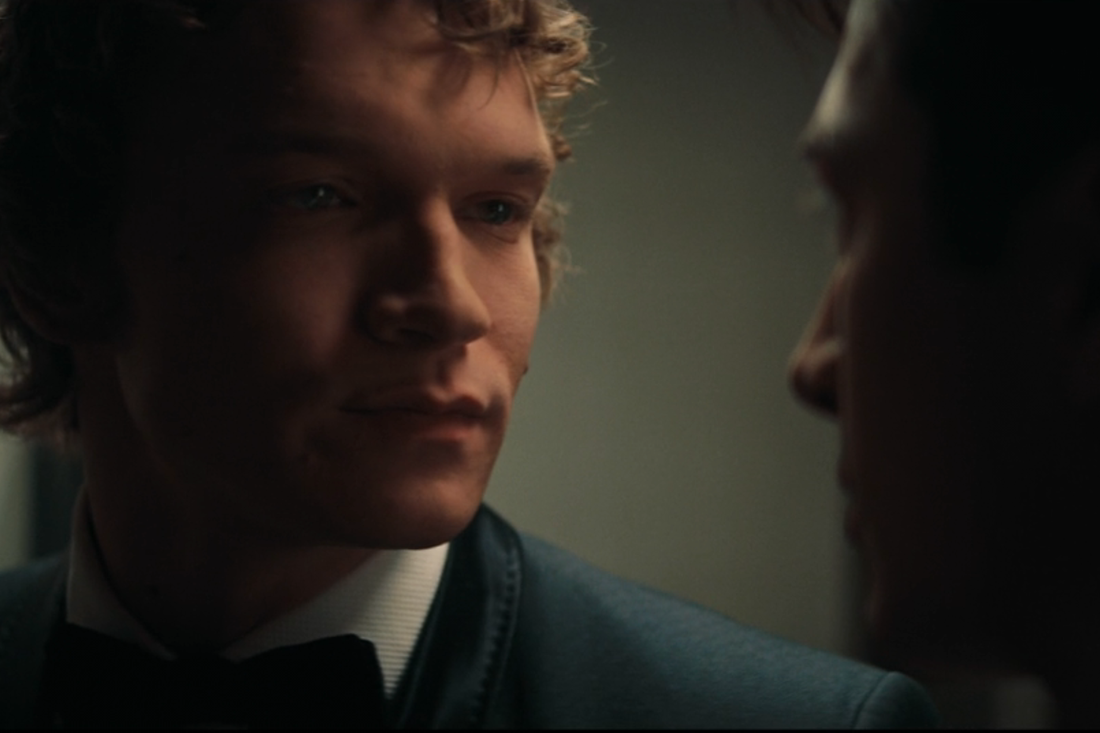
At an awards show in Las Vegas, Shane and Ilya stepped into a bathroom for a private argument, and then arranged to meet up later that evening. According to director Parrell, the scene in episode two, “Olympians,” was straightforward. He described it as simply two men standing close together, captured with some well-lit close-up shots. Parrell kept the lighting minimal—one or two lights to create a reflection in their eyes—and filmed the scene with a single camera, allowing the actors to drive the performance.
That subtle “sparkle” in the eyes of actors Williams and Storrie has a technical name: eye light. While it might sound strange, cinematographer Parrell believes it allows the audience to connect with the character’s inner self, creating empathy. To enhance this effect, he used two filters. A Tiffen Black Glimmerglass filter softened the image, removing harshness, and a polarizer reduced shine on the actors’ skin. Parrell explains that this makes Connor and Hudson appear more grounded and draws the viewer’s attention directly to their eyes, making the eye light the only noticeable sparkle.
The Champagne celebration: “It smelled insane for days.”
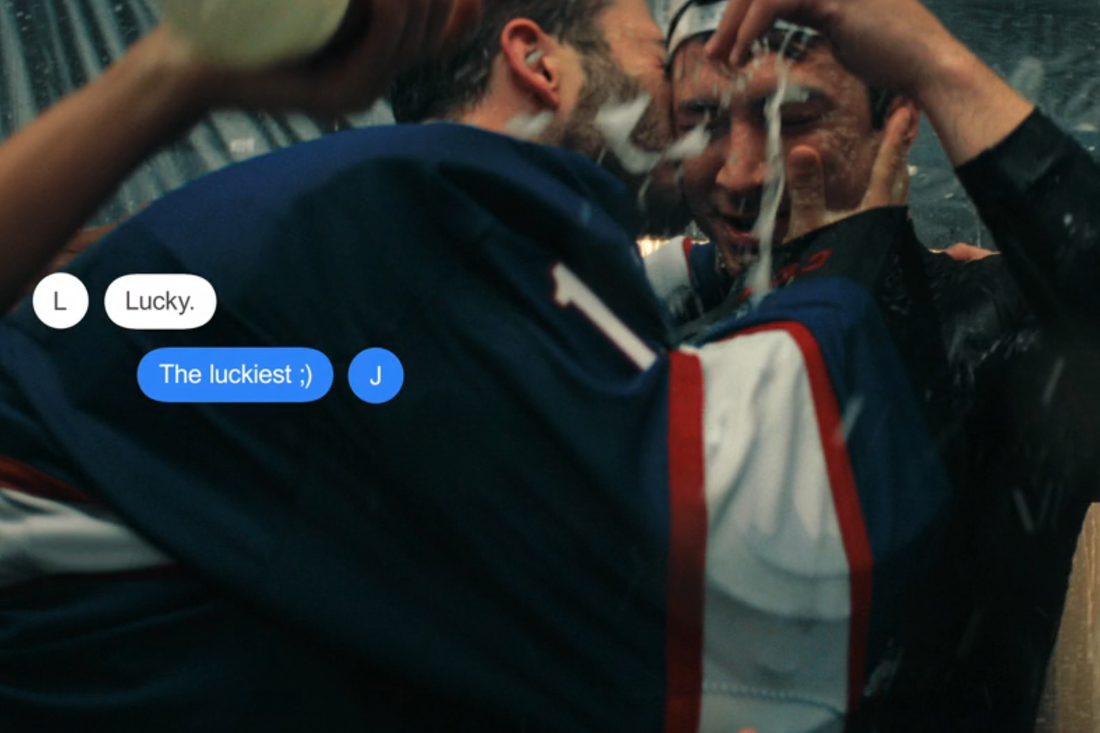
In the fourth episode, titled “Rose,” the team celebrates their victory with a Champagne shower in the locker room. According to Parrell, they didn’t warn Hudson beforehand. Right before filming, Tierney quietly told some of the actors to spray him with Champagne. They only had one chance to get the shot, so Williams’s surprised reaction was completely real – he had no idea it was coming.
To safeguard the equipment during filming, Arthur Moukhortov, the set decorator, covered the cameras, camera operators, and the locker room area with plastic sheeting inside the Sleeman Centre, the Guelph arena used for all the hockey scenes. They filmed the scene in slow motion, and Moukhortov himself played Soren Miitka, the bearded player who kisses Shane. After filming, Moukhortov cleaned up, mopping up the “Champagne” – actually Welch’s sparkling grape juice – from the floor. As director Parrell recalls, the arena smelled strongly of grape juice for days.
The club: “You’ll know exactly where you are just by the color.”
The show’s creator, Parrell, structured each episode using “color chapters,” giving each a unique visual style. He describes it as a visual signature – you can tell where you are in the episode simply by the colors on screen. For example, scenes between Shane and his girlfriend, Rose, are intentionally warm and “golden,” while a nightclub scene uses the popular “bisexual lighting” aesthetic. This scene, with Shane and Ilya dancing under pink, purple, and blue lights while exchanging glances, felt particularly striking. Parrell explains he chose these colors because they look good together and are frequently used for a reason.
One of the most intense scenes for me is in the club. It all hinges on this incredible, risky wraparound shot. When Ilya sees Miles, Rose’s friend, at the bar, he instantly knows Shane has to be close by. The camera follows exactly where Ilya is looking as he searches the crowd. Apparently, they didn’t shoot a lot of alternate angles, which meant if this one shot didn’t work in editing, they’d be stuck! Later, the action flips – Shane spots Ilya and starts walking towards him, and the camera moves with Hudson, circling around Connor. They filmed the whole thing in slow motion – 60 frames per second – and then stretched it out even more in post-production. It perfectly syncs up with when t.A.T.u.’s “All The Things She Said” transitions into the remix, making the whole sequence so much more powerful.
The scene culminates with a rapid series of images: Shane and Ilya exchanging glances across the dance floor, Shane and Rose being intimate, and Ilya showering alone. The director, Parrell, intentionally filmed very close-up shots of the actors, almost as if the camera was a participant in the scene. He explains, “If you’re going to do that, you have to mean it,” wanting the moment to feel explosive— “like something went off.” He used a flashing strobe light to emphasize the peak of the emotion, and carefully timed the cuts between scenes. “It was important for those connections to feel deliberate and intimate,” he says. “I was always trying to link Shane and Ilya, to heighten the sense of longing between them.”
Ilya’s monologue: “It almost feels like they’re in the same room.”
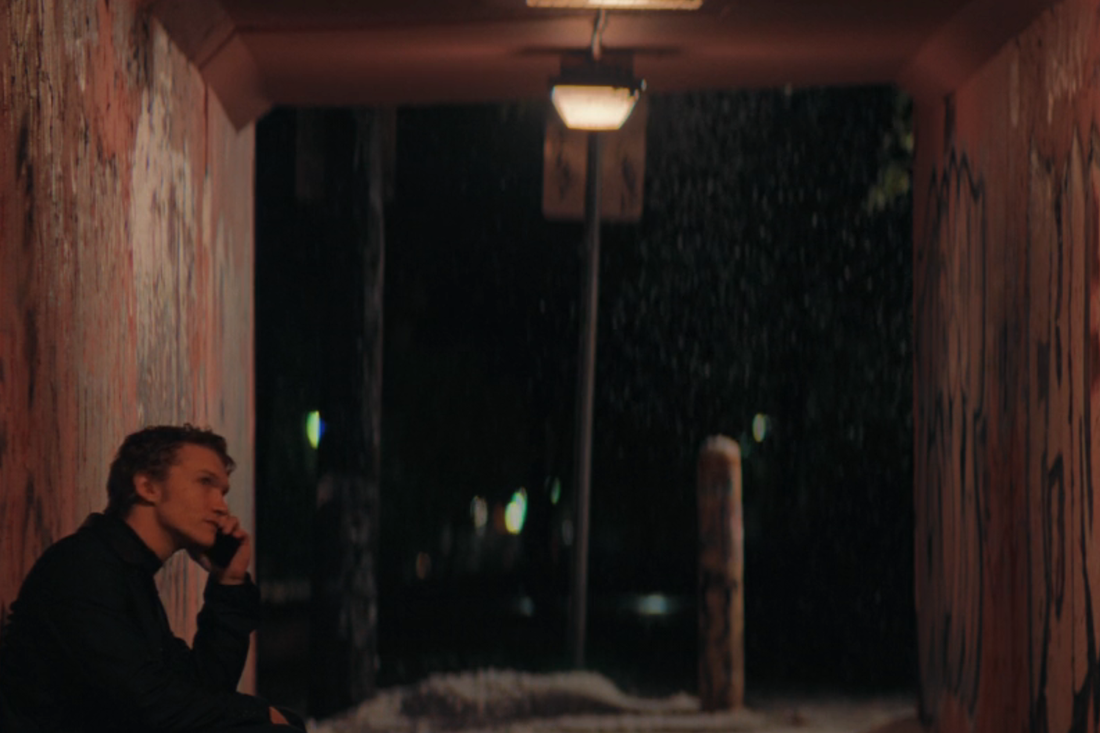
Following his father’s funeral, Ilya shared everything he’d been keeping secret with Shane, speaking to him in Russian over the phone. Originally, the scene was planned for an industrial area of Hamilton, but when that location wasn’t available, the director and production designer found an even better spot: a completely pink tunnel. As the director explained, when a location offers something unexpected and special like that, you embrace it and build the scene around it.
Okay, so creating a winter scene for Moscow indoors was pretty cool. The effects team basically filled this tunnel with fake snow. Then, the director, Parrell, gave the actor, Storrie, a few spots where he could pause and look good, and let him just improvise his way through. Storrie walked around, found his moments, and the camera operator, James Poremba, followed him with a handheld camera for the whole thing. Apparently, they filmed the entire scene in one continuous shot – a really long take for James, but it looked amazing!
As a film lover, I was really struck by this scene. It jumps between Ilya, who’s in a dimly lit Moscow apartment, and Shane, listening in from a hotel stairwell while he’s on the road. The director, Parrell, intentionally made the lighting different – Ilya’s side feels dark and enclosed, while Shane’s is brighter and more open. He told me he wanted to emphasize how far apart they are, with the time difference adding to that feeling. But here’s the clever part: even though they’re miles and miles apart, the way they look at each other, the angles of their faces, make it feel like they’re actually in the same space, having a direct conversation. It’s a really powerful way to connect these two characters.
The Scott-Kip kiss: “This shot is the show.”
I was completely blown away by the end of episode five! Seeing Scott Hunter, played by François Arnaud, come out as gay with that kiss to Kip Grady (Robbie G.K.) right on the ice at Madison Square Garden was just incredible. Honestly, I teared up when I read the script – it was the defining moment of the show, according to one of the creators. They really put everything into making that kiss perfect, even using half the VFX budget just for that one scene! And you know what? It was worth it. We might not have seen as much hockey action, but that kiss? That’s what everyone will remember – it’s already iconic and all over the internet!
The kiss was filmed in an empty studio, but the scene was made to look like Madison Square Garden using visual effects. Parrell and the team at FOLKS used detailed 3-D scans of the Sleeman Centre to digitally recreate and expand the arena. According to Parrell, the visual effects were crucial to making the scene believable – everything had to look real. They filmed the crew and about 50 extras at the arena, capturing them cheering, reacting, and enjoying the game in various outfits. FOLKS then used this footage to create a library of digital bodies that they could copy and position throughout the stands. If you look closely, you might even see the same person appear multiple times in the crowd.
The cottage: “I always want these guys to be in the same frame.”
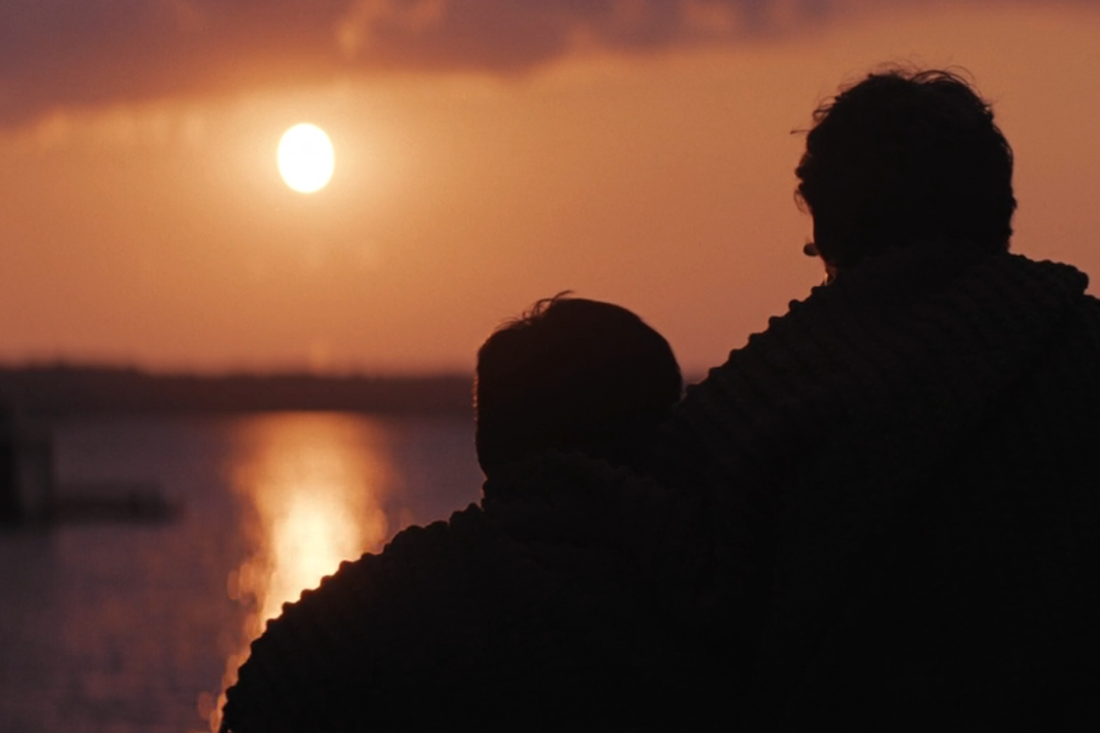
Once Scott publicly reveals his identity, Ilya travels to a secluded cottage to be with Shane, giving them the privacy they’ve been longing for. According to director Tierney, episode six, titled “The Cottage,” was intended to feel like a honeymoon for the couple. Producer Parrell recalls Tierney emphasizing the importance of visually connecting Shane and Ilya throughout the episode. He wanted them consistently shown together, avoiding any shots that might create distance and accurately reflecting their closeness in that setting.
Honestly, Shane and Ilya are practically inseparable, even at the cottage! The only moment you think they’re apart is when Ilya jokingly suggests Shane could marry his childhood friend, Svetlana, to get citizenship. But even then, they’re still physically connected – touching feet, a little accidental contact here and there. The director, Parrell, explained they really want to emphasize how deeply connected Shane and Ilya are, and show that love in every little interaction, no matter how small.
Everything with the cottage sets was coming together so fast, we actually finished ahead of schedule! I remember Parrell noticing how the light was changing over the lake one afternoon. We’d already filmed Shane and Ilya sitting on a rock watching the sunset, but the actual sunset that evening was even more beautiful. Parrell immediately said we should reshoot it. It’s amazing, because usually shows don’t have that kind of flexibility. But we’re such a well-oiled machine as a team that we were able to get everyone back into costume and film the scene again. The result is just stunning.
The blowjob: “This is what the people want.”
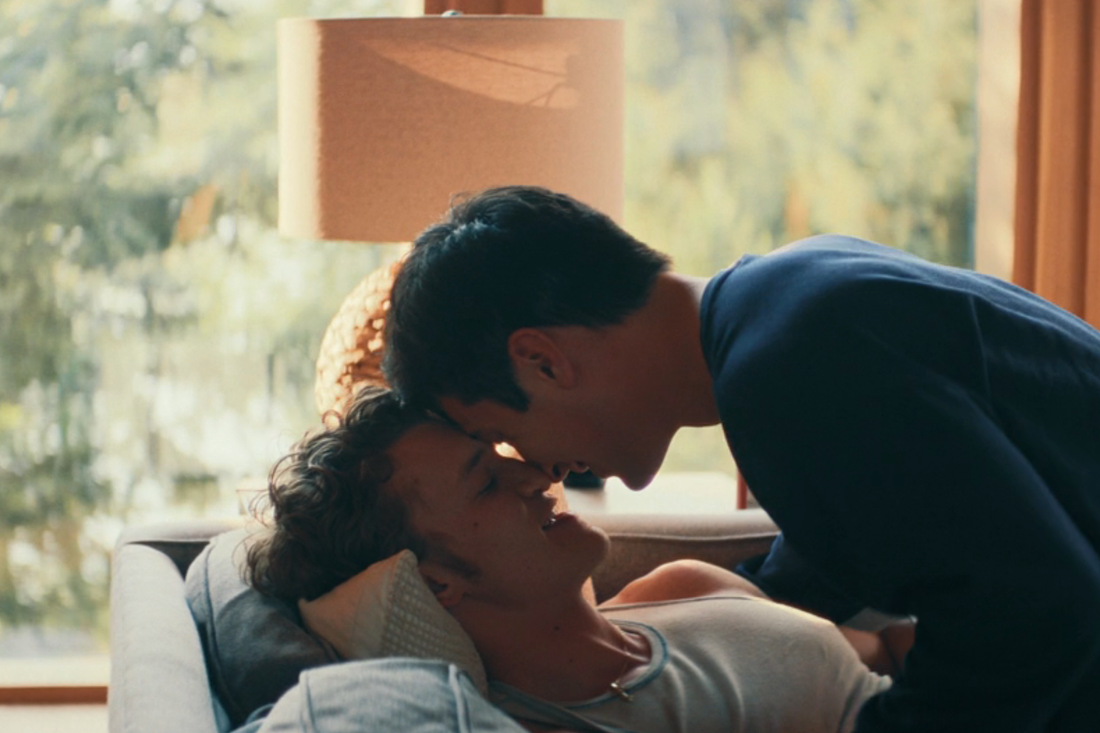
While at the cottage, Shane receives a phone call from his teammate Hayden. During the call, Ilya begins performing oral sex on him. The scene is intimate but avoids being overly explicit, a result director Parrell attributes to his camera operators, Ashley Iris Gill and James Poremba. They collaborated with the entire team, including the intimacy coordinator, Chala Hunter, to carefully choose the camera angles. Parrell noticed they understood the nuance of the scene, noting they weren’t hesitant. He instructed them to disregard traditional expectations surrounding how male bodies are filmed. “Forget everything you’ve been taught about the ‘male gaze’,” he said. “This is a chance to be completely free from those expectations. Capture the scene fully – get right up to the edge of what’s considered private, and give the audience what they want.”
As soon as Shane finishes his phone call, he playfully jumps onto Ilya, creating a very close, intimate moment – what the director, Parrell, describes as being “nose-to-nose.” He intentionally includes these small, meaningful interactions, particularly focusing on how Ilya’s necklace moves during intimate scenes. Parrell believes these shots are just as important as the explicit moments, as they create a sense of genuine closeness and allow the audience to fully experience the connection between the characters.
The foot taps: “I knew there would be memes.”
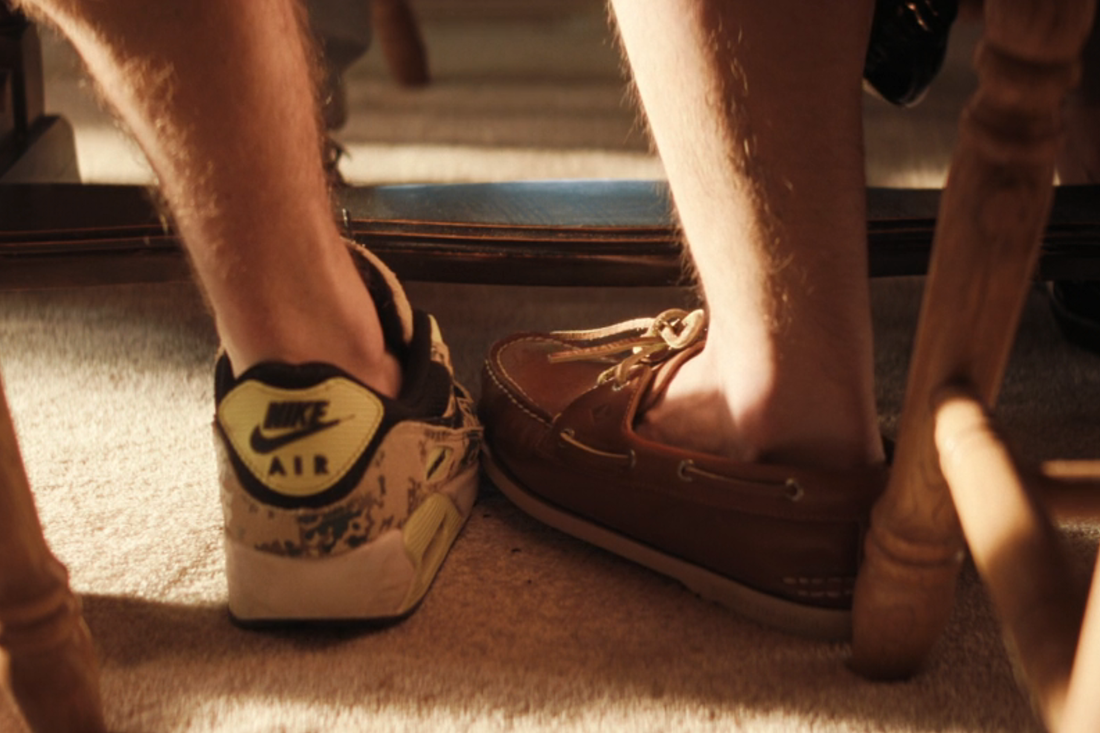
During a press conference scene – filmed to feel like there was a large, unseen crowd – a reporter asks Ilya a question he doesn’t quite grasp. Shane subtly signals he can help, and Ilya quietly thanks him with a nudge back. The director, wanting this moment to feel private, filmed it as a separate, focused shot. This same subtle gesture reappears later in the episode “The Cottage,” when Shane and Ilya are meeting Shane’s parents after coming out. The director specifically revisited the original footage from the earlier scene to recreate the moment, anticipating – and hoping for – it to become a popular meme. The first scene is cool and dimly lit, while the second is bathed in warm sunlight. This contrast was intentional. In the pilot episode, Shane and Ilya are still getting to know each other. But that later scene, the one with the warm light, really captures the heart of the show. It shows they’ll end up happy, and the director felt the lighting should reflect that.
The credits: “This is a happy love story, and it can be yours.”
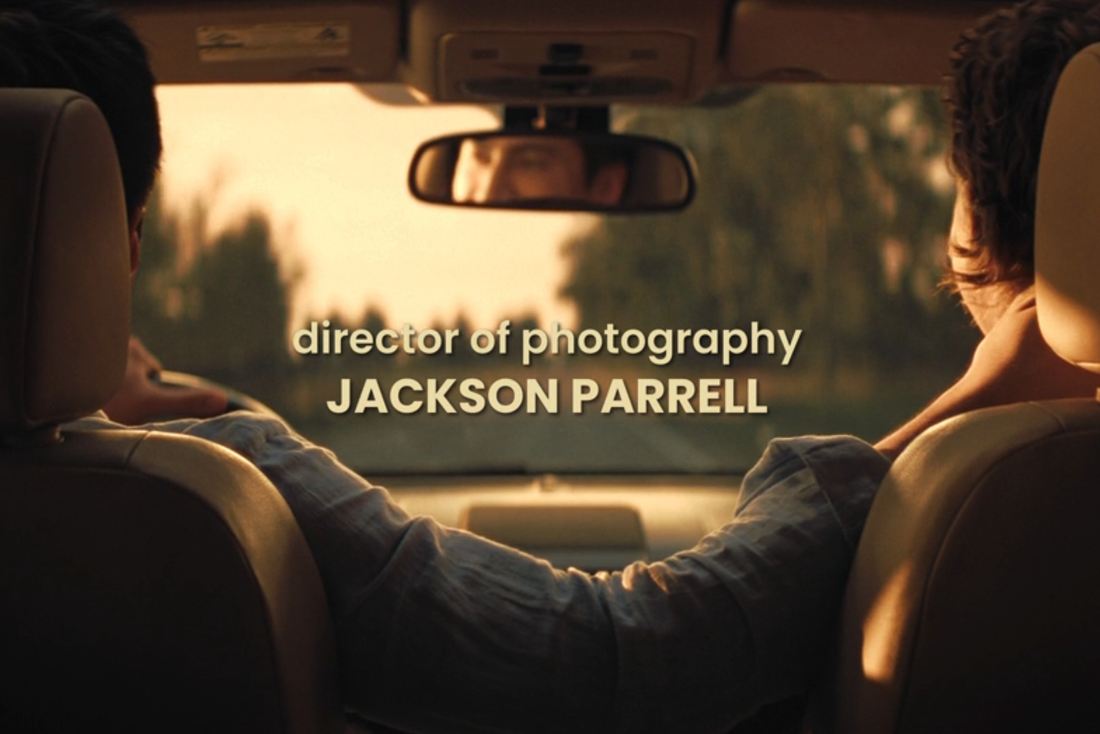
The final scene of “Heated Rivalry,” where Shane and Ilya drive back to the cottage, presented a unique challenge. It was filmed using a virtual set, and the team needed a background image that would convincingly portray a scenic drive and display the entire end credits – something most shows don’t do. Director of Photography Tierney insisted on showing all the crew names, wanting them to be part of the show’s final shot. As Parrell explains, the shot was specifically designed with this in mind, serving as a tribute to the team’s work.
The late afternoon light in the scene gently flickers across Shane and Ilya’s faces, mimicking the effect of sunlight filtering through trees. To achieve this, lighting expert Loreen Ruddock and operator Claire Wall worked with Parrell to program the “sun” to react to a line of pixels representing the passing trees, creating a realistic flashing effect that moved with the car. Parrell explains, “If the light is too flawless, it looks artificial.” He aimed for authenticity – the specific golden hour light of a drive home. “I wanted it to feel hopeful,” Parrell says. “This is a queer love story without any sudden twists or drama. This is the defining moment, the happy ending. And it’s a story anyone can relate to.”
Read More
- Off Campus Season 1 Soundtrack Guide
- Chainsaw Man Volume 24’s Cover Art Reveals a Brand-New Denji
- DoorDash responds after customer uses AI to make food look bad and get a refund
- Euphoria Season 3’s New R-Rated Sydney Sweeney Scene Proves The Show Is Trolling Us
- Hideo Kojima says Metal Gear Solid 2 became the future he hoped would not happen
- Dragon Quest II HD-2D Remake: Where to get the Magic Key
- Umamusume has been transformed into a D&D game with new race
- All Golden Ball Locations in Yakuza Kiwami 3 & Dark Ties
- HSR Banner Schedule (Honkai Star Rail)
- Gold Rate Forecast
2026-02-06 16:58