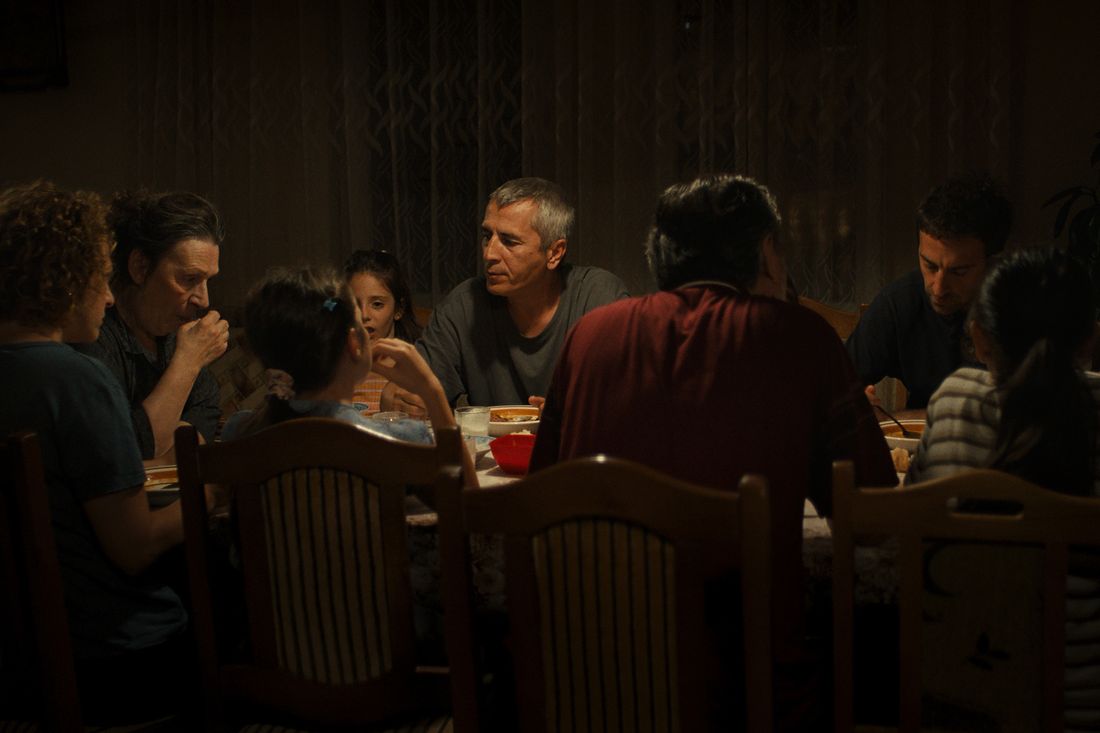
A standout winner at this year’s Sundance Film Festival was Visar Morina’s Shame and Money, which won the Grand Jury Prize for World Cinema Dramatic. This category has become increasingly noteworthy in recent years. Morina’s film is a small but well-crafted story that benefits from the increased attention an award brings, as it likely wouldn’t gain traction through sensationalism or controversial topics. However, this doesn’t mean it’s hard to watch; in fact, it’s likely more relatable than many blockbuster superhero films, dealing as it does with the universal themes of shame and financial hardship. The film’s strength lies in its realistic portrayal of the daily struggles people face to make ends meet and the emotional impact those struggles have. Ultimately, it offers a unique perspective rarely seen in contemporary cinema.
The film opens on a small family farm where Shaban and his wife, Hatixhe, make a living by selling milk and dairy products from their cows. They live with Shaban’s mother and brother, Agim, a teacher – a large, seemingly cheerful family who share meals together. The family dynamic shifts when their youngest brother, Liridon, asks for 1800 Euros to move to Germany for work, but is largely dismissed due to a history of unreliability. After an argument, Liridon vanishes, along with the family’s cows. Now without income, Shaban, Hatixhe, Shaban’s mother, and their three children relocate to Pristina, where Hatixhe’s brother-in-law, Alban, owns a nightclub and provides them with temporary housing and odd jobs. Struggling to make ends meet, Shaban begins taking on any available day labor work, finding jobs with groups of workers on the street.
This isn’t a sensational story, and the film doesn’t try to make it one. Surprisingly, that’s what makes Shame and Money so compelling. Shaban and Hatixhe are incredibly hardworking and practical, facing their difficulties with a straightforward attitude. When they arrive in Pristina, they proactively seek work, going directly to businesses like restaurants, construction sites, and garages to ask if anyone is hiring. Despite their age, they’re capable of physical labor and willing to do whatever it takes. Their experience caring for sick cows back on the farm prepares them to handle various challenges, from assisting Hatixhe’s sister’s ailing father-in-law to helping a stranger in need.
The real issue isn’t their honesty, but how others react to it. Wealthy Albanians are embarrassed by the thought of seeing family members struggling to find work, and offering Shaban money only confuses him. Astrit Kabashi perfectly portrays Shaban’s genuine innocence – he’s untouched by the superficial concerns of social class. Shaban and Hatixhe are proud and self-reliant; they don’t want charity and don’t understand the unwritten rules of society. When Hatixhe receives help from her sister, she’s asked to keep it secret, even down to concealing her fertility treatments. Maintaining the appearance of success requires keeping up a facade of effortless ease in all aspects of life.
Director Morina’s straightforward approach, much like the realistic portrayal of Shaban and Hatixhe and their hard work, mirrors the characters’ own no-nonsense attitude. It reminded me of films by the Dardenne Brothers or Mike Leigh, but Shame and Money feels even more subtle; those directors usually build towards a big, dramatic finish, while this film remains remarkably restrained. Though the ending includes intense, even violent scenes, Morina leaves you questioning whether these events truly happen or are more like symbolic, dreamlike visions. As the film progresses, its gritty realism blurs into something more imaginative, hinting that Shaban and Hatixhe have developed a heightened awareness of how others perceive them and their social class. Ultimately, shame and financial hardship become inseparable in their minds, making this a deeply tragic story.
Read More
- Netflix’s Little House On The Prairie Reboot: Release Date, Cast & Everything We Know
- Off Campus Season 1 Soundtrack Guide
- Silver Rate Forecast
- Gold Rate Forecast
- Prime Video’s New R-Rated Spy Thriller Is Officially No.1 On Streaming Despite Poor Reviews
- Brent Oil Forecast
- EUR ZAR PREDICTION
- Infinity Nikki Candlelight Reverie Challenge and Rewards Guide
- Amazon Primes new GenAI cartoon looks like K-Pop Demon Hunters with aliens
- KPop Demon Hunters Meets Avatar: The Last Airbender In Netflix’s 3-Part Fantasy Series
2026-02-01 00:54